
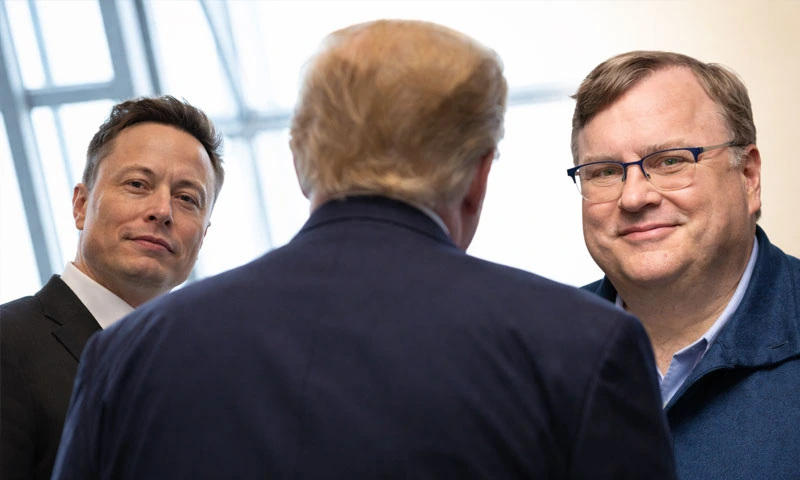
Tech billionaire Elon Musk has reignited a political controversy by posting on X (formerly Twitter) that LinkedIn co-founder Reid Hoffman publicly said he wished former U.S. President Donald Trump had been killed in a recent assassination attempt — a claim that has drawn widespread attention and debate across social and traditional media. Musk’s post referenced comments Hoffman made during a July 2024 panel at the Allen & Company Sun Valley Conference, a gathering of influential tech leaders and investors. According to multiple accounts, at that event Hoffman responded to conservative billionaire Peter Thiel by saying, “Yeah, I wish I had made him an actual martyr,” a remark many interpreted as expressing a wish for Trump to die. In Musk’s post shared this week, he wrote: “Just a reminder that Reid Hoffman really did say in a public forum that he wished President Trump had been killed in the assassination attempt.” The comments have resurfaced amid renewed scrutiny after Trump survived an attempted assassination in Pennsylvania in 2024, an incident that sparked political tensions and a flurry of misinformation online. Hoffman’s Response and Clarifications In the aftermath of the original controversy last year, Hoffman publicly sought to clarify his remarks, framing them as sarcastic and contextual rather than literal calls for violence. In a statement on X that summer, he explained that his comment was made in the context of a heated exchange with Thiel, who had sarcastically thanked him for legal actions against Trump that had, in Thiel’s view, strengthened the former president’s political position. Hoffman stated his remark was meant metaphorically about accountability, not about physical harm. He wrote, according to reports: “Of course we meant nothing about any sort of physical harm or violence, which I categorically deplore.” He also condemned political violence following the assassination attempt. The White House said “violence should only be condemned, never encouraged or joked about,” after Musk drew criticism for related posts. Broader Context: Political Rhetoric and Tech Leaders Reid Hoffman is a prominent figure in tech and politics. Best known as co-founder of LinkedIn and an early executive at PayPal, he is also deeply involved in venture capital and political funding, particularly for Democratic causes. His political engagement and billionaire status have made him a polarising figure among both left and right audiences. Hoffman’s original comment drew ire from conservative circles last year, with some arguing that elites in tech and finance were out of touch and hostile toward conservative political figures. Reports at the time noted that Republicans seized on the remark as evidence of broader anti-Trump sentiment in Silicon Valley. Musk’s post this week is part of a broader trend in which high-profile tech personalities increasingly wade into political disputes on social platforms. Musk himself has a history of controversial political posts on X, including comments about past assassination attempts and political violence, some of which he later deleted or walked back after public backlash. Impact and Reactions The resurfacing of Hoffman’s comment has further ignited discussions about the role and responsibility of tech leaders in public discourse, especially around sensitive topics like political violence. Experts warn that rhetoric, even sarcastic, can be misinterpreted and fuel division. Public opinion remains sharply divided, with social media users on both sides debating the intent and impact of such statements. Whether this controversy will have long-term effects on Hoffman’s reputation or influence in tech and politics remains to be seen. However, it highlights how remarks by influential figures can resurface and reverberate long after they were first made.
Explained: The Root of the US–Iran Crisis and the Dangers Ahead
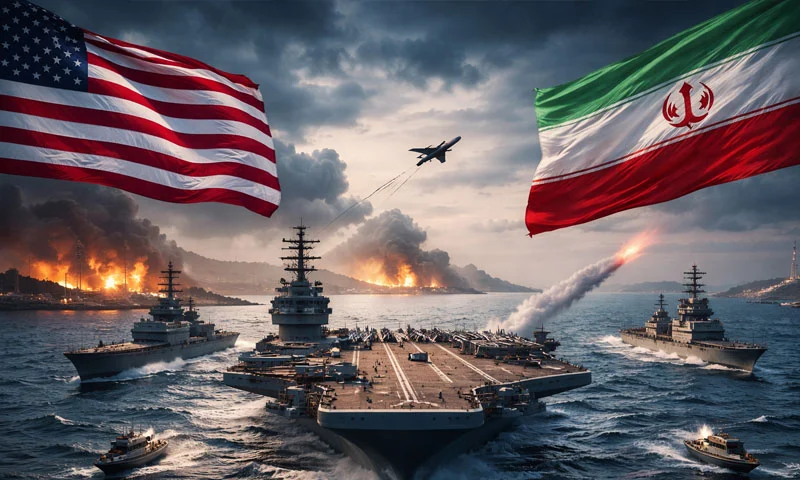
Tensions between the United States and the Islamic Republic of Iran have sharply increased in late January 2026, driven by renewed disputes over Iran’s nuclear program, continued internal unrest within Iran, and growing U.S. military pressure aimed at forcing Tehran back to negotiations. The escalation has raised serious concerns across the Middle East and beyond, with global powers closely watching developments due to their political, economic, and security stakes in the region. The Core Issue: Nuclear Program and Strategic Confrontation At the heart of the current standoff lies Iran’s nuclear program and Washington’s long-standing demand that Tehran permanently abandon any pathway toward nuclear weapons. The United States has reiterated that Iran must return to binding negotiations that impose strict and verifiable limits on its nuclear activities. President Donald Trump has publicly called on Iran to accept a new agreement focused on what he describes as a “no nuclear weapons” outcome, warning that failure to comply could result in military action. This nuclear dispute is not isolated. It is part of a broader strategic conflict that includes regional influence, sanctions enforcement, and long-running mistrust between the two countries following years of collapsed agreements and diplomatic disengagement. Human Rights Concerns and Domestic Unrest in Iran Alongside the nuclear issue, U.S. officials have cited Iran’s internal situation as a key concern. Washington has accused Iranian authorities of using excessive force against nationwide protests, with reports indicating large-scale civilian casualties. American leaders have linked these human rights concerns to their broader pressure strategy, arguing that Iran’s domestic conduct reflects its broader regional and international behavior. Tehran, however, rejects these accusations and views them as interference in its internal affairs. Military Build-Up and Pressure Tactics The escalation has been underscored by a visible U.S. military buildup in the Middle East. The United States has deployed a major naval carrier strike group, centered on the USS Abraham Lincoln, along with additional air and naval assets. Washington describes these deployments as defensive and deterrent in nature, intended to prevent regional instability. However, U.S. officials have also acknowledged that the military presence serves as leverage to push Iran toward negotiations. Iran has interpreted these moves as direct threats. In response, Tehran has conducted military exercises near the Strait of Hormuz and warned that any violation of its territorial waters would be met with force. Trump’s Position and Iran’s Rejection of Talks Under Threat President Trump has repeatedly stated that “time is running out” for diplomacy and that Iran must choose between negotiations and the risk of military confrontation. His administration has also expanded economic pressure, including new sanctions targeting Iranian oil shipments and related entities. Iran’s leadership has firmly rejected the idea of negotiating under coercion. Iranian officials have stated that no meaningful talks can occur in an environment dominated by military threats and economic punishment. Iran’s mission to the United Nations has warned that any U.S. attack would trigger a strong and unprecedented response. Potential Regional Consequences of a Military Conflict Analysts and regional officials warn that a U.S. attack on Iran could have far-reaching consequences. Iran maintains influence through allied groups and armed networks across Iraq, Syria, Lebanon, and Yemen. Any direct confrontation could therefore expand beyond Iran’s borders, increasing instability across the Middle East. The mere prospect of conflict has already heightened anxiety among regional governments, many of which fear being drawn into a wider confrontation. Global Oil Markets at Risk Iran remains a significant oil producer, with output estimated at over three million barrels per day. Rising tensions have already affected global energy markets, as traders factor in the risk of supply disruptions. A major concern is the Strait of Hormuz, a critical chokepoint through which a substantial portion of the world’s oil shipments pass. Any disruption to traffic through the strait could have immediate and severe consequences for global energy prices and economic stability. Reactions of Key Global Stakeholders China and Russia, both of which maintain strategic ties with Iran, have historically opposed unilateral military action by the United States. While neither has indicated support for a U.S. strike, both are expected to resist such action diplomatically and call for de-escalation. Pakistan, which seeks balanced relations with both Washington and Tehran, is unlikely to participate in any military action. However, a regional conflict could still affect Pakistan through economic pressures, energy price shocks, and potential refugee movements. Across the broader international community, calls for restraint and renewed diplomacy have grown louder. Several Gulf states have expressed concern that a full-scale conflict would destabilize the region and undermine economic and security interests. Outlook and Risks Ahead With diplomatic channels strained and military posturing intensifying, the current U.S.–Iran standoff represents one of the most serious escalations in recent years. The situation carries significant risks not only for the Middle East but also for global markets and international security. Whether the crisis moves toward renewed negotiations or further confrontation will likely depend on whether both sides find a way to reduce tensions without appearing to concede under pressure—a challenge that has repeatedly undermined past diplomatic efforts.

China Greenlights Nvidia H200 Chip Imports as Tech Demand Soars
China has taken a significant step in the global technology race by approving the first batch of Nvidia’s H200 artificial intelligence (AI) chips for import, according to multiple sources familiar with the matter. The approvals were granted during a visit to China by Nvidia CEO Jensen Huang, marking a notable shift in Beijing’s stance toward cutting-edge U.S. tech products. The H200, Nvidia’s second most powerful AI processor, delivers roughly six times the performance of the earlier H20 model — previously the most advanced AI chip allowed into China. This high computing power makes the H200 critical for large-scale AI workloads, including machine learning research, deep learning models and data centre operations. Chinese tech giants are expected to be the first beneficiaries of the nod. ByteDance, Alibaba and Tencent have reportedly received approvals for several hundred thousand H200 units, with additional companies now waiting for subsequent rounds of green lights. The approval comes after the U.S. government formally authorised exports of H200 chips to China earlier in January 2026. That decision reversed a long-standing ban on advanced AI chips, allowing Nvidia to seek sales in the lucrative Chinese market under certain conditions, including national security reviews and usage limitations. Until now, Chinese customs had blocked H200 shipments despite the U.S. export clearance, creating uncertainty for Nvidia and its supply chain. Chinese firms had already ordered more than two million H200 chips, far exceeding the company’s inventory, highlighting the scale of demand. Experts see the move as part of a broader balancing act by Beijing. On one hand, China wants to access top-tier AI hardware to support research and development and compete with global peers like OpenAI. On the other, the government remains committed to nurturing its own semiconductor industry, which has been growing quickly but still lags behind U.S. designs in many categories. Despite the clear demand, some observers note that import approvals come with conditions. Beijing is reportedly discussing rules that could require companies to purchase a proportion of domestically made chips alongside foreign imports, a move intended to protect local manufacturers. The approvals also occur amid political pushback in the United States. Some U.S. lawmakers have voiced concerns that exporting advanced AI technology could help China narrow the technology gap, with proposals under consideration to give Congress more oversight over AI chip exports. For now, China’s decision to allow the import of Nvidia’s H200 AI chips reflects a nuanced strategy — one that seeks to satisfy immense internal demand for AI capabilities while preserving momentum toward semiconductor self-sufficiency.
Record Snowfall Worldwide, From the U.S. to Pakistan — What Does It Mean for the Coming Summer?
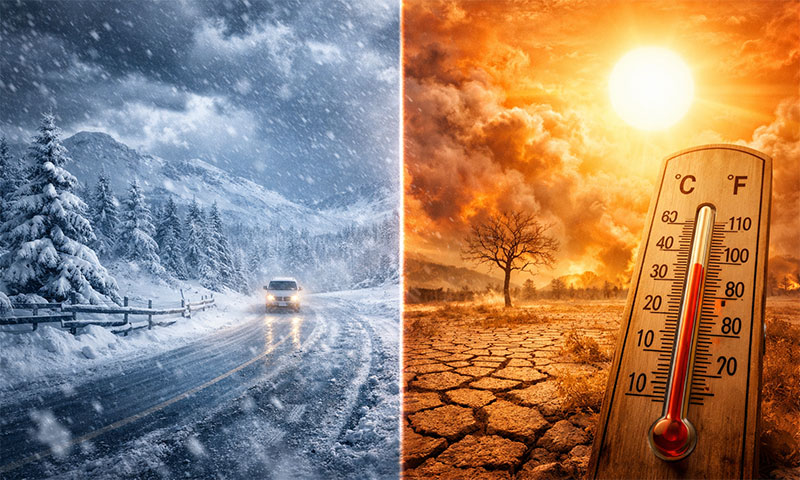
From North America and East Asia to South Asia, this winter has delivered unusually intense snowfall and prolonged cold, setting records and disrupting daily life across multiple regions. Countries including the United States, Japan and Russia have reported historic snow accumulation, while Pakistan’s northern areas and Balochistan have also experienced some of the heaviest snowfall in years — prompting renewed discussion among scientists about how climate change is reshaping weather extremes. In Pakistan, the impact has been particularly striking. Gilgit-Baltistan, upper Khyber Pakhtunkhwa and northern Balochistan have faced persistent snowstorms, road closures and freezing temperatures. Notably, Quetta and Abbottabad recorded widespread snowfall after many years, an event residents and local authorities described as rare فfor urban centres that have seen diminishing snow frequency over the past decade. The Pakistan Meteorological Department (PMD) said the snowfall was linked to strong westerly weather systems interacting with unusually cold air, warning that such intense winter episodes could occur even as long-term temperature trends continue upward. Heavy snowfall has affected Chitral, with over one foot of snow recorded in the town. Roads including the Lawari Tunne remain closed and power supply is disrupted. ❄️#Snowfall #Chitral #Pakistan pic.twitter.com/dKuANHmhRC— Chitral (@ChitralPK) January 23, 2026 A warming world — with sharper cold extremes Climate scientists stress that severe winters do not contradict global warming. According to the World Meteorological Organization (WMO), recent years remain among the warmest on record globally, despite episodes of extreme cold in some regions. WMO Secretary-General Celeste Saulo has said that rising global temperatures are increasing atmospheric moisture and energy, which can intensify weather systems of all kinds — including winter storms. “High land and ocean temperatures are contributing to more extreme weather events across the world,” the WMO noted in its latest global climate update. The Intergovernmental Panel on Climate Change (IPCC) explains that while cold extremes are decreasing overall, climate change is also linked to greater variability and volatility in weather patterns. This means regions can still experience short-lived but severe cold spells, especially when Arctic air masses are displaced southward. Why heavy snow can increase in some regions Scientists note that a warmer atmosphere can hold more moisture, which can lead to heavier precipitation. When temperatures remain below freezing, that moisture falls as snow rather than rain — producing intense snowfall events, even in a generally warming climate. This mechanism has been observed globally this winter — from record snowfalls in parts of Japan to widespread disruption across the United States — and was also evident in Pakistan’s recent snowstorms, particularly in Quetta, Ziarat, Abbottabad and the upper valleys of KP and Gilgit-Baltistan. What lies ahead: colder shocks, hotter summers While winters may still deliver sudden cold extremes, scientists warn that the bigger long-term shift is toward hotter and more dangerous summers. The IPCC projects that as global temperatures rise: Heatwaves will become more frequent and intense Cold spells will be less common but potentially more disruptive Energy demand, health risks and water stress will increase Climate researcher Samantha Burgess of the European Centre for Medium-Range Weather Forecasts (ECMWF), cited in WMO-linked assessments, has warned: “Every fraction of a degree matters. Even small increases in global temperature significantly raise the risk of extreme weather.” For Pakistan, experts say this means greater seasonal contrasts — harsher heatwaves in summer alongside sporadic but powerful winter systems. Urban centres not adapted to snow or extreme cold, such as Quetta and Abbottabad, may face growing infrastructure and public safety challenges. Japan: Today, Sapporo had the heaviest snowfall ever recorded for the month of January.pic.twitter.com/CD9amYLhDE— Volcaholic 🌋 (@volcaholic1) January 25, 2026 Human impact and adaptation Across Pakistan, recent snowfall has already affected transport, water supply and tourism, while freezing temperatures damaged pipelines and left remote communities temporarily cut off. Authorities and climate analysts agree that adapting infrastructure and disaster preparedness to both heat and cold extremes is becoming increasingly urgent. The WMO has repeatedly warned that climate change is no longer a future risk but a present reality, urging governments to strengthen early-warning systems and resilience planning.
Monster Winter Storm Paralyzes U.S. Travel, Triggers Widespread Blackouts and Emergency Declarations
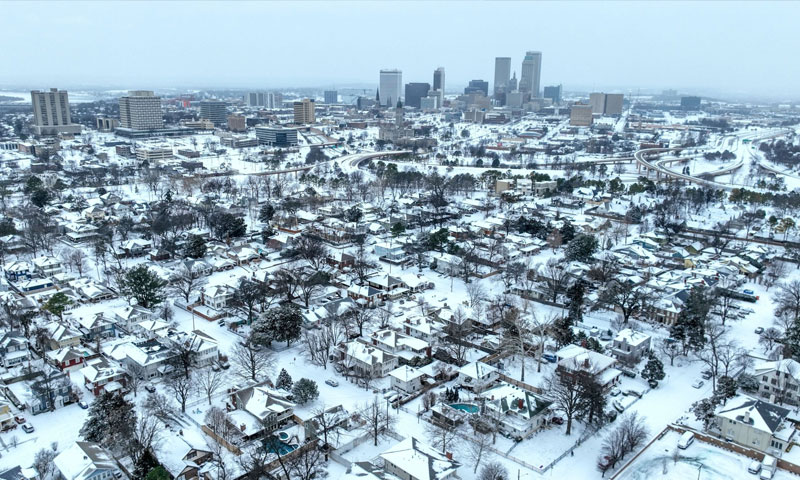
A powerful winter storm sweeping across large parts of the United States has triggered widespread disruption, forcing the cancellation of thousands of flights and knocking out electricity to hundreds of thousands of homes as dangerously cold weather advances eastward. More than 4,000 flights were cancelled on Saturday, with disruptions expected to worsen as the storm spreads across the eastern two-thirds of the country. By early Sunday, power outages had already affected over 230,000 customers, stretching as far west as Texas, according to outage monitoring data. Weather forecasters warned that a combination of heavy snow, sleet, freezing rain and extreme cold would persist through Sunday and into the coming week, raising the risk of prolonged travel disruption and infrastructure strain. Describing the storm system as “historic,” U.S. President Donald Trump approved federal emergency disaster declarations for multiple states, including South Carolina, Virginia, Tennessee, Georgia, North Carolina, Maryland, Arkansas, Kentucky, Louisiana, Mississippi, Indiana and West Virginia. “We will continue to monitor and stay in touch with all states in the path of this storm,” Trump said in a social media post, urging Americans to remain safe and prepared. Widespread Emergency Declarations and Power Concerns At least 17 states and Washington, D.C. declared weather emergencies, according to the Department of Homeland Security (DHS). DHS Secretary Kristi Noem said tens of thousands of people across southern states were without power as utility crews raced to restore service. The hardest-hit states included Louisiana, Mississippi, Texas, Tennessee and New Mexico, where outages continued to rise into Sunday. https://x.com/dwnews/status/1876253635744514424 To prevent grid failures, the U.S. Department of Energy (DOE) issued emergency orders allowing grid operators in Texas and the mid-Atlantic region to deploy backup power resources, including at data centers and major facilities, even if doing so exceeded normal regulatory limits. Airlines and Airports Brace for Continued Disruptions Airlines across the country scrambled to adjust schedules as conditions deteriorated. By late Saturday night, more than 9,400 additional flights scheduled for Sunday had already been cancelled, according to flight-tracking data. Major carriers warned passengers to expect abrupt changes. Delta Air Lines reported further cancellations across Atlanta and the East Coast, while relocating cold-weather specialists to assist de-icing operations at southern airports. JetBlue said it had cancelled about 1,000 flights through Monday, while United Airlines confirmed it had proactively grounded flights in areas forecast to receive the worst conditions. Images from affected airports showed de-icing crews working around the clock as ice and snow accumulated on aircraft. Forecast Warns of “Crippling” Conditions The National Weather Service warned that the storm could bring widespread and long-lasting ice accumulation across the Southeast, where even moderate icing can lead to what forecasters described as “crippling to locally catastrophic impacts.” Meteorologists also warned that record-low temperatures and dangerous wind chills could push further into the Great Plains by Monday, increasing risks to public safety. Officials urged residents to stock up on food and fuel, limit travel where possible, and prepare for prolonged outages as the storm continues to move east.

TikTok Escapes US Ban After ByteDance Seals American-Led Ownership Deal
TikTok’s Chinese parent company, ByteDance, announced on Thursday that it has finalized a landmark agreement to create a new joint venture that will place TikTok’s US operations under majority American ownership, a move aimed at preventing a nationwide ban on the app used by more than 200 million Americans. The agreement marks a major turning point in TikTok’s long-running standoff with Washington, which began in August 2020 when then-President Donald Trump first attempted to block the platform over national security concerns tied to data privacy and Chinese ownership. Although US lawmakers passed legislation in April 2024 requiring ByteDance to divest TikTok’s US assets by January 2025 or face a ban — a law later upheld by the Supreme Court — Trump ultimately chose not to enforce the measure after negotiations over a restructuring deal gained momentum. Under the finalized arrangement, a new entity named TikTok USDS Joint Venture LLC will oversee the protection of US user data, content moderation systems, and recommendation algorithms through enhanced cybersecurity and privacy safeguards. ByteDance shared limited details about the divestiture but confirmed that American and global investors will collectively own 80.1% of the venture, while ByteDance will retain a 19.9% minority stake. Three managing investors — cloud technology firm Oracle, private equity giant Silver Lake, and Abu Dhabi-based investment company MGX — will each hold a 15% share. Trump welcomed the agreement in a social media post, claiming TikTok “will now be owned by a group of Great American Patriots and Investors, the biggest in the world.” He also publicly thanked Chinese President Xi Jinping for approving the deal, saying cooperation from Beijing was critical to its completion. A White House official confirmed to Reuters that both the US and Chinese governments had signed off on the arrangement. The Chinese Embassy in Washington declined to comment. The new venture will operate TikTok’s US app, according to the White House, while handling backend services related to user data and algorithm security. The recommendation algorithm will be retrained and tested exclusively using US user data and will be stored within Oracle’s US-based cloud infrastructure. TikTok said the venture’s investor group also includes the Dell Family Office — linked to Dell Technologies founder Michael Dell — along with Vastmere Strategic Investments, Alpha Wave Partners, Revolution, Merritt Way, Via Nova, Virgo LI, and NJJ Capital. Former TikTok USDS executive Adam Presser has been appointed chief executive officer of the new venture, while Will Farrell will serve as chief security officer. TikTok CEO Shou Chew will join the board, continuing to oversee the platform’s global strategy. Trump, who has more than 16 million followers on TikTok, has previously credited the app with helping him secure reelection. According to a photo published by the New York Times, TikTok executives presented Trump with internal data highlighting his popularity on the platform in December. The White House itself launched an official TikTok account last August. Earlier reports had indicated that while ByteDance would retain control over revenue-generating businesses such as advertising and e-commerce, operational control over US data, content moderation, and algorithms would shift to the American-led venture. The new entity will earn a share of revenue in exchange for providing technology and data security services.
History, Rules, and Reality: What Past Nobel Medal Gifts Reveal About Trump’s Case
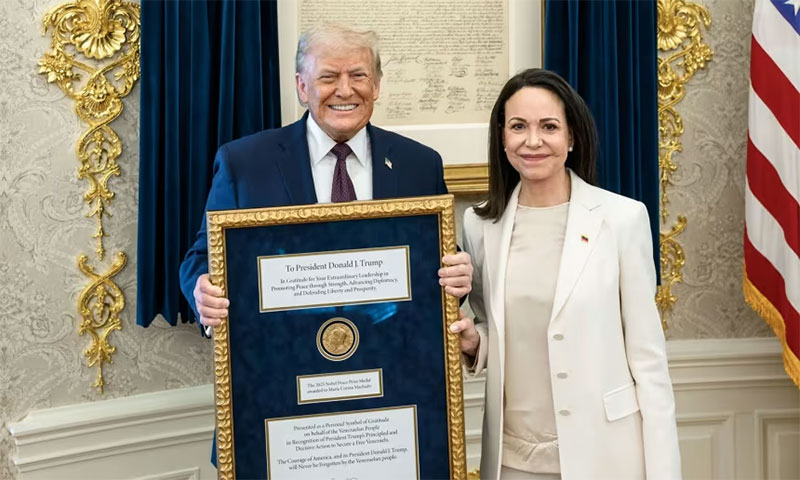
The decision by Venezuelan opposition leader and María Corina Machado, the 2025 Nobel Peace Prize laureate, to present her Nobel Peace Prize medal to Donald Trump during a White House meeting has ignited international debate over the limits of symbolism, the rules governing the Nobel Prize, and the ethical weight of such gestures. Machado handed over the gold medal during a meeting with Trump on January 15, describing it as a personal token of gratitude. Trump accepted the medal and publicly thanked her, calling it a gesture of “mutual respect,” according to international media reports. What the Nobel authorities say The Norwegian Nobel Committee moved quickly to clarify the institutional position. In a statement carried by Reuters, the committee stressed that while a laureate is free to dispose of the physical items associated with the prize — including the medal, diploma, and prize money — the Nobel Peace Prize itself cannot be transferred. “Regardless of what may happen to the medal, the diploma, or the prize money, it is and remains the original laureate who is recorded in history as the recipient of the prize,” the committee said. The Nobel Peace Center echoed that stance, noting that although a medal can change hands, the title of Nobel Peace Prize laureate remains permanently linked to the person selected by the committee. Rare, but not without precedent While the episode is highly unusual, Nobel historians note that it is not the first time a Nobel medal has changed ownership. One of the most controversial examples dates back to 1943, when Swedish writer Knut Hamsun gave his Nobel Prize in Literature medal to Nazi propaganda minister Joseph Goebbels. More recently, Nobel Peace Prize laureate Dmitry Muratov auctioned his medal in 2022 to raise funds for Ukrainian refugee children, while the family of former UN secretary-general Kofi Annan donated his Nobel medal to the United Nations’ Geneva office in 2024. What sets the current case apart, analysts say, is the explicit political symbolism of handing the medal to a sitting U.S. president during an official visit. Ethical criticism in Norway The move drew sharp criticism from Norwegian political figures and academics. Janne Haaland Matlary, a professor at the University of Oslo and former politician, described the act as “completely unheard of” in comments to Norway’s public broadcaster NRK. She argued that while the gesture may be legally permissible, it showed “a lack of respect for the award itself.” Other Norwegian commentators, quoted by international media, called the episode “absurd” and warned that such acts risk politicizing a prize intended to recognize independent efforts for peace. Trump’s response Ahead of the meeting, Trump told reporters that Machado — not himself — was the Nobel Peace Prize winner, pushing back against any suggestion that the gesture made him a laureate. After accepting the medal, he publicly thanked Machado but did not claim the Nobel title. Legal bottom line According to the Nobel Foundation’s statutes and the committee’s clarification, the rules are clear: A Nobel laureate may give away, sell, or donate the physical medal. The Nobel Peace Prize itself cannot be transferred, shared, or reassigned. The official historical record remains unchanged, with Machado listed as the sole laureate. As the controversy continues, the Nobel institutions have sought to draw a firm line between symbolic gestures and formal recognition, underlining that while medals may travel, the Nobel Prize — in law and in history — does not.
Gaza After the War: Trump Assembles US-Led Board, Appoints Blair and Military Chief
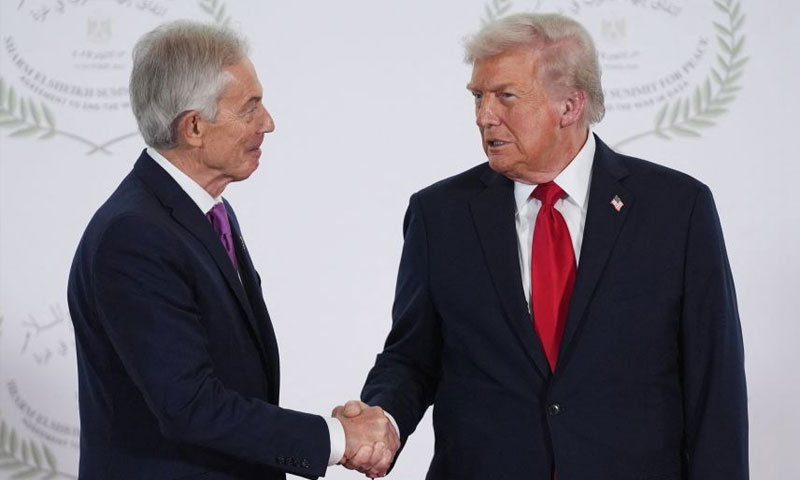
US President Donald Trump has appointed former British prime minister Tony Blair to a prominent role in a new US-backed plan for post-war Gaza, while naming a senior American military officer to lead a proposed international security force in the devastated Palestinian territory. The White House said on Friday that Trump had finalized the membership of a newly created “Board of Peace,” a body dominated by Americans that will oversee Gaza’s reconstruction, governance planning, and economic revival following more than two years of intense Israeli bombardment. Trump, who has declared himself chair of the board, said its mandate will include governance capacity-building, regional diplomacy, reconstruction planning, investment attraction, and large-scale capital mobilisation for Gaza. Alongside Blair, the board includes Trump’s son-in-law Jared Kushner, US Secretary of State Marco Rubio, and Trump’s longtime associate and special envoy Steve Witkoff. Other members named to the board are Ajay Banga, billionaire financier Marc Rowan, and Robert Gabriel, a close Trump aide serving on the National Security Council. Blair’s controversial return to Middle East diplomacy Blair’s appointment is likely to prove contentious across the Middle East, where he remains a divisive figure due to his role in the 2003 US-led invasion of Iraq. Trump acknowledged last year that Blair’s involvement would need to be “acceptable to everybody.” After leaving office in 2007, Blair spent several years working on Israeli-Palestinian diplomacy as a representative of the Middle East Quartet, which included the United Nations, the European Union, the United States, and Russia. Parallel Palestinian governance talks in Cairo The US announcement came as a Palestinian technocratic committee intended to help govern Gaza held its first meeting in Cairo. The gathering was attended by Kushner and international envoys, including Nickolay Mladenov, who has been appointed as a high representative to liaise between the Palestinian committee and Trump’s Board of Peace. Gaza native Ali Shaath, a former deputy minister in the Palestinian Authority, has been selected to head the governing committee. Members said they hope to travel to Gaza in the coming weeks to begin on-the-ground work, security permitting. Security force to replace Hamas policing Trump also named Jasper Jeffers, a US Major General from Central Command’s special operations forces, to lead a newly proposed International Stabilisation Force. The force is expected to provide security in Gaza and help train a new local police service intended to replace Hamas-run security structures. Jeffers previously oversaw monitoring of a ceasefire between Israel and Lebanon in late 2024, a role that involved managing periodic violations linked to Hezbollah activity. US officials said Washington is seeking international partners to contribute troops, with Indonesia emerging as an early volunteer. However, diplomats cautioned that persuading countries to deploy forces may prove difficult unless Hamas agrees to fully disarm. Ceasefire strains and Israeli strikes The announcement came as Israel’s military confirmed fresh strikes on Gaza on Friday, citing what it described as a “blatant violation” of the ceasefire declared in October. The strikes occurred despite US statements that the Gaza plan had moved into a second phase, shifting focus from halting hostilities to disarming Hamas. Advisory board and regional tensions Trump also announced a secondary executive advisory board, which will include Blair, Witkoff, Mladenov, and Hakan Fidan. Israel has rejected any Turkish role in the security force, citing President Recep Tayyip Erdogan’s sharp criticism of Israel’s actions in Gaza. Senior representatives from Egypt, Qatar, and the United Arab Emirates—all key regional mediators—will also sit on the advisory body. The UAE normalised relations with Israel in 2020 under the US-brokered Abraham Accords. Despite strained relations with the United Nations, Trump also named Sigrid Kaag, the UN’s humanitarian coordinator for Gaza, to the board.
Trump Warns Protesters With the Military — How Often Has a US President Done This Before?
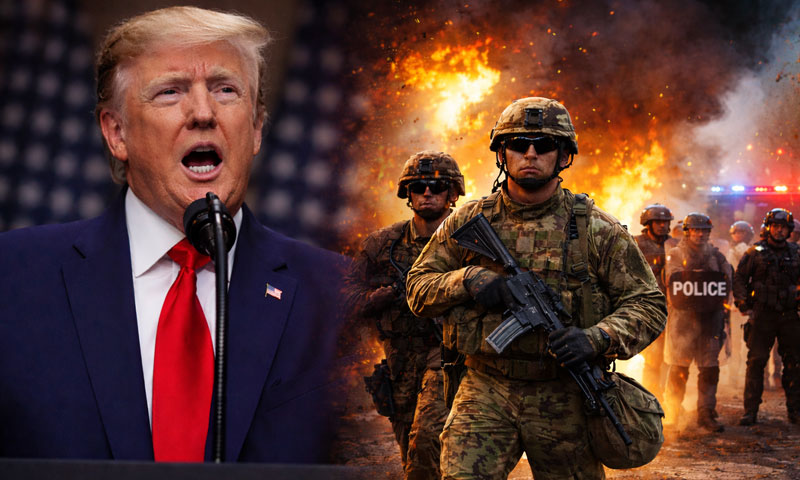
President Donald Trump has again ignited controversy after warning that he could deploy the US military to deal with protests in Minnesota targeting Immigration and Customs Enforcement (ICE). The remarks, made amid escalating demonstrations, revive a question that has followed Trump throughout his political career: how often has he threatened to use force against Americans—and how unusual is this in US history? Trump’s latest warning centres on the Insurrection Act, a centuries-old statute that allows a sitting president to deploy federal troops inside the United States to suppress rebellion or enforce federal law when state authorities are deemed unable or unwilling to act. Trump’s Record: Repeated Threats, Rare Use During his first term, Trump repeatedly raised the prospect of military intervention against domestic unrest. In 2020, amid nationwide protests following the killing of George Floyd, Trump publicly urged governors to “dominate the streets” and said he was prepared to invoke the Insurrection Act if states failed to restore order. Although active-duty troops were placed on standby near Washington, the Act was never formally invoked. Since returning to office, Trump has again turned to similar rhetoric. Protests linked to immigration enforcement, federal policing, and internal security have prompted warnings that federal troops could be deployed if local authorities resist or fail to act. The Minnesota protests represent the latest instance where Trump has threatened military involvement without yet taking the formal legal step required to do so. Legal scholars note that while Trump has frequently discussed the Insurrection Act, no US president has invoked it primarily to suppress political protest without state consent in modern times. When Other Presidents Actually Used Force Historically, US presidents have used military force domestically—but usually under narrow circumstances. George H. W. Bush invoked the Insurrection Act in 1992 at the request of California’s governor during the Los Angeles riots following the Rodney King verdict. Federal troops were deployed after local authorities were overwhelmed. During the civil rights era, Dwight D. Eisenhower, John F. Kennedy, and Lyndon B. Johnson used federal troops or nationalised the National Guard to enforce court-ordered desegregation and protect Black Americans from violent resistance. These actions were framed as enforcement of constitutional rights rather than suppression of dissent. Earlier presidents, including Abraham Lincoln, also used military power internally during periods of rebellion or civil war, but those cases predate modern democratic norms and legal safeguards. What Makes Trump Different What distinguishes Trump from many of his predecessors is not actual deployment, but the frequency and public nature of his threats. Experts argue that repeatedly raising the prospect of military force against civilians—even without invoking it—can have a chilling effect on democratic protest and civil liberties. Unlike past presidents who acted after state requests or court orders, Trump’s warnings have often come in direct response to political demonstrations against federal policy. This has prompted concerns from constitutional scholars and civil rights groups about the normalisation of military rhetoric in domestic governance. A Pattern, Not an Isolated Moment Trump’s Minnesota remarks do not stand alone. They reflect a broader pattern in which military force is positioned as a solution to internal political dissent. While the Insurrection Act remains unused—for now—the repeated threats themselves mark a significant shift in how presidential power is discussed in public life. As protests continue, the central question remains whether such warnings will remain rhetorical—or whether the United States could once again see troops deployed on its own streets.

Immigrant Visas on Hold: What the US Visa Pause Means for Pakistan and Other Countries
The United States has temporarily halted the issuance of immigrant visas for citizens of 75 countries, including Pakistan, as part of a sweeping review of immigration policy ordered by President Donald Trump. The suspension took effect on January 21, according to the United States Department of State. In a statement released on Thursday, the State Department said the move is linked to an ongoing assessment of whether immigration pathways are aligned with the administration’s emphasis on economic self-reliance. Officials said the review aims to ensure that new permanent residents do not become dependent on public assistance programs in the United States. As part of the policy, immigrant visa processing for applicants from countries identified as “high-risk” has been paused. While applicants may continue to file paperwork and appear for scheduled interviews, no immigrant visas — which grant permanent residency — will be issued until the review is completed. The State Department said the pause will remain in place until authorities are satisfied that immigration screening mechanisms adequately prevent what it described as excessive reliance on welfare benefits by incoming migrants. No specific timeline was provided for when visa issuance may resume. Among the affected countries are Pakistan, Afghanistan, Bangladesh, Iran, Iraq, Egypt, Nigeria, Somalia, Russia, Brazil, and Thailand, along with dozens of others spanning Asia, Africa, the Middle East, Europe, and Latin America. Officials clarified that the suspension does not apply to tourist, student, or other non-immigrant visas. Previously approved immigrant visas will also remain valid, and dual nationals applying with passports from countries not included in the list are exempt from the freeze. The move reflects a broader tightening of US immigration policy under Trump’s second term. Since returning to office, the administration has reinstated and expanded enforcement of the “public charge” rule, a provision of US immigration law that allows officials to deny entry to individuals deemed likely to depend on government benefits. Trump pursued similar measures during his first presidency, including travel restrictions on several Muslim-majority countries — policies that faced extensive legal challenges before being upheld in revised form and later overturned by former president Joe Biden. The visa pause comes as immigration enforcement within the United States has also intensified. The agency Immigration and Customs Enforcement has expanded operations across multiple states, drawing public and political scrutiny. Tensions escalated last week after a US citizen, Renee Good, was fatally shot during a federal operation in Minneapolis, triggering protests and renewed debate over enforcement practices under the current administration.
