

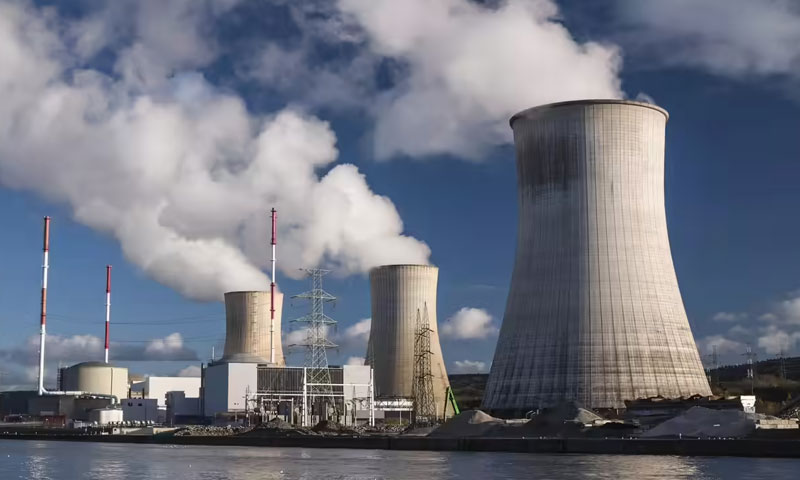
Japan on Wednesday restarted the world’s largest nuclear power plant for the first time since the 2011 Fukushima disaster, a move that has reignited public anxiety and protests despite government assurances over safety. The restart of a reactor at the Kashiwazaki-Kariwa nuclear facility marks a significant milestone in Tokyo’s push to revive atomic energy after more than a decade of shutdowns following the country’s worst nuclear accident. The plant was brought back online at 7:02 pm local time, a spokesperson for Tokyo Electric Power Company (TEPCO) confirmed. Located in Niigata prefecture along the Sea of Japan coast, Kashiwazaki-Kariwa is the largest nuclear power complex in the world by potential generating capacity, although only one of its seven reactors has been restarted. The move follows approval by the regional governor last month, but public opinion in the area remains deeply divided. A survey conducted in September showed that around 60 per cent of residents oppose the restart, while just 37 per cent support it. On Tuesday, dozens of protesters — many of them elderly — gathered outside the plant in freezing conditions, voicing concerns over safety and evacuation plans. “It’s Tokyo’s electricity that is produced here, so why should the people of this region be put at risk?” said 73-year-old resident Yumiko Abe. “That makes no sense.” TEPCO said it would proceed cautiously, stressing that safety checks would continue even after the restart. The company pledged to “carefully verify the integrity of each facility and respond to any issues in an appropriate and transparent manner.” The Kashiwazaki-Kariwa facility was shut down in 2011 after a massive earthquake and tsunami triggered meltdowns at the Fukushima Daiichi Nuclear Power Plant, prompting Japan to suspend all nuclear reactors nationwide. Since then, only 14 reactors — mostly in western and southern Japan — have resumed operations under stringent safety regulations, with 13 currently running. Kashiwazaki-Kariwa is the first TEPCO-operated nuclear plant to restart since the Fukushima disaster. The utility also manages the crippled Fukushima Daiichi site, which remains under decommissioning — a process expected to take several decades. Opposition groups argue that serious risks remain. Residents point to the plant’s location near an active seismic fault line and recall a powerful earthquake that struck the area in 2007. Earlier this month, seven anti-nuclear groups submitted a petition signed by nearly 40,000 people to TEPCO and Japan’s Nuclear Regulation Authority, warning that evacuation during a major emergency would be nearly impossible. “I don’t think evacuation can realistically happen if something goes wrong,” said Chie Takakuwa, a 79-year-old resident of nearby Kariwa. Another protester, 81-year-old Keisuke Abe, said restarting the plant was “absolutely unacceptable” while Fukushima’s crisis remains unresolved. Although the facility has been upgraded with a 15-metre-high tsunami wall, elevated emergency power systems and other safeguards, critics remain wary. TEPCO has faced repeated criticism in recent years over safety lapses and data-handling issues, including a recent alarm failure during testing at the Kashiwazaki-Kariwa site. Japan’s renewed embrace of nuclear energy is driven by broader policy goals. Resource-poor Japan is seeking to cut its heavy dependence on imported fossil fuels, meet rising electricity demand — including from artificial intelligence technologies — and achieve carbon neutrality by 2050. Prime Minister Sanae Takaichi has publicly backed the expansion of nuclear power. In 2023, nearly 70 per cent of Japan’s electricity came from coal, gas and oil. Under a government-approved energy plan, that share is expected to fall to 30–40 per cent over the next 15 years, while nuclear power is projected to account for around 20 per cent of the country’s energy mix by 2040, up from about 8.5 per cent in fiscal year 2023–24.
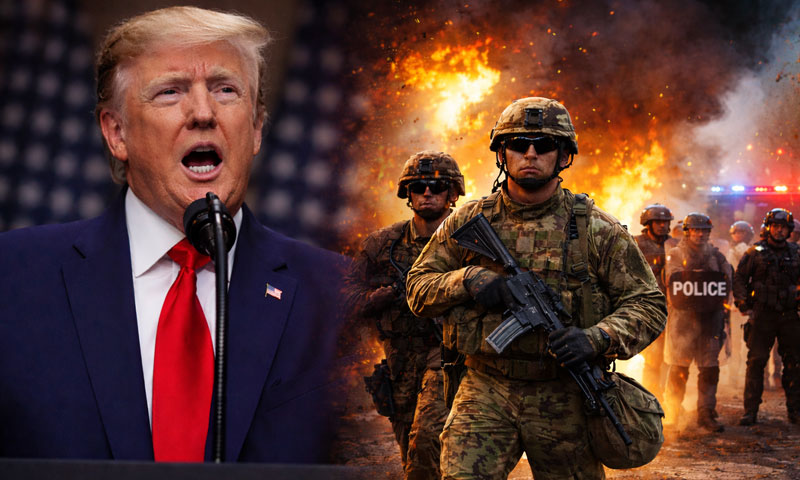
Trump Warns Protesters With the Military — How Often Has a US President Done This Before?
President Donald Trump has again ignited controversy after warning that he could deploy the US military to deal with protests in Minnesota targeting Immigration and Customs Enforcement (ICE). The remarks, made amid escalating demonstrations, revive a question that has followed Trump throughout his political career: how often has he threatened to use force against Americans—and how unusual is this in US history? Trump’s latest warning centres on the Insurrection Act, a centuries-old statute that allows a sitting president to deploy federal troops inside the United States to suppress rebellion or enforce federal law when state authorities are deemed unable or unwilling to act. Trump’s Record: Repeated Threats, Rare Use During his first term, Trump repeatedly raised the prospect of military intervention against domestic unrest. In 2020, amid nationwide protests following the killing of George Floyd, Trump publicly urged governors to “dominate the streets” and said he was prepared to invoke the Insurrection Act if states failed to restore order. Although active-duty troops were placed on standby near Washington, the Act was never formally invoked. Since returning to office, Trump has again turned to similar rhetoric. Protests linked to immigration enforcement, federal policing, and internal security have prompted warnings that federal troops could be deployed if local authorities resist or fail to act. The Minnesota protests represent the latest instance where Trump has threatened military involvement without yet taking the formal legal step required to do so. Legal scholars note that while Trump has frequently discussed the Insurrection Act, no US president has invoked it primarily to suppress political protest without state consent in modern times. When Other Presidents Actually Used Force Historically, US presidents have used military force domestically—but usually under narrow circumstances. George H. W. Bush invoked the Insurrection Act in 1992 at the request of California’s governor during the Los Angeles riots following the Rodney King verdict. Federal troops were deployed after local authorities were overwhelmed. During the civil rights era, Dwight D. Eisenhower, John F. Kennedy, and Lyndon B. Johnson used federal troops or nationalised the National Guard to enforce court-ordered desegregation and protect Black Americans from violent resistance. These actions were framed as enforcement of constitutional rights rather than suppression of dissent. Earlier presidents, including Abraham Lincoln, also used military power internally during periods of rebellion or civil war, but those cases predate modern democratic norms and legal safeguards. What Makes Trump Different What distinguishes Trump from many of his predecessors is not actual deployment, but the frequency and public nature of his threats. Experts argue that repeatedly raising the prospect of military force against civilians—even without invoking it—can have a chilling effect on democratic protest and civil liberties. Unlike past presidents who acted after state requests or court orders, Trump’s warnings have often come in direct response to political demonstrations against federal policy. This has prompted concerns from constitutional scholars and civil rights groups about the normalisation of military rhetoric in domestic governance. A Pattern, Not an Isolated Moment Trump’s Minnesota remarks do not stand alone. They reflect a broader pattern in which military force is positioned as a solution to internal political dissent. While the Insurrection Act remains unused—for now—the repeated threats themselves mark a significant shift in how presidential power is discussed in public life. As protests continue, the central question remains whether such warnings will remain rhetorical—or whether the United States could once again see troops deployed on its own streets.
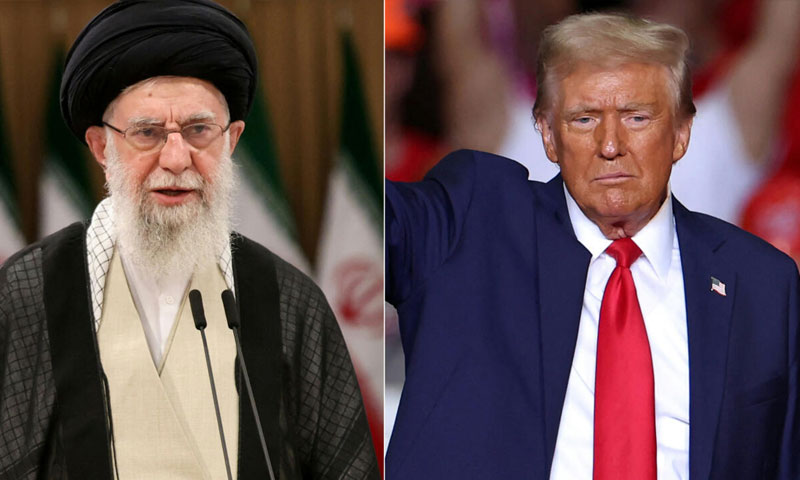
Khamenei Blames Iran Unrest on US Influence, Warns of Tougher Crackdown
Iran’s Supreme Leader Ayatollah Ali Khamenei on Friday signalled a harder line against ongoing anti-government protests, accusing demonstrators of acting in the interests of foreign powers — particularly the United States — as unrest persisted across several Iranian cities under a sweeping communications blackout. In a short address broadcast on state television, the 86-year-old leader said some protesters were “destroying their own streets to please the president of another country,” a clear reference to Donald Trump. Responding to chants of “Death to America” from the audience, Khamenei warned that the Islamic Republic would not tolerate individuals he described as “mercenaries” working on behalf of external forces. Khamenei also lashed out at Trump directly, urging him to focus on domestic challenges in the United States rather than commenting on Iran’s internal affairs. Iranian officials have repeatedly accused Washington, Israel, and their allies of encouraging instability inside the country. Defiant Rhetoric and Historical Warnings Striking a defiant tone, Khamenei dismissed what he described as threats from Trump, drawing comparisons with historical figures he said were removed from power despite their dominance. He named Pharaoh, Nimrod, Reza Khan, and Mohammad Reza Pahlavi as examples of rulers who, he claimed, fell at the height of their authority — adding that Trump would meet a similar fate. The remarks underscored the leadership’s determination to frame the unrest as a foreign-backed plot rather than a domestic uprising. Protests Continue Despite Blackout The true scale of the demonstrations remains difficult to verify due to extensive internet shutdowns and restrictions on international phone services. However, the unrest is widely seen as the most serious challenge to Iran’s leadership in several years. The protests began on December 28 over rising prices, unemployment, and economic hardship. Since then, they have evolved into broader expressions of political anger, with demonstrators openly challenging the ruling system. Exiled Royal Figure Reappears in Public Discourse The protests have also revived debate over the influence of exiled crown prince Reza Pahlavi, who has urged Iranians to sustain demonstrations. Some rallies reportedly featured chants supporting the former shah — a taboo act in the past that once carried severe punishment — highlighting the depth of public frustration. Scenes of Unrest and Official Response Short video clips shared by activists online showed crowds chanting anti-government slogans around bonfires, with debris scattered across streets in Tehran and other cities. State media later acknowledged the unrest but blamed what it called “terrorist elements” linked to the US and Israel for setting fires and inciting violence, reporting casualties without providing details. Despite official warnings and an increased security presence, protesters were reported to have continued marching into Friday morning, defying authorities as international scrutiny of Iran’s response intensified.
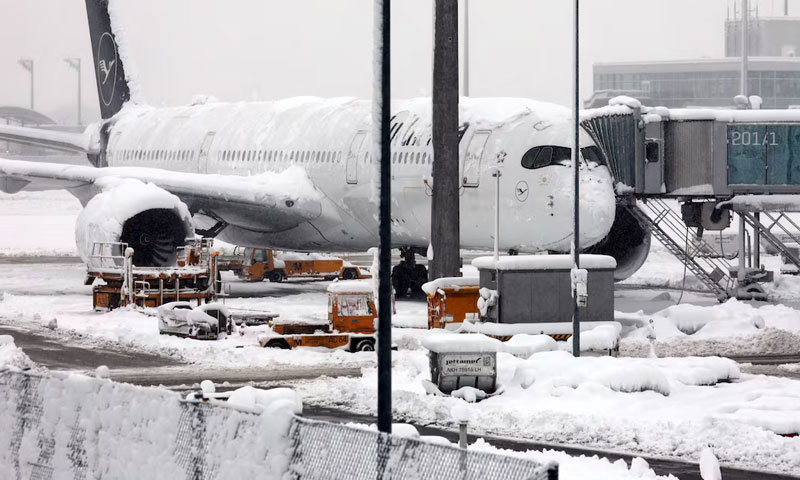
Deadly Cold Snap Hits Europe: Six Dead, More Than 600 Flights Grounded
A powerful winter cold snap has swept across large parts of Europe, leaving at least six people dead and causing widespread disruption to travel, power supplies, and daily life. Heavy snowfall, freezing rain, and dangerously low temperatures forced the cancellation of hundreds of flights and stranded thousands of passengers at major transport hubs, including Paris and Amsterdam. Air travel was hit especially hard. More than 600 flights were cancelled at Amsterdam’s Schiphol airport in a single day as crews struggled to clear runways and de-ice aircraft. In Paris, authorities announced plans to cancel around 40% of flights at Charles de Gaulle airport, with further reductions at Orly, in an effort to keep operations safe amid persistent ice and snow. ❄️ Europe Travel Disruptions Intensify ❄️ A worsening cold snap is set to bring heavier snowfall across Europe, leading to more flight cancellations, delayed trains, and blocked roads in the coming days. ✈️ KLM has confirmed the cancellation of 600 flights at Amsterdam Schiphol… pic.twitter.com/GcdMZ334Tr — AirNav Radar (@AirNavRadar) January 6, 2026 France recorded the highest death toll, with five people killed in weather-related incidents. In the southwestern Landes region, icy roads caused multiple collisions, killing three people and injuring at least 15 others. Two more fatalities were reported in the Paris region. One driver died after crashing into a heavy goods vehicle, while a taxi driver lost control on a snow-covered road, plunging into the Marne River. The passenger survived but was treated for hypothermia. French authorities placed 38 districts under an “orange” alert for snow and black ice, warning of extremely hazardous driving conditions. Rail services were also disrupted, with numerous cancellations and delays, including high-speed connections between Paris and Amsterdam. Further southeast, the Balkans faced severe conditions as heavy snow and rain swelled rivers and brought transport to a standstill. In Sarajevo, a woman was killed when a tree branch, weighed down by thick, wet snow, fell on her. Power and water outages were reported in parts of Serbia, Croatia, and Montenegro, highlighting the broader strain on infrastructure. KLM CANCELS HUNDREDS OF FLIGHTS AS DE-ICING FLUID SUPPLY CRISIS HITS SCHIPHOL Since Friday, January 2, KLM has been de-icing aircraft around the clock at Amsterdam Schiphol, using about 85,000 liters of fluid daily amid severe winter weather in Europe. Persistent snowfall,… pic.twitter.com/VEFVv9ZZ6Y — Turbine Traveller (@Turbinetraveler) January 6, 2026 Elsewhere, Germany braced for more snow as temperatures in some regions dropped below –10°C, while the UK experienced its coldest night of the winter so far, triggering school closures and transport chaos. Italy and Spain also saw unusual winter scenes, from flooded rivers to snowfall during public events. Weather services warn that disruptions are likely to continue for several days, with more snow and freezing temperatures forecast across much of northern and western Europe.
