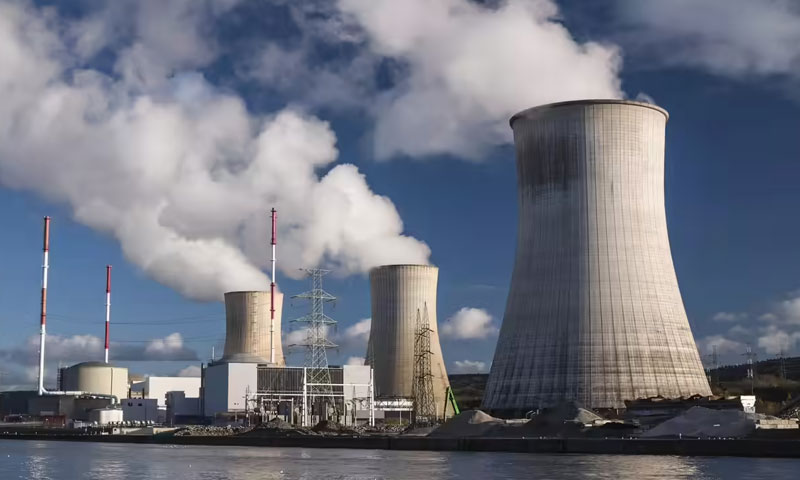
Japan on Wednesday restarted the world’s largest nuclear power plant for the first time since the 2011 Fukushima disaster, a move that has reignited public anxiety and protests despite government assurances over safety. The restart of a reactor at the Kashiwazaki-Kariwa nuclear facility marks a significant milestone in Tokyo’s push to revive atomic energy after more than a decade of shutdowns following the country’s worst nuclear accident.
The plant was brought back online at 7:02 pm local time, a spokesperson for Tokyo Electric Power Company (TEPCO) confirmed. Located in Niigata prefecture along the Sea of Japan coast, Kashiwazaki-Kariwa is the largest nuclear power complex in the world by potential generating capacity, although only one of its seven reactors has been restarted.
The move follows approval by the regional governor last month, but public opinion in the area remains deeply divided. A survey conducted in September showed that around 60 per cent of residents oppose the restart, while just 37 per cent support it.
On Tuesday, dozens of protesters — many of them elderly — gathered outside the plant in freezing conditions, voicing concerns over safety and evacuation plans. “It’s Tokyo’s electricity that is produced here, so why should the people of this region be put at risk?” said 73-year-old resident Yumiko Abe. “That makes no sense.”
TEPCO said it would proceed cautiously, stressing that safety checks would continue even after the restart. The company pledged to “carefully verify the integrity of each facility and respond to any issues in an appropriate and transparent manner.”
The Kashiwazaki-Kariwa facility was shut down in 2011 after a massive earthquake and tsunami triggered meltdowns at the Fukushima Daiichi Nuclear Power Plant, prompting Japan to suspend all nuclear reactors nationwide. Since then, only 14 reactors — mostly in western and southern Japan — have resumed operations under stringent safety regulations, with 13 currently running.
Kashiwazaki-Kariwa is the first TEPCO-operated nuclear plant to restart since the Fukushima disaster. The utility also manages the crippled Fukushima Daiichi site, which remains under decommissioning — a process expected to take several decades.
Opposition groups argue that serious risks remain. Residents point to the plant’s location near an active seismic fault line and recall a powerful earthquake that struck the area in 2007. Earlier this month, seven anti-nuclear groups submitted a petition signed by nearly 40,000 people to TEPCO and Japan’s Nuclear Regulation Authority, warning that evacuation during a major emergency would be nearly impossible.
“I don’t think evacuation can realistically happen if something goes wrong,” said Chie Takakuwa, a 79-year-old resident of nearby Kariwa. Another protester, 81-year-old Keisuke Abe, said restarting the plant was “absolutely unacceptable” while Fukushima’s crisis remains unresolved.
Although the facility has been upgraded with a 15-metre-high tsunami wall, elevated emergency power systems and other safeguards, critics remain wary. TEPCO has faced repeated criticism in recent years over safety lapses and data-handling issues, including a recent alarm failure during testing at the Kashiwazaki-Kariwa site.
Japan’s renewed embrace of nuclear energy is driven by broader policy goals. Resource-poor Japan is seeking to cut its heavy dependence on imported fossil fuels, meet rising electricity demand — including from artificial intelligence technologies — and achieve carbon neutrality by 2050. Prime Minister Sanae Takaichi has publicly backed the expansion of nuclear power.
In 2023, nearly 70 per cent of Japan’s electricity came from coal, gas and oil. Under a government-approved energy plan, that share is expected to fall to 30–40 per cent over the next 15 years, while nuclear power is projected to account for around 20 per cent of the country’s energy mix by 2040, up from about 8.5 per cent in fiscal year 2023–24.