

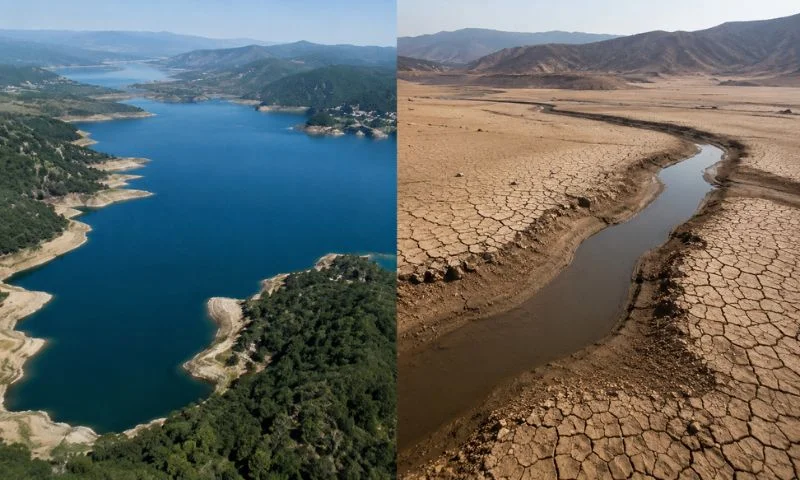
The world is losing freshwater at an alarming pace as climate change, prolonged droughts and unsustainable water use place growing pressure on rivers, lakes and wetlands. According to a 2025 World Bank report cited by Al Jazeera, the planet loses an estimated 324 trillion litres of freshwater every year. That amount is enough to meet the annual needs of about 280 million people. Read More: Scientists Create Solar Device That Turns Desert Air Into Drinking Water The phenomenon, known as “continental drying”, has become a growing concern for scientists and policymakers. To mark the World Day to Combat Desertification and Drought on June 17, Al Jazeera examined satellite imagery showing how water bodies across the globe have shrunk over recent decades. Parana River, Argentina The Parana River stretches nearly 4,900 kilometres and serves as a vital trade route connecting Brazil, Paraguay and Argentina. Satellite images comparing 1990 and 2026 show a sharp decline in water levels near Rosario. The reduction has disrupted grain exports, lowered hydroelectric output at the Itaipu Dam and exposed large areas of riverbed. Lake Poope, Bolivia Lake Poope once ranked as Bolivia’s second-largest lake, covering around 1,000 square kilometres. Satellite imagery from 1984 and 2020 shows that the lake has almost completely disappeared. Drought, rising temperatures and water diversions transformed much of the area into a salt flat, devastating fisheries and Indigenous Uru communities. Lake Ngami, Botswana Located on the edge of the Okavango Delta, Lake Ngami depends heavily on seasonal inflows. Images from 1984 and 2020 reveal dramatic fluctuations. Severe droughts and declining water inflows nearly erased the lake at its lowest point, damaging fishing grounds and livestock pastures before partial recovery occurred. Laguna de Aculeo, Chile Laguna de Aculeo, near Santiago, was once a popular recreational destination. Satellite comparisons between 2007 and 2026 show that the lake has largely dried up. Years of drought and increasing water stress have dramatically altered the landscape and affected nearby communities. Lake Urmia, Iran Lake Urmia was once the Middle East’s largest saltwater lake, spanning nearly 6,000 square kilometres during the 1990s. Today, it covers only about 581 square kilometres. Consecutive droughts, river diversion projects, agricultural demand and groundwater extraction have reduced the lake to less than 10 percent of its former size. Al Chibayish Marshes, Iraq The Al Chibayish Marshes form part of Iraq’s UNESCO-listed Mesopotamian Wetlands. Satellite imagery from 1984 and 2020 highlights extensive drying caused by drainage projects and drought. However, increased rainfall and restoration efforts have helped some parts of the marshes recover in recent years. Ambovombe, Madagascar Southern Madagascar has endured some of the country’s harshest drought conditions. Images comparing 1985 and 2020 show worsening environmental degradation around Ambovombe. Water shortages, stronger sandstorms and declining agricultural productivity have increased hardship for local communities. Lake Faguibine, Mali Near the Sahara Desert, Lake Faguibine has suffered decades of decline. Satellite images show that reduced flooding from the Niger River, combined with sediment buildup and drought, has caused the lake to shrink dramatically and accelerated desertification across the region. Lake Mead, United States Lake Mead, located on the Nevada-Arizona border, is the largest reservoir in the United States by capacity.\ Satellite imagery from 1984 and 2020 reveals a dramatic fall in water levels. Prolonged drought, rising temperatures and heavy water consumption have exposed vast stretches of previously submerged land. South Aral Sea, Uzbekistan The South Aral Sea remains one of the world’s most severe environmental disasters. Decades of river diversions for irrigation have shrunk the lake by more than 90 percent. Satellite images from 1984 and 2020 show vast expanses of exposed lakebed where water once existed. Scientists warn that continued freshwater losses could threaten food production, biodiversity, energy generation and water security for millions of people. The satellite images highlighted by Al Jazeera provide a stark reminder of how rapidly landscapes can change when water resources come under sustained pressure.

PM Praises Provinces as NEC Finalises Major Economic Decisions
Prime Minister Shehbaz Sharif on Wednesday praised the provinces for their cooperation in tackling Pakistan’s economic challenges, saying collective efforts helped the country achieve macroeconomic stability despite significant domestic and external pressures. Addressing a meeting of the National Economic Council (NEC), the prime minister said the federal and provincial governments worked together to steer the economy through a difficult period. “We made decisions in the best interest of Pakistan as a team,” PM Shehbaz told participants. The NEC meeting came just days before the presentation of the federal budget for fiscal year 2026-27 and focused on development priorities, economic targets and resource allocation. The prime minister acknowledged that Pakistan faced major economic challenges during the past year. However, he said coordinated policymaking helped improve stability and maintain progress under the country’s reform agenda. Referring to recent regional tensions, PM Shehbaz noted that oil prices had risen sharply in international markets. He said the government provided Rs128 billion in relief to consumers through fuel price measures. The premier recalled that long queues formed at petrol stations in several countries during recent disruptions. In contrast, he said timely government action ensured uninterrupted fuel supplies in Pakistan. The prime minister also highlighted ongoing consultations with provincial governments regarding the upcoming budget. “The federal government was in consultations with provinces for several weeks for the upcoming budget,” he said. According to PM Shehbaz, discussions focused on generating additional resources and improving fiscal management. He stressed that maximising available resources remains a key government objective. He also reaffirmed the government’s commitment to the International Monetary Fund programme. “We tried to meet the expectations of the people,” he said, adding that progress became possible through collective teamwork. NEC Approves Development Budget and Growth Targets During the meeting, Planning Minister Ahsan Iqbal briefed participants on budget proposals and key economic indicators. He announced that the NEC had approved a Rs3.66 trillion national development budget and set a 4 percent GDP growth target for fiscal year 2026-27. The approved development package includes Rs1 trillion for the federal Public Sector Development Programme, Rs2.21 trillion for provincial development spending and Rs451 billion for federal enterprises. Read More: Budget 2026-27: Why Punjab and Sindh Agreed to Major Spending Cuts Furthermore, the council approved a proposal to hold NEC meetings every quarter to improve policy coordination and implementation. Iqbal said Pakistan’s development spending had fallen significantly over recent years. “The Public Sector Development Programme has declined from 2.6% of GDP in 2018 to 0.6%,” he said. He argued that Pakistan now requires a “development emergency” to accelerate growth and improve competitiveness. Defence, Exports and Water Security Remain Key Priorities The planning minister warned that debt servicing continues to place pressure on public finances. According to Iqbal, nearly 74 percent of government revenue currently goes toward debt servicing. “We will have to increase foreign investment and exports,” he said while discussing long-term economic priorities. The NEC approved sector-specific targets for the next fiscal year. Agriculture growth has been set at 3.6 percent, industrial growth at 4.5 percent and services sector growth at 4.2 percent. Meanwhile, policymakers fixed the inflation target at 8.2 percent. Iqbal also identified water security as Pakistan’s foremost national priority. The minister confirmed that the federal PSDP would focus on ongoing projects. Therefore, authorities will not launch new schemes except those related to education and defence. PM Shehbaz also emphasised that ensuring adequate resources for national defence remains a key priority. He said Pakistan requires additional funding to address terrorism-related challenges and strengthen national security. The NEC’s decisions will now shape the government’s development agenda as Pakistan prepares to unveil its budget and pursue growth targets for the next fiscal year.
Rising Winter Heat Could Trigger Glacier Floods in Pakistan
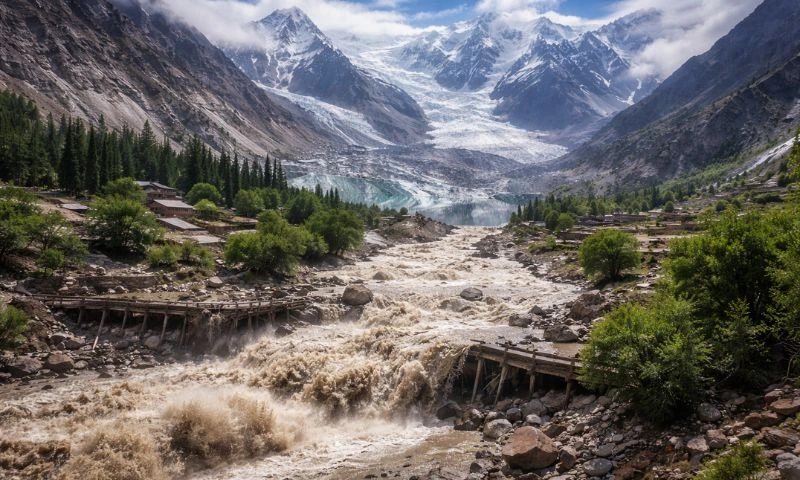
Northern Pakistan is now confronting an unusual winter heat wave that has scientists and officials warning about the rising threat of glacial lake outburst floods. Recent weather data show daytime temperatures recorded as much as 3 to 5°C above normal, creating a dangerous combination of reduced snowfall, accelerated glacier melt, and growing flood risks in the country’s mountainous north. The Pakistan Meteorological Department (PMD) says that below-normal rainfall and limited snowfall this winter have left the region warmer and drier than usual. The warming has been particularly intense in areas like Gilgit, Bunji, Chilas, and Astore, where higher minimum temperatures are affecting overnight ice refreezing. Climate Trends Fuel Glacier Melt According to the PMD, stable atmospheric conditions and prolonged clear skies have allowed heat to build up, reducing the usual cold relief of winter nights. With less overnight cooling, snow and glacier surfaces do not refreeze as they normally would, increasing meltwater runoff into glacial lakes that sit behind natural ice and moraine dams. “Reduced nighttime cooling further enhances meltwater runoff into glacial lakes,” the PMD said in a statement, adding that rapid melting increases water accumulation in these lakes. The growing water volume raises the likelihood of Glacial Lake Outburst Floods (GLOFs) in downstream valleys, officials warned. Glacial lake outburst floods can occur suddenly and without warning, triggering flash floods that sweep through river valleys, damaging infrastructure and posing serious risks to mountain communities. Read More: Heatwaves and Floods Hit Pakistan’s Economy Hard, Officials Reveal Vulnerable Regions and Glaciers The areas most at risk include Gilgit, Ghizar, Hunza, Bunji, Chilas, and Astore, where temperature anomalies were especially high in February. Between February 1 and 22, daytime temperatures in Gilgit reached 4.7°C above normal, while nighttime increases hit 3.4°C in Chilas. Pakistan’s northern highlands, mainly in Gilgit-Baltistan, host some of the world’s major glaciers, including the Batura and Baltoro glaciers, which feed rivers and sustain local ecosystems. These ice masses are vital sources of freshwater but are already responding to warming trends. Scientific observations have shown that many glaciers in the Hindu Kush Himalaya region are receding as temperatures rise. Melting ice increases water flow into glacial lakes, a phenomenon that may both strengthen water availability in the short term and increase flood risk. In the long run, however, faster glacier loss threatens freshwater security for downstream populations. Climate Change Links and Long-Term Threats Climate experts say rising temperatures and altered precipitation patterns across South Asia are tied to broader global warming trends. Research shows that warmer air can hold more moisture and elevate melting rates, especially when snowfall is low. Pakistan is considered one of the countries most vulnerable to the impacts of climate change, facing cycles of drought, heat waves, extreme rainfall, and flood events. Historical data also tell a cautionary tale. The catastrophic 2010 Pakistan floods, which affected millions and caused massive destruction, were linked to heavy monsoon rains combined with landscape changes intensified by climate variability. Read More: The Hotspot Effect: How Warming Is Reshaping Everyday Life in South Asia What Authorities Are Doing The PMD says it is closely monitoring temperature trends, glacier melt conditions, and hydrometeorological parameters. It plans to issue timely advisories to authorities and local communities to prepare for possible GLOF events. Early warning systems and community awareness campaigns are essential in reducing disaster risk in high-altitude villages and along river valleys. Adapting to these shifting climate patterns will require both local preparedness and national strategies to strengthen infrastructure, provide early warnings, and support communities at risk.
