

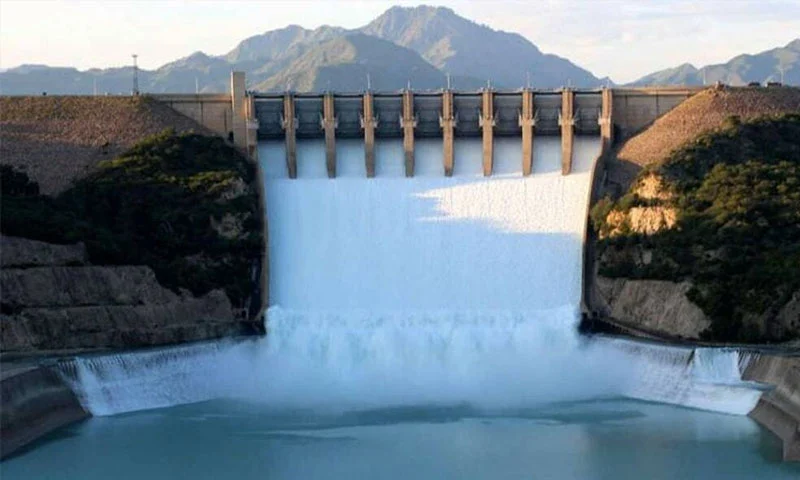
The cost of Pakistan’s Tarbela 5th Extension Hydropower Project has surged to about Rs316 billion after ECNEC approved a major revision, despite concerns over project management and previous structural failures. The Executive Committee of the National Economic Council approved a 282 percent upward revision in the project cost. The original estimate stood at about Rs82 billion. The latest approval adds roughly Rs234 billion to the bill. Read More: $5bn Neelum-Jhelum hydropower project to stay offline until 2028 Deputy Prime Minister Ishaq Dar chaired the ECNEC meeting. The committee approved 16 development projects with a combined estimated cost of Rs1.15 trillion. Around Rs320 billion of that amount represents additional costs linked to delays and price escalation. Cofferdam Failure Raised Serious Questions The Tarbela project has faced delays, cost pressures and questions over oversight. Planning Minister Ahsan Iqbal had earlier “expressed serious concerns over the project’s management, transparency, and oversight mechanisms,” according to the Planning Commission. An official inquiry also examined the collapse of the project’s downstream cofferdam. Investigators concluded that the failure was “not caused by flood but by change in design from roller-compacted concrete to rock-fill dam”. The inquiry also identified inadequate supervision and delayed administrative action. It linked those failures to structural damage, project delays and financial losses. A separate government inquiry held the contractor, consultant and WAPDA responsible for the collapse. It also found that river flows remained within historical levels rather than reaching exceptional flood conditions. Read More: Scientists Create Solar Device That Turns Desert Air Into Drinking Water The Finance Ministry had sought justification for the cost escalation before ECNEC approval. It also asked WAPDA to explain the repayment mechanism because international lenders are financing the project. The World Bank and Asian Infrastructure Investment Bank are providing $390 million and $300 million respectively. The project will add 1,530 megawatts through three 510MW generating units at Tarbela Dam. ECNEC Approves Rs1.15 Trillion Development Package ECNEC also cleared several major transport, water and social development schemes. The committee approved the Lahore-Sahiwal-Bahawalnagar Motorway at Rs407 billion. It retained the original 295-kilometre alignment. The first 18.5-kilometre section from Lahore Ring Road to Raja Jang Interchange will cost Rs49 billion. The 48-kilometre Khwazakhela-Besham Expressway received approval at Rs116.6 billion. ECNEC also cleared a Rs29 billion road connecting Gilgit-Baltistan with Azad Kashmir. The Rathoa Haryam Bridge received approval at Rs10.8 billion. Its original estimate stood at only Rs1.4 billion. Read More: New Saudi Water Rules Could Cost Violators Up to SR200,000 Meanwhile, Lahore’s wastewater treatment project received Rs56.6 billion. A poverty alleviation programme covering 10 districts of southern Punjab secured Rs29.7 billion. ECNEC also approved Rs10.6 billion for the Fulbright scholarship programme, which aims to support 816 scholarships. The approvals underline the growing financial burden caused by delays and revised costs across major public projects. Tarbela 5 remains one of the most closely watched because of its scale, foreign financing and importance to Pakistan’s future electricity supply.
Why Pakistan Wants to Replace Two Gas Utilities With Five
The government is finalising a plan to split Pakistan’s two gas utilities into five smaller companies. It would create one transmission company and four provincial distribution firms. Petroleum Minister Ali Pervaiz Malik reviewed the roadmap on Tuesday with World Bank Country Director for Pakistan Bolormaa Amgaabazar. SNGPL, SSGCL and OGRA officials also attended. “The reform framework also proposes the restructuring and unbundling of the Sui companies by separating their transmission, distribution and energy businesses, while creating greater opportunities for private sector participation throughout the gas value chain,” an official statement said. Government Seeks Approval by End of August The Petroleum Division wants to fast-track the process and place the final roadmap before the prime minister by the end of August 2026. “The meeting reviewed and endorsed the strategic direction of Pakistan’s gas sector reforms,” the statement said. “Following the prime minister’s approval, the Petroleum Division will initiate phased implementation of the reform programme in consultation with all stakeholders to ensure a smooth and sustainable transition to a modern, competitive and financially viable gas sector,” it added. The division plans to appoint a transaction adviser immediately. The adviser would design the separation of SNGPL and SSGCL into five entities. Read More: HBL Backs Mari Energies Project in Pakistan to Turn Polluting Gas into LNG The World Bank may finance the advisory work. Another option would require both utilities to share the cost and recover it through consumer tariffs. However, the companies and their shareholders oppose both the breakup and any requirement to fund it. Under the proposal, a National Gas Transmission Company would take over the transmission networks and businesses of both utilities. It would operate as a common carrier, similar to the National Grid Company in the power sector. The company would not buy or sell gas. It would transport locally produced gas and imported LNG, while charging wheeling fees to suppliers and buyers. Sources said major business groups were interested in the transmission business through privatisation. Viability, Pricing and Provincial Concerns The four distribution companies would operate within provincial boundaries. Officials would shape them around population, network density, gas demand, workload, supervision and operational efficiency. The proposal faces difficult pricing questions. Pakistan applies uniform national gas prices, although system losses differ sharply across provinces. Sources said Balochistan records the highest losses, followed by Khyber Pakhtunkhwa, Sindh and Punjab. Read More: Pakistan Restricts Gas to Factories as Middle East War Disrupts Energy Flow The plan therefore requires a weighted average sale price equalisation mechanism, or another pricing formula. The official roadmap also calls for targeted subsidies, a revised protected customer category and movement towards a single market-clearing price. KPMG and OGRA opposed a similar model in 2020 on financial and technical viability grounds. They urged consultations with provinces, shareholders and other stakeholders before any breakup. Experts also warned that distribution companies could become loss-making while the transmission company remained profitable. The earlier plan was shelved. Opposition remains to appointing an adviser or splitting the utilities before provinces are consulted and the Council of Common Interests considers the agreed mechanism.
World Bank Greenlights $375.9 Million for Pakistan’s Energy Future
The World Bank has approved $375.9 million for Pakistan’s Grid Stability Enhancement Project. The funding launches the first phase of the Boosting Energy Security through Transmission in Pakistan (BEST-PAK) programme. The initiative will run for 10 years. It aims to modernise Pakistan’s electricity transmission system, cut power outages and improve energy security. The World Bank says Pakistan’s ageing transmission network struggles with grid instability and congestion. These problems disrupt electricity supplies, increase costs and prevent the country from using available renewable energy. “Pakistan’s energy challenges are deeply interconnected with its broader economic stability,” World Bank Country Director for Pakistan Bolormaa Amgaabazar said. “By investing in advanced technologies for more resilient transmission infrastructure, this project will contribute to reducing electricity costs, bringing more renewable energy onto the grid, and laying the groundwork for a power sector that works better for households, businesses and industries, as well as overall Pakistan’s economy,” she added. Project will unlock more renewable energy The project will strengthen electricity flow across the national grid. It will install Static Synchronous Compensators (STATCOMs) at three major 500 kV substations. Engineers will also add fixed reactors and capacitor banks at 26 grid substations. These upgrades will allow Pakistan to connect 640 megawatts of wind energy that currently cannot reach the national grid. The project will also enable full use of 1,840 MW of wind generation capacity in southern Pakistan. In addition, the improved network will support nearly 491 MW of private sector renewable energy projects. The World Bank said these investments will help Pakistan move closer to its target of generating 60 percent of electricity from renewable sources by 2030. The organisation estimates the project will prevent about 832,500 tonnes of carbon dioxide emissions each year. Over 25 years, avoided emissions could exceed 20.8 million tonnes. Grid reforms and climate resilience The programme also supports the government’s reform of the National Transmission and Dispatch Company (NTDC). Officials plan to split the utility into specialised successor companies to improve governance, efficiency and accountability. World Bank Lead Energy Specialist Waleed Saleh Alsuraih said reliable transmission remains critical for Pakistan’s energy future. “A reliable and modern transmission grid was essential for Pakistan’s energy future,” he said. “As the first phase of the BEST-PAK programme, it unlocks a pathway to large-scale clean energy deployment, stronger energy security, and a modern, commercially oriented transmission sector through targeted infrastructure investments and institutional reforms, creating the conditions for future private capital participation.” The project also prepares Pakistan’s power system for climate change. Engineers will place new installations on elevated platforms to reduce flood risks. They will also install equipment that can operate in temperatures as high as 55°C. The World Bank believes these improvements will strengthen Pakistan’s electricity network, improve service reliability and support long-term economic growth while expanding the country’s clean energy capacity.

Pakistan Turns to International Bonds as Saudi Oil Facility Expires
Pakistan plans to raise $2 billion through Eurobonds, Sukuk and Panda bonds in fiscal year 2026-27. However, the government has made no provision for financing under the Saudi Oil Facility in the new budget. Budget documents show that Pakistan expects to secure $23.378 billion in external financing next year. The funding will come from multilateral lenders, bilateral partners, commercial banks, international bond markets and other foreign inflows. The financing strategy comes as Pakistan works to strengthen its external accounts. It also seeks to maintain foreign exchange reserves under an IMF-backed reform programme. A major feature of the budget is the absence of expected inflows from the Saudi Oil Facility. “The government has estimated no receipts from the Saudi Oil Facility for the coming fiscal year, compared with the revised estimate of $1 billion for 2025-26.” Saudi Arabia’s oil financing arrangement expired in April 2026. Pakistan has requested an extension. However, officials did not include any expected inflows in the budget. The facility has supported Pakistan’s balance of payments for years. It allowed the country to import oil on deferred payment terms. Saudi and Chinese deposits remain key support The government has listed $12 billion in bilateral deposits held by the State Bank of Pakistan. The budget documents do not provide a country-wise breakdown. However, official sources said Saudi Arabia accounts for $8 billion, while China provides the remaining $4 billion. Pakistan also expects to receive $4.866 billion from multilateral lenders during 2026-27. The Asian Development Bank is expected to provide $1.68 billion. Meanwhile, the Asian Infrastructure Investment Bank could contribute $86.337 million. The government has projected another $17.669 million from the European Investment Bank. Pakistan expects to receive $412 million from the World Bank’s International Bank for Reconstruction and Development. It also expects $1.43 billion from the International Development Association. Other multilateral inflows include $186.64 million from the Islamic Development Bank. The institution may also provide $1 billion in short-term financing. Additional support includes $39.75 million from the International Fund for Agricultural Development and $8.76 million from the OPEC Fund for International Development. Bond markets and IMF financing Pakistan has projected bilateral loans of $400.42 million for the next fiscal year. China is expected to provide $97.64 million. France may contribute $94 million, while Saudi Arabia could provide $47.18 million. The government also expects financing from Denmark, South Korea, the United States, Kuwait, Japan, Germany, Oman and Italy. Foreign commercial borrowing is projected at $2.35 billion. Inflows through Naya Pakistan Certificates are estimated at $1.122 billion. The budget also includes $530 million under the IMF’s Resilience and Sustainability Facility. The programme supports climate-related reforms and investments. However, the government does not record disbursements under the IMF’s $7 billion Extended Fund Facility in the federal budget. The State Bank of Pakistan records those funds separately because they support the country’s balance of payments. The financing plan highlights Pakistan’s continued reliance on international lenders, friendly countries and global capital markets. The government hopes these inflows will help meet external funding needs during the next fiscal year.
Pakistan’s North Reaches Highest Temperatures in 65 Years
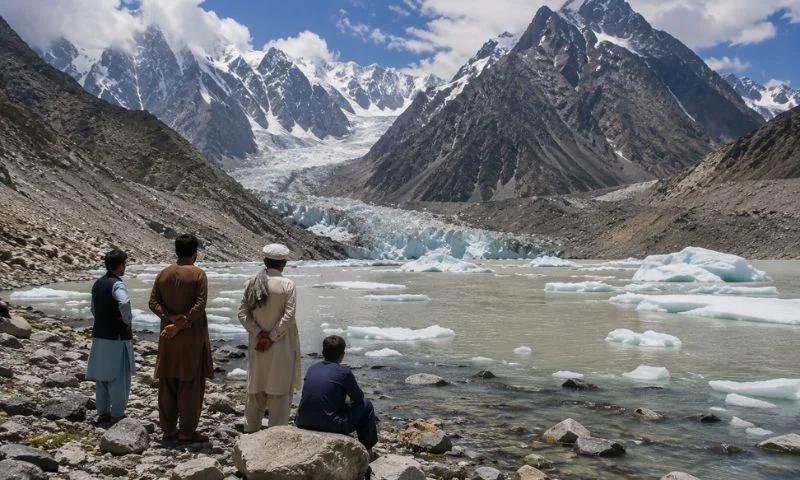
Pakistan experienced its second-warmest year in 65 years during 2025, continuing a worrying climate trend that economists and environmental experts say poses growing risks to the country’s economy, water resources and food security. According to the Economic Survey 2025-26, the country recorded a national annual mean temperature of 23.9°C in 2025. That figure stood 1.09°C above the long-term average of 22.8°C. The survey identified 2024 as the hottest year on record and 2025 as the second warmest, marking consecutive years of exceptionally high temperatures. Despite contributing less than 1% of current global greenhouse gas emissions and only 0.4% historically, Pakistan remains among the countries most vulnerable to climate change. “Climate change is no longer a distant or abstract threat to the country but a present reality,” the survey stated. Scientists note that Pakistan’s average temperature has increased by around 0.5°C over the past five decades. Climate projections indicate temperatures could rise by another 3°C to 5°C by the end of the century if global emissions remain high. Northern Regions See Sharpest Temperature Rise The strongest warming occurred in northern Pakistan during 2025. Temperature anomalies reached 1.24°C in Gilgit-Baltistan, 1.29°C in Khyber Pakhtunkhwa and 1.56°C in Azad Jammu and Kashmir. All three regions recorded their highest annual temperatures in 65 years. Pakistan received 288.5 millimetres of rainfall during the year, slightly below the long-term average of 297.6 millimetres. Rainfall patterns, however, remained highly uneven. Sindh, Punjab and Gilgit-Baltistan received above-average precipitation, while Khyber Pakhtunkhwa and Balochistan remained below average. The monsoon season from July to September brought rainfall levels 23% above normal. Earlier months remained unusually dry. Experts say rising temperatures are accelerating glacier melt across the Himalaya, Karakoram and Hindu Kush mountain ranges. The changes are also altering monsoon behaviour and increasing the likelihood of extreme floods. The survey noted that fewer rainy days and more intense downpours have shifted monsoon patterns southward. Those changes contributed to widespread flooding across Pakistan in 2025, echoing the devastation witnessed during the catastrophic floods of 2022. The government also warned that limited international climate financing could hinder Pakistan’s ability to meet its commitments under global climate agreements. The World Bank estimates Pakistan requires $565.7 billion in climate-related investments by 2030. Of that amount, approximately $217.7 billion remains unfunded. Global Heat Emergency Deepens The climate crisis is not limited to Pakistan. The World Health Organization reported that extreme heat has claimed more than 200,000 lives across Europe since 2022. “The impacts of climate change are a clear and present danger, and its most immediate and lethal manifestation is extreme heat,” said Hans Henri Kluge, the WHO’s regional director for Europe. Scientists are also monitoring the return of the El Nino climate pattern. The National Oceanic and Atmospheric Administration said there is a 63% chance that El Nino will strengthen into one of the most powerful events recorded since 1950. UN Secretary-General Antonio Guterres warned that “El Nino conditions will pour fuel on the fire of a warming world”. Meanwhile, India has already reported delays in monsoon progress and below-average rainfall, raising concerns about agricultural production across the region. As temperatures continue to rise, climate experts warn that South Asia faces increasing risks from extreme heat, floods, water shortages and economic disruption.
