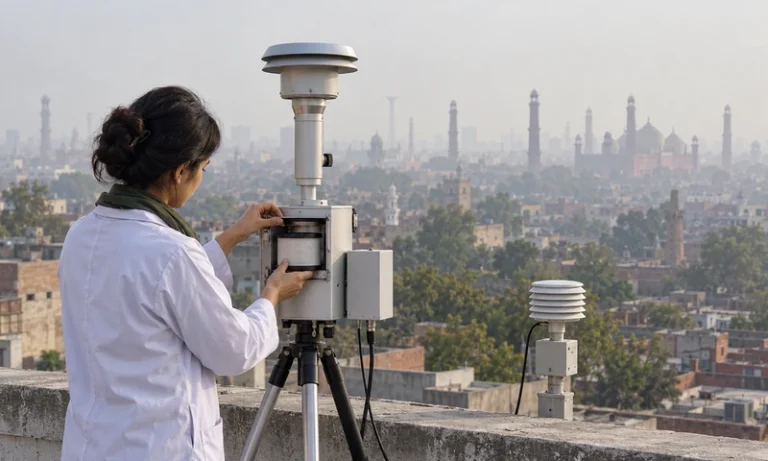
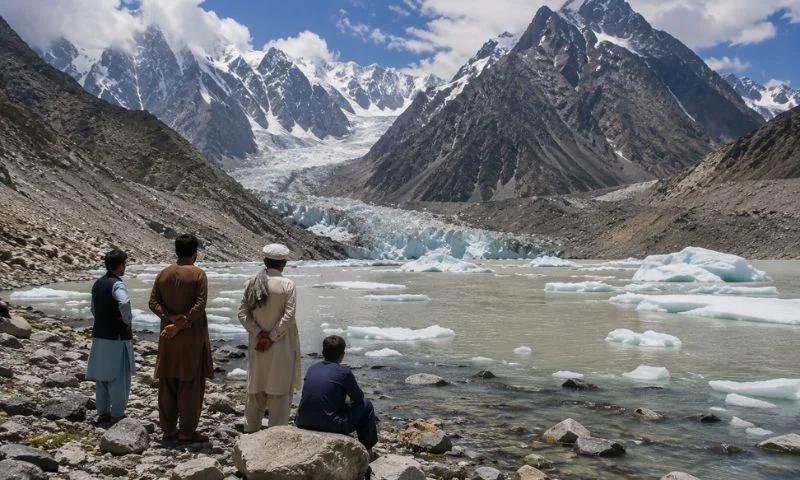
Pakistan experienced its second-warmest year in 65 years during 2025, continuing a worrying climate trend that economists and environmental experts say poses growing risks to the country’s economy, water resources and food security.
According to the Economic Survey 2025-26, the country recorded a national annual mean temperature of 23.9°C in 2025. That figure stood 1.09°C above the long-term average of 22.8°C.
The survey identified 2024 as the hottest year on record and 2025 as the second warmest, marking consecutive years of exceptionally high temperatures.
Despite contributing less than 1% of current global greenhouse gas emissions and only 0.4% historically, Pakistan remains among the countries most vulnerable to climate change.
“Climate change is no longer a distant or abstract threat to the country but a present reality,” the survey stated.
Scientists note that Pakistan’s average temperature has increased by around 0.5°C over the past five decades. Climate projections indicate temperatures could rise by another 3°C to 5°C by the end of the century if global emissions remain high.
Northern Regions See Sharpest Temperature Rise
The strongest warming occurred in northern Pakistan during 2025.
Temperature anomalies reached 1.24°C in Gilgit-Baltistan, 1.29°C in Khyber Pakhtunkhwa and 1.56°C in Azad Jammu and Kashmir. All three regions recorded their highest annual temperatures in 65 years.
Pakistan received 288.5 millimetres of rainfall during the year, slightly below the long-term average of 297.6 millimetres.
Rainfall patterns, however, remained highly uneven. Sindh, Punjab and Gilgit-Baltistan received above-average precipitation, while Khyber Pakhtunkhwa and Balochistan remained below average.
The monsoon season from July to September brought rainfall levels 23% above normal. Earlier months remained unusually dry.
Experts say rising temperatures are accelerating glacier melt across the Himalaya, Karakoram and Hindu Kush mountain ranges. The changes are also altering monsoon behaviour and increasing the likelihood of extreme floods.
The survey noted that fewer rainy days and more intense downpours have shifted monsoon patterns southward. Those changes contributed to widespread flooding across Pakistan in 2025, echoing the devastation witnessed during the catastrophic floods of 2022.
The government also warned that limited international climate financing could hinder Pakistan’s ability to meet its commitments under global climate agreements.
The World Bank estimates Pakistan requires $565.7 billion in climate-related investments by 2030. Of that amount, approximately $217.7 billion remains unfunded.
Global Heat Emergency Deepens
The climate crisis is not limited to Pakistan.
The World Health Organization reported that extreme heat has claimed more than 200,000 lives across Europe since 2022.
“The impacts of climate change are a clear and present danger, and its most immediate and lethal manifestation is extreme heat,” said Hans Henri Kluge, the WHO’s regional director for Europe.
Scientists are also monitoring the return of the El Nino climate pattern.
The National Oceanic and Atmospheric Administration said there is a 63% chance that El Nino will strengthen into one of the most powerful events recorded since 1950.
UN Secretary-General Antonio Guterres warned that “El Nino conditions will pour fuel on the fire of a warming world”.
Meanwhile, India has already reported delays in monsoon progress and below-average rainfall, raising concerns about agricultural production across the region.
As temperatures continue to rise, climate experts warn that South Asia faces increasing risks from extreme heat, floods, water shortages and economic disruption.