

Pakistan has agreed to meet 11 new conditions set by the International Monetary Fund as it seeks approval for the next $1.2 billion tranche under its ongoing bailout programme, adding fresh pressure on the government to push through key economic reforms. The new conditions were introduced during the latest review of the $7 billion Extended Fund Facility, bringing the total number of conditions imposed on Pakistan over the past two years to around 75, according to officials familiar with the discussions. The tranche, once approved by the IMF Executive Board, is expected to include roughly $1 billion under the Extended Fund Facility and about $200 million through the Resilience and Sustainability Facility. Budget approval and fiscal discipline One of the central conditions requires Pakistan’s parliament to approve the fiscal year 2026-27 budget strictly in line with IMF targets. The government has committed to presenting a “fiscally consolidated budget” and avoiding aggressive growth targets in the coming year. This reflects the IMF’s continued focus on fiscal discipline and revenue generation, as Pakistan struggles with a low tax-to-GDP ratio and external financing pressures. Officials have indicated that the upcoming budget will prioritise expanding the tax base and limiting expenditure to meet programme benchmarks. Reforms in economic zones and business climate Among the new conditions, Pakistan has agreed to amend laws governing Special Economic Zones and Special Technology Zones. The reforms aim to gradually phase out tax incentives and shift toward a cost-based system by 2035, in line with IMF recommendations. Authorities have also committed to restricting export processing zones from selling goods in the domestic market, a move intended to improve tax compliance and transparency. In addition, the government plans to establish a Pakistan Regulatory Registry by 2027 to streamline business regulations and improve the investment environment. Energy pricing and structural adjustments The IMF has reinforced conditions related to energy sector reforms, requiring Pakistan to implement timely electricity and gas tariff adjustments. These include quarterly tariff adjustments, monthly fuel cost adjustments, and regular gas price revisions to ensure cost recovery and reduce circular debt in the energy sector. Analysts say these measures could lead to higher utility prices in the short term but are aimed at stabilising the sector financially. Broader economic context Pakistan reached a staff-level agreement with the IMF in March 2026 after prolonged negotiations, with the programme seen as critical to maintaining macroeconomic stability. The IMF has acknowledged improvements in inflation, external balances and market confidence, but warned that global factors such as rising energy prices and regional tensions could pose risks to the outlook. The upcoming tranche is expected to support Pakistan’s foreign exchange reserves and help manage external financing needs amid ongoing economic challenges. Challenges ahead Economists say meeting the new conditions will require politically difficult decisions, particularly in areas such as taxation, energy pricing and subsidy reforms. While the programme is designed to stabilise the economy, critics argue that repeated conditions may slow growth and increase pressure on households through higher costs. Still, officials maintain that continued engagement with the IMF remains essential for sustaining financial stability and securing international support.
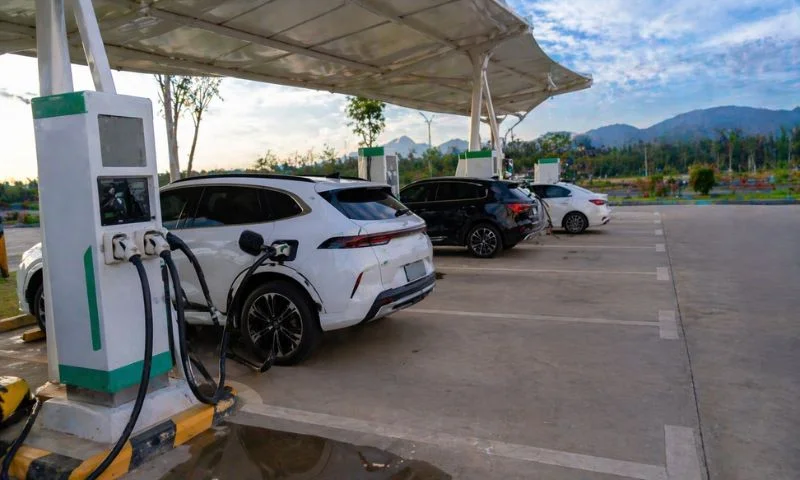
Pakistan Builds EV Charging Network Across Motorways
Pakistan is gradually building an electric vehicle charging network along its motorways and highways, with several fast-charging stations now operational at key travel points, signalling early progress in enabling long-distance EV travel. Recent developments show that multiple charging stations have been installed along the Lahore to Islamabad M-2 Motorway, one of the country’s busiest intercity routes. These stations are located at major service areas, allowing EV users to recharge during travel and reducing concerns about battery range limitations. Key motorway EV charging stations The following locations have been identified as active or recently developed EV charging points along Pakistan’s motorway network: Bhera Service Area (M-2 Motorway) Kallar Kahar Service Area (M-2 Motorway) Chakri Service Area (M-2 Motorway) Sial Mor Service Area (M-2 Motorway) Additional earlier installations and nearby facilities include: Pindi Bhattian (near M-2 Motorway) Ravi Toll Plaza (M-2 Motorway) On other motorway routes, the network is also expanding to: Zahir Pir (M-5 Motorway) Rashakai Service Area (M-1 Motorway) Tandlianwala (M-3 Motorway) Khanewal Service Area (M-4 Motorway) These stations are typically installed at motorway service areas where fuel stations, rest stops and food outlets already exist, making them convenient for travellers. Fast charging capabilities introduced Most of the newly installed stations are equipped with DC fast chargers ranging between 60kW and 180kW, enabling vehicles to charge up to 50 to 80 percent within 30 to 50 minutes depending on battery size. Some locations also support ultra-fast charging infrastructure capable of serving multiple vehicles simultaneously, reflecting a move toward scalable EV networks. Partnerships driving rollout The expansion is being led by a mix of public and private sector collaboration. Companies such as Hubco Green, Pakistan State Oil and private automotive partners are investing in charging infrastructure across highways and urban areas. These partnerships are seen as essential in building a nationwide network, especially given the high capital costs associated with EV infrastructure. Urban network complements highways In addition to motorways, charging stations are already operational in major cities, including: Islamabad: I-8 Markaz, F-7, Blue Area Lahore: Emporium Mall, Packages Mall Karachi: DHA Phase 6 and Super Highway locations Experts say the combination of motorway and urban charging networks is critical to supporting both daily commuting and long-distance travel. Early stage but growing momentum Despite recent progress, Pakistan’s EV charging network remains limited compared to global standards. Industry estimates suggest that until recently, fewer than 100 public charging stations were available nationwide, with most concentrated in urban centres. However, analysts say the addition of motorway charging stations marks a turning point, making intercity EV travel more practical and encouraging adoption. Outlook for EV adoption With the government targeting thousands of charging stations in the coming years, the expansion of infrastructure is expected to reduce reliance on imported fuel and support cleaner transportation. Experts say sustained investment and policy support will be key to building a reliable EV ecosystem, but the current rollout indicates that Pakistan is taking early steps toward electrifying its transport sector.

Ufone Set to Launch 5G in Pakistan as Rollout Enters New Phase
Pakistan’s telecom sector is entering a new phase of high-speed connectivity as Ufone prepares to launch its 5G services following the country’s first major spectrum auction, marking a significant step toward next-generation digital infrastructure. The move comes after the Pakistan Telecommunication Authority issued 5G licences to the country’s leading operators, including Ufone, Jazz and Zong, enabling them to begin rollout in phases across major cities. While Jazz and Zong have already launched initial services, Ufone is expected to go live in the coming weeks after completing infrastructure deployment and importing necessary 5G equipment, according to industry reports. Strong spectrum position for 5G Ufone, part of the PTCL Group, emerged as one of the key players in the 2026 spectrum auction, securing approximately 180 MHz of spectrum, including a substantial share in the 3.5 GHz band, considered ideal for high-speed 5G services. This allocation places the operator in a strong position to deliver faster speeds, lower latency and improved network capacity, particularly in densely populated urban areas. The rollout is expected to begin in major cities such as Islamabad, Lahore and Karachi before expanding nationwide in phases, aligning with regulatory requirements to ensure service quality during early deployment. Pakistan’s 5G journey gains momentum Pakistan formally entered the 5G era after completing its spectrum auction in March 2026, a milestone that industry stakeholders say will reshape the country’s digital economy. The government and regulators have framed 5G as a critical enabler for economic growth, supporting sectors such as e-commerce, fintech, healthcare and smart cities. Officials have said operators will gradually expand coverage while upgrading existing infrastructure to support the transition from 4G networks. What 5G means for users Compared with previous generations, 5G technology offers significantly higher data speeds, ultra-low latency and the ability to connect a larger number of devices simultaneously. For consumers, this could translate into faster downloads, smoother streaming and improved mobile gaming experiences. For businesses, the technology is expected to unlock new opportunities in automation, artificial intelligence and the Internet of Things. Industry experts say the introduction of 5G could also help bridge Pakistan’s digital divide by improving connectivity in underserved areas, though this will depend on the pace of infrastructure expansion and device affordability. Challenges ahead Despite the optimism, challenges remain. Analysts point to high deployment costs, limited availability of compatible devices and the need for extensive network upgrades as key hurdles. There are also concerns around spectrum pricing and return on investment, as telecom operators balance expansion with financial sustainability. However, with competition intensifying among operators, industry watchers expect rapid progress once services are fully launched. The upcoming rollout by Ufone is likely to further accelerate adoption, as Pakistan moves closer to joining the global race in next-generation connectivity.

Europe’s EV Sales Jump 51% as Iran War Drives Fuel Costs Higher
Electric vehicle sales across Europe have surged sharply as rising fuel prices linked to the Iran war push consumers away from petrol and diesel cars, highlighting how geopolitical tensions are accelerating the shift toward cleaner transport. Data from European industry groups shows that fully electric vehicle sales jumped by more than 50% in March alone across key markets, with over 240,000 battery electric vehicles registered during the month. The increase marks one of the strongest monthly gains in recent years and reflects a rapid change in consumer behaviour. The surge comes as the ongoing conflict involving Iran has disrupted global oil supplies, sending petrol and diesel prices to multi-year highs. The closure of the Strait of Hormuz, a critical shipping route for around 20% of the world’s oil, has contributed to the spike, analysts say. Fuel prices reshape buying decisions Rising costs at the pump have been a decisive factor behind the shift. European petrol prices have climbed significantly since the conflict escalated, prompting many drivers to reconsider the long-term affordability of combustion engine vehicles. Industry data suggests that nearly 560,000 electric vehicles were registered in Europe in the first quarter of 2026, representing strong year-on-year growth. Experts say the trend reflects a broader pattern seen during previous energy crises, where consumers accelerate adoption of alternative technologies when traditional fuel costs rise sharply. “Pain at the pump is pushing consumers away from combustion engines,” analysts told Reuters in related reporting, pointing to a surge in both new and used EV demand across the region. Growth spreads across major markets The increase in EV sales has been recorded across several major European economies. Germany, France, Spain and Italy all reported strong growth, with some markets posting increases of more than 40%. In Norway, one of the most advanced EV markets, electric cars now account for the vast majority of new vehicle sales, while countries such as Denmark and Finland are also seeing rapid adoption. Government incentives have also played a role, with subsidies and tax benefits continuing to support EV purchases. However, analysts say the recent spike in fuel prices has been a more immediate trigger for consumer behaviour. Energy security and long-term impact Beyond short-term demand, the surge in EV sales is being seen as part of a broader shift toward energy security in Europe. Electric vehicles are expected to reduce reliance on imported oil, with estimates suggesting that increased adoption could cut oil consumption by millions of barrels annually. The European Union has already warned that prolonged disruption to energy supplies could have lasting economic effects, including higher inflation and potential fuel shortages if the conflict continues. Industry outlook Automakers and analysts say the current momentum could continue if fuel prices remain elevated. Used EV sales, which tend to react quickly to market changes, have already seen significant increases as consumers seek cheaper alternatives. However, challenges remain, including charging infrastructure gaps and concerns over battery supply chains. Despite these hurdles, the latest data suggests that geopolitical shocks are accelerating Europe’s transition to electric mobility faster than expected.

Apple Names John Ternus as CEO, Tim Cook Steps Into Chairman Role
Apple has named long-time insider John Ternus as its next chief executive officer, replacing Tim Cook in a major leadership transition as the company prepares for a new phase shaped by artificial intelligence and intensifying global competition. The iPhone maker said Ternus, currently senior vice president of hardware engineering, will take over as CEO on September 1, 2026, while Cook will move into the role of executive chairman after more than a decade leading the company. The decision follows what Apple described as a “thoughtful, long-term succession planning process”, marking the company’s most significant leadership change since Cook himself succeeded co-founder Steve Jobs in 2011. End of a defining era Cook’s tenure saw Apple transform into one of the world’s most valuable companies, with its market value surging into the trillions and its product ecosystem expanding beyond the iPhone to include wearables and services. “It has been the greatest privilege of my life to be the CEO of Apple,” Cook said in a statement, reflecting on his 15-year leadership. Under his leadership, Apple navigated global supply chain challenges, expanded its services business, and launched products such as the Apple Watch and AirPods. However, analysts have increasingly questioned whether the company has moved fast enough in the artificial intelligence race, where competitors such as Google and Microsoft have accelerated investment. A hardware leader takes charge Ternus, 50, is a 25-year Apple veteran who joined the company’s product design team in 2001 and rose through the ranks to lead hardware engineering. He has overseen development of key products including the iPhone, Mac, iPad, Apple Watch and AirPods, and played a central role in Apple’s transition to in-house silicon chips and the revival of Mac sales. His appointment signals continuity in Apple’s product-focused strategy, with a strong emphasis on integrating new technologies into existing devices rather than pursuing entirely new categories. “I am profoundly grateful for this opportunity to carry Apple’s mission forward,” Ternus said, adding that he looks forward to building on the company’s legacy. Focus shifts to AI The leadership change comes as Apple faces mounting pressure to strengthen its position in artificial intelligence, an area where it has been perceived as lagging behind rivals. Industry analysts say Ternus is expected to prioritise embedding AI capabilities across Apple’s product ecosystem, rather than launching standalone AI platforms. The transition also coincides with internal restructuring, including changes in Apple’s hardware leadership as the company prepares for the next phase of innovation. Investors and market outlook Initial market reaction to the announcement was measured, with investors viewing the move as a continuation of Apple’s long-term strategy rather than a radical shift. Experts note that Ternus inherits a company with strong fundamentals but facing new challenges, including slowing hardware growth, evolving consumer expectations, and rapid advances in AI technologies. The coming years are expected to test whether Apple can maintain its dominance in consumer electronics while adapting to a technology landscape increasingly defined by artificial intelligence.

Pakistan’s Freelancers Shine Globally as Earnings Hit $856 Million With 50% Surge
Pakistan’s freelance sector has recorded a strong surge in earnings, bringing in $856 million during the first nine months of the current fiscal year, reflecting a 50% increase compared to the same period last year, according to official data. The sharp rise highlights the growing importance of freelancing as a key contributor to Pakistan’s digital economy and foreign exchange inflows, as more young professionals tap into global online markets. Rapid Growth in Digital Workforce Data from the State Bank of Pakistan shows that freelance earnings increased from $567 million in the previous year to $856 million, marking a significant jump of nearly $289 million. Industry experts say the growth reflects rising global demand for digital services and the increasing participation of Pakistani youth in freelance platforms. Pakistan is already among the top freelancing countries globally, with estimates suggesting over 2.3 million freelancers are currently working across various sectors including software development, graphic design, content writing and digital marketing. Officials note that training programmes, government initiatives and private sector efforts have helped expand the talent pool, enabling more individuals to access international clients and generate income in foreign currency. Challenges Remain Despite Strong Performance Despite the impressive growth, the sector continues to face structural challenges, including inconsistent internet connectivity and power outages, which can disrupt workflow and limit productivity. Experts warn that addressing these issues is critical if Pakistan aims to sustain and accelerate its digital growth momentum. “There is a huge opportunity for Pakistan to expand its freelance exports further, but infrastructure improvements will be key,” an industry analyst said. There have also been calls to introduce more reliable internet solutions and policy support to ensure freelancers can compete effectively in global markets. Positive Outlook for Pakistan’s Digital Future The strong performance of the freelance sector is being seen as a positive sign for Pakistan’s broader economic outlook, particularly at a time when the country is seeking to diversify its export base. Government institutions such as the Ministry of IT and the Pakistan Software Export Board are working to strengthen the freelance ecosystem through skill development, certifications and global outreach programmes. Experts believe that with the rollout of faster internet technologies and continued investment in digital skills, freelance earnings could grow further in the coming years. The sector’s expansion also points to a shift in Pakistan’s economic model, where digital services are emerging as a reliable and scalable source of income. As global demand for remote work continues to rise, Pakistan’s growing freelance workforce is well-positioned to capitalise on new opportunities and contribute significantly to economic stability.
