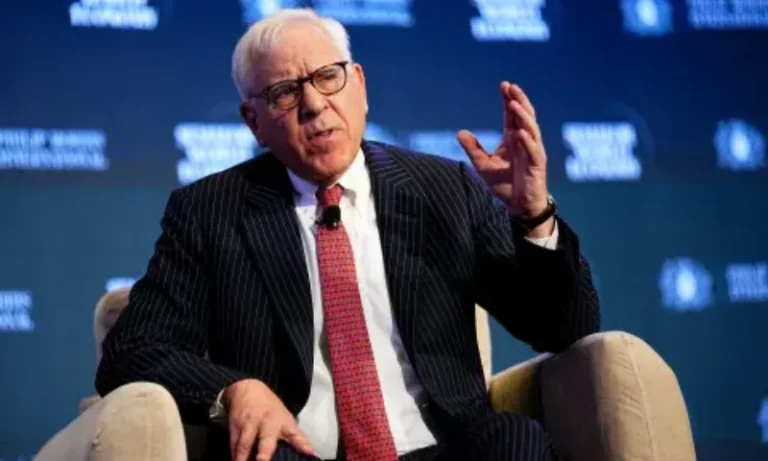
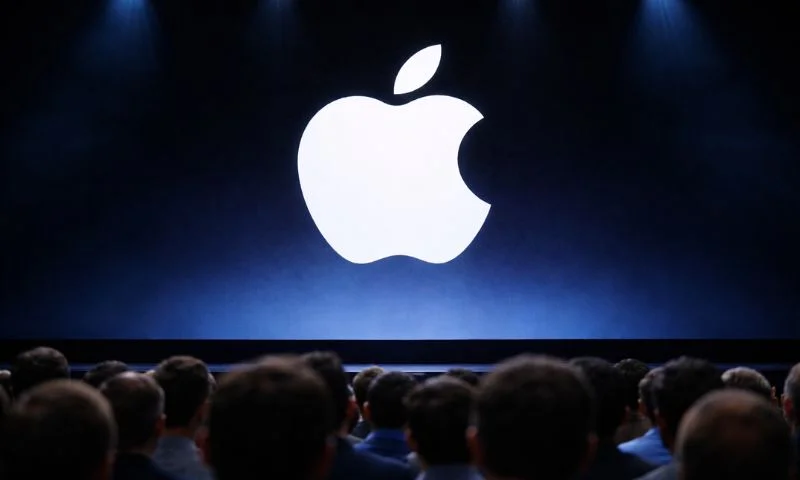
Apple has named long-time insider John Ternus as its next chief executive officer, replacing Tim Cook in a major leadership transition as the company prepares for a new phase shaped by artificial intelligence and intensifying global competition.
The iPhone maker said Ternus, currently senior vice president of hardware engineering, will take over as CEO on September 1, 2026, while Cook will move into the role of executive chairman after more than a decade leading the company.
The decision follows what Apple described as a “thoughtful, long-term succession planning process”, marking the company’s most significant leadership change since Cook himself succeeded co-founder Steve Jobs in 2011.
End of a defining era
Cook’s tenure saw Apple transform into one of the world’s most valuable companies, with its market value surging into the trillions and its product ecosystem expanding beyond the iPhone to include wearables and services.
“It has been the greatest privilege of my life to be the CEO of Apple,” Cook said in a statement, reflecting on his 15-year leadership.
Under his leadership, Apple navigated global supply chain challenges, expanded its services business, and launched products such as the Apple Watch and AirPods. However, analysts have increasingly questioned whether the company has moved fast enough in the artificial intelligence race, where competitors such as Google and Microsoft have accelerated investment.
A hardware leader takes charge
Ternus, 50, is a 25-year Apple veteran who joined the company’s product design team in 2001 and rose through the ranks to lead hardware engineering.
He has overseen development of key products including the iPhone, Mac, iPad, Apple Watch and AirPods, and played a central role in Apple’s transition to in-house silicon chips and the revival of Mac sales.
His appointment signals continuity in Apple’s product-focused strategy, with a strong emphasis on integrating new technologies into existing devices rather than pursuing entirely new categories.
“I am profoundly grateful for this opportunity to carry Apple’s mission forward,” Ternus said, adding that he looks forward to building on the company’s legacy.
Focus shifts to AI
The leadership change comes as Apple faces mounting pressure to strengthen its position in artificial intelligence, an area where it has been perceived as lagging behind rivals.
Industry analysts say Ternus is expected to prioritise embedding AI capabilities across Apple’s product ecosystem, rather than launching standalone AI platforms.
The transition also coincides with internal restructuring, including changes in Apple’s hardware leadership as the company prepares for the next phase of innovation.
Investors and market outlook
Initial market reaction to the announcement was measured, with investors viewing the move as a continuation of Apple’s long-term strategy rather than a radical shift.
Experts note that Ternus inherits a company with strong fundamentals but facing new challenges, including slowing hardware growth, evolving consumer expectations, and rapid advances in AI technologies.
The coming years are expected to test whether Apple can maintain its dominance in consumer electronics while adapting to a technology landscape increasingly defined by artificial intelligence.