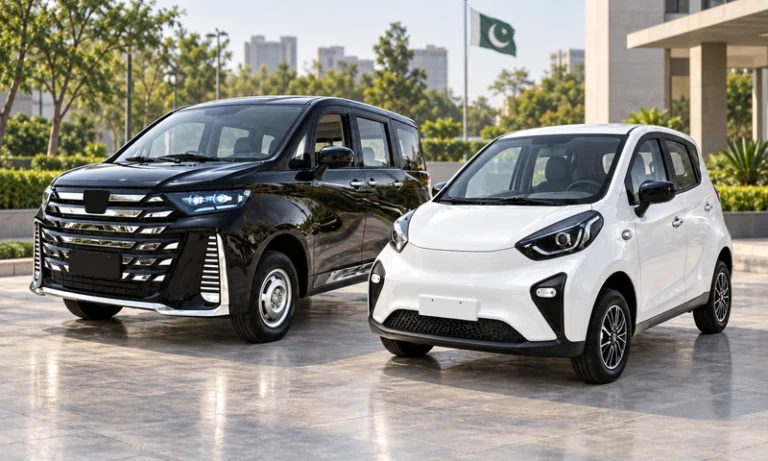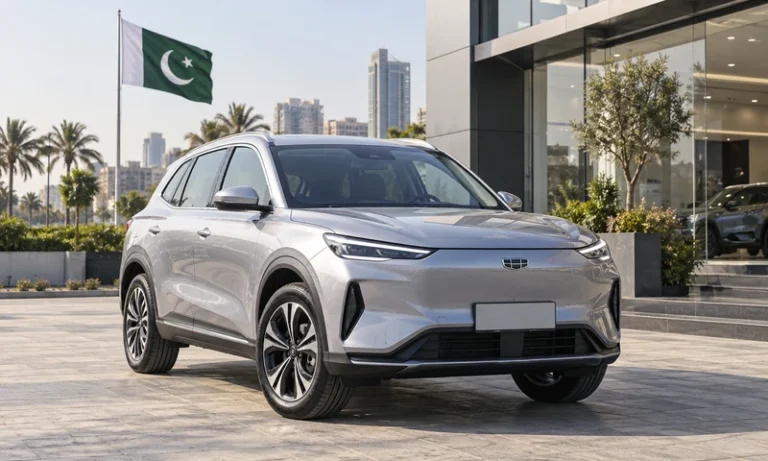
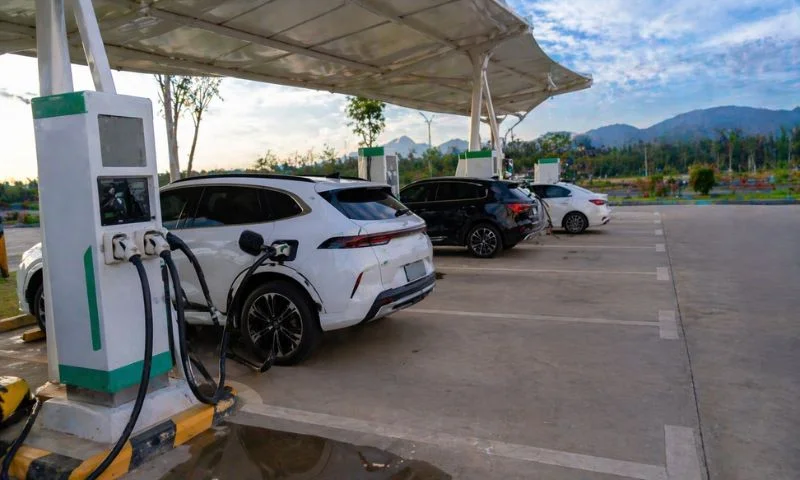
Pakistan is gradually building an electric vehicle charging network along its motorways and highways, with several fast-charging stations now operational at key travel points, signalling early progress in enabling long-distance EV travel.
Recent developments show that multiple charging stations have been installed along the Lahore to Islamabad M-2 Motorway, one of the country’s busiest intercity routes. These stations are located at major service areas, allowing EV users to recharge during travel and reducing concerns about battery range limitations.
Key motorway EV charging stations
The following locations have been identified as active or recently developed EV charging points along Pakistan’s motorway network:
- Bhera Service Area (M-2 Motorway)
- Kallar Kahar Service Area (M-2 Motorway)
- Chakri Service Area (M-2 Motorway)
- Sial Mor Service Area (M-2 Motorway)
Additional earlier installations and nearby facilities include:
- Pindi Bhattian (near M-2 Motorway)
- Ravi Toll Plaza (M-2 Motorway)
On other motorway routes, the network is also expanding to:
- Zahir Pir (M-5 Motorway)
- Rashakai Service Area (M-1 Motorway)
- Tandlianwala (M-3 Motorway)
- Khanewal Service Area (M-4 Motorway)
These stations are typically installed at motorway service areas where fuel stations, rest stops and food outlets already exist, making them convenient for travellers.
Fast charging capabilities introduced
Most of the newly installed stations are equipped with DC fast chargers ranging between 60kW and 180kW, enabling vehicles to charge up to 50 to 80 percent within 30 to 50 minutes depending on battery size.
Some locations also support ultra-fast charging infrastructure capable of serving multiple vehicles simultaneously, reflecting a move toward scalable EV networks.
Partnerships driving rollout
The expansion is being led by a mix of public and private sector collaboration. Companies such as Hubco Green, Pakistan State Oil and private automotive partners are investing in charging infrastructure across highways and urban areas.
These partnerships are seen as essential in building a nationwide network, especially given the high capital costs associated with EV infrastructure.
Urban network complements highways
In addition to motorways, charging stations are already operational in major cities, including:
- Islamabad: I-8 Markaz, F-7, Blue Area
- Lahore: Emporium Mall, Packages Mall
- Karachi: DHA Phase 6 and Super Highway locations
Experts say the combination of motorway and urban charging networks is critical to supporting both daily commuting and long-distance travel.
Early stage but growing momentum
Despite recent progress, Pakistan’s EV charging network remains limited compared to global standards. Industry estimates suggest that until recently, fewer than 100 public charging stations were available nationwide, with most concentrated in urban centres.
However, analysts say the addition of motorway charging stations marks a turning point, making intercity EV travel more practical and encouraging adoption.
Outlook for EV adoption
With the government targeting thousands of charging stations in the coming years, the expansion of infrastructure is expected to reduce reliance on imported fuel and support cleaner transportation.
Experts say sustained investment and policy support will be key to building a reliable EV ecosystem, but the current rollout indicates that Pakistan is taking early steps toward electrifying its transport sector.