

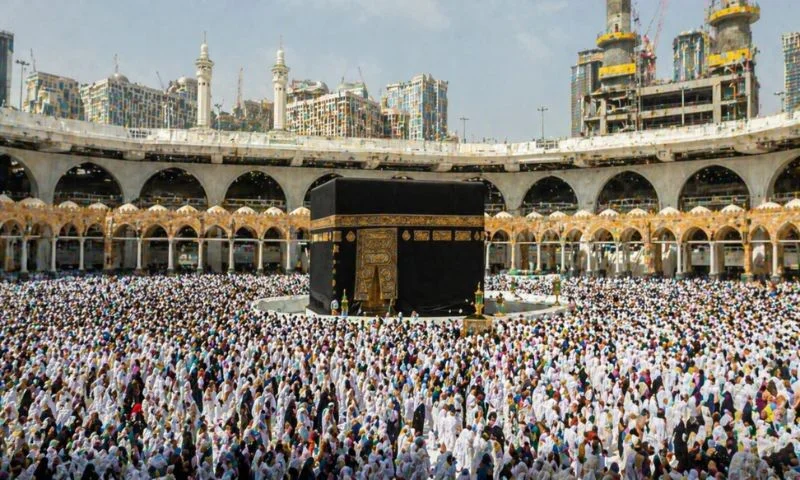
Saudi Arabia has introduced sweeping new regulations for Hajj 2026, enforcing strict permit requirements, tighter entry controls into Makkah and heavy financial penalties for violators as authorities prepare for one of the world’s largest religious gatherings. Officials have reiterated a central rule for this year’s pilgrimage: no individual will be allowed to perform Hajj without an official permit issued through authorised channels. “No leniency will be shown toward any attempt to perform Hajj without a permit,” the Ministry of Hajj and Umrah said. The measures are aimed at improving crowd control, safety and logistical management during the annual event, which draws millions of pilgrims from around the world. Permit mandatory, entry tightly controlled Under the updated rules, entry into Makkah and the holy sites during the Hajj period is restricted exclusively to individuals holding valid Hajj permits. Authorities have explicitly barred all visit visa holders from performing Hajj, warning that such visas do not grant access to pilgrimage areas. Expatriates residing in Saudi Arabia must also carry proper documentation, such as a Hajj permit or a work permit for the holy sites, to enter Makkah during the restricted period. In addition, Umrah visas and permits have been temporarily suspended during the Hajj season to prioritise pilgrims performing the annual rituals. Heavy fines and strict penalties Saudi authorities have announced significant penalties for violating Hajj regulations. Individuals attempting to perform Hajj without a permit, including visit visa holders entering restricted areas, face fines of up to 20,000 Saudi riyals. Stronger penalties apply to those facilitating illegal participation. Anyone who transports, shelters or assists unauthorised pilgrims can be fined up to 100,000 riyals, with penalties increasing based on the number of violators involved. Authorities have also warned that violators may face deportation and a ban from re-entering the Kingdom for up to 10 years. In some cases, courts may order the confiscation of vehicles used to transport illegal pilgrims, further tightening enforcement measures. Deadlines and compliance measures Officials have set strict timelines for compliance. Foreign pilgrims entering on Umrah visas were required to leave the Kingdom by mid-April, with overstaying considered a violation. Security checkpoints have been reinforced at entry points to Makkah, with authorities turning back individuals who do not have the required permits. The government has urged residents and visitors to comply fully with regulations and report violations through designated emergency channels. Ensuring safety at scale The tightened rules reflect Saudi Arabia’s broader strategy to manage the massive influx of pilgrims while ensuring safety and efficiency. Officials say the permit system remains the cornerstone of crowd control, helping regulate the number of participants and prevent overcrowding at key sites. The measures come as preparations intensify for Hajj 2026, with authorities deploying enhanced transport, security and digital systems to streamline operations. Outlook While the stricter rules may pose challenges for some travellers, officials say they are essential to ensuring a safe and organised pilgrimage experience. With millions expected to attend, Saudi Arabia is signalling a zero-tolerance approach toward violations, reinforcing that compliance with permit regulations is non-negotiable.


Anne Hathaway’s “Inshallah” Comment Sparks Speculation Has She Converted to Islam?
Hollywood actor Anne Hathaway has sparked widespread discussion on social media after using the phrase “Inshallah” during a recent public interaction, prompting speculation about her religious beliefs, though no confirmation has been made regarding any conversion to Islam. The comment quickly gained traction online, with fans debating its meaning and significance. The phrase “Inshallah,” an Arabic expression meaning “if God wills,” is commonly used by Muslims when referring to future hopes or plans. The discussion began after Hathaway used the word while speaking about her future, saying, “I want to have a long, healthy life. InshaAllah, I hope so.” The brief remark was enough to trigger speculation across platforms, with some users questioning whether the actor had embraced Islam, while others viewed the usage as a cultural or expressive choice rather than a religious declaration. Anne Hathaway goes viral for using Arabic word ‘Inshallah’ during interview. “I want to have a long healthy life, Inshallah. I hope so.” The Arabic word translates as “If Allah wills” or “God willing.” pic.twitter.com/YFXAdutwK3— Oli London (@OliLondonTV) April 21, 2026 Social media platforms saw a surge in reactions, with many pointing out that the phrase is widely used beyond strictly religious contexts, including by non-Muslims familiar with Arabic expressions or Islamic culture. The phrase reflects humility and uncertainty about future outcomes, acknowledging that plans may depend on factors beyond human control. In recent years, similar expressions have been adopted in global discourse, with public figures occasionally using them in interviews or speeches, sometimes leading to misinterpretation or overanalysis. No Official Confirmation Despite the online speculation, Hathaway has not made any statement suggesting a change in her religious beliefs. There has been no confirmation from the actor or her representatives regarding conversion claims. Observers say such reactions highlight the speed at which social media narratives can evolve, often amplifying brief remarks into larger debates. The episode underscores how cultural expressions, particularly those rooted in religion, can take on broader meanings in global conversations. While the debate continues online, analysts emphasize that a single phrase, especially one widely used across different communities, does not necessarily indicate a personal or religious shift.

Meta Is Tracking Every Click and Keystroke to Train AI to Replace You
Meta is rolling out new internal software that will monitor employees’ mouse movements, clicks and keystrokes to train its artificial intelligence models, marking a significant shift in how tech firms gather real-world data for next-generation AI systems. The initiative, revealed in internal memos, involves installing tracking tools on work computers of US-based employees. The system will collect detailed interaction data, including how staff navigate software, use shortcuts and perform everyday digital tasks. The data will also include occasional screen snapshots to provide context, allowing AI models to better understand how humans interact with digital interfaces. Push to build AI agents The move is part of Meta’s broader effort to develop advanced AI agents capable of performing complex workplace tasks autonomously. According to internal communication, the goal is to improve areas where AI still struggles, such as selecting options from menus or executing multi-step workflows. “For agents to understand how people actually complete everyday tasks using computers, we need to train our models on real examples,” an internal note said. Meta has increasingly shifted its strategy toward becoming an AI-first company, investing heavily in automation tools and restructuring teams around AI-driven workflows. No opt-out, concerns rise The rollout has sparked unease among employees, particularly after reports that participation is mandatory on company-issued devices. Internal discussions cited in reports show some employees questioning the lack of an opt-out option and expressing discomfort with the level of monitoring. Despite the backlash, Meta has said safeguards are in place to protect sensitive information and that the data will not be used for performance evaluation. The company also emphasised that monitoring work activity on corporate devices is not a new practice, though the scale and purpose of the new system are significantly broader. Privacy and regulatory questions The development has raised fresh concerns about workplace surveillance and data privacy, particularly as companies expand the use of AI training datasets. Legal experts note that while US regulations allow such monitoring in many cases, similar practices could face restrictions in Europe under stricter data protection laws. Analysts say the initiative reflects a growing trend among tech companies to rely on real-world behavioural data to improve AI performance, especially as traditional datasets become saturated. Part of wider industry shift Meta’s move comes amid a broader transformation in the technology sector, where companies are racing to build AI systems capable of automating large portions of digital work. The company has already reorganised parts of its workforce under AI-focused teams and encouraged employees to integrate AI tools into daily operations. Industry experts say the use of employee-generated data highlights the increasing value of human-computer interaction patterns in training AI systems. However, they caution that such approaches could redefine workplace boundaries and expectations, particularly if monitoring becomes more widespread. For now, Meta’s initiative underscores how the race for AI dominance is pushing companies to explore new and controversial sources of training data.

Why Azerbaijan’s LNG Offer Could Change Pakistan’s Energy Game
Azerbaijan has said it is ready to supply liquefied natural gas to Pakistan, offering potential relief as the country faces mounting energy shortages amid global supply disruptions and declining domestic production. Azerbaijan’s state energy company SOCAR confirmed that it can begin supplying LNG as soon as Islamabad formally places a request, under an existing framework agreement between SOCAR Trading and Pakistan LNG Limited signed in 2025. “SOCAR is ready to provide LNG to Pakistan as soon as PLL submits a corresponding request,” the company said in response to queries. However, the company did not specify whether Pakistan has already made such a request, when the first shipment could arrive, or the origin of the LNG cargoes to be supplied under the agreement. Energy shortfall drives urgency Pakistan’s move to secure additional LNG supplies comes at a time when the country is grappling with a widening energy gap. Officials have indicated that around 400 million cubic feet per day of additional gas is required to support power generation and reduce electricity shortfalls. The crisis has been exacerbated by declining domestic gas production and volatility in global LNG markets, which have been disrupted by ongoing geopolitical tensions, including conflict in the Middle East affecting supply routes. Pakistan relies heavily on imported LNG to meet its energy needs, particularly during peak demand periods. Any disruption in global supply chains can quickly translate into power shortages and load shedding across the country. Qatar supply disruptions add pressure The urgency to secure LNG from Azerbaijan has also been intensified by disruptions in supplies from Qatar, Pakistan’s primary LNG supplier. Officials recently confirmed that multiple LNG cargoes from Qatar had been delayed or halted due to instability in the Strait of Hormuz, a critical shipping route for global energy supplies. Pakistan has been in discussions with Qatar to secure additional cargoes once supply routes stabilise, but uncertainty remains over timelines. In this context, Azerbaijan’s offer provides an alternative source that could help diversify Pakistan’s energy imports and reduce dependence on a single supplier. Framework agreement enables fast procurement The 2025 agreement between SOCAR and Pakistan LNG Limited allows for the direct purchase of LNG cargoes through an accelerated procedure, reducing the need for lengthy tender processes. Analysts say this mechanism could prove crucial in enabling Pakistan to respond quickly to supply shortages and price fluctuations in international markets. The arrangement builds on earlier energy cooperation between the two countries, with Azerbaijan previously offering regular LNG cargoes under government-to-government deals. Challenges remain Despite the potential relief, experts caution that LNG imports remain subject to global price volatility and logistical challenges. Pakistan’s ability to secure shipments will depend on competitive pricing, availability of cargoes and stability in global supply routes. At the same time, the country continues to face structural challenges in its energy sector, including circular debt and reliance on imported fuels. Outlook Officials say diversifying LNG sources is part of a broader strategy to strengthen energy security and ensure uninterrupted power supply. While Azerbaijan’s offer signals a positive development, analysts note that long-term solutions will require investment in domestic energy production and alternative sources. For now, the possibility of additional LNG supplies offers a critical buffer as Pakistan navigates a challenging energy landscape.

Why Young Chinese Are Quitting Jobs to Build AI-Powered Solo Businesses
A growing number of young professionals in China are turning to artificial intelligence tools to launch “one-person companies”, as fears of job insecurity and automation reshape career choices in the world’s second-largest economy. The trend, highlighted in recent reporting, shows individuals using AI to handle tasks traditionally requiring teams, including marketing, design, customer service and content production. For many, the shift is driven by what some describe as “AI anxiety” and uncertainty about long-term employment prospects. Shanghai-based Wei Xin, 34, said she anticipated her role as a document reviewer would eventually be replaced by AI, prompting her to explore new opportunities using the same technology. “If I don’t use it, don’t approach it, I might soon be eliminated,” she said. Rise of one-person companies The emergence of so-called one-person companies is being powered by increasingly accessible AI tools that can automate complex workflows. Tasks such as writing advertising copy, editing videos and managing online stores can now be handled by a single individual using AI assistance. One entrepreneur, Wang Tianyi, said he earns up to 40,000 yuan per month by creating AI-generated commercials for businesses after leaving his job in the tech sector. He believes solo ventures will become a “major trend” due to the efficiency gains AI provides. Industry data supports this shift. Executives at major Chinese platforms estimate that up to 30 to 40 percent of users are now solo entrepreneurs leveraging AI tools to run businesses independently. Job anxiety drives shift The rise of these businesses is closely tied to growing concerns about job stability, particularly among younger workers. China’s youth unemployment rate has remained elevated, with roughly one in six people aged 16 to 24 out of work, adding pressure on graduates and early-career professionals. At the same time, age-related workplace challenges persist. Many professionals refer to the “curse of 35”, an unofficial threshold where career prospects in certain industries begin to decline. “There’s like this invisible line,” said Dai, an entrepreneur who hosts workshops on building solo businesses. “People might face some challenges in the workplace.” Experts say AI has intensified these concerns by accelerating automation across white-collar roles, from administrative work to data processing. Government support and incentives Local governments in China have begun encouraging the trend as a way to address unemployment and stimulate innovation. Cities such as Suzhou have pledged to cultivate thousands of one-person company founders, while Chengdu has offered subsidies of up to 20,000 yuan for graduates starting AI-driven ventures. Analysts describe these measures as low-cost strategies to boost entrepreneurship and absorb workforce pressures. “These measures are carrots to help these start-ups get off the ground,” said technology policy expert Kyle Chan. Opportunities and risks While the model offers flexibility and independence, challenges remain. Many solo founders struggle to scale their businesses or generate consistent revenue. “The important thing in the future will be how to sell it,” Wang said, highlighting the difficulty of turning AI-driven ideas into sustainable income. Experts also caution that increased reliance on AI may create new vulnerabilities, including market saturation and dependency on digital platforms. A changing workforce The trend reflects a broader global shift as artificial intelligence reshapes labour markets and career paths. For many young Chinese professionals, building a one-person company is not just an entrepreneurial choice but a strategy for survival in an uncertain job landscape. “There is a sense of control, of creativity,” Dai said, describing the appeal of working independently with AI support.
Students Watched Online: UK Universities Accused of Spying on Students’ Social Media
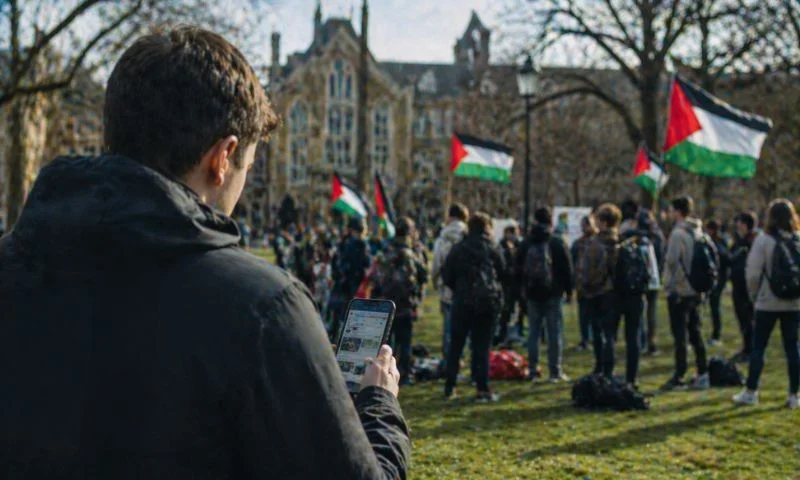
A number of British universities have paid a private security company run by former military intelligence officials to monitor students’ social media activity, raising concerns about surveillance, privacy and academic freedom. An investigation found that at least 12 universities hired a firm known as Horus to track student protesters and academics, particularly those expressing support for Palestine. The company reportedly analysed social media posts, compiled intelligence reports and conducted background checks on individuals invited to speak on campuses. The findings highlight how universities turned to external security services amid rising campus protests linked to the war in Gaza and broader political tensions. Monitoring protests and online activity According to the investigation, the security firm provided detailed reports on student activism, including online behaviour and affiliations. In one case, it carried out background checks on a Palestinian guest speaker, while in others it tracked the social media presence of student protesters. Student groups at institutions such as the London School of Economics were among those reportedly monitored, with the firm producing intelligence-style briefings for university administrators. The surveillance extended beyond physical protests, focusing heavily on digital spaces where students organise and express views. Universities defend security measures Universities involved have argued that such monitoring was necessary to maintain campus safety and manage potential disruptions. They said the use of external security firms was part of broader efforts to assess risks linked to protests and ensure events could proceed without incident. However, critics say the approach risks blurring the line between safety and surveillance. Civil liberties organisations have warned that monitoring students’ online activity could have a chilling effect on free speech and discourage political engagement. Concerns over privacy and academic freedom The revelations have triggered debate over data protection and the role of universities as spaces for open discussion. Campaigners argue that outsourcing surveillance to private firms raises serious questions about accountability and the handling of sensitive personal information. “There are growing fears that universities are acting as extensions of security services,” one rights group said in response to the findings. Experts note that universities hold large volumes of personal data, and increased monitoring could expose students and staff to misuse of information if safeguards are not strictly enforced. Part of a wider trend The use of surveillance measures on campuses is not new, but the scale and sophistication of monitoring appear to be increasing. Previous investigations have shown that some institutions have monitored student communications or worked with external organisations to track protest activity, particularly in politically sensitive contexts. Analysts say the latest revelations reflect broader tensions between security concerns and civil liberties in higher education systems. Growing scrutiny The report is likely to intensify scrutiny of university policies and their relationships with private security firms. Students and advocacy groups are calling for greater transparency, clearer guidelines on data use and stronger protections for academic freedom. As universities continue to navigate politically charged environments, the balance between ensuring safety and protecting individual rights is expected to remain a central issue.

Dawood Lawrencepur Appoints Hussain Dawood as Chairman, Retains CEO
Dawood Lawrencepur Limited has announced changes to its top leadership, appointing Hussain Dawood as chairman of the board while reappointing Muhammad Bilal Ahmed as chief executive officer, according to a notice issued to the Pakistan Stock Exchange. The move signals continuity at the Karachi-based investment company, which is part of the broader Dawood Group and focuses on managing investments in subsidiaries and associated businesses. Leadership Changes Confirmed According to the official filing, Hussain Dawood will now lead the board of directors, taking on the chairman role at a time when the company is undergoing structural consolidation. At the same time, Muhammad Bilal Ahmed has been reappointed as CEO, ensuring stability in the company’s executive management. The announcement reflects a strategic effort to align leadership with ongoing corporate developments, particularly as Dawood Lawrencepur continues to expand its investment portfolio and strengthen its governance structure. The leadership update comes alongside a broader corporate restructuring, with the company consolidating assets, liabilities and obligations of merging entities under a unified structure. As part of the arrangement, shares of Dawood Lawrencepur Limited are expected to be issued to shareholders of associated entities including Cyan Limited and DH Partners Limited, reinforcing the company’s position as an investment holding platform. Dawood Lawrencepur was incorporated in 2004 through the merger of several textile and industrial entities and has since evolved into an investment-focused company managing diversified assets across sectors. Hussain Dawood, who also chairs major industrial and investment entities, brings extensive experience in business strategy and capital allocation, while Muhammad Bilal Ahmed is expected to continue overseeing operational execution and investment performance. The development highlights a broader trend among listed firms to strengthen governance frameworks and enhance investor confidence through clear leadership structures.
US President Donald Trump Announces Ceasefire at Pakistan’s Request, White House Signals Caution
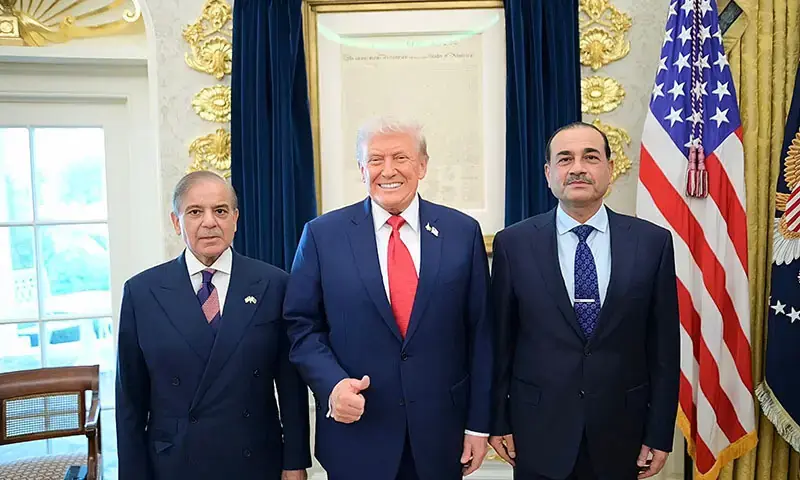
US President Donald Trump announced a ceasefire with Iran through his social media platform Truth Social, crediting Pakistan’s leadership for playing a key role in securing the pause in hostilities as diplomatic efforts continue. In his post, Trump said the ceasefire decision was taken “at the request of Pakistan’s Prime Minister Shehbaz Sharif and Field Marshal Asim Munir,” adding that it was intended to create space for ongoing negotiations. He described the move as part of efforts to reduce tensions and give diplomacy a chance to succeed. 🚨 pic.twitter.com/7dXfz9afth— Rapid Response 47 (@RapidResponse47) April 21, 2026 The announcement comes at a critical moment, with a fragile ceasefire nearing its deadline and uncertainty surrounding the next round of talks between Washington and Tehran. Pakistan Welcomes Ceasefire, Highlights Mediation Role Prime Minister Shehbaz Sharif responded on X, thanking Trump for accepting Pakistan’s request and extending the ceasefire. “On my personal behalf and on behalf of Field Marshal Syed Asim Munir, I sincerely thank President Trump for graciously accepting our request to extend the ceasefire to allow ongoing diplomatic efforts to take their course,” the prime minister said. On my personal behalf and on behalf of Field Marshal Syed Asim Munir, I sincerely thank President Trump for graciously accepting our request to extend the ceasefire to allow ongoing diplomatic efforts to take their course. With the trust and confidence reposed in, Pakistan…— Shehbaz Sharif (@CMShehbaz) April 21, 2026 He reiterated that Pakistan would continue its efforts to facilitate dialogue between the United States and Iran, expressing hope that negotiations could lead to a long-term resolution. Federal Information Minister Attaullah Tarar also welcomed the development, calling it a positive outcome of Pakistan’s diplomatic engagement and a reflection of its growing role in promoting regional stability. The situation as it stands at 1930 PST 1. Formal response from Iranian side about confirmation of delegation to attend Islamabad Peace Talks is still awaited.2. Pakistan as the mediator is in constant touch with Iranians and pursuing the path of diplomacy and dialogue.3.…— Attaullah Tarar (@TararAttaullah) April 21, 2026 White House Cautious as Talks Hang in Balance While confirming the ceasefire, the White House signaled caution about the future of negotiations, indicating that further talks would depend on Iran’s participation and progress on key issues. Officials noted that a planned visit by US negotiators to Islamabad remains under review, amid uncertainty over whether Tehran will join the next round of discussions. Iran has taken a more guarded stance, raising concerns over US conditions, sanctions and military actions, which it says must be addressed before meaningful negotiations can proceed. Ceasefire Buys Time but Key Gaps Persist The ceasefire extension is seen as a temporary measure aimed at preventing escalation while allowing both sides to continue diplomatic engagement. However, major differences remain over core issues, including sanctions relief, regional security arrangements and maritime restrictions. Analysts say Pakistan’s role as a mediator has gained prominence, with Islamabad hosting earlier rounds of talks and maintaining communication channels between both sides. Despite some signs of progress, experts caution that the path to a final agreement remains complex, with both Washington and Tehran holding firm on key demands. With the ceasefire deadline approaching, the coming days will be crucial in determining whether the diplomatic process can deliver a breakthrough or if tensions could rise again.
