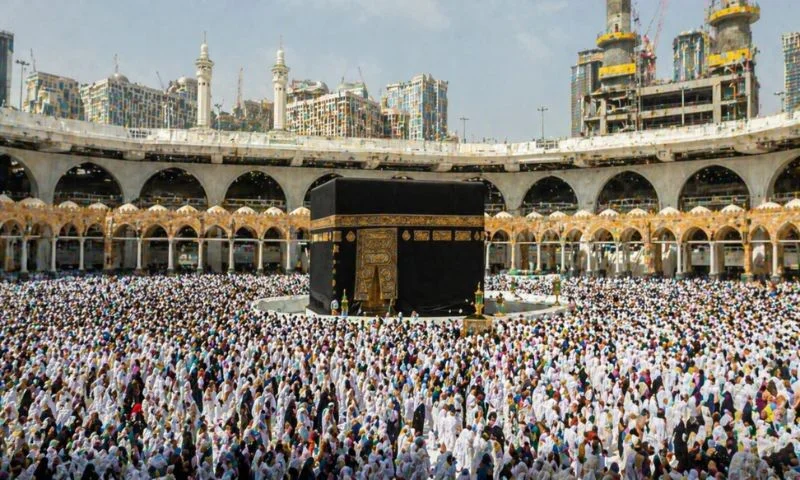
Saudi Arabia has introduced sweeping new regulations for Hajj 2026, enforcing strict permit requirements, tighter entry controls into Makkah and heavy financial penalties for violators as authorities prepare for one of the world’s largest religious gatherings.
Officials have reiterated a central rule for this year’s pilgrimage: no individual will be allowed to perform Hajj without an official permit issued through authorised channels. “No leniency will be shown toward any attempt to perform Hajj without a permit,” the Ministry of Hajj and Umrah said.
The measures are aimed at improving crowd control, safety and logistical management during the annual event, which draws millions of pilgrims from around the world.
Permit mandatory, entry tightly controlled
Under the updated rules, entry into Makkah and the holy sites during the Hajj period is restricted exclusively to individuals holding valid Hajj permits.
Authorities have explicitly barred all visit visa holders from performing Hajj, warning that such visas do not grant access to pilgrimage areas.
Expatriates residing in Saudi Arabia must also carry proper documentation, such as a Hajj permit or a work permit for the holy sites, to enter Makkah during the restricted period.
In addition, Umrah visas and permits have been temporarily suspended during the Hajj season to prioritise pilgrims performing the annual rituals.
Heavy fines and strict penalties
Saudi authorities have announced significant penalties for violating Hajj regulations.
Individuals attempting to perform Hajj without a permit, including visit visa holders entering restricted areas, face fines of up to 20,000 Saudi riyals.
Stronger penalties apply to those facilitating illegal participation. Anyone who transports, shelters or assists unauthorised pilgrims can be fined up to 100,000 riyals, with penalties increasing based on the number of violators involved.
Authorities have also warned that violators may face deportation and a ban from re-entering the Kingdom for up to 10 years.
In some cases, courts may order the confiscation of vehicles used to transport illegal pilgrims, further tightening enforcement measures.
Deadlines and compliance measures
Officials have set strict timelines for compliance. Foreign pilgrims entering on Umrah visas were required to leave the Kingdom by mid-April, with overstaying considered a violation.
Security checkpoints have been reinforced at entry points to Makkah, with authorities turning back individuals who do not have the required permits.
The government has urged residents and visitors to comply fully with regulations and report violations through designated emergency channels.
Ensuring safety at scale
The tightened rules reflect Saudi Arabia’s broader strategy to manage the massive influx of pilgrims while ensuring safety and efficiency.
Officials say the permit system remains the cornerstone of crowd control, helping regulate the number of participants and prevent overcrowding at key sites.
The measures come as preparations intensify for Hajj 2026, with authorities deploying enhanced transport, security and digital systems to streamline operations.
Outlook
While the stricter rules may pose challenges for some travellers, officials say they are essential to ensuring a safe and organised pilgrimage experience.
With millions expected to attend, Saudi Arabia is signalling a zero-tolerance approach toward violations, reinforcing that compliance with permit regulations is non-negotiable.