


Pakistani runners London Marathon 2026 made a notable impact as a contingent of 18 athletes from Pakistan and the diaspora competed in the 42.195km race, reflecting both performance and endurance on a global stage. The race, part of the London Marathon series, saw more than 50,000 participants take part in one of the largest marathon events in the world. Among the standout names was Karachi-based runner Adnan Gandhi, a Six Star finisher, who completed his second consecutive London Marathon and his 11th World Marathon Major overall. His wife, Hira Diwan Gandhi, also a Six Star finisher, ran her sixth London Marathon and her 18th marathon overall. Denmark-based Zeeshan Rab added further depth to the contingent, taking part in his 55th marathon and his eighth race of the year, highlighting the experience within the Pakistani group. The group included runners from Pakistan, the UK, USA, Austria, Norway, UAE, and Denmark, demonstrating the strong role of the diaspora in international endurance events. Participants included Sarah Lodhi, Qamar Zia, Ahmer Khan, Naveed Hussain, Amin Mukaty, Faisal Shafi, Abdullah Athar, and several UK-based runners. Performance and Global Context While elite athletes dominated headlines, including Kenya’s Sabastian Sawe who clocked a historic 1:59:30, Pakistani runners focused on completing the race and achieving personal milestones. The London Marathon saw nearly 59,000 finishers, underlining its scale and competitiveness. Pakistani participants did not compete in the elite category but recorded respectable finishing times typical of amateur marathon runners. The fastest performances among Pakistani participants ranged in the approximate 3 to 4 hour bracket, while others completed the race within standard cut-off times of around six to seven hours, reflecting varying experience levels. Many runners also participated for charitable causes. Adnan Gandhi, for example, raised funds for the British Asian Trust, supporting mental health and youth employment initiatives in Pakistan. Read More: History Made: Kenya Star Breaks Two-Hour Marathon Barrier Representation, Challenges and Future Growth The participation of 18 Pakistani runners may appear modest, but it signals a steady rise in endurance sports from the country. Running communities in cities like Karachi and Lahore continue to expand, encouraging athletes to take part in global events. However, challenges remain. Pakistan lacks structured marathon training systems, elite coaching, and institutional backing. Many runners rely on personal training plans and community support. Despite this, the London Marathon 2026 performance highlights progress. The presence of multiple Six Star finishers indicates that Pakistani runners are achieving global milestones. Experts say international participation helps improve performance standards and inspires new runners. As exposure increases, more athletes are expected to compete at higher levels. For now, the achievements in London underline resilience and growing ambition. Pakistani runners may not yet dominate elite rankings, but their consistency and presence continue to build momentum on the global stage. Read More: Flair Travel Joins Hands with Pakistan Tennis Federation in Major Boost for Sports Tourism
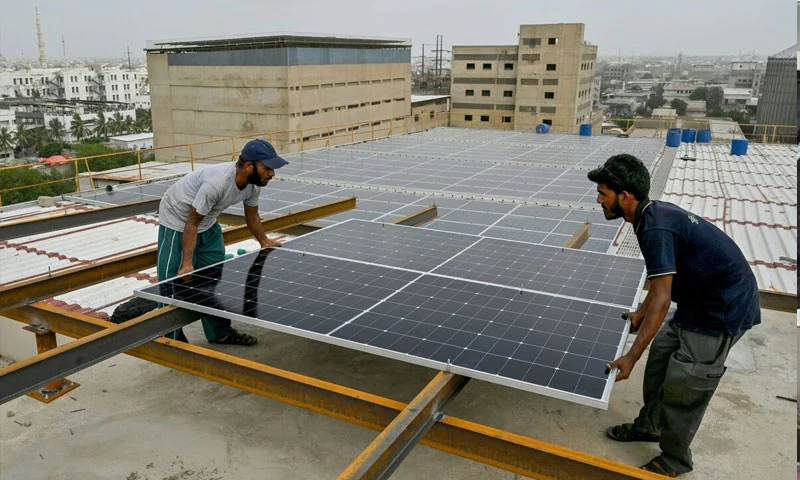
Solar Takes Over as Pakistan’s Top Electricity Source
Pakistan’s solar energy revolution in Pakistan has accelerated at an unprecedented pace, with solar power emerging as the country’s leading source of electricity, driven largely by households and businesses rather than the state. Data shows a sharp increase in solar’s share of electricity generation over the past five years. Solar contributed just 4 percent in 2021. That figure rose to 7 percent in 2022 and 10 percent in 2023. It then climbed to 14 percent in 2024 and reached 25 percent in 2025. In 2026, solar now accounts for around 30 percent of total electricity generation, making it the largest source in the national energy mix. Read More: Pakistan Makes Bold Rs3 Billion Move Toward Solar Powered Telecom Energy analysts say this shift marks one of the fastest transitions to renewable energy seen globally. Unlike many countries, Pakistan’s transition has not been led by large-scale government projects. Instead, consumers have driven the change through rooftop solar installations. “This is a consumer-led energy transition,” an energy expert said, pointing to the rapid growth in small-scale solar systems across urban and rural areas. Consumers Lead the Transition Rising electricity tariffs and frequent power shortages have pushed households and businesses toward solar solutions. In recent years, electricity prices have increased sharply due to higher fuel costs and structural inefficiencies in the power sector. As a result, many consumers have turned to solar panels to reduce dependence on the national grid. Net metering policies have also encouraged adoption by allowing users to sell excess electricity back to the system. Read More: Net Metering Overhaul Explained: Who Wins, Who Loses, and What Solar Users Should Know According to data from the International Energy Agency, Pakistan has significantly increased its solar imports, particularly from China, which has lowered installation costs. Meanwhile, the World Bank has noted that distributed solar solutions can help countries address energy shortages while reducing emissions. Experts say the falling cost of solar technology has played a crucial role. Over the past decade, global solar panel prices have dropped sharply, making the technology more accessible. Economic and Environmental Impact The solar energy revolution in Pakistan is already reshaping the economy and energy landscape. Reduced reliance on imported fuel can ease pressure on foreign exchange reserves. At the same time, lower electricity costs can improve business competitiveness. Environmental benefits are also significant. Increased solar adoption helps reduce carbon emissions and supports global climate goals. Pakistan remains vulnerable to climate change, so cleaner energy sources offer long-term advantages. However, challenges remain. Grid integration, policy consistency, and infrastructure upgrades will determine how sustainable this growth becomes. Analysts warn that without proper planning, rapid solar adoption could create imbalances in the power system. Read More: Solar Boom Today, Waste Crisis Tomorrow? The Hidden Challenge of Solar Panels Despite these concerns, the trend shows no signs of slowing. The combination of high energy costs, technological advances, and consumer demand continues to drive adoption. Pakistan’s solar shift highlights a broader transformation. It shows how market forces and individual choices can reshape a national energy system. If current trends continue, the country could become a global case study in consumer-led renewable energy adoption.

One Million Jobs in London Face AI Disruption
AI impact on London jobs is becoming a growing concern after a new report warned that at least one million roles in the UK capital face significant exposure to automation. The study by the Greater London Authority highlights how rapid advances in artificial intelligence could reshape the city’s labour market. The report found that more than 300,000 administrative jobs face the highest risk, as routine clerical tasks align closely with generative AI capabilities. A further 748,000 roles across IT, data analysis, and secretarial work also face disruption, though the level of impact varies by task. In a speech in Madrid, London Mayor Sadiq Khan warned policymakers against inaction. “If we take a hands-off approach, AI could cause significant harm to London’s labour market,” he said. Who Faces the Greatest Risk The findings show that nearly 46 percent of London’s workforce operates in roles where AI could automate part of their tasks. That equates to around 2.4 million workers, underscoring the scale of potential disruption. Women, young people, and highly educated workers appear most exposed. Many are concentrated in administrative and knowledge-based roles where automation tools can replicate routine processes. Professions such as brokers, web designers, telephone sales staff, and journalists also feature among those at risk. In contrast, jobs requiring manual skills or human interaction, including barbers, chefs, and architects, show lower exposure. Economist Jeff Dwan-O’Reilly, who authored the report, noted that limited exposure does not mean immunity. Even roles less aligned with AI could still see changes in workflows and productivity expectations. Read More: Why Young Chinese Are Quitting Jobs to Build AI-Powered Solo Businesses Automation or Augmentation Despite the warning signs, the report stops short of predicting widespread job losses. Instead, it suggests that AI will likely reshape tasks rather than eliminate entire roles. “I want to be clear that a high degree of exposure to AI does not necessarily mean job losses,” Khan said. “Our research indicates there’s every chance that AI will augment and assist the Londoners working in these roles.” However, early signs of workforce shifts are already emerging. Around 7 percent of large UK businesses have used AI to reduce staffing levels, according to the report. Former UK prime minister Rishi Sunak recently echoed these concerns, stating that AI is already flattening job opportunities for younger workers, particularly in sectors like law, accountancy, and creative industries. Read More: G42 Opens Jobs to AI Agents in World-First Hiring Move A Defining Moment for the Labour Market Experts say the findings reflect a broader global trend. Research from organizations such as the International Labour Organization suggests that AI will transform millions of jobs worldwide, with advanced economies facing the greatest exposure. London’s challenge now lies in balancing innovation with workforce protection. Policymakers are under pressure to invest in reskilling, education, and regulatory frameworks that ensure AI benefits are widely shared. “Given the numbers of Londoners that are exposed, we cannot afford to be complacent,” Khan said. As artificial intelligence continues to evolve, the debate over its impact on jobs is likely to intensify. For London’s workforce, the coming years could define how technology reshapes careers, industries, and economic stability.

From Lab to Loom: How India’s Silk Industry Is Reinventing Itself
India silk industry renewal is gathering pace as science, technology, and entrepreneurship reshape one of the country’s oldest rural industries. Across states like Andhra Pradesh, farmers and startups are blending research with tradition to revive sericulture and boost incomes. Dr Jolapuram Umamaheswari represents this shift. She left her career in Singapore and returned to India in search of independence. “When I came back to India, I was jobless but I wanted to be my own boss,” she reported. After exploring options, she turned to silk farming. “Silk farming sits at a rare intersection of biology, precision, and business. It didn’t feel like I was leaving science, it felt like I was applying it differently,” she said. Science Meets Tradition Sericulture involves feeding mulberry leaves to silkworms, harvesting cocoons, and extracting silk fibres. The process demands strict control of temperature, humidity, and hygiene. Early setbacks tested Umamaheswari’s resolve. “The early days were not easy. There were disease outbreaks, inconsistent yields, and the steep learning curve that comes with managing living systems,” she said. Over time, she refined her methods. Better feeding practices and environmental control improved survival rates. Today, she produces around 10 silk crops annually. Each cycle takes less than a month and generates a steady monthly income of about $1,000. Experts say her journey reflects a broader transformation. According to India’s Central Silk Board, improved techniques have increased productivity even as the number of farmers declines. “India is the only country in the world where all four commercial varieties of silk are available,” said Manthira Moorthy from the board, referring to mulberry, tasar, eri, and muga silk. Read More: Why Young Chinese Are Quitting Jobs to Build AI-Powered Solo Businesses Technology Reshapes the Industry Startups are accelerating this renewal. At Asho Farms, founder Krishna Tomala has integrated sensors and automation into silk farming. “A silkworm grows nearly a thousand times in just 25 days. But its success depends completely on temperature, humidity and good-quality leaves,” he said. Sensors now monitor conditions in real time. Automated systems adjust fans and humidifiers to maintain optimal environments. The company also uses artificial intelligence to detect disease. “I use computer vision and machine learning. Cameras can detect early signs of diseases in silkworm larvae with over 99% accuracy,” Tomala said. Beyond farming, technology is transforming silk reeling. Machines now extract fibres faster and more efficiently. Satheesh Kannur, a silk reeler, said one machine can produce up to 60kg of raw silk daily. “Technology is transforming silk reeling from a slow, manual craft into a fast, precision-driven industry,” he said. Read More: From Tradition to Technology: How AI Clips Are Fueling Marriage Debates in China Challenges and Future Outlook Despite progress, challenges remain. India ranks second globally after China in silk production. However, fragmented landholdings and declining farmer interest could limit supply. “Without cocoons, there is no silk,” Kannur warned, pointing to growing demand from manufacturers. Officials remain optimistic. They say better disease control, genome research, and improved farming techniques will sustain growth. Researchers are also developing disease-resistant silkworms through international collaborations. Meanwhile, farmers like Umamaheswari continue to innovate at ground level. She plans to integrate dairy farming into her operations, using manure to enrich mulberry crops. “Even small improvements in technique can significantly increase yield and quality,” she said. As India blends science with tradition, its silk industry appears poised for a new phase of sustainable growth.

Your Charging Cable Is Dying Faster Than You Think
Charging cable damage habits are costing consumers money and convenience, as everyday misuse quietly shortens the lifespan of phone and laptop chargers. A recent report how simple behaviors such as bending cables sharply or pulling them from the cord instead of the plug can lead to early failure. Experts say cables are designed to handle limited stress, yet many users unknowingly exceed those limits. Repeated bending near the connector weakens internal wires over time. Eventually, the cable stops charging or becomes unsafe to use. “Cables tend to fail at their weakest point, which is usually where the wire meets the connector,” the report notes, explaining that this area faces the most strain during daily use. Small Habits, Big Impact Many users charge their devices while actively using them, placing constant pressure on the cable. This habit, though common, accelerates wear. Twisting or tightly wrapping cables for storage also damages internal wiring. According to engineers cited in the report, frequent plugging and unplugging can loosen connectors. Over time, this reduces charging efficiency and increases the risk of overheating. Heat exposure, especially from fast charging, can further degrade materials. Research from Consumer Reports supports these findings. It notes that improper handling remains one of the leading causes of cable failure worldwide. Meanwhile, data from International Electrotechnical Commission shows that poor-quality or damaged cables can pose safety risks, including short circuits. “People often underestimate the stress they put on cables during normal use,” an electronics specialist said. “Even small, repeated actions can cause internal damage.” Read More: Wired Headphones Make a Comeback as Health Concerns and Sound Quality Debate Grow How to Make Your Cables Last Longer Simple changes can significantly extend a cable’s life. Experts recommend unplugging cables by holding the connector instead of pulling the cord. Avoid sharp bends, especially near the ends, and store cables loosely rather than tightly wrapped. Using certified cables also matters. Products that meet safety standards are more durable and less prone to overheating. Some manufacturers now reinforce cable joints to reduce strain damage. Another key step involves reducing unnecessary movement during charging. Placing devices on stable surfaces instead of using them mid-charge can limit stress on connectors. As devices rely more on fast charging and higher power delivery, cable durability becomes increasingly important. Analysts warn that replacing cables frequently adds to electronic waste, raising environmental concerns. “Extending the life of small accessories like cables can have a meaningful impact on reducing e-waste,” the report adds. With smartphones and laptops central to daily life, maintaining charging cables may seem minor. Yet experts say these small adjustments can save money, improve safety, and reduce waste over time. Read More: The End of Wires? Finland’s Wireless Electricity Experiment Stuns Scientists

$1200 New York Tiny Apartment Goes Viral Over 44 Sq Ft Space
New York City has once again drawn global attention to its housing crisis after a woman’s video showing her 44-square-foot apartment rented for $1200 went viral, sparking debate over affordability in one of the world’s most expensive cities. Tiny Space, Big Price Shock The viral clip shows a compact living space that barely fits a bed and a few essentials. The tenant walks viewers through the apartment, highlighting how she has organised every inch to make it functional. The video quickly gained traction on social media, with many users expressing disbelief at the rent. Read More: This Viral Fan Method Could Change How You Cool Your Home “This is my entire apartment,” she says in the video, pointing to the tightly packed layout. Despite the size, the rent stands at $1200 per month, a figure that stunned viewers unfamiliar with New York’s housing market. View this post on Instagram A post shared by Caleb Simpson (@calebwsimpson) Many social media users reacted with shock. Some questioned how such spaces are even legal, while others pointed out that this reflects a broader housing shortage rather than an isolated case. Housing Crisis Driving Micro-Living Trend Housing experts say the video reflects a wider trend in New York City, where soaring rents and limited supply have pushed residents toward micro-apartments. These units, often under 100 square feet, have become increasingly common in high-demand neighbourhoods. According to recent housing data, the average rent for a one-bedroom apartment in New York City exceeds $3,500 per month, depending on location. This has forced many young professionals and students to settle for smaller spaces in exchange for affordability. Read More: Parents of 13 Reveal Jaw-Dropping Monthly Grocery Bill Before Baby No. 14 Urban planners note that micro-living is not unique to New York. Cities like Tokyo and Hong Kong have long embraced compact housing due to space constraints and high land prices. However, the rapid rise of such units in the United States highlights growing pressure on urban housing markets. Social Media Reaction and Broader Debate The viral video has reignited discussions about housing inequality and cost of living. While some users praised the tenant’s creativity in maximising space, others criticised the system that allows such high rents for minimal living conditions. “New York rent is out of control,” one user commented, echoing a sentiment widely shared online. Others argued that demand continues to outstrip supply, keeping prices elevated despite growing criticism. Read More: Fuel Prices Surge, Expenses Rise: How to Save Money in Tough Times For many residents, micro-apartments represent a compromise between location and comfort. While they provide access to job opportunities and urban amenities, they also highlight the trade-offs people must make to live in major metropolitan areas.
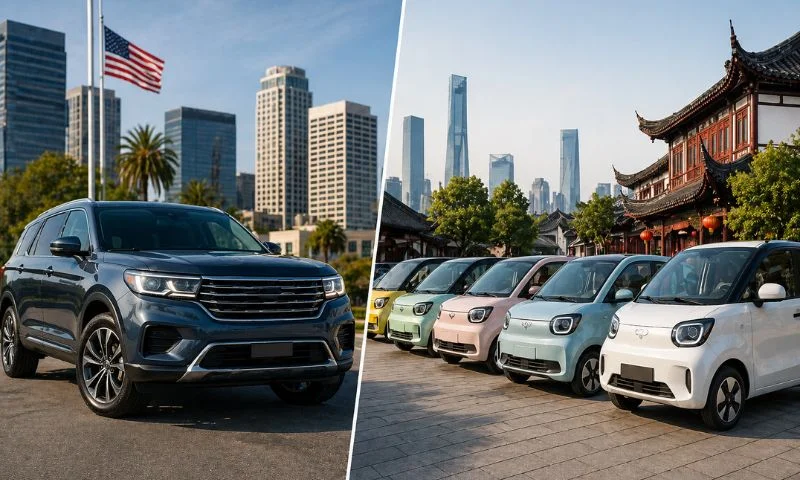
Five New Chinese EVs in The Price of One Car in US: The Price Gap Shaking the Auto Industry
The idea that the price of one American car could buy five Chinese electric vehicles is not far from reality. The average new car in the United States now costs close to $48,000, according to data from Cox Automotive. In contrast, several entry-level EVs in China sell for under $10,000. Models like the BYD Seagull and the Wuling Hongguang Mini EV have become symbols of China’s aggressive push into low-cost electric mobility. Analysts say this pricing gap reflects structural differences in manufacturing, policy, and consumer demand. “The cost advantage Chinese manufacturers have is not marginal, it is structural,” said Tu Le, managing director at Sino Auto Insights. “They have optimized supply chains, local battery production, and scale in a way Western automakers are still catching up to.” Why Chinese EVs Are So Cheap China’s EV boom has been driven by years of state support and industrial strategy. Companies like BYD and SAIC Motor benefit from domestic battery supply chains, lower labor costs, and intense competition among dozens of local brands. Battery prices, which account for a large share of EV costs, have also fallen sharply in China. According to the International Energy Agency, China produces more than 70 percent of the world’s EV batteries, giving its manufacturers a decisive edge. Chinese EVs also tend to focus on urban mobility. Many offer smaller battery packs, shorter driving ranges, and fewer premium features compared to U.S. vehicles. That design philosophy helps cut costs while meeting local demand. “Chinese EV makers design for affordability first, not luxury,” said an analyst at BloombergNEF. “That changes everything from materials to performance expectations.” Read More: Electric Rides & Hybrid Power: Pakistan’s 2026 Car Lineup Preview Barriers in Western Markets Despite the price advantage, most ultra-cheap Chinese EVs are not available in the United States. Trade tariffs, safety regulations, and political tensions limit their entry. The U.S. has also imposed steep tariffs on Chinese EV imports, citing concerns over unfair subsidies. American automakers like Tesla and General Motors focus on higher-margin vehicles. Their models often include longer range, advanced software, and premium features, which push prices higher. Still, the price gap has sparked concern among policymakers and industry leaders. Some warn that Western markets risk falling behind in the race for mass-market EV adoption. “The affordability challenge is real,” said Fatih Birol, executive director of the International Energy Agency. “If electric cars are to scale globally, they must become accessible to a much wider population.” As competition intensifies, analysts expect global automakers to rethink their strategies. Lower-cost EV platforms, localized supply chains, and policy incentives could reshape pricing dynamics in the coming years. Read More: “Not a Fair Fight”: Ford CEO Warns Chinese EVs Could Crush US Auto Industry
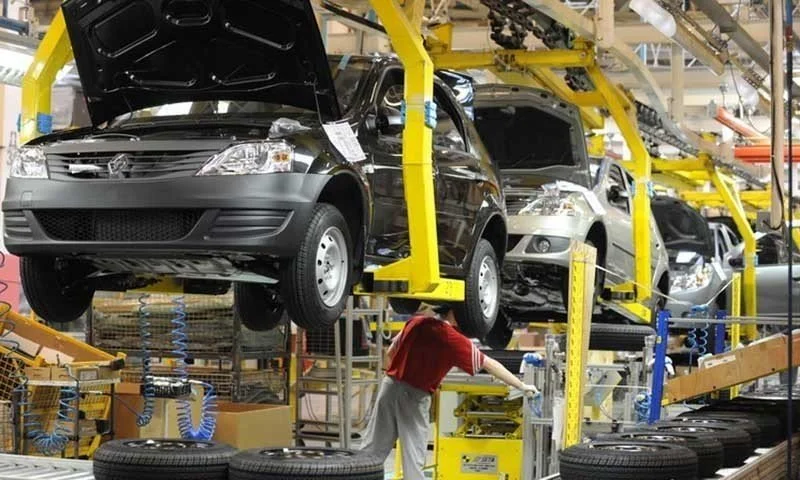
Local Auto Parts Production Gets Major Boost in Pakistan
Pakistan’s auto sector is gaining momentum as Indus Motor Company announced an additional Rs1 billion investment to expand local auto parts production. The move strengthens localisation efforts and promises long-term economic benefits for the country. Indus Motor Accelerates Localisation Drive Indus Motor Company has approved fresh funding to scale up domestic manufacturing of vehicle components. This step builds on its earlier Rs4.1 billion commitment made in 2024. As a result, the total investment in localisation now stands at Rs5.1 billion. Read More: Pakistan Builds EV Charging Network Across Motorways The company will use the funds to install plant and machinery, develop moulds and dies, and enhance production capacity. Moreover, it has extended the project timeline to 2027, showing a phased and sustained approach. Industry experts say this decision reflects renewed confidence in Pakistan’s manufacturing sector. After a period of slowdown, companies are now actively rebuilding operations and supply chains. Economic Gains and Import Relief The investment is expected to reduce Pakistan’s reliance on imported auto parts. As a result, it can ease pressure on foreign exchange reserves, which remain a key concern for policymakers. At the same time, stronger localisation will support domestic vendors and engineering firms. This creates a ripple effect across the supply chain. In addition, it opens doors for technology transfer and skill development. Read More: Pakistan’s Electric Revolution Gains Momentum as Bold Shift Targets Fuel Import Reduction Economists highlight that local production reduces exposure to currency fluctuations. Consequently, it helps stabilise costs for manufacturers and improves overall efficiency. Benefits for Consumers and Industry For consumers, the impact may appear gradually. However, increased local production can improve vehicle availability and reduce delivery delays. Over time, it may also help stabilise car prices. Read More: Changan Unveils UNI-S SUV in Pakistan, Targets Premium Market Furthermore, the move signals a broader recovery in Pakistan’s auto sector. In recent years, production cuts and import restrictions had disrupted the market. Now, easing constraints and improved economic stability are supporting a turnaround. Analysts believe continued investment in localisation will strengthen the industry’s foundation. If sustained, it could shift Pakistan from an assembly-based model to a more value-driven manufacturing hub.
