Pakistan’s solar energy revolution in Pakistan has accelerated at an unprecedented pace, with solar power emerging as the country’s leading source of electricity, driven largely by households and businesses rather than the state.
Data shows a sharp increase in solar’s share of electricity generation over the past five years. Solar contributed just 4 percent in 2021. That figure rose to 7 percent in 2022 and 10 percent in 2023. It then climbed to 14 percent in 2024 and reached 25 percent in 2025. In 2026, solar now accounts for around 30 percent of total electricity generation, making it the largest source in the national energy mix.
Read More: Pakistan Makes Bold Rs3 Billion Move Toward Solar Powered Telecom
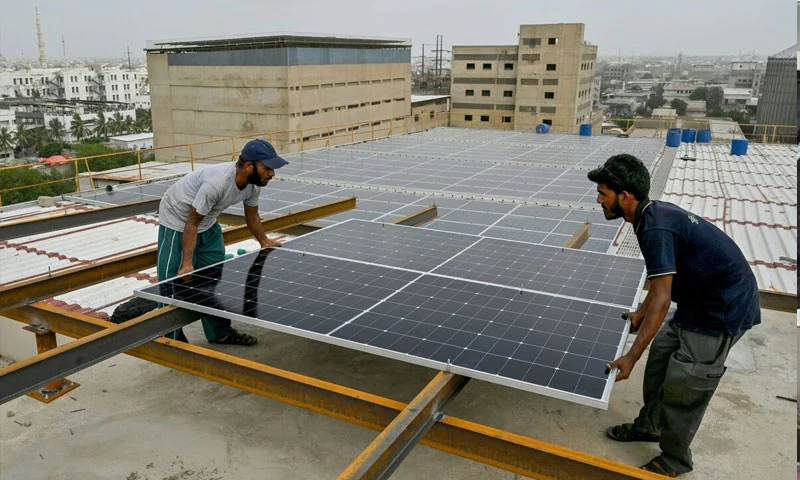
Energy analysts say this shift marks one of the fastest transitions to renewable energy seen globally. Unlike many countries, Pakistan’s transition has not been led by large-scale government projects. Instead, consumers have driven the change through rooftop solar installations.
“This is a consumer-led energy transition,” an energy expert said, pointing to the rapid growth in small-scale solar systems across urban and rural areas.
Consumers Lead the Transition
Rising electricity tariffs and frequent power shortages have pushed households and businesses toward solar solutions. In recent years, electricity prices have increased sharply due to higher fuel costs and structural inefficiencies in the power sector.
As a result, many consumers have turned to solar panels to reduce dependence on the national grid. Net metering policies have also encouraged adoption by allowing users to sell excess electricity back to the system.
Read More: Net Metering Overhaul Explained: Who Wins, Who Loses, and What Solar Users Should Know
According to data from the International Energy Agency, Pakistan has significantly increased its solar imports, particularly from China, which has lowered installation costs. Meanwhile, the World Bank has noted that distributed solar solutions can help countries address energy shortages while reducing emissions.
Experts say the falling cost of solar technology has played a crucial role. Over the past decade, global solar panel prices have dropped sharply, making the technology more accessible.
Economic and Environmental Impact
The solar energy revolution in Pakistan is already reshaping the economy and energy landscape. Reduced reliance on imported fuel can ease pressure on foreign exchange reserves. At the same time, lower electricity costs can improve business competitiveness.
Environmental benefits are also significant. Increased solar adoption helps reduce carbon emissions and supports global climate goals. Pakistan remains vulnerable to climate change, so cleaner energy sources offer long-term advantages.
However, challenges remain. Grid integration, policy consistency, and infrastructure upgrades will determine how sustainable this growth becomes. Analysts warn that without proper planning, rapid solar adoption could create imbalances in the power system.
Read More: Solar Boom Today, Waste Crisis Tomorrow? The Hidden Challenge of Solar Panels
Despite these concerns, the trend shows no signs of slowing. The combination of high energy costs, technological advances, and consumer demand continues to drive adoption.
Pakistan’s solar shift highlights a broader transformation. It shows how market forces and individual choices can reshape a national energy system. If current trends continue, the country could become a global case study in consumer-led renewable energy adoption.