
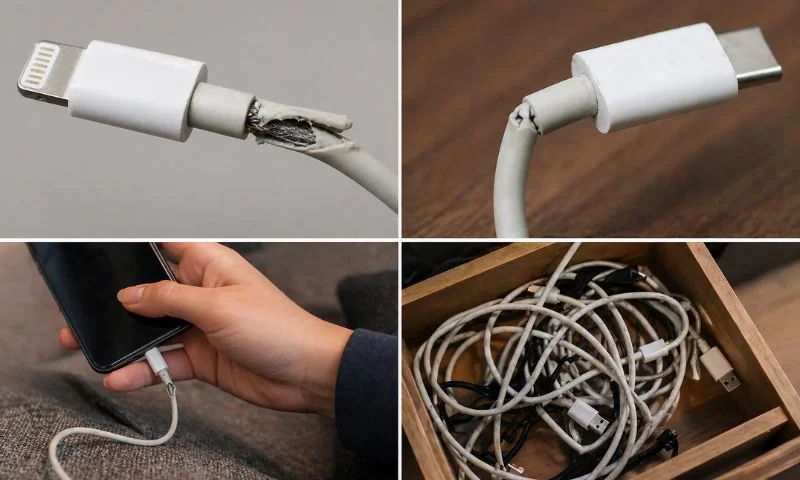
Charging cable damage habits are costing consumers money and convenience, as everyday misuse quietly shortens the lifespan of phone and laptop chargers. A recent report how simple behaviors such as bending cables sharply or pulling them from the cord instead of the plug can lead to early failure.
Experts say cables are designed to handle limited stress, yet many users unknowingly exceed those limits. Repeated bending near the connector weakens internal wires over time. Eventually, the cable stops charging or becomes unsafe to use.
“Cables tend to fail at their weakest point, which is usually where the wire meets the connector,” the report notes, explaining that this area faces the most strain during daily use.
Small Habits, Big Impact
Many users charge their devices while actively using them, placing constant pressure on the cable. This habit, though common, accelerates wear. Twisting or tightly wrapping cables for storage also damages internal wiring.
According to engineers cited in the report, frequent plugging and unplugging can loosen connectors. Over time, this reduces charging efficiency and increases the risk of overheating. Heat exposure, especially from fast charging, can further degrade materials.
Research from Consumer Reports supports these findings. It notes that improper handling remains one of the leading causes of cable failure worldwide. Meanwhile, data from International Electrotechnical Commission shows that poor-quality or damaged cables can pose safety risks, including short circuits.
“People often underestimate the stress they put on cables during normal use,” an electronics specialist said. “Even small, repeated actions can cause internal damage.”
Read More: Wired Headphones Make a Comeback as Health Concerns and Sound Quality Debate Grow
How to Make Your Cables Last Longer
Simple changes can significantly extend a cable’s life. Experts recommend unplugging cables by holding the connector instead of pulling the cord. Avoid sharp bends, especially near the ends, and store cables loosely rather than tightly wrapped.
Using certified cables also matters. Products that meet safety standards are more durable and less prone to overheating. Some manufacturers now reinforce cable joints to reduce strain damage.
Another key step involves reducing unnecessary movement during charging. Placing devices on stable surfaces instead of using them mid-charge can limit stress on connectors.
As devices rely more on fast charging and higher power delivery, cable durability becomes increasingly important. Analysts warn that replacing cables frequently adds to electronic waste, raising environmental concerns.
“Extending the life of small accessories like cables can have a meaningful impact on reducing e-waste,” the report adds.
With smartphones and laptops central to daily life, maintaining charging cables may seem minor. Yet experts say these small adjustments can save money, improve safety, and reduce waste over time.
Read More: The End of Wires? Finland’s Wireless Electricity Experiment Stuns Scientists