


The Pakistan Navy has launched a humanitarian rescue operation in the Arabian Sea to assist a distressed merchant vessel carrying multinational crew, security sources said on Monday. Emergency response after distress call According to officials, Pakistan Navy personnel rushed to aid seven crew members aboard MV Gautam, including six Indian nationals and one Indonesian, after the vessel developed a technical fault while sailing from Oman to India. The Maritime Rescue and Coordination Centre in Mumbai alerted Pakistani authorities and requested assistance after receiving the distress signal. In response, Pakistan deployed PNS Kashmir, a ship of the Pakistan Maritime Security Agency, to carry out the operation. Security sources said the affected crew members are receiving immediate support onboard. “Pakistan Navy personnel are providing emergency assistance to six Indian and one Indonesian crew member aboard the MV Gautam,” they said. They added that the crew is being provided with food, medical aid, and technical assistance while efforts continue to stabilize the vessel at sea. Maritime cooperation and humanitarian role Officials emphasized that the operation reflects Pakistan Navy’s commitment to maritime safety and international humanitarian obligations. Despite regional tensions, coordination between rescue authorities highlights the importance of cooperation in emergency situations at sea. “Pakistan Navy remains fully prepared and committed to responding effectively to any emergency at sea,” security sources said. The Arabian Sea serves as a vital shipping route for global trade, with thousands of vessels passing through the region each year. Maritime authorities often coordinate across borders to ensure safety, especially in cases involving technical failures or adverse weather conditions. Track record of rescue operations Pakistan Navy has carried out several rescue and evacuation missions in recent years, particularly in the North Arabian Sea. These operations often involve distressed merchant ships and fishing vessels, reinforcing its role in maritime security. In April, the navy rescued 18 crew members from merchant vessel Gold Autumn after a distress call about 200 nautical miles off Pakistan’s coast. According to the Inter-Services Public Relations (ISPR), PNS Hunain led the operation. “The ship’s team of specialists provided medical aid, assisted in firefighting, carried out damage assessment, and successfully rescued the crew,” the ISPR said. The rescued crew included nationals from China, Bangladesh, Myanmar, Vietnam, and Indonesia. Authorities later transported them to Karachi for medical treatment and repatriation. Such operations underline Pakistan’s expanding maritime response capabilities. Naval officials say they continue to enhance coordination with regional partners to ensure timely assistance in emergencies. The latest rescue effort involving MV Gautam highlights the navy’s readiness to act swiftly, regardless of nationality, and reinforces its humanitarian mandate in one of the world’s busiest maritime corridors.
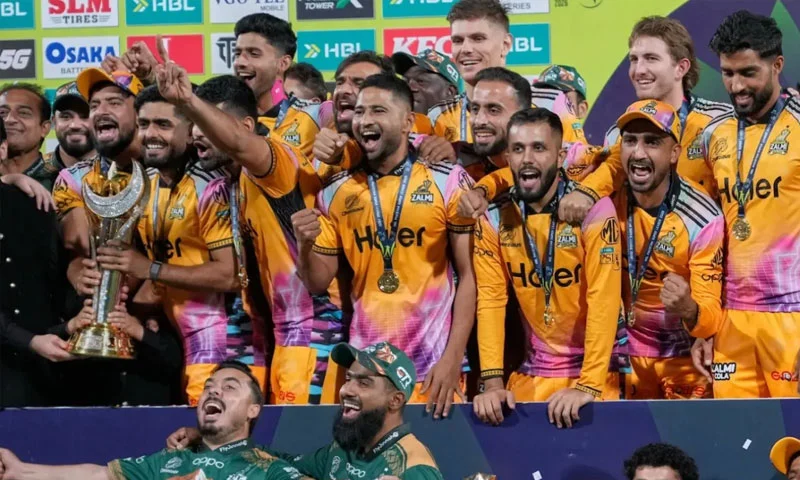
Babar Azam Named Captain of PSL 11 Team of the Tournament
Babar Azam capped a dominant season by being named captain of the HBL Pakistan Super League 11 Team of the Tournament, following his title-winning campaign with Peshawar Zalmi. Babar leads Team of the Tournament after historic season The Zalmi skipper guided his side to their second PSL title, ending a nine-year drought, and delivered one of the most consistent batting displays in the league’s history. Babar scored 588 runs in 11 innings, averaging 73.50, and claimed the Hanif Mohammad Cap as the leading run-scorer. Read More: Babar Azam Joins Elite List After Stunning PSL Final Victory He also matched Fakhar Zaman’s record for the joint-most runs in a single PSL edition, set in 2022. Babar struck two centuries in a span of four matches against Quetta Gladiators and Islamabad United, underlining his control at the top of the order. The Team of the Tournament reflects Zalmi’s dominance, with three players included. Alongside Babar, Kusal Mendis earned a spot as wicketkeeper-batter after scoring 550 runs, including a century against Karachi Kings, while Sufiyan Muqeem sealed his place with 22 wickets at an average of 14.40. Kingsmen and Qalandars stars also feature Runners-up Hyderabad Kingsmen also placed three players in the XI. Usman Khan, who scored 389 runs with a century and three fifties, slotted into the middle order. Left-arm spinner Hassan Khan contributed both with bat and ball, scoring 139 runs at a strike rate of 195 and taking six wickets. Emerging pacer Hunain Shah made a strong impact despite missing early matches. He picked up 17 wickets in 10 games and played a key role during the latter stages of the tournament. Read More: PSL 11 Final Prize Breakdown: How Much Cash Is at Stake? Two players from Lahore Qalandars also earned selection. Fakhar Zaman scored 401 runs in eight matches, finishing third on the run charts, while Shaheen Shah Afridi claimed 16 wickets at an average of 18.18. Shan Masood represented Multan Sultans after scoring 367 runs at a strike rate of 158.18, while Islamabad United contributed two players. Captain Shadab Khan impressed with 173 runs and 17 wickets, earning the Best All-Rounder award, while England pacer Richard Gleeson took 12 wickets with the new ball. Quetta Gladiators’ Hasan Nawaz was named 12th player after scoring 291 runs. Emerging stars highlight PSL’s future The Emerging Team of the Tournament showcased rising local talent. Sameer Minhas led the group with 349 runs at a strike rate above 155, while Farhan Yousuf continued his breakout year after captaining Pakistan in the ICC U19 World Cup. Read More: Historic Century Puts Babar Azam at Top of PSL Records Young pacer Ali Raza also earned recognition after claiming the only hat-trick of the season. The HBL PSL 11 featured 44 matches played between March 26 and May 3 across Lahore and Karachi, reinforcing its status as one of the leading T20 leagues globally. Babar’s leadership and consistency stood out in a season marked by high-scoring contests and emerging talent.
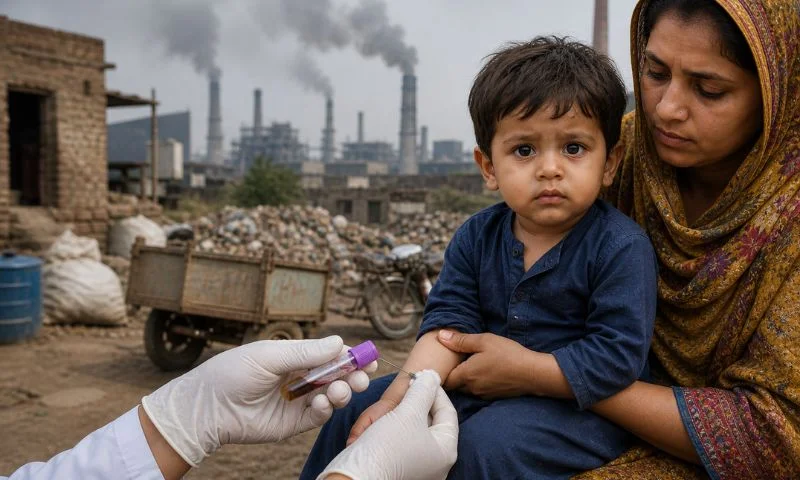
Shocking Report: Lead Exposure Found in 4 in 10 Children in Pakistan
A new study in Pakistan has found alarming levels of lead exposure among young children, raising serious public health concerns in industrial and urban areas. The research, conducted by the Ministry of National Health Services, Regulations and Coordination and UNICEF, found that four in 10 children aged 12 to 36 months in high-risk areas had lead in their blood. The study sampled 2,100 children across seven locations, including Haripur, Islamabad, Karachi, Lahore, Peshawar, Quetta, and Rawalpindi. These areas include major industrial zones and densely populated urban centers. According to the findings, children in Hattar and Haripur showed the highest exposure rates. About 88 percent of children tested there had elevated lead levels. In contrast, only one percent of children in Islamabad showed similar levels. Severe health risks and widespread sources UNICEF warned that lead exposure can have lasting health impacts on children. It can stunt growth, cause anaemia, and weaken the immune system. It also affects brain development. “Children can absorb up to five times more lead than adults, making them especially vulnerable. Lead affects every system in the body, but its impact on developing brains can be devastating and lifelong. There is no safe level of exposure to lead for children whose harmful effects are irreversible,” said Pernille Ironside. The study identified several likely sources of exposure. These include industrial emissions, informal battery recycling, lead-based paints, contaminated food and spices, and traditional cosmetics. Experts say such sources remain common in many low and middle income countries. Weak regulation and lack of awareness often worsen the problem. Economic impact and urgent need for action The report warned that the scale of exposure in Pakistan could be among the highest globally. It said up to eight in 10 children may face some level of exposure nationwide. Lead poisoning does not only harm health. It also affects learning ability and long-term productivity. The study estimated economic losses at six to eight percent of Pakistan’s GDP, or about $25 billion to $35 billion annually. “Lead poisoning is one of the most preventable threats to child health and development. The evidence is clear that it has lifelong consequences for learning and productivity,” said Abdullah Fadil. UNICEF said authorities plan a nationwide survey later in 2026. The survey will assess exposure levels among children, pregnant women, and other vulnerable groups. Public health experts say stronger regulation, awareness campaigns, and safer industrial practices could help reduce exposure. They stress the need for urgent action to protect children’s health and future development.

Karachi Community Raises Funds to Rescue Kitab Ghar in Just 53 Minutes
A public library in Karachi has avoided closure after a surge of online donations helped it meet and exceed its emergency funding goal within days, highlighting strong community support for citizen-led cultural spaces. Kitab Ghar, a small but growing public library initiative, had warned earlier this week that it faced shutdown due to a sharp increase in rent. The management said it needed Rs500,000 to relocate to a more affordable space and continue operations. The appeal, posted online on Tuesday, quickly gained traction across social media platforms. Within three days, the campaign not only met its target but significantly surpassed it. “Karachi… you did it,” the organisers said in an update. “We posted the first call for funds in the midst of planning our sabbatical, but you guys stopped us in our tracks. We met the fundraising goal in 53 MINUTES, and in three days, you TRIPLED it.” Donations pour in from across the world Organisers said contributions came through multiple local channels as well as international platforms such as Venmo and Zelle. Donations ranged widely in size, reflecting broad participation from individuals. According to the library’s team, contributions varied from as little as Rs500 to as high as $1,350, which exceeds Rs370,000. The mix of small and large donations helped drive the campaign’s rapid success. Read More: PSO Launches Nationwide Ramadan Donation Drive at Fuel Stations Community members and supporters shared the campaign widely, turning it into a collective effort to preserve a public space dedicated to reading and learning. Public libraries remain limited in Karachi, making such initiatives particularly valuable for students and young readers. Pakistan has long faced challenges in maintaining public library infrastructure. Experts often point to limited funding and urban development pressures as key factors behind the decline of such spaces. Temporary relief and future plans In addition to fundraising success, the library received further support from an unnamed benefactor. Organisers said negotiations are underway to keep Kitab Ghar at its current location for another 11 months. This arrangement will allow the team to plan a smoother transition to a more sustainable venue. The management reiterated its commitment to relocation but said the additional time would help avoid disruptions. To celebrate the milestone, Kitab Ghar plans to host community events aimed at sustaining operations. These activities will also help maintain engagement with its growing supporter base. View this post on Instagram A post shared by Kitab Ghar Karachi (@kitabgharkarachi) “Thank you for saving Kitab Ghar,” the organisers said. “It’s an honour to serve every one of you.” The story reflects a broader trend of community-backed initiatives stepping in to support cultural and educational spaces. In cities like Karachi, where public resources often remain stretched, such grassroots efforts play a crucial role. For now, Kitab Ghar stands as a rare success story. A simple appeal turned into a powerful demonstration of collective action, ensuring that the library continues to serve its community.

Pakistan Among World’s 4th Weakest Passports in 2026 Ranking
Pakistan has once again ranked among the world’s weakest passports in 2026, underscoring continued travel limitations for its citizens, according to the latest Henley Passport Index. The index placed Pakistan fourth from the bottom, reflecting restricted global mobility compared with most countries. Analysts say the ranking highlights ongoing challenges linked to visa access and international travel freedom. At the top of the list, Singapore retained its position as the world’s most powerful passport. It offers visa-free or visa-on-arrival access to 192 destinations worldwide. The ranking draws on data tracking how many countries passport holders can enter without obtaining a prior visa. Japan, South Korea, and the United Arab Emirates secured second place, each with access to 187 destinations. Norway and Switzerland followed closely with 185 destinations. Europe dominates, conflict-hit nations trail European countries continue to dominate the rankings, supported by strong diplomatic ties and stable economic conditions. Experts say the European Union benefits from extensive bilateral travel agreements, which boost visa-free access for its citizens. At the lower end of the index, Afghanistan remained the weakest passport globally, allowing access to only 23 destinations without a prior visa. Syria and Iraq followed in the rankings. Pakistan’s position just above these countries reflects the constraints its citizens face when traveling abroad. Many destinations require visas in advance, often involving lengthy application processes. Experts link passport strength to several factors, including diplomatic relations, national security perceptions, migration trends, and political stability. Countries with stronger global partnerships tend to secure better travel access for their citizens. Read More: Pakistan Passport Rises Again: 32 Countries Now Visa-Free in Feb 2026 Mobility challenges and gradual progress Analysts note that passport rankings also reflect practical access to opportunities abroad. Travel ease affects tourism, education, business expansion, and employment prospects. Countries with weaker passports often face stricter global visa regulations. These restrictions can stem from concerns related to security, irregular migration, or regional instability. Despite its low ranking, Pakistan has recorded gradual improvement in recent years. Officials have pursued bilateral agreements and policy measures to expand visa access. However, progress remains slow compared with regional and global peers. The Henley Passport Index updates regularly to reflect changes in visa agreements and diplomatic access. The latest rankings have again sparked debate over mobility challenges faced by citizens of lower-ranked countries. Observers say improving passport strength requires sustained diplomatic engagement and economic stability. Until then, Pakistani travelers will likely continue to face limited access to global destinations.

US Transfers Seized Iranian Ship Crew to Pakistan
The United States Central Command transferred crew members of a seized Iranian-linked vessel to Pakistan for repatriation, according to US media reports, with Islamabad later confirming the development. The vessel, M/V Touska, came under US control on April 19 in the Gulf of Oman. Officials said it failed to follow blockade directions linked to Iranian ports. “Today, US forces completed the transfer of 22 crew members of M/V Touska to Pakistan for repatriation,” ABC News quoted CENTCOM spokesperson Capt. Tim Hawkins as saying. Hawkins said six other individuals linked to the vessel had moved earlier to a regional country. Iranian state media later reported that those individuals were family members of the crew. Pakistan confirms evacuation and coordination Following the reports, Pakistan confirmed it had received the crew and started the repatriation process to Iran. In a statement shared on social media, Ishaq Dar said, “Pleased to announce that twenty-two crew members from the seized Iranian container vessel, ‘MV Touska’, have been safely evacuated to Pakistan.” Pleased to announce that twenty-two crew members from the seized Iranian container vessel, “MV Touska”, have been safely evacuated to Pakistan. The individuals were safely flown in Pakistan last night and will be transferred to Iran today. The Iranian ship is also being… — Ishaq Dar (@MIshaqDar50) May 4, 2026 He added, “The individuals were safely flown in Pakistan last night and will be transferred to Iran today. The Iranian ship is also being backloaded to Pakistani territorial waters for its return to its original owners after necessary repairs.” Dar said both the United States and Iran supported the process. He called it “an important confidence-building measure.” “Pakistan expresses its appreciation to the United States and Iran, and remains committed to facilitating dialogue, diplomacy, and mediation for the regional peace and security,” he added. CENTCOM did not respond to requests for further details. Authorities in Tehran also did not issue an official statement. Read More: Iran Proposes Strait of Hormuz Deal to US to End Conflict Seizure underscores maritime tensions The interception highlights tensions in shipping routes near Iran. The Gulf of Oman links the Strait of Hormuz to global trade lanes. US naval forces often monitor vessels tied to sanctions concerns. Analysts say such actions can trigger diplomatic sensitivity, especially when civilian crews are involved. Pakistan’s role helped manage the humanitarian aspect of the case. Officials expect the vessel to return to its owners after repairs, though no timeline is available.
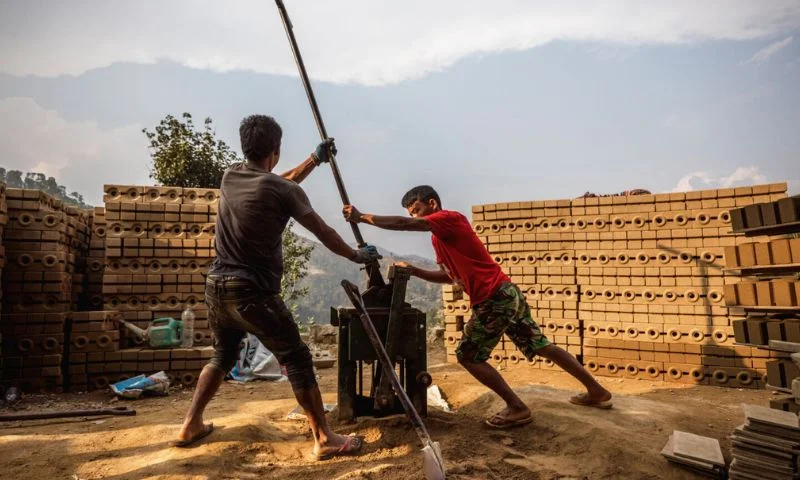
How Eco-Bricks Are Rebuilding Nepal After Earthquake Devastation
In the aftermath of the 2015 earthquake in Nepal, entire villages across Gorkha and Sindhupalchok lay flattened. Survivors searched through rubble for essentials and loved ones. The disaster, which killed nearly 9,000 people and damaged or destroyed over 800,000 homes, exposed the fragility of traditional housing across the country. Björn Söderberg, co-founder of Build up Nepal, recalls the devastation. “The morning after the earthquake, the air was thick with dust and silence,” he said, describing communities left with little more than debris and grief. In the weeks that followed, families rebuilt using bamboo and tin. However, these structures offered little protection against future disasters. “Rebuilding time and again was pushing poor families deeper into poverty,” Söderberg said. “We had to find a better way.” A low-cost innovation reshaping rural housing Traditional bricks in Nepal rely on coal-fired kilns, which account for about 37 percent of the country’s carbon emissions. These kilns also contribute to hazardous air pollution and exploitative labor conditions. To address this, Build up Nepal introduced interlocking Eco-bricks based on Compressed Stabilised Earth Bricks technology. These blocks use local soil, sand, industrial waste, and minimal cement. They require no coal or kilns, cutting construction emissions by up to 75 percent. The design also reduces costs. A small two-room house built with Eco-bricks costs about 25 percent less than conventional alternatives. More importantly, the interlocking system improves resilience against earthquakes and floods. Read More: From Waste to Wonder: Beaconhouse Students Redefine Sustainable Art Since its launch, the initiative has produced more than 42 million Eco-bricks. The program has helped construct over 12,000 homes across Nepal, providing shelter to around 58,000 people. The model has also created 1,900 green jobs through a decentralized network of micro-entrepreneurs. Many participants previously relied on seasonal labor or migration for income. Proven resilience and growing trust The technology faced a critical test during the 2023 earthquake in western Nepal, which damaged or destroyed about 79,000 homes. According to Build up Nepal, all Eco-brick structures withstood the tremors. This performance has strengthened trust in the approach. Söderberg said the results gave the team confidence to expand further. In Sindhuli, a young mother named Sita built her own two-room house using Eco-bricks. “For the first time,” she said, “I don’t worry when the ground shakes.” Read More: Solar Takes Over as Pakistan’s Top Electricity Source The initiative has also delivered environmental benefits. Build up Nepal estimates it has avoided 122,000 tonnes of carbon dioxide emissions so far. The project received global recognition when it won the Zayed Sustainability Prize for Climate Action. The award aims to support scalable solutions in sustainability and resilience. Experts say Nepal remains highly vulnerable to earthquakes due to its location along the Himalayan seismic belt. Climate risks, including floods and landslides, continue to threaten rural communities. Söderberg believes community-driven solutions offer the most sustainable path forward. “Start small, think big, and build trust among those you serve,” he said, urging innovators to focus on practical, local approaches. Despite ongoing challenges, Nepal’s rebuilding effort reflects a shift toward resilience and sustainability. Brick by brick, communities are replacing fear with stability and hope.

GameStop vs eBay: The Unlikely Deal Shaking Wall Street
GameStop is preparing a potential offer for eBay as CEO Ryan Cohen pushes an aggressive strategy to dramatically increase the struggling retailer’s market value, the Wall Street Journal reported on Friday. The report said GameStop has quietly built a stake in eBay ahead of a possible bid. Cohen could take the proposal directly to eBay shareholders if the company resists, according to people familiar with the matter. Shares reacted sharply to the news. eBay jumped about 14 percent in extended trading, while GameStop gained around 4 percent. eBay currently holds a market capitalization of roughly $46 billion, compared to GameStop’s nearly $12 billion. Details of the potential offer remain unclear. The report added that a formal bid could come as soon as later this month. Neither company nor Cohen responded immediately to requests for comment. Unusual deal structure raises stakes A potential acquisition would defy conventional dealmaking norms. Public companies rarely target firms significantly larger than themselves. Such deals often rely on heavy borrowing, stock issuance, or both. Analysts say the move reflects Cohen’s willingness to take bold risks. His strategy hinges on leveraging future earnings of a combined entity to justify the scale of the transaction. Read More: Major Shake-up in Cement Sector as Fauji Cement and KAPCO Take Joint Control of Attock Cement GameStop has spent years trying to adapt to a rapidly shifting retail environment. The company struggled as consumers moved toward digital downloads and online shopping. It responded by closing stores and pivoting toward a more digital-first model. Cohen, who joined the board in January 2021 and became CEO in September 2023, has driven cost-cutting measures that helped restore profitability. Still, revenue pressure persists. The company reported a 14 percent drop in revenue to $1.10 billion during the holiday quarter, highlighting ongoing challenges in its core business. Turnaround pressure mounts GameStop recently unveiled a compensation package worth about $35 billion for Cohen. The package ties rewards to ambitious performance targets. These include lifting the company’s market value to $100 billion and achieving $10 billion in cumulative EBITDA. The retailer’s shares remain far below the peaks seen during the 2021 meme stock rally, when retail investors propelled the stock to historic highs. Read More: inDrive Joins WEF Unicorn Club, Puts Pakistan on Global Tech Map Meanwhile, eBay has shown stronger momentum. Its shares have risen more than 19 percent this year. The company recently forecast second-quarter revenue above Wall Street expectations. Growth drivers include collectibles, motor accessories, and live-streamed auctions. Industry observers say a deal could reshape both companies. GameStop would gain a massive online marketplace platform, while eBay could see renewed strategic direction under Cohen’s leadership. However, execution risks remain high. Financing such a transaction and integrating two very different business models would test even seasoned management teams.

Babar Azam Joins Elite List After Stunning PSL Final Victory
Babar Azam led Peshawar Zalmi to a historic title win on Sunday, sealing his first trophy as captain in the Pakistan Super League and ending the franchise’s nine-year wait for glory. Babar breaks captaincy drought with Zalmi triumph Babar, who began his PSL captaincy stint in 2022 with Karachi Kings, finally lifted the title as Zalmi clinched their second championship. The franchise last won in 2017 under Darren Sammy. Read More: Historic Century Puts Babar Azam at Top of PSL Records The victory placed Babar among an elite group of PSL-winning captains, becoming the ninth overall and only the second in Zalmi’s history. Shaheen Shah Afridi leads the list with three titles, while names like Misbah-ul-Haq and Sarfaraz Ahmed also feature. Zalmi secured the title with a five-wicket win over Hyderabad Kingsmen in a high-stakes final at Gaddafi Stadium. Babar Azam had a great run this #HBLPSL11 as he is named best batter of the tournament 🏏#NewEra pic.twitter.com/FX4aVmMl2n— PakistanSuperLeague (@thePSLt20) May 3, 2026 Babar’s decision to field first proved decisive. Zalmi bowled out Kingsmen for 129 in 18 overs despite a fighting half-century from Saim Ayub, who scored 54 off 50 balls with five fours and two sixes. Hardie and Samad seal memorable chase Chasing 130, Zalmi stumbled early and slipped to 40 for 4. However, an 85-run partnership between Aaron Hardie and Abdul Samad turned the game. Samad scored 48 off 34 deliveries before his dismissal, while Hardie remained unbeaten on 56 off 39 balls, hitting nine boundaries. Zalmi reached the target with 28 balls to spare, completing a dominant finish. Read More: PSL 11 Final Prize Breakdown: How Much Cash Is at Stake? The win capped a remarkable season for Babar, who also dominated the batting charts. He collected 588 runs in 11 innings at an average of 73.50 and claimed the Hanif Mohammad Cap. His tally equaled Fakhar Zaman’s record for most runs in a single PSL edition. Muqeem shines as Zalmi dominate awards Zalmi’s success reflected in the individual awards as Sufiyan Muqeem emerged as the Player of the Tournament. The left-arm spinner took 22 wickets in 11 innings at an average of 14.40, earning the Fazal Mehmood Cap. “My individual performance was good, and so was the team’s,” Muqeem said. “I have worked very hard on my bowling. It was written in the stars for me to be named the best bowler, and I’m very happy with it. Individual awards are very important for a player.” Babar also secured the Best Batter of the Tournament award, underlining his dominance throughout the campaign. Read More: IPL Built for Entertainment Not Development, Muttiah Muralithan Other honors went to Shadab Khan, who won Best All-Rounder after scoring 173 runs and taking 17 wickets, and Kusal Mendis, named Best Wicketkeeper. Hunain Shah claimed Emerging Player of the Tournament, while Farhan Yousaf won Best Fielder. Zalmi’s title win and sweep of major awards highlighted their dominance in PSL 11, marking a defining moment in the franchise’s history.

Oil Falls as US Moves to Free Stranded Ships in Strait of Hormuz
Oil prices edged lower on Monday after Donald Trump said Washington would begin efforts to free ships stranded in the Strait of Hormuz, although the absence of a US-Iran peace deal kept crude trading above $100 a barrel. Brent crude futures fell 64 cents, or 0.59%, to $107.53 a barrel by 2308 GMT, extending a $2.23 drop on Friday. U.S. West Texas Intermediate crude stood at $101.10 a barrel, down 84 cents, or 0.82%, after losing $3.13 in the previous session. Read More: Crude Rally Sparks Fears of $140 Oil Amid Rising Tensions Markets reacted to Trump’s announcement of a maritime initiative aimed at easing congestion in the Strait of Hormuz, a key route for roughly a fifth of global oil supply. The waterway has faced severe disruption due to ongoing tensions involving Iran, raising fears of prolonged supply constraints. “For the good of Iran, the Middle East, and the United States, we have told these Countries that we will guide their Ships safely out of these restricted Waterways, so that they can freely and ably get on with their business,” Trump wrote on his Truth Social platform. He expanded on the plan, calling it “Project Freedom,” and said it would begin Monday morning Middle East time. Trump added that countries not involved in the conflict had requested U.S. assistance to free their vessels. “Countries from all over the World… have asked the United States if we could help free up their Ships, which are locked up in the Strait of Hormuz,” he said, describing them as “neutral and innocent bystanders.” He warned that any interference with the operation “will, unfortunately, have to be dealt with forcefully,” while framing the effort as a humanitarian step. “Many of these Ships are running low on food, and everything else necessary for largescale crews to stay on board in a healthy and sanitary manner,” he said. Stalled talks keep oil above $100 Despite the announcement, oil prices remained supported as diplomatic progress between Washington and Tehran stalled. Negotiations continued over the weekend, with both sides assessing responses but holding firm on key demands. Read More: US President Donald Trump Threatens Iran’s Oil and Power Infrastructure if Talks Fail “Peace talks have been stalled as both sides refuse to move on their respective red lines,” analysts at ANZ said. Trump has pushed for a nuclear agreement with Iran. Tehran has suggested postponing nuclear discussions until the conflict ends and both sides lift shipping blockades in the Gulf. The lack of a breakthrough has kept traffic in the Strait limited, sustaining concerns about supply disruptions. Traders continue to price in geopolitical risk as long as tensions threaten one of the world’s most critical oil corridors. OPEC+ output increase seen as limited support Separately, OPEC+ said on Sunday it would raise output targets by 188,000 barrels per day in June for seven member countries, marking a third straight monthly increase. Read More: Think Saudi Arabia Has the Most Oil? Here’s the Real Top 10 List The increase matches May levels but excludes the share of the United Arab Emirates, which left OPEC on May 1. Analysts expect the additional supply to have limited impact while conflict-linked disruptions persist in the Strait of Hormuz. Energy markets remain sensitive to developments in both diplomacy and shipping security. Until flows normalize or a deal emerges, prices are likely to stay volatile and elevated.
