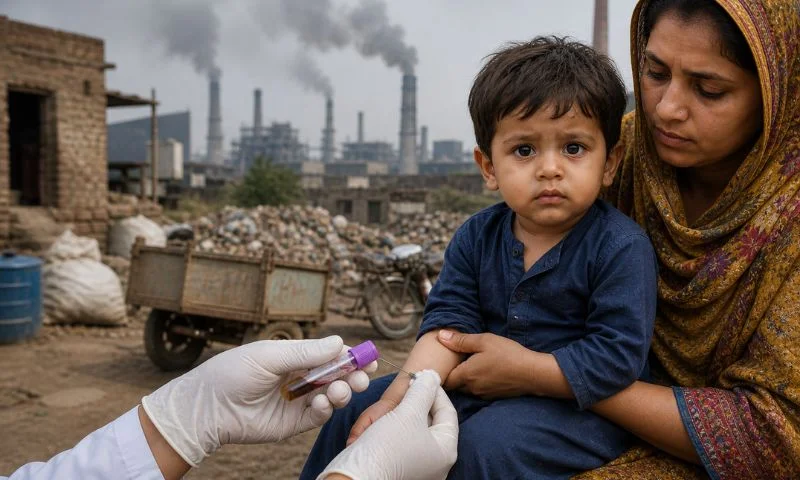
A new study in Pakistan has found alarming levels of lead exposure among young children, raising serious public health concerns in industrial and urban areas.
The research, conducted by the Ministry of National Health Services, Regulations and Coordination and UNICEF, found that four in 10 children aged 12 to 36 months in high-risk areas had lead in their blood.
The study sampled 2,100 children across seven locations, including Haripur, Islamabad, Karachi, Lahore, Peshawar, Quetta, and Rawalpindi. These areas include major industrial zones and densely populated urban centers.
According to the findings, children in Hattar and Haripur showed the highest exposure rates. About 88 percent of children tested there had elevated lead levels. In contrast, only one percent of children in Islamabad showed similar levels.
Severe health risks and widespread sources
UNICEF warned that lead exposure can have lasting health impacts on children. It can stunt growth, cause anaemia, and weaken the immune system. It also affects brain development.
“Children can absorb up to five times more lead than adults, making them especially vulnerable. Lead affects every system in the body, but its impact on developing brains can be devastating and lifelong. There is no safe level of exposure to lead for children whose harmful effects are irreversible,” said Pernille Ironside.
The study identified several likely sources of exposure. These include industrial emissions, informal battery recycling, lead-based paints, contaminated food and spices, and traditional cosmetics.
Experts say such sources remain common in many low and middle income countries. Weak regulation and lack of awareness often worsen the problem.
Economic impact and urgent need for action
The report warned that the scale of exposure in Pakistan could be among the highest globally. It said up to eight in 10 children may face some level of exposure nationwide.
Lead poisoning does not only harm health. It also affects learning ability and long-term productivity. The study estimated economic losses at six to eight percent of Pakistan’s GDP, or about $25 billion to $35 billion annually.
“Lead poisoning is one of the most preventable threats to child health and development. The evidence is clear that it has lifelong consequences for learning and productivity,” said Abdullah Fadil.
UNICEF said authorities plan a nationwide survey later in 2026. The survey will assess exposure levels among children, pregnant women, and other vulnerable groups.
Public health experts say stronger regulation, awareness campaigns, and safer industrial practices could help reduce exposure. They stress the need for urgent action to protect children’s health and future development.