In the aftermath of the 2015 earthquake in Nepal, entire villages across Gorkha and Sindhupalchok lay flattened. Survivors searched through rubble for essentials and loved ones. The disaster, which killed nearly 9,000 people and damaged or destroyed over 800,000 homes, exposed the fragility of traditional housing across the country.
Björn Söderberg, co-founder of Build up Nepal, recalls the devastation. “The morning after the earthquake, the air was thick with dust and silence,” he said, describing communities left with little more than debris and grief.
In the weeks that followed, families rebuilt using bamboo and tin. However, these structures offered little protection against future disasters. “Rebuilding time and again was pushing poor families deeper into poverty,” Söderberg said. “We had to find a better way.”
A low-cost innovation reshaping rural housing
Traditional bricks in Nepal rely on coal-fired kilns, which account for about 37 percent of the country’s carbon emissions. These kilns also contribute to hazardous air pollution and exploitative labor conditions.
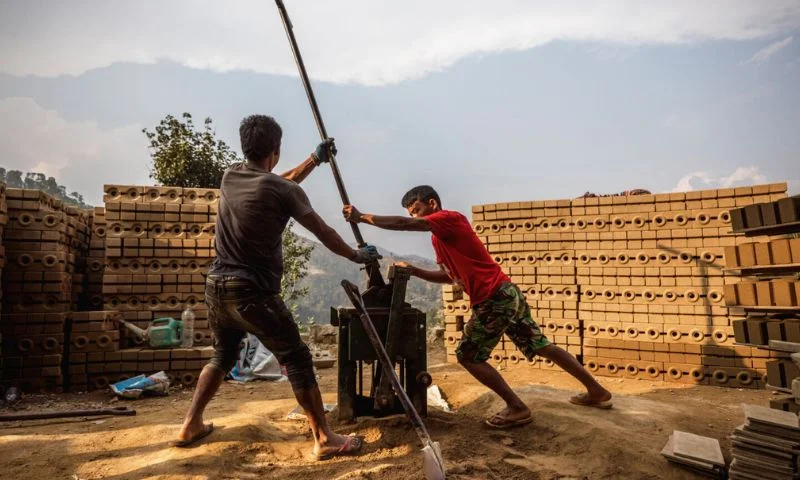
To address this, Build up Nepal introduced interlocking Eco-bricks based on Compressed Stabilised Earth Bricks technology. These blocks use local soil, sand, industrial waste, and minimal cement. They require no coal or kilns, cutting construction emissions by up to 75 percent.
The design also reduces costs. A small two-room house built with Eco-bricks costs about 25 percent less than conventional alternatives. More importantly, the interlocking system improves resilience against earthquakes and floods.
Read More: From Waste to Wonder: Beaconhouse Students Redefine Sustainable Art
Since its launch, the initiative has produced more than 42 million Eco-bricks. The program has helped construct over 12,000 homes across Nepal, providing shelter to around 58,000 people.
The model has also created 1,900 green jobs through a decentralized network of micro-entrepreneurs. Many participants previously relied on seasonal labor or migration for income.
Proven resilience and growing trust
The technology faced a critical test during the 2023 earthquake in western Nepal, which damaged or destroyed about 79,000 homes. According to Build up Nepal, all Eco-brick structures withstood the tremors.
This performance has strengthened trust in the approach. Söderberg said the results gave the team confidence to expand further.
In Sindhuli, a young mother named Sita built her own two-room house using Eco-bricks. “For the first time,” she said, “I don’t worry when the ground shakes.”
Read More: Solar Takes Over as Pakistan’s Top Electricity Source
The initiative has also delivered environmental benefits. Build up Nepal estimates it has avoided 122,000 tonnes of carbon dioxide emissions so far.
The project received global recognition when it won the Zayed Sustainability Prize for Climate Action. The award aims to support scalable solutions in sustainability and resilience.
Experts say Nepal remains highly vulnerable to earthquakes due to its location along the Himalayan seismic belt. Climate risks, including floods and landslides, continue to threaten rural communities.
Söderberg believes community-driven solutions offer the most sustainable path forward. “Start small, think big, and build trust among those you serve,” he said, urging innovators to focus on practical, local approaches.
Despite ongoing challenges, Nepal’s rebuilding effort reflects a shift toward resilience and sustainability. Brick by brick, communities are replacing fear with stability and hope.