

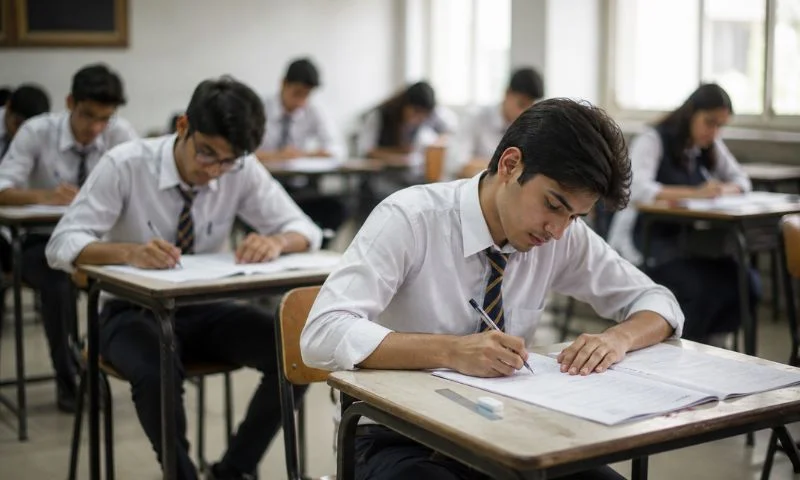
CIE has postponed an A-level Maths exam in Pakistan after another alleged paper leak triggered concern among students, parents and education authorities. The examination board confirmed that AS-level mathematics paper 52 (9709) had been shared prematurely in violation of exam regulations. Following the incident, Cambridge announced that the A-level mathematics paper 32 (9709), scheduled for May 15 in Pakistan, would no longer take place as planned. The board said it would replace the paper with a new examination and announce a revised date by May 22. “The Cambridge International AS and A level results release date of August 11 remains unchanged,” the statement said. Cambridge said it had launched an investigation into the matter. “We investigate such incidents promptly and thoroughly, and we are now working to understand the extent of the leak and determine next steps,” the board stated. The controversy has intensified pressure on Cambridge examinations in Pakistan. Allegations of paper leaks in Pakistan during major exams have repeatedly sparked criticism and anxiety among students. Cambridge Calls Incident “Unprecedented” Cambridge Country Director Uzma Yousuf said the organization’s main priority remained protecting students from unfair disadvantages caused by the leak. “Our priority is to ensure that students are not disadvantaged by this incident, and we continue to take all possible measures to protect the integrity of our exams,” she said. Uzma added that senior professionals were reviewing all available facts before making final decisions regarding affected exams. “Our decisions about the next steps are taken by senior and experienced professionals who are in possession of all the facts and our principles are: Ensuring the fairness and reliability of the grades that we award, so that universities and other users of the grades can continue to trust them,” she said. Read More: Pakistani Graduate Rehab Asad Shaikh Sues LSE After Marking Error Changed Her Academic Future Cambridge also described the current situation as unlike previous cases. “The nature of the exam paper theft seen in the current exam series is unprecedented,” Uzma said. “We believe it is the work of criminals seeking to undermine examinations and the futures of the students who depend on them. We are pursuing several legal routes to stop and punish those responsible.” She urged students and parents to rely only on official Cambridge announcements and avoid spreading misinformation online. “While we do not comment on individual reports of paper leaks, we investigate all allegations,” she added. Pakistan Government Orders Immediate Probe The controversy prompted intervention from Pakistan’s federal government. Khalid Maqbool Siddiqui directed the chairman of the Inter Board Committee of Chairmen to immediately contact Cambridge authorities and seek a full investigation. The minister described the alleged leaks as “an extremely serious matter”. He said such incidents created severe stress and uncertainty for students and parents who prepared honestly for examinations. Siddiqui also urged Cambridge to strengthen its examination system, security procedures and monitoring mechanisms. “The government will not compromise on the future of students, the transparency of the examination system, and the protection of merit,” he said. Cambridge exams hold major importance in Pakistan because thousands of students use the qualifications for university admissions both locally and internationally. The latest controversy has renewed debate about examination security and the growing challenge of preventing leaks in the digital age.
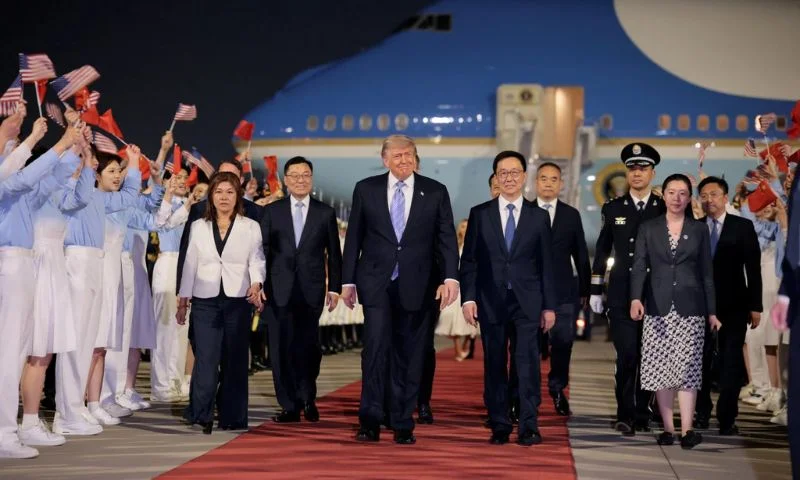
Trump Arrives in Beijing for Historic High-Stakes Summit With Xi Jinping
US President Donald Trump arrived in Beijing on Wednesday evening for a historic visit expected to shape the future of US-China relations at a time of growing geopolitical and economic uncertainty. Trump descended the steps of Air Force One to a carefully choreographed welcome ceremony that included Chinese Vice-President Han Zheng greeting him on the tarmac. Chinese officials rolled out a red carpet as military guards and senior diplomats welcomed the US delegation. Analysts described the high-level reception as a deliberate signal from Beijing, especially because Trump received a lower-level welcome during his 2017 visit. Read More: Elon Musk and Tim Cook to Join Trump on High-Stakes China Visit The summit with Chinese President Xi Jinping marks the first visit to China by a sitting US president in nearly a decade. Trump’s trip comes during a fragile period in relations between the world’s two largest economies, with tensions centered on trade, semiconductors, Taiwan and artificial intelligence. The visit was originally scheduled for March. However, the ongoing US-Israel war with Iran delayed the summit after regional instability disrupted diplomatic planning and global markets. Tech Titans and Trade Talks Take Center Stage Several major American business leaders joined Trump’s delegation to Beijing. Among them were Elon Musk, Tim Cook and Jensen Huang. Executives from Boeing, Goldman Sachs, Tesla, BlackRock and other major firms also accompanied the president. Trump signaled ahead of the visit that expanding US business access to China would become a major priority during talks with Xi. “I will be asking President Xi, a Leader of extraordinary distinction, to ‘open up’ China so that these brilliant people can work their magic,” Trump wrote on Truth Social before landing in Beijing. He added that it would be his “very first request” during discussions with Xi. Trade remains a central issue between Washington and Beijing after years of tariff battles and technology restrictions. The White House wants China to increase purchases of US agricultural goods, aircraft and energy products. China, meanwhile, hopes Washington will ease restrictions on advanced semiconductors and AI-related exports. Nvidia and other technology companies have faced growing pressure because of US export controls on advanced AI chips. Iran War and Taiwan Add Pressure to Summit several private discussions between Trump and Xi will be around the ongoing conflict involving Iran. China relies heavily on Iranian oil imports and maintains deep economic ties with Tehran. The United States reportedly wants Beijing to use its influence to help prevent further escalation in the Middle East and restore stability around the Strait of Hormuz. Taiwan is also expected to remain a major flashpoint during the talks. The Trump administration recently approved a major arms package for Taiwan while sending mixed signals about Washington’s long-term military commitments in the region. Analysts say the symbolism of the Beijing visit matters almost as much as policy outcomes. Chinese authorities organized elaborate diplomatic events across the capital, including ceremonies linked to Beijing’s historic Temple of Heaven. Observers say Beijing wants to project confidence and show that China now approaches Washington from a position of greater strength than during Trump’s first presidency. Despite low expectations for dramatic breakthroughs, both sides appear eager to prevent tensions from escalating further.
Pakistan, IMF Review Budget Strategy as Govt Signals Tax Relief
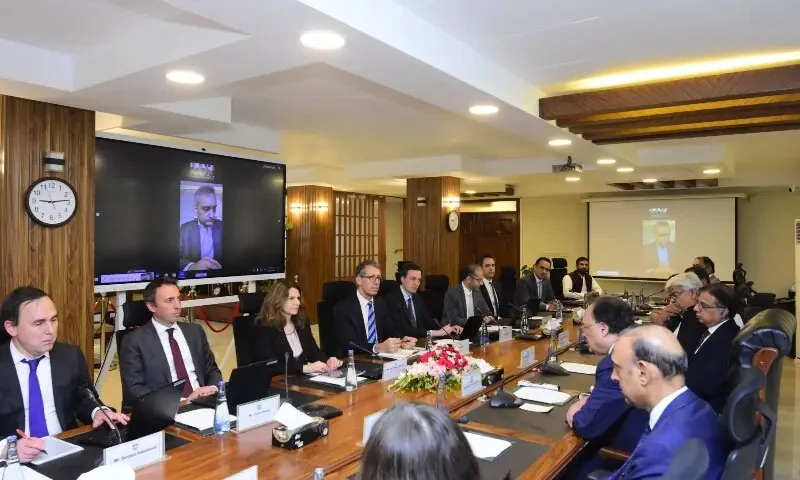
Muhammad Aurangzeb briefed a visiting International Monetary Fund mission on Pakistan’s economic outlook, reform agenda and preparations for the upcoming federal budget as Islamabad works to sustain macroeconomic stability under its IMF-backed programme. According to a Finance Ministry statement issued on Wednesday, discussions focused on fiscal strategy, structural reforms and measures aimed at strengthening long-term economic resilience. Read More: Why Pakistan’s Salaried Class Could Finally Get Relief in Budget 2026 “The discussions focused on Pakistan’s macroeconomic stabilisation efforts, preparations for the upcoming federal budget, and the broader reform agenda aimed at strengthening fiscal and external sustainability while fostering sustainable economic growth,” the statement said. The IMF delegation, led by Mission Chief Iva Petrova, met Pakistani officials in Islamabad amid ongoing talks over the country’s next fiscal framework and reform commitments. Aurangzeb highlighted improving trends in remittances and exports during the meeting. He said recent data showed growth in exports on both month-on-month and year-on-year bases, reflecting stronger macroeconomic fundamentals and improving economic resilience. Finance Minister Muhammad Aurangzeb holds a meeting with the visiting IMF mission led by Mission Chief Iva Petrova in Islamabad to review Pakistan’s macroeconomic outlook, upcoming budget preparations, and ongoing reforms aimed at strengthening economic stability and sustainable… pic.twitter.com/QrCojRDJxy — Pakistan TV (@PakTVGlobal) May 13, 2026 The finance minister also stressed the need to move Pakistan away from recurring boom-and-bust cycles through reforms focused on productivity, deregulation and export competitiveness. He said the government had designed its reform programme with input from international economists and experts. Aurangzeb stated that the policy measures formed part of a “broader and technically grounded economic transformation strategy endorsed at the highest level.” IMF acknowledges economic progress The IMF mission acknowledged Pakistan’s progress in maintaining economic stability despite regional and global challenges. “The Mission appreciated the government’s continued commitment to prudent economic management and reform implementation,” the statement added. The IMF team also stressed the importance of fiscal discipline and structural reforms to support durable economic growth. Officials discussed broader macroeconomic priorities and budget targets during the meeting. Read More: IMF Sets Tough Budget Priorities for Pakistan Ahead of FY26 Plan The session included Jameel Ahmad, Finance Secretary Imdad Ullah Bosal, Federal Board of Revenue Chairman Rashid Mahmood Langrial and senior officials from the Finance and Revenue Division. The meeting came hours after the State Bank of Pakistan confirmed receiving around $1.3 billion from the IMF under the Extended Fund Facility and Resilience and Sustainability Facility programmes. “The amount would be reflected in SBP’s foreign exchange reserves for the week ending on May 15, 2026,” the central bank said earlier. Pakistan secured the latest IMF tranche after the lender approved the country’s third review under its 37-month Extended Fund Facility programme. The IMF originally approved the programme on September 25, 2024, to support economic reforms and external stability. Government eyes relief-focused budget Meanwhile, government sources told that authorities may avoid introducing major new taxes in the upcoming budget. Officials instead plan to achieve next year’s revenue targets through enforcement and administrative measures worth around Rs778 billion to Rs780 billion. Read More: Pakistan Gets $1.3 Billion IMF Boost as SBP Reserves Rise Pakistan’s economic managers continue balancing IMF reform commitments with political pressure to ease the burden on businesses and salaried consumers ahead of the new fiscal year. Analysts say the upcoming budget will remain critical for investor confidence, inflation management and future IMF engagement.

Fortuner Sales Jump While BYD Shark 6 Hits Hilux Demand
Indus Motor Company said hybrid vehicles are likely to gain traction in Pakistan before full electric vehicle adoption as the company navigates rising Chinese competition, policy uncertainty and changing consumer demand. The company shared the outlook during its latest corporate briefing, where management discussed financial performance and future strategy. According to details compiled by PakWheels, Topline Securities and Arif Habib Limited, Toyota expects electrification to become unavoidable globally, including in Pakistan. Read More: Pakistan Plans EV Battery Policy as Chinese Investors Eye Market However, the company believes hybrid technology will dominate the local market before full EV adoption becomes commercially viable. Management said it plans to introduce new models in short, medium and long-term phases. The company may accelerate launches once authorities finalise Pakistan’s National Electric Vehicle policy. Toyota also addressed growing competition from Chinese automakers, particularly in the SUV and pickup segment. The company said sales of the Toyota Fortuner doubled year-on-year, but the Toyota Hilux faced pressure in urban areas because of newer Chinese rivals, including the BYD Shark 6. Management added that rural demand for the Hilux remained relatively stable. Toyota explains Fortuner price cut and localization strategy The company clarified that the recent reduction in Fortuner prices did not represent a traditional discount campaign. Toyota management said government tax reductions contributed 60% to 70% of the cut, while localization-led savings reduced costs further. The company stated, “This was not a conventional discount but a structural cost change.” Localization levels for the Toyota Corolla, Toyota Yaris and Toyota Corolla Cross now exceed 60%. Localization in the Hilux and Fortuner segment has increased from 38% to more than 41%. Read More: Suzuki Fronx Price Revealed: Offers Hybrid Power At A Surprising Price Toyota said these improvements allowed the company to transfer a 3% cost benefit directly to consumers.Management also announced another Rs1 billion investment for localization development. The amount adds to nearly Rs3 billion in previously approved investments aimed at strengthening domestic manufacturing. Market share battle intensifies amid policy uncertainty Toyota said it still controls more than 50% market share in most segments. However, the company acknowledged stronger competition in the Corolla Cross category, where its market share stands between 25% and 30%. Management rejected suggestions that Chinese automakers have significantly weakened Toyota’s overall position. The company said it gained around 1% market share compared to the previous year. Executives acknowledged earlier market share losses but said many customers returned to Toyota after evaluating competing brands. Institutional sales, including government and corporate buyers, account for roughly 20% of total company sales. Toyota also highlighted sharp fluctuations in used imported vehicles. Read More: Nishat Brings iCaur EV SUVs to Pakistan in Bold Market Move Pakistan imported 36,053 used cars between July 2025 and March 2026. Imports dropped sharply to 793 units in March because of disruptions linked to the US-Iran conflict. The company said uncertainty surrounding Pakistan’s upcoming Auto Policy continues to affect long-term planning. The current policy expires on June 30, 2026, while negotiations between automakers and the government over incentives remain unresolved. Toyota warned that current price reductions may reverse if costs increase after the federal budget.
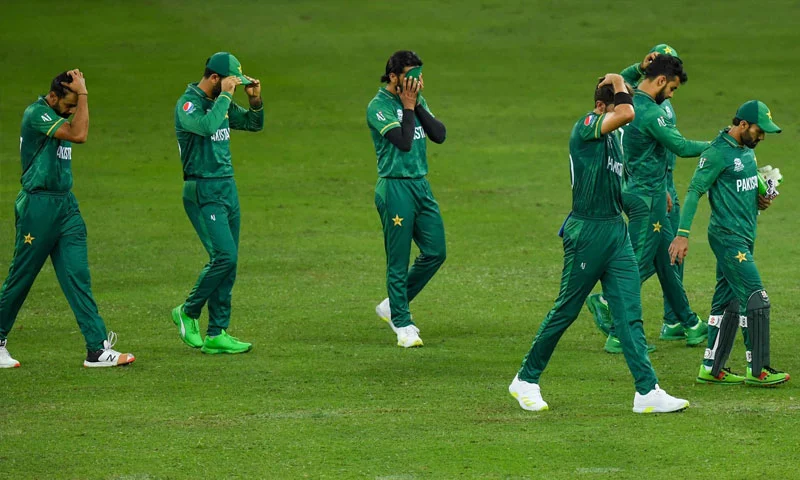
Pakistan Cricket’s Two-Year Collapse Leaves Fans Furious
Pakistan national cricket team suffered another major setback after losing a third straight Test match to Bangladesh national cricket team, extending a painful run that has raised fresh questions about the team’s direction, selection policies and leadership. The latest defeat came days after Pakistan lost the ODI series in Bangladesh and crashed out of the 2026 T20 World Cup before the semi-finals stage. The result added to a long list of failures that have damaged Pakistan’s reputation across all formats during the past two years. Read More: Pakistan Collapse as Bangladesh Take 1-0 Lead in Test Series Pakistan lost a T20 International to Ireland cricket team before the 2024 T20 World Cup and then suffered a shocking defeat against United States national cricket team in the same tournament. The team also failed to qualify for the Super Eight stage of that World Cup. Months later, Bangladesh swept Pakistan 2-0 in a historic Test series on Pakistani soil. The defeat marked Bangladesh’s first ever Test series win against Pakistan. Pakistan’s red-ball struggles worsened when the side lost a Test match by an innings despite scoring 556 runs in the first innings. The team also suffered embarrassing defeats in white-ball cricket. Pakistan lost both an ODI and a T20I against Zimbabwe national cricket team during a chaotic period marked by inconsistent batting and poor bowling performances. World Cup failures and historic defeats increase pressure Pakistan entered the 2025 ICC Champions Trophy with hopes of revival but failed to win a single match. The side also missed out on a semi-final place in the tournament, extending its poor record in ICC events. The team later recorded its worst ever defeat in T20 International history during a crushing loss that exposed major flaws in bowling and fielding. In another alarming statistic, Pakistan conceded 92 runs in the first six overs of a T20I, one of the most expensive powerplay performances in international cricket history. The batting unit also collapsed for 110 against Bangladesh in a T20I earlier this year. Read More: T20 World Cup Disaster: Rare Moment in Pakistan Cricket History as PCB Fines Squad Pakistan’s struggles against a weakened New Zealand national cricket team side further increased criticism of the team management. Pakistan lost seven of eight matches against New Zealand despite several senior Kiwi players missing because of franchise cricket commitments. Former players and analysts have repeatedly criticised the Pakistan Cricket Board for frequent captaincy changes, inconsistent selection policies and instability within the coaching setup. Questions grow over future direction The team’s decline has sparked intense debate among fans and former cricketers in Pakistan. Many critics now question whether Pakistan cricket has entered one of the weakest periods in its modern history. Pakistan still possesses world-class talent, particularly in fast bowling, but inconsistent performances continue to overshadow individual brilliance. Read More: Pakistan Reshuffles Coaching Setup as Sarfaraz Takes Charge for Bangladesh Tests Fans have also expressed frustration over repeated collapses in high-pressure tournaments and poor performances against lower-ranked sides. For a team that once dominated world cricket with unpredictability and flair, the recent results reflect a sharp and worrying decline.

Big Bird Foods Makes Major Retail Move With Imtiaz Partnership
Big Bird Foods Limited has expanded its retail presence after securing placement of its value-added food products across 27 outlets of Imtiaz Super Market nationwide. The company informed the Pakistan Stock Exchange that the move forms part of its broader strategy to strengthen its position in Pakistan’s growing modern retail segment. Big Bird Foods, listed on the Pakistan Stock Exchange under the symbol BBFL, already operates in the food service and corporate supply business. The latest arrangement aims to deepen its reach among retail consumers through one of Pakistan’s largest supermarket chains. Read More: Millat Tractors Signs Major EV Bike Deal in Pakistan Imtiaz Super Market has rapidly expanded its footprint in major cities including Karachi, Lahore, Islamabad and Faisalabad. The retailer has built strong market share in grocery, frozen food and fresh food categories as Pakistani consumers increasingly shift toward organised retail shopping. Big Bird Foods said the partnership could generate between Rs2 billion and Rs2.5 billion in annual revenues once the rollout reaches full scale and operations stabilise. However, the company cautioned that actual performance may vary depending on product availability, consumer demand, rollout timelines and overall market conditions. The company stated, “The expanded retail presence is also expected to increase capacity utilization and improve fixed cost absorption.” Retail expansion reflects changing consumer trends Pakistan’s organised retail sector has expanded steadily during the past decade as supermarket chains continue opening stores in urban centres. Food companies have increasingly targeted modern trade outlets to improve product visibility and strengthen brand recognition among middle-income consumers. Industry analysts say frozen and ready-to-cook food products have gained popularity because of changing lifestyles, rising urbanisation and increasing demand for convenience foods. Read More: Service Long March Tyres Set for $28m IPO in Major PSX Move Big Bird Foods operates as one of Pakistan’s established poultry and processed food companies. The company markets frozen chicken products, nuggets, burgers, sausages and other ready-to-cook items. The latest expansion may also help the company improve production efficiency by increasing factory utilisation levels. Higher volumes through retail channels could support margins by spreading operational costs across larger output levels. The development comes at a time when Pakistan’s food and retail sectors continue facing inflationary pressures and fluctuating consumer spending patterns. Despite economic challenges, organised retail chains have continued expanding operations across major cities. Investors eye growth in modern trade segment Investors closely watched the announcement because the partnership signals Big Bird Foods’ stronger push into Pakistan’s modern retail space. Analysts believe nationwide shelf placement in a large retail network could strengthen the company’s long-term revenue base. The expansion also highlights increasing competition among food manufacturers for visibility in supermarket chains as consumer buying habits evolve. Read More: easypaisa Profit Jumps 4.4 Times in Record Q1 2026 Results Retail experts say companies with stronger nationwide distribution networks may gain an advantage in Pakistan’s packaged food market over the coming years. Imtiaz Super Market has emerged as one of the country’s fastest-growing retail chains through aggressive store expansion and wider product offerings. Big Bird Foods expects the collaboration to support future growth while improving operational efficiency across its business segments.

Pakistan Could Observe Eid ul Adha on May 27, Says SUPARCO
Pakistan is likely to celebrate Eid ul Adha on May 27 after SUPARCO forecast strong chances of sighting the Zil Hajj moon on May 17. The national space agency released preliminary astronomical projections on Tuesday regarding the start of Zil Hajj 1447 Hijri. SUPARCO said atmospheric and astronomical conditions may support moon visibility in several parts of the country on the evening of May 17. A spokesperson said, “The age of the new moon at the time of sunset on May 17 will be approximately 18 hours and 30 minutes.” The official added that astronomers generally consider such conditions suitable for crescent visibility. SUPARCO also said the moon will likely be born at 1:01am on May 17. The spokesperson said coastal regions may offer clearer viewing conditions than inland areas. “The gap between sunset and moonset in coastal areas is expected to remain around 60 minutes, which significantly improves the probability of the moon being visible,” the spokesperson added. Based on these projections, Pakistan may begin Zil Hajj on Monday, May 18. The country will likely celebrate Eid ul Adha on Wednesday, May 27. However, SUPARCO clarified that the Central Ruet-e-Hilal Committee will make the final announcement. Ruet-e-Hilal Committee to announce official decision Pakistan follows the Islamic lunar calendar, which depends on crescent sightings. The Central Ruet-e-Hilal Committee usually meets before major Islamic occasions, including Ramadan and both Eids. Religious scholars, meteorologists and SUPARCO officials attend these meetings. They review eyewitness accounts and scientific data before announcing the official decision. Pakistan has increased the use of astronomical forecasts during moon sighting discussions in recent years. SUPARCO now regularly issues visibility projections before important Islamic months. Saudi Arabia and several Gulf countries will also begin moon observations around the same time. If Saudi authorities sight the crescent on May 17, the kingdom may celebrate Eid ul Adha on May 26. Pakistan often marks the festival a day later because geographical conditions affect moon visibility. Eid preparations gain momentum across Pakistan Preparations for Eid ul Adha have already started in several cities. Livestock markets have begun operating in Karachi, Lahore and Islamabad ahead of the festival. Local administrations are also preparing security, sanitation and traffic management plans. Eid ul Adha commemorates Prophet Ibrahim’s willingness to sacrifice his son in obedience to God’s command. Muslims around the world celebrate the occasion by offering animal sacrifices and sharing meat with relatives and the needy.

Lionel Messi’s Massive MLS Salary Leaves Rivals Far Behind
Argentina captain Lionel Messi remains Major League Soccer’s highest-paid player after signing a new contract extension with Inter Miami CF that keeps him with the club through the 2028 season. The MLS Players Association released its latest salary figures on Tuesday, showing Messi earns an annual base salary of $25 million. His guaranteed compensation stands at $28.3 million. The updated figures place Messi far ahead of the rest of the league. His base salary is more than double that of the second-highest paid player, Son Heung-min. Read More: Messi Reacts as Trump Praises Cristiano Ronaldo at White House The South Korean forward joined Los Angeles FC last August after leaving Tottenham Hotspur F.C.. Reports said LAFC paid a league-record transfer fee of around $26 million to sign him. According to the salary data, Son earns a base salary of $10.36 million with total guaranteed compensation reaching $11.2 million. The MLS Players Association figures do not include commercial endorsements or outside sponsorship income. Messi’s compensation package also excludes his option to acquire a stake in Inter Miami, the Florida-based club co-owned by former England captain David Beckham. Messi’s impact continues on and off the pitch Messi joined Inter Miami in 2023 after leaving Paris Saint-Germain F.C.. His arrival transformed the club’s global profile and boosted MLS television ratings, ticket sales and sponsorship revenues. The 38-year-old forward has scored 59 goals in 64 MLS regular-season matches for Miami. He led the league with 29 goals last season and won the MLS Most Valuable Player award for the second straight year. Messi is also preparing to lead Argentina national football team in its FIFA World Cup title defence next month. Inter Miami teammate Rodrigo De Paul ranks third on the MLS salary list with guaranteed compensation of $9.7 million. Read More: Messi vs. Ronaldo Money Battle: Who Made More in 2025? Mexico international Hirving Lozano sits fourth with $9.3 million in guaranteed compensation despite not featuring for San Diego FC since November. Miguel Almirón rounds out the top five earners. The Atlanta United FC midfielder receives guaranteed compensation of $7.9 million. MLS spending rises as league targets global stars The latest figures highlight MLS’s growing financial strength as clubs continue to attract established international players. Total league compensation now stands at $631 million, according to the players union. Average guaranteed compensation across MLS rose to $688,816. The figure marks an 8.9% increase from salary data released in October last year. MLS clubs have increasingly targeted globally recognised players in recent seasons to expand the league’s international reach and commercial appeal. Read More: Ronaldo Talks Life After Football: The Dream Home He’s Planning Messi’s arrival remains the biggest turning point for the league’s global visibility. Apple TV subscriptions for MLS Season Pass surged after his move to Miami, while stadium attendance records also climbed across several cities. Inter Miami currently ranks among the league’s most valuable franchises, helped largely by Messi’s influence on and off the field.
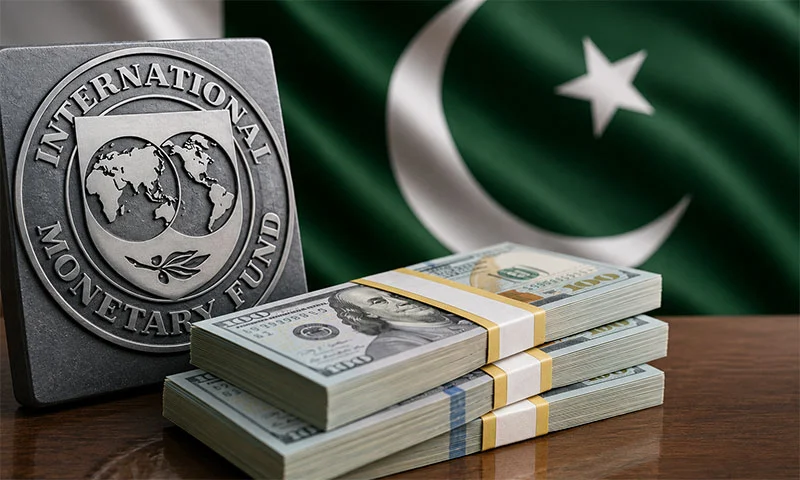
Pakistan Gets $1.3 Billion IMF Boost as SBP Reserves Rise
Pakistan received around $1.3 billion from the International Monetary Fund (IMF), giving the country’s foreign exchange reserves a major boost. The State Bank of Pakistan (SBP) confirmed the development on Wednesday. #SBP has received about US$1.3 billion under the IMF’s EFF and RSF programsThe IMF Executive Board completed third review under the Extended Fund Facility (EFF) in its meeting held on 08 May 2026, and approved disbursement of SDR 760 million for Pakistan. Furthermore, the IMF…— SBP (@StateBank_Pak) May 13, 2026 “The amount would be reflected in SBP’s foreign exchange reserves for the week ending on May 15, 2026,” the central bank said. The payment followed the IMF Executive Board’s approval of Pakistan’s third review under the Extended Fund Facility (EFF) and the second review under the Resilience and Sustainability Facility (RSF). The IMF board approved the review during a meeting in Washington on May 9. The decision unlocked immediate access to around $1.1 billion under the EFF programme and nearly $220 million under the RSF arrangement. Pakistan has now received nearly $4.8 billion under both IMF programmes combined. Pakistan secured the latest tranche after reaching a staff-level agreement with the IMF on March 27. Read More: Pakistan Plans Historic Yuan Bond Launch After IMF Lifeline IMF officials held detailed talks with Pakistani authorities in Karachi and Islamabad between February 25 and March 2. Both sides later continued discussions through virtual meetings. IMF says reforms remain on track The IMF said Pakistan’s reform programme stayed broadly on track despite global economic uncertainty and regional tensions. “The authorities’ strong implementation, despite the Middle East war, has maintained economic stability and improved financing and external conditions,” the IMF said in a statement. The lender urged Pakistan to continue reforms and maintain fiscal discipline. Pakistan entered the 37-month EFF programme in September 2024. The programme aims to stabilise the economy, rebuild reserves and support sustainable growth. The IMF has repeatedly asked Pakistan to widen the tax base, reduce circular debt and improve the energy sector. Read More: IMF Clears $1.2 Billion for Pakistan Amid Strict Reform Demands The lender also wants Islamabad to reform state-owned enterprises and improve revenue collection. Pakistan’s foreign exchange reserves stood near $16 billion at the end of December 2025, according to IMF data. Budget talks and market confidence The IMF programme remains central to Pakistan’s economic recovery plans. Economists say the latest inflow could improve investor confidence ahead of the federal budget. The government is expected to continue talks with the IMF on tax measures, energy pricing reforms and privatisation plans. Finance Minister Muhammad Aurangzeb earlier described the IMF board approval as a sign of confidence in Pakistan’s reform agenda. The SBP raised its benchmark interest rate by 100 basis points to 11.5% in April. Read More: Pakistan to End 200-Unit Power Subsidy Under IMF Deal The IMF praised the move and said the central bank maintained an “appropriately tight monetary policy stance.” The RSF programme focuses on climate resilience and disaster preparedness. The facility also supports long-term economic sustainability projects in Pakistan.
