
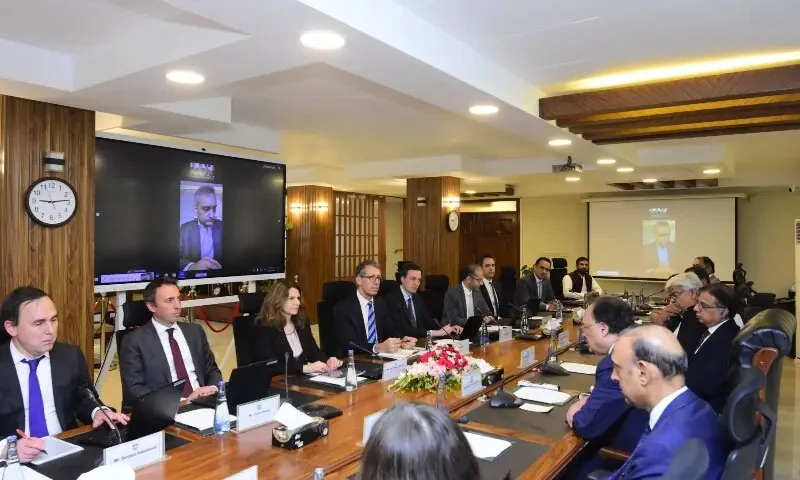
Muhammad Aurangzeb briefed a visiting International Monetary Fund mission on Pakistan’s economic outlook, reform agenda and preparations for the upcoming federal budget as Islamabad works to sustain macroeconomic stability under its IMF-backed programme.
According to a Finance Ministry statement issued on Wednesday, discussions focused on fiscal strategy, structural reforms and measures aimed at strengthening long-term economic resilience.
Read More: Why Pakistan’s Salaried Class Could Finally Get Relief in Budget 2026
“The discussions focused on Pakistan’s macroeconomic stabilisation efforts, preparations for the upcoming federal budget, and the broader reform agenda aimed at strengthening fiscal and external sustainability while fostering sustainable economic growth,” the statement said.
The IMF delegation, led by Mission Chief Iva Petrova, met Pakistani officials in Islamabad amid ongoing talks over the country’s next fiscal framework and reform commitments.
Aurangzeb highlighted improving trends in remittances and exports during the meeting.
He said recent data showed growth in exports on both month-on-month and year-on-year bases, reflecting stronger macroeconomic fundamentals and improving economic resilience.
Finance Minister Muhammad Aurangzeb holds a meeting with the visiting IMF mission led by Mission Chief Iva Petrova in Islamabad to review Pakistan’s macroeconomic outlook, upcoming budget preparations, and ongoing reforms aimed at strengthening economic stability and sustainable… pic.twitter.com/QrCojRDJxy
— Pakistan TV (@PakTVGlobal) May 13, 2026
The finance minister also stressed the need to move Pakistan away from recurring boom-and-bust cycles through reforms focused on productivity, deregulation and export competitiveness.
He said the government had designed its reform programme with input from international economists and experts.
Aurangzeb stated that the policy measures formed part of a “broader and technically grounded economic transformation strategy endorsed at the highest level.”
IMF acknowledges economic progress
The IMF mission acknowledged Pakistan’s progress in maintaining economic stability despite regional and global challenges.
“The Mission appreciated the government’s continued commitment to prudent economic management and reform implementation,” the statement added.
The IMF team also stressed the importance of fiscal discipline and structural reforms to support durable economic growth.
Officials discussed broader macroeconomic priorities and budget targets during the meeting.
Read More: IMF Sets Tough Budget Priorities for Pakistan Ahead of FY26 Plan
The session included Jameel Ahmad, Finance Secretary Imdad Ullah Bosal, Federal Board of Revenue Chairman Rashid Mahmood Langrial and senior officials from the Finance and Revenue Division.
The meeting came hours after the State Bank of Pakistan confirmed receiving around $1.3 billion from the IMF under the Extended Fund Facility and Resilience and Sustainability Facility programmes.
“The amount would be reflected in SBP’s foreign exchange reserves for the week ending on May 15, 2026,” the central bank said earlier.
Pakistan secured the latest IMF tranche after the lender approved the country’s third review under its 37-month Extended Fund Facility programme.
The IMF originally approved the programme on September 25, 2024, to support economic reforms and external stability.
Government eyes relief-focused budget
Meanwhile, government sources told that authorities may avoid introducing major new taxes in the upcoming budget. Officials instead plan to achieve next year’s revenue targets through enforcement and administrative measures worth around Rs778 billion to Rs780 billion.
Read More: Pakistan Gets $1.3 Billion IMF Boost as SBP Reserves Rise
Pakistan’s economic managers continue balancing IMF reform commitments with political pressure to ease the burden on businesses and salaried consumers ahead of the new fiscal year.
Analysts say the upcoming budget will remain critical for investor confidence, inflation management and future IMF engagement.