

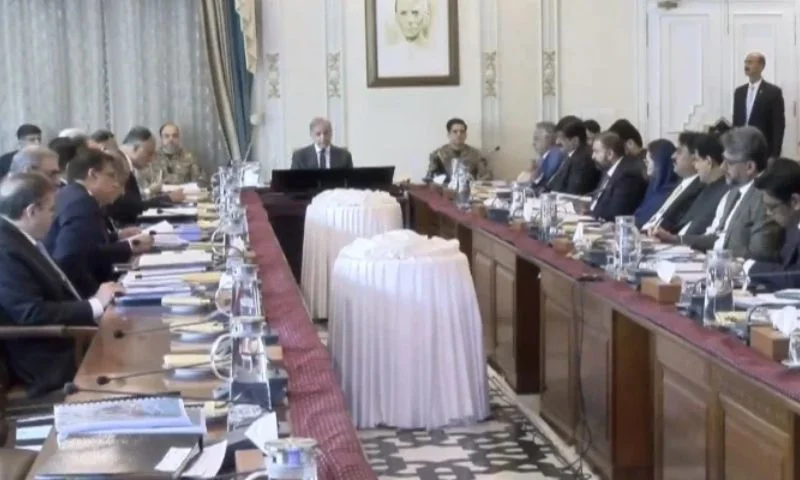
Prime Minister Shehbaz Sharif on Wednesday praised the provinces for their cooperation in tackling Pakistan’s economic challenges, saying collective efforts helped the country achieve macroeconomic stability despite significant domestic and external pressures. Addressing a meeting of the National Economic Council (NEC), the prime minister said the federal and provincial governments worked together to steer the economy through a difficult period. “We made decisions in the best interest of Pakistan as a team,” PM Shehbaz told participants. The NEC meeting came just days before the presentation of the federal budget for fiscal year 2026-27 and focused on development priorities, economic targets and resource allocation. The prime minister acknowledged that Pakistan faced major economic challenges during the past year. However, he said coordinated policymaking helped improve stability and maintain progress under the country’s reform agenda. Referring to recent regional tensions, PM Shehbaz noted that oil prices had risen sharply in international markets. He said the government provided Rs128 billion in relief to consumers through fuel price measures. The premier recalled that long queues formed at petrol stations in several countries during recent disruptions. In contrast, he said timely government action ensured uninterrupted fuel supplies in Pakistan. The prime minister also highlighted ongoing consultations with provincial governments regarding the upcoming budget. “The federal government was in consultations with provinces for several weeks for the upcoming budget,” he said. According to PM Shehbaz, discussions focused on generating additional resources and improving fiscal management. He stressed that maximising available resources remains a key government objective. He also reaffirmed the government’s commitment to the International Monetary Fund programme. “We tried to meet the expectations of the people,” he said, adding that progress became possible through collective teamwork. NEC Approves Development Budget and Growth Targets During the meeting, Planning Minister Ahsan Iqbal briefed participants on budget proposals and key economic indicators. He announced that the NEC had approved a Rs3.66 trillion national development budget and set a 4 percent GDP growth target for fiscal year 2026-27. The approved development package includes Rs1 trillion for the federal Public Sector Development Programme, Rs2.21 trillion for provincial development spending and Rs451 billion for federal enterprises. Read More: Budget 2026-27: Why Punjab and Sindh Agreed to Major Spending Cuts Furthermore, the council approved a proposal to hold NEC meetings every quarter to improve policy coordination and implementation. Iqbal said Pakistan’s development spending had fallen significantly over recent years. “The Public Sector Development Programme has declined from 2.6% of GDP in 2018 to 0.6%,” he said. He argued that Pakistan now requires a “development emergency” to accelerate growth and improve competitiveness. Defence, Exports and Water Security Remain Key Priorities The planning minister warned that debt servicing continues to place pressure on public finances. According to Iqbal, nearly 74 percent of government revenue currently goes toward debt servicing. “We will have to increase foreign investment and exports,” he said while discussing long-term economic priorities. The NEC approved sector-specific targets for the next fiscal year. Agriculture growth has been set at 3.6 percent, industrial growth at 4.5 percent and services sector growth at 4.2 percent. Meanwhile, policymakers fixed the inflation target at 8.2 percent. Iqbal also identified water security as Pakistan’s foremost national priority. The minister confirmed that the federal PSDP would focus on ongoing projects. Therefore, authorities will not launch new schemes except those related to education and defence. PM Shehbaz also emphasised that ensuring adequate resources for national defence remains a key priority. He said Pakistan requires additional funding to address terrorism-related challenges and strengthen national security. The NEC’s decisions will now shape the government’s development agenda as Pakistan prepares to unveil its budget and pursue growth targets for the next fiscal year.
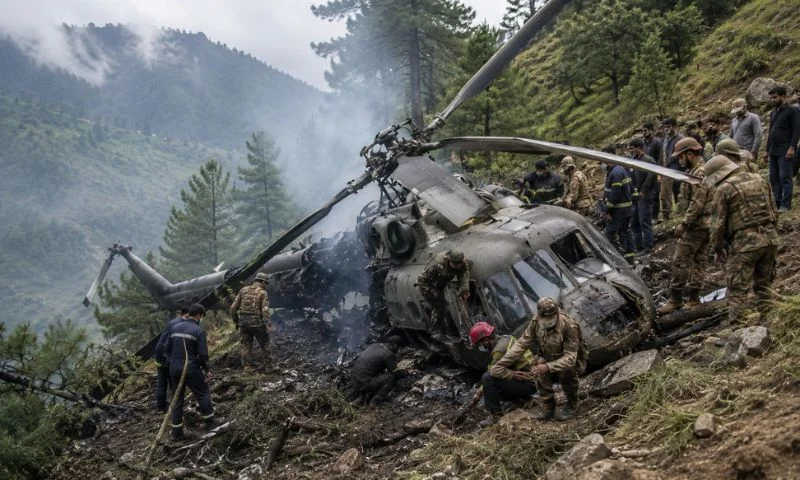
Pakistan Army Helicopter Crash Near Muzaffarabad Leaves No Survivors
A Pakistan Army Aviation helicopter crashed near Muzaffarabad on Wednesday, killing all personnel on board, according to the ISPR. The military’s media wing said the Mi-17 helicopter developed a technical fault during take-off before the accident occurred. “All personnel on board embraced Shahadat. There were no survivors,” the ISPR said in a statement. The helicopter belonged to Pakistan Army Aviation, a branch that provides transport, logistics, surveillance and operational support to military formations across the country. Soon after the crash, rescue and recovery teams reached the site and launched emergency operations. Authorities have not yet released the identities of the personnel who lost their lives. The military said a board of inquiry would investigate the incident and determine the exact technical cause behind the crash. The accident occurred near Muzaffarabad, the capital of Azad Jammu and Kashmir, a mountainous region where military and civilian helicopters frequently operate because of challenging terrain and limited road access. Army Leadership Expresses Grief Chief of Army Staff and Chief of Defence Forces Field Marshal Syed Asim Munir expressed deep sorrow over the tragedy. According to the ISPR, the army chief and all ranks of the Pakistan Army conveyed their condolences to the families of the deceased personnel. The military described the loss as a tragic incident and paid tribute to the service and sacrifice of those who died in the crash. Pakistan Army Aviation plays a critical role in supporting military operations, disaster relief efforts and humanitarian missions. Its fleet includes transport helicopters that regularly fly in remote and mountainous areas. The Mi-17 is one of the most widely used military transport helicopters in the world. Pakistan has employed the aircraft for troop movement, logistics support, rescue missions and relief operations during natural disasters. The helicopter’s ability to operate in difficult weather and rugged terrain has made it a key component of military aviation operations. Inquiry Ordered Into Technical Fault Military aviation accidents remain relatively rare, but authorities typically launch detailed investigations whenever they occur. The board of inquiry will examine technical records, maintenance history and operational procedures linked to the aircraft. Investigators will also assess the circumstances surrounding the reported technical fault during take-off. The findings will help determine whether mechanical failure, maintenance issues or other factors contributed to the accident. Pakistan’s armed forces routinely conduct aviation safety reviews and technical inspections to maintain operational readiness across their air fleets. The latest crash has once again highlighted the risks faced by military aviation crews who operate in demanding environments across the country. As rescue teams complete recovery efforts and investigators begin their work, the focus now shifts to establishing the exact cause of the tragedy and supporting the families of the personnel who lost their lives in the line of duty.
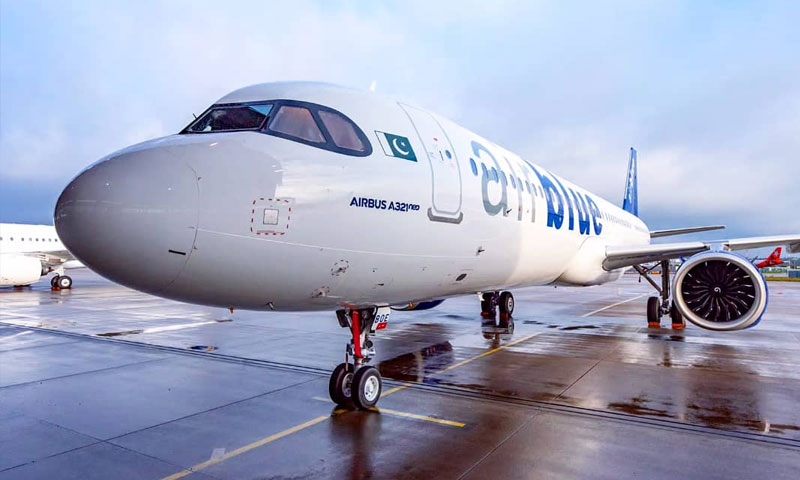
Flying to Skardu? Airblue Has a New Offer for You
Airblue has launched a special discount initiative for passengers travelling to Skardu, offering reduced hotel and restaurant rates as part of efforts to promote tourism in Pakistan’s northern regions. The airline announced that passengers flying to Skardu from Lahore, Karachi and Islamabad can avail themselves of exclusive discounts at selected hotels and restaurants by presenting their Airblue boarding passes. The initiative comes as Pakistan’s tourism industry continues to attract growing domestic interest in Gilgit-Baltistan, home to some of the country’s most scenic destinations, including Skardu, Hunza and Deosai National Park. According to Airblue, the programme will provide travellers with discounts on accommodation and dining services at several hospitality establishments, including PC Hotel, Himmel Resort, Fortune North Hotel and Khoj Resort. Passengers will receive up to 20% discounts on food and beverage services, while hotel stays will be available at discounts of up to 12%. The airline said the offer aims to enhance the travel experience for visitors while encouraging more tourists to explore the country’s northern areas. Skardu Emerges as Tourism Hotspot Skardu has become one of Pakistan’s fastest-growing tourist destinations in recent years. The city serves as the gateway to some of the world’s highest mountains, including K2, and attracts thousands of local and international visitors annually. Improved road infrastructure, increased flight connectivity and rising interest in adventure tourism have helped boost visitor numbers across Gilgit-Baltistan. Tourism experts say partnerships between airlines and hospitality businesses can play a key role in making travel more affordable and encouraging longer stays. Airblue’s latest initiative reflects a broader trend among travel operators seeking to create value-added packages that combine transportation, accommodation and dining benefits. The airline currently operates flights connecting major Pakistani cities with Skardu, a route that witnesses significant demand during the summer tourism season. Supporting Local Tourism Economy The discount programme is expected to benefit both travellers and businesses operating in the region. Hotels, restaurants and tourism operators in northern Pakistan have increasingly focused on attracting domestic tourists as travel demand continues to grow. Industry observers note that tourism contributes significantly to local economies through spending on accommodation, transport, food services and recreational activities. Airblue said travellers can simply present a valid boarding pass at participating venues to access the promotional offers. The airline added that the initiative seeks to provide additional convenience for passengers while supporting tourism-related economic activity in the region. With summer travel season underway, the programme is likely to attract families, adventure seekers and leisure travellers planning visits to one of Pakistan’s most picturesque destinations. As competition among airlines and tourism operators intensifies, such partnerships may become increasingly common in efforts to promote regional tourism and enhance visitor experiences.

Pakistan Nears $41 Billion Remittance Milestone After Historic May
Pakistan received a record $4.251 billion in workers’ remittances during May 2026, marking the highest monthly inflow in the country’s history and providing a major boost to foreign exchange reserves and economic stability. Data released by the State Bank of Pakistan (SBP) on Wednesday showed remittances rose 20.2% compared to April and increased 15.4% from the same month last year. The strong performance pushed total remittance inflows for the first 11 months of fiscal year 2025-26 to $38.1 billion, up 9.2% from $34.9 billion recorded during the corresponding period a year earlier. The latest figures reinforce the growing importance of overseas Pakistanis in supporting the country’s external account at a time when policymakers continue efforts to strengthen economic recovery and maintain financial stability. Topline Securities attributed the surge primarily to seasonal Eid-related transfers. “The strong growth was primarily driven by Eid-related seasonal inflows, as remittances typically increase during festive periods,” the brokerage house said in a research note. The firm added that total remittances for FY26 are likely to exceed $41 billion, setting another historic milestone. Overseas Pakistanis Drive Historic Surge Pakistan’s average monthly remittance inflow during the first 11 months of FY26 reached $3.5 billion, compared with $3.2 billion during the previous fiscal year. Waqas Ghani, Head of Research at JS Global, said the improvement reflected deeper structural changes rather than temporary factors alone. “This improvement continues to reflect structural factors like higher emigration volumes, sustained shift from hawala to formal banking channels, and relatively stable FX spreads in the interbank market.” He added that regional geopolitical developments may have accelerated remittance flows in recent months. Remittances remain one of Pakistan’s largest sources of foreign exchange and play a critical role in supporting household incomes, domestic consumption and balance-of-payments stability. The government and the central bank have also encouraged overseas Pakistanis to use formal banking channels through various incentive schemes and digital transfer mechanisms. Saudi Arabia and UAE Lead Inflows Saudi Arabia remained the largest source of remittances during May. Pakistanis living in the kingdom sent $1.025 billion, compared with $914 million in the same month last year and $842 million in April. The United Arab Emirates followed closely with remittances reaching $1.007 billion. The amount increased 33% year-on-year and jumped 37% from the previous month. The United Kingdom remained another major contributor, with overseas Pakistanis sending $645 million in May. Remittances from the United States reached $350 million, reflecting a 10% monthly increase from April. Meanwhile, inflows from European Union countries rose to $466 million, up 8% from the previous month. Adviser to the Finance Minister Khurram Schehzad described the achievement as a major vote of confidence in Pakistan’s economy. “This is a resounding testament to the unwavering confidence of overseas Pakistanis, which is further strengthening the country’s economy and external stability,” he wrote on X. “With the last month of the fiscal year, remittances are all set to surpass $41 billion for the first time in history!”

Air Canada Pilot Flew for 17 Years Without Required Licence
Canadian authorities have charged a former Air Canada pilot after investigators alleged he spent nearly 17 years flying large passenger aircraft without the licence legally required to command them. Police say Geoffrey Wall, 59, captained more than 900 domestic and international flights between 2009 and 2025. During that period, he allegedly flew Boeing 767, 777 and 787 aircraft while lacking the Airline Transport Pilot Licence for Aeroplanes (ATPL-A), the qualification required for airline captains in Canada. The case emerged during a routine review of pilot credentials. Investigators say the findings shocked aviation officials and raised questions about oversight in one of the world’s most heavily regulated industries. Authorities arrested Wall on June 1. He now faces seven criminal charges, including fraud, possession of counterfeit marks and the use of forged documents. Deputy Chief Nick Milinovich described the investigation as a case that “reads like a movie script”. According to police, Wall earned nearly C$3 million while serving as captain during the period under investigation. Investigation Reveals Alleged Licensing Deception Investigators stress that Wall held a valid commercial pilot licence throughout his aviation career. Therefore, he could legally operate commercial aircraft as a pilot. However, police allege he never obtained the higher-level ATPL-A qualification required after his promotion to captain in 2009. Authorities claim he continued flying as pilot in command for the next 16 years while allegedly misrepresenting his credentials to regulators and Air Canada. Police compared the situation to a doctor who holds a medical licence but performs specialised surgery without the required certification. The alleged deception came to light in 2025 during a routine examination of licensing records. Investigators found irregularities in documents submitted by the pilot. Air Canada then notified Transport Canada, the country’s aviation regulator, after identifying anomalies in Wall’s paperwork. The pilot retired earlier this year. Meanwhile, authorities launched a criminal investigation known as Project Icarus. Investigators also allege that Wall filed a false police report claiming his pilot documentation had been stolen. Transport Canada later imposed administrative penalties and referred the case for further investigation. Wall is scheduled to appear in court on June 29, 2026. Air Canada Says Safety Was Never at Risk Despite the allegations, Air Canada insists passenger safety was never compromised. The airline said Wall successfully completed all mandatory flight competency checks throughout his career. It also confirmed that he held a valid commercial pilot licence. Air Canada noted that pilots undergo recurrent simulator training every six months. In addition, certified Transport Canada examiners conduct annual flight evaluations. The airline said those assessments consistently demonstrated Wall’s ability to operate aircraft safely. However, Air Canada emphasised that proper licensing remains a fundamental part of aviation safety and regulatory compliance. The carrier said it immediately removed Wall from active duty after discovering the discrepancy. It also voluntarily reported the matter to regulators. Furthermore, Air Canada completed a broader audit of pilot qualifications. According to the airline, investigators found no similar cases. The case has drawn comparisons to the film Catch Me If You Can, in which a conman successfully impersonates an airline pilot. Authorities have not yet explained how the alleged licensing discrepancy escaped detection for more than a decade. Investigators continue examining whether additional safeguards are necessary to prevent similar incidents in the future.

Meta Gives Its AI Access to More of Your Online Activity
Meta Platforms has announced a major update to how it personalises content across Facebook and Instagram, revealing that it will now use data shared by other businesses to tailor not only advertisements but also users’ feeds and interactions with its artificial intelligence tools. The move marks a significant expansion of Meta’s personalisation strategy as the company intensifies efforts to integrate AI across its platforms and compete with rivals in the rapidly evolving artificial intelligence market. In a blog post published on Tuesday, Meta said it already uses off-platform activity, such as purchases made on external websites and interactions with online services, to deliver targeted advertisements. Under the new policy, the company will also use that information to customise content recommendations and AI-generated responses. Meta stressed that it is not collecting additional data as part of the change. “We aren’t collecting any new data as part of this update,” the company said. “This is about using information that businesses already send to us to further improve your experience.” The update means users could see content that reflects their activity beyond Facebook and Instagram. Meta provided an example of a consumer who recently purchased a tent online and may subsequently see camping-related videos in their Reels feed. AI and Content Personalisation Meta spokesperson Emil Vazquez told technology publication The Verge that the company previously relied primarily on activity within its own ecosystem, including likes, follows, comments and viewing behaviour, to personalise content recommendations. The latest change broadens that approach by incorporating data supplied by businesses through Meta’s advertising and tracking infrastructure. The development also follows Meta’s growing use of artificial intelligence across its platforms. Last year, the company began using conversations with its AI assistant to personalise advertising experiences. Industry analysts view the latest update as part of Meta’s wider strategy to make its AI tools more relevant and responsive by leveraging a broader range of user signals. The company has invested billions of dollars in AI infrastructure and recently introduced several AI-powered products aimed at improving user engagement and advertising effectiveness. Privacy Controls Remain Available Alongside the update, Meta has simplified the controls governing access to off-platform information. Users who do not want Meta to use information shared by other businesses for advertising, feed recommendations or AI responses can disable the “Activity from other businesses” setting. According to Vazquez, the rollout will occur globally but several regions will not receive the feature initially. The excluded markets include the European region, the United Kingdom, Brazil, Thailand, South Africa, Turkey, South Korea, Ecuador, Nigeria and Kenya. The announcement is likely to reignite debates surrounding digital privacy, data collection and the growing role of AI in shaping online experiences. While Meta argues the changes will improve relevance and convenience, privacy advocates have long questioned how major technology companies use consumer data across platforms and services. As competition intensifies among technology giants, personalisation powered by artificial intelligence is becoming a key battleground. Meta’s latest move signals that data shared beyond its platforms will play a growing role in that strategy.

PCB Hands Asian Games Captaincy to Sahibzada Farhan in Surprise Move
The Pakistan Cricket Board (PCB) on Tuesday announced a 15-member squad for the Asian Games 2026. Experienced opener Sahibzada Farhan will lead the side, while Abdul Samad will serve as vice-captain. The cricket competition will take place in Aichi-Nagoya, Japan. It forms part of the Asian Games scheduled from September 19 to October 4. Meanwhile, the cricket event will begin on September 24. The medal matches will take place on October 3. Pakistan will compete against nine other teams for the gold medal. Therefore, selectors have combined experienced players with emerging talent. Farhan enters the tournament as one of the squad’s most experienced T20 players. The 30-year-old has played 46 T20 Internationals for Pakistan. During that time, he scored 1,305 runs, including two centuries and 10 half-centuries. In addition, the squad includes several players who featured prominently in domestic and franchise cricket over the past year. Saim Ayub, Usman Khan, Abrar Ahmed and Salman Mirza all retained their places. Meanwhile, Haider Ali and Ahmed Daniyal earned recalls after strong performances in domestic competitions. Four New Faces Earn Major Opportunity The squad also includes four players who are yet to make their T20 International debut. Fast bowler Akif Javed secured a place after consistent performances in domestic cricket. Likewise, teenage pacer Ali Raza received a call-up after impressing selectors with his pace and potential. All-rounder Maaz Sadaqat and batter Saad Masood also earned selection. As a result, the Asian Games could become an important stepping stone in their international careers. Pakistan’s management continues to expand its talent pool ahead of future ICC events. Therefore, selectors have increasingly rewarded young performers with opportunities in major tournaments. Furthermore, 14 of the 15 selected players will attend the National Cricket Academy White-Ball Camp. The camp will begin in Lahore on June 15. Officials believe the programme will help players prepare for international assignments later this year. Hesson to Head Coaching Staff Mike Hesson will lead the support staff as head coach. Meanwhile, former Australian fast bowler Ashley Noffke will work as bowling coach. Shane McDermott will oversee fielding preparations. In addition, Muhammad Tahir will serve as physiotherapist, while Imran Ullah will work as trainer. Usman Hashmi will perform dual responsibilities as analyst and team operations coordinator. Cricket has become one of the most closely watched events at the Asian Games. India won the men’s gold medal at the Hangzhou Games in 2023. Afghanistan claimed silver, while Bangladesh secured bronze. This time, Pakistan will aim to challenge the region’s strongest teams. More importantly, the squad offers several young players a chance to establish themselves on the international stage. Squad Sahibzada Farhan (captain), Abdul Samad (vice-captain), Abrar Ahmed, Ahmed Daniyal, Akif Javed, Ali Raza, Arafat Minhas, Haider Ali, Hasan Nawaz, Maaz Sadaqat, Mohammad Salman Mirza, Saad Masood, Saim Ayub, Sufyan Moqim and Usman Khan (wicketkeeper). Support Staff Mike Hesson (head coach), Ashley Noffke (bowling coach), Shane McDermott (fielding coach), Muhammad Tahir (physiotherapist), Imran Ullah (trainer), Usman Hashmi (analyst-cum-team operations coordinator).
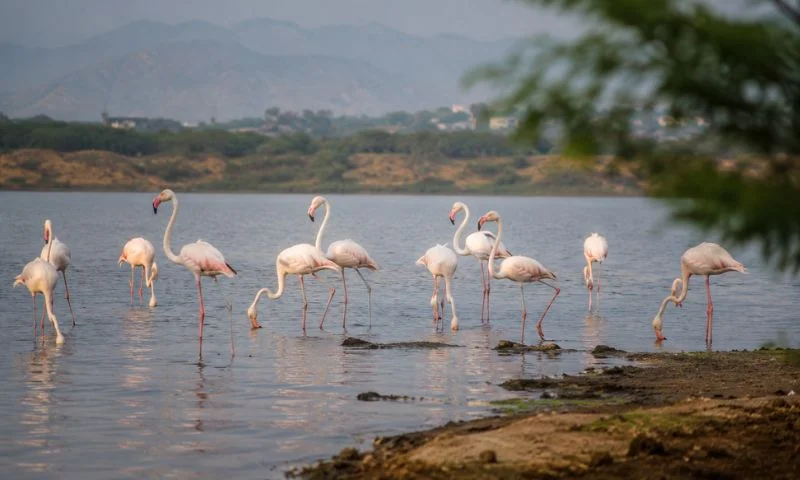
Why Conservationists Are Alarmed After Flamingos Reappeared at Rawal Lake
The return of flamingos to Rawal Lake after a prolonged absence has excited birdwatchers and conservationists, but reports of suspected poaching have quickly overshadowed what many considered a positive sign for the region’s fragile ecosystem. According to initial reports, a small flock of around 12 to 13 flamingos recently appeared at Rawal Lake, one of Islamabad’s most important freshwater reservoirs and a seasonal refuge for migratory birds. Wildlife experts viewed the sighting as encouraging because flamingo visits to the lake have become increasingly rare in recent years. Their return had raised hopes that environmental conditions around the water body remained suitable for migratory species travelling through South Asia’s major flyways. However, those hopes suffered a setback after reports emerged that suspected poachers may have targeted the birds shortly after their arrival. Authorities believe several flamingos may have been killed, although officials have not yet confirmed the exact number. Investigators are also examining allegations that local individuals could have participated in the hunting activity. The incident has drawn widespread concern among environmental groups and wildlife enthusiasts, who have repeatedly called for stronger protection of migratory birds across Pakistan. Wildlife Authorities Launch Investigation The Islamabad Wildlife Management Board has taken immediate notice of the reports and launched a formal inquiry into the incident. Officials are collecting evidence from Rawal Lake and nearby areas. They are also coordinating with local police to identify suspects and support any legal proceedings that may follow. Authorities have not released details about possible arrests. However, officials say they will pursue strict legal action if investigators confirm the allegations. Wildlife officials described the incident as highly concerning because flamingo populations depend on safe stopover sites during migration. Rawal Lake and surrounding wetlands provide important habitats for dozens of migratory bird species that travel thousands of kilometres between breeding and wintering grounds. Pakistan sits along the Central Asian Flyway, one of the world’s major migratory bird routes. Every year, millions of birds pass through the country on their seasonal journeys between Central Asia, Siberia and warmer regions further south. Environmental experts say illegal hunting, habitat degradation and pollution continue to threaten many migratory species across the region. Conservation Concerns Grow Conservationists argue that even the loss of a small group of flamingos could affect efforts to encourage the return of sensitive bird populations to urban wetlands. The Islamabad Wildlife Management Board has not yet issued final findings. Investigators continue to examine the circumstances surrounding the reported killings. Wildlife officials stressed that the presence of flamingos at Rawal Lake remains ecologically significant. Their return often indicates the availability of food sources and suitable wetland conditions. Environmental groups have urged authorities to strengthen monitoring around protected habitats and increase public awareness about wildlife protection laws. The investigation remains ongoing, and officials say they will hold any violators accountable under existing wildlife regulations. For conservationists, the incident serves as a reminder that protecting migratory birds requires constant vigilance. The return of flamingos offered a rare moment of optimism, but the suspected poaching case now threatens to turn that success into another setback for Pakistan’s wildlife conservation efforts.

Smoking Kills 164,000 Pakistanis Every Year as Misinformation Blocks Safer Alternatives: Report
Smoking claims an estimated 164,000 lives every year in Pakistan and costs the economy around Rs422 billion annually through healthcare expenses and lost productivity, according to a new report that warns misinformation is preventing smokers from considering less harmful alternatives. The findings come from The Switch Report, described by its authors as Pakistan’s largest survey examining smokers’ perceptions of alternatives to traditional cigarettes. The study surveyed 1,600 adults across six provinces between January and May 2026. Researchers included 1,085 confirmed smokers and combined quantitative findings with focus group discussions in Karachi, Lahore and Islamabad. The report also reviewed international evidence from eight countries. Pakistan remains one of the world’s largest tobacco-consuming nations. According to data from the World Health Organization, tobacco use continues to place a significant burden on public health systems across low and middle-income countries, including Pakistan. The report found that 18.3 million Pakistani adults currently smoke. It also noted that one in every five Pakistani men remains trapped in a habit that health experts have long identified as preventable. Researchers said the biggest obstacle to switching away from conventional cigarettes was not affordability, availability or addiction. Instead, they pointed to widespread misinformation about nicotine and smoke-free products. Majority of Smokers Hold Incorrect Health Beliefs According to the survey, 59.3 percent of smokers believe smokeless products, including vapes and nicotine pouches, are more harmful than traditional cigarettes. The report also found that 56.6 percent of smokers incorrectly attribute smoking-related diseases, including cancer, to nicotine rather than combustion. Researchers argued that this misunderstanding shapes how smokers evaluate alternatives. “A smoker who thinks nicotine causes cancer won’t see any difference between a regular cig and a nicotine pouch. This makes no sense logically. Every alternative looks equally deadly.” The report identified anti-tobacco organisations and public health campaigns that treat all nicotine products as equally harmful as a major source of confusion among consumers. Researchers said many awareness campaigns fail to distinguish between combustible tobacco products and smoke-free alternatives. The study found that family members remain the primary source of health information for Pakistani smokers, cited by 40.5 percent of respondents. Social media followed at 34 percent, while peers accounted for 31.8 percent. Only 22.4 percent of smokers said they received information from healthcare professionals. This came despite 78 percent reporting that they trust doctors more than any other source. Call for Evidence-Based Public Awareness The report’s authors warned that misinformation could undermine harm-reduction efforts and discourage smokers from seeking alternatives. “In situations where over 50pc of all smokers wrongly perceive nicotine as being carcinogenic, one realizes that there is a great failure in educating people against false stories from anti-smoking campaigns.” Shahbaz Khan, Chief Executive Officer of the WTA, urged policymakers to address what he described as a growing information gap. “The government must take steps to counter misinformation and create an environment where smokers can access factual, evidence-based information,” he said. Public health experts continue to stress that quitting all tobacco and nicotine products remains the safest option. However, the report argues that accurate information is essential if smokers are to make informed decisions about available alternatives. The findings add a new dimension to Pakistan’s tobacco control debate as policymakers balance public health goals with efforts to reduce smoking-related disease and economic losses.

Budget 2026-27: Pakistan Likely to Impose Up to 25pc Sales Tax on Imported EVs
Pakistan is likely to impose up to 25 percent sales tax on imported electric vehicles in the upcoming Budget 2026-27, while maintaining existing tax rates on hybrid vehicles, according to officials familiar with budget proposals. The move comes as several tax concessions for the electric vehicle sector approach their expiry date on June 30, 2026. The government is reviewing incentives introduced under its electric mobility strategy and the Automotive Industry Development and Export Policy (AIDEP) 2021-26. Sources told Business Recorder that the sales tax exemption on the import of completely knocked down kits for electric vehicles by local manufacturers will lapse at the end of the current fiscal year. The exemption currently covers small electric cars and sport utility vehicles with battery capacities of up to 50 kWh. It also applies to light commercial vehicles with battery capacities of up to 150 kWh. At present, locally manufactured or assembled electric four-wheelers benefit from a one percent sales tax rate. The concession remains valid until June 30, 2026. Hybrid vehicles also enjoy preferential treatment. Depending on engine size and specifications, locally assembled hybrid vehicles currently attract sales tax rates ranging from 8.5 percent to 12.75 percent. Sources said the government is not considering changes to hybrid vehicle taxation in the next fiscal year. The proposal reflects concerns raised by industry stakeholders who have warned against abrupt policy changes that could discourage investment in local vehicle assembly. Senate Panel Clears Customs Amendment Bill The Senate Standing Committee on Finance has already approved the Customs (Amendment) Bill, 2026. The legislation aims to implement financial provisions contained in the Automotive Industry Development and Export Policy 2021-26. According to official documents, the amendments seek to align customs concessions available under AIDEP with provisions listed in Part V(A) of the Fifth Schedule to the Customs Act, 1969. The committee unanimously endorsed the bill after detailed deliberations. Read More: Five New Chinese EVs in The Price of One Car in US: The Price Gap Shaking the Auto Industry Pakistan introduced major incentives for electric vehicles under the EV Policy 2020. The federal cabinet approved the policy on June 16, 2020, to encourage green transportation, reduce fuel imports and support local manufacturing. The policy granted concessional customs duty on imports of EV-specific parts for electric motorcycles, rickshaws, buses, trucks and other commercial vehicles. In December 2021, the federal cabinet expanded these concessions through AIDEP 2021-26. The policy extended benefits to light commercial vehicles, vans and additional four-wheeler categories. Industry Awaits Clarity on Future EV Incentives The proposed customs amendments would continue duty concessions on the import of electric vehicle parts and components until June 30, 2026. The package also allows manufacturers to import completely built electric vehicles under specific conditions. Companies can import up to 10 units of the same variant for local assembly and manufacturing purposes. For electric two- and three-wheelers, the concession applies to a maximum of 200 units approved by the Engineering Development Board under the EV Policy 2020. Industry experts say the upcoming budget will determine whether Pakistan accelerates its transition to electric mobility or slows adoption through higher taxation on imported vehicles. The government has promoted electric vehicles as part of its broader strategy to reduce dependence on imported petroleum products and lower transport-related emissions. However, fiscal pressures and the need to increase revenue have forced policymakers to review several tax exemptions ahead of Budget 2026-27. With budget proposals expected later this week, investors, automakers and consumers now await final decisions on the future of electric vehicle incentives in Pakistan.
