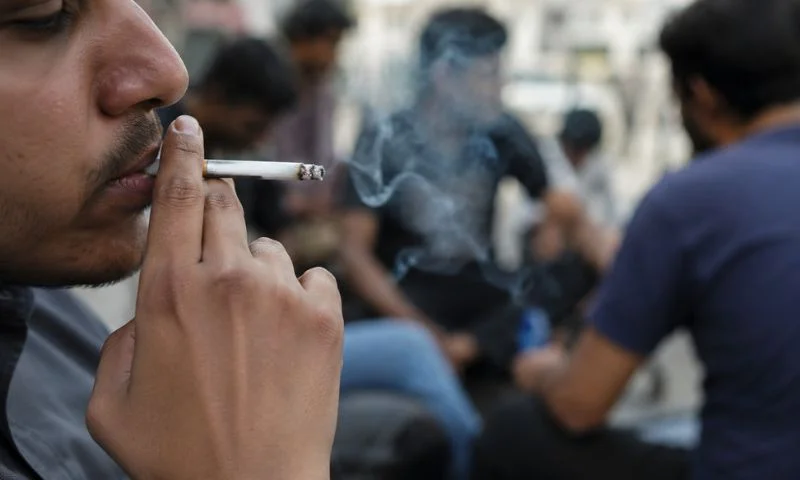
Smoking claims an estimated 164,000 lives every year in Pakistan and costs the economy around Rs422 billion annually through healthcare expenses and lost productivity, according to a new report that warns misinformation is preventing smokers from considering less harmful alternatives.
The findings come from The Switch Report, described by its authors as Pakistan’s largest survey examining smokers’ perceptions of alternatives to traditional cigarettes.
The study surveyed 1,600 adults across six provinces between January and May 2026. Researchers included 1,085 confirmed smokers and combined quantitative findings with focus group discussions in Karachi, Lahore and Islamabad. The report also reviewed international evidence from eight countries.
Pakistan remains one of the world’s largest tobacco-consuming nations. According to data from the World Health Organization, tobacco use continues to place a significant burden on public health systems across low and middle-income countries, including Pakistan.
The report found that 18.3 million Pakistani adults currently smoke. It also noted that one in every five Pakistani men remains trapped in a habit that health experts have long identified as preventable.
Researchers said the biggest obstacle to switching away from conventional cigarettes was not affordability, availability or addiction. Instead, they pointed to widespread misinformation about nicotine and smoke-free products.
Majority of Smokers Hold Incorrect Health Beliefs
According to the survey, 59.3 percent of smokers believe smokeless products, including vapes and nicotine pouches, are more harmful than traditional cigarettes.
The report also found that 56.6 percent of smokers incorrectly attribute smoking-related diseases, including cancer, to nicotine rather than combustion.
Researchers argued that this misunderstanding shapes how smokers evaluate alternatives.
“A smoker who thinks nicotine causes cancer won’t see any difference between a regular cig and a nicotine pouch. This makes no sense logically. Every alternative looks equally deadly.”
The report identified anti-tobacco organisations and public health campaigns that treat all nicotine products as equally harmful as a major source of confusion among consumers.
Researchers said many awareness campaigns fail to distinguish between combustible tobacco products and smoke-free alternatives.
The study found that family members remain the primary source of health information for Pakistani smokers, cited by 40.5 percent of respondents. Social media followed at 34 percent, while peers accounted for 31.8 percent.
Only 22.4 percent of smokers said they received information from healthcare professionals. This came despite 78 percent reporting that they trust doctors more than any other source.
Call for Evidence-Based Public Awareness
The report’s authors warned that misinformation could undermine harm-reduction efforts and discourage smokers from seeking alternatives.
“In situations where over 50pc of all smokers wrongly perceive nicotine as being carcinogenic, one realizes that there is a great failure in educating people against false stories from anti-smoking campaigns.”
Shahbaz Khan, Chief Executive Officer of the WTA, urged policymakers to address what he described as a growing information gap.
“The government must take steps to counter misinformation and create an environment where smokers can access factual, evidence-based information,” he said.
Public health experts continue to stress that quitting all tobacco and nicotine products remains the safest option. However, the report argues that accurate information is essential if smokers are to make informed decisions about available alternatives.
The findings add a new dimension to Pakistan’s tobacco control debate as policymakers balance public health goals with efforts to reduce smoking-related disease and economic losses.