

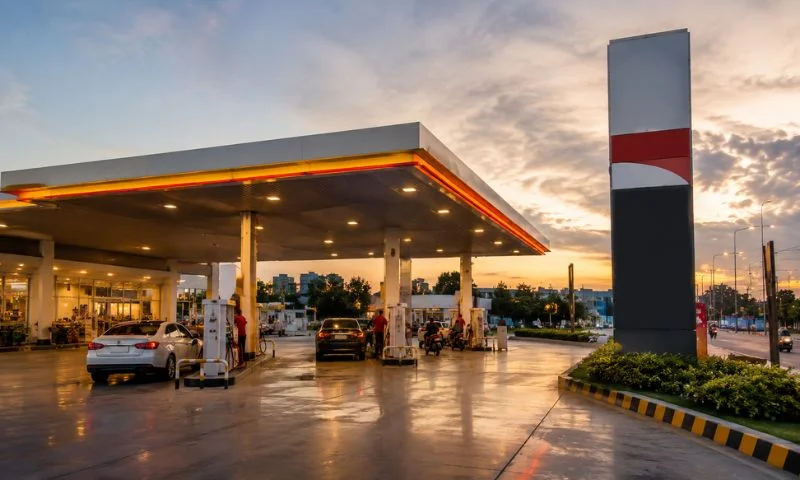
Wafi Energy Pakistan Limited (WEPL), formerly known as Shell Pakistan Limited, has reappointed its chairperson and chief executive officer for fresh three-year terms, reinforcing leadership continuity at a time when the company is reporting strong financial growth. The company disclosed the appointments in a notice submitted to the Pakistan Stock Exchange (PSX) on Tuesday. According to the filing, the Board of Directors has reappointed Ghassan Al Almoudi as Chairperson of the Board for a term of three years effective June 16, 2026. “The Board of Directors has re-appointed Ghassan Al Almoudi as the Chairperson of the Board, for a term of three (03) years with effect from June 16, 2026,” the company informed the bourse. The board also renewed the appointment of Zubair Shaikh as Chief Executive Officer for another three-year term. The leadership decisions come less than two years after Saudi Arabia’s Wafi Energy completed its acquisition of a majority stake in Shell Pakistan, marking one of the most significant transactions in Pakistan’s downstream energy sector in recent years. Leadership Stability During Growth Phase The reappointments signal the company’s intention to maintain strategic continuity as it expands operations under the Wafi Energy brand. Wafi Energy acquired a controlling stake in Shell Pakistan through Wafi Energy Holding Limited after receiving regulatory approvals in 2023. Following the transaction, the company rebranded as Wafi Energy Pakistan Limited while continuing operations across its retail fuel network, lubricants business and commercial energy segments. Industry analysts say leadership stability remains critical as Pakistan’s fuel marketing sector navigates changing energy demand, economic challenges and increasing competition. Ghassan Al Almoudi has played a key role in overseeing the company’s transition following the ownership change. Meanwhile, Zubair Shaikh has led day-to-day operations during a period of restructuring and business integration. The company remains one of Pakistan’s well-known energy marketers, operating a nationwide network of fuel stations and serving industrial, commercial and retail customers. Profit Jumps 148% in First Quarter The leadership announcement coincided with strong financial performance. Wafi Energy Pakistan recently reported a profit after tax of Rs2.16 billion for the first quarter of 2026. The figure represents a 148% increase compared with Rs873 million recorded during the same period last year. The sharp rise reflects improved operational performance and stronger earnings across key business segments. The company has focused on enhancing efficiency and strengthening its market position since the ownership transition. Wafi Energy Pakistan is a publicly listed company incorporated in Pakistan. Its majority shareholder is Wafi Energy Holding Limited, which operates from Abu Dhabi in the United Arab Emirates. Wafi Energy itself is one of the region’s major energy companies and has expanded its footprint across several Middle Eastern and international markets. The latest appointments suggest the company intends to build on recent momentum as it pursues long-term growth opportunities in Pakistan’s evolving energy landscape.
New Leak Suggests Standard iPhone 18 Could Arrive in 2027
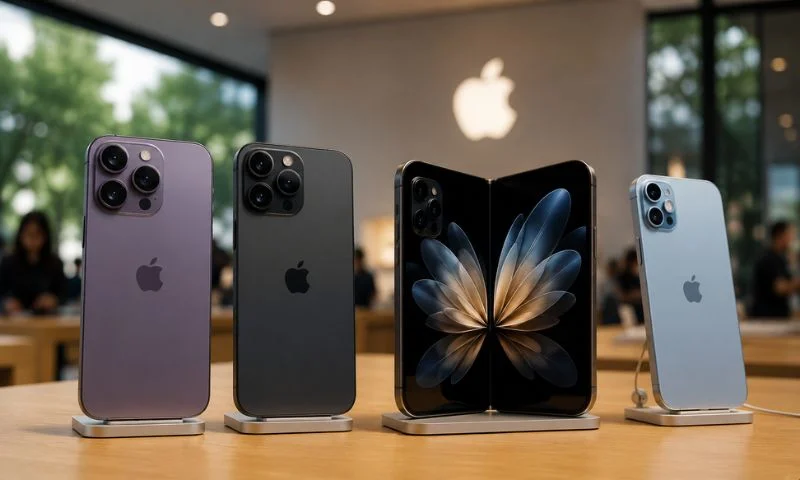
Apple could be preparing one of the biggest changes to its iPhone release strategy in years, with new reports suggesting the standard iPhone 18 may launch months after the premium Pro models instead of arriving alongside them. The speculation follows fresh comments from Largan Precision, one of Apple’s key camera lens suppliers. During a recent shareholders’ meeting, chairman Lin En-ping said that a major U.S. customer had delayed the launch of a new product until the first quarter of 2027. Lin did not identify either the customer or the product. However, industry analysts noted that the timeline closely aligns with recent reports about Apple’s future iPhone roadmap. For nearly a decade, Apple has unveiled its flagship iPhone lineup during a September launch event. Industry reports now suggest the company may move toward a staggered release strategy as its product portfolio expands. If the reports prove accurate, Apple could launch the iPhone 18 Pro, iPhone 18 Pro Max and a long-rumoured foldable iPhone in late 2026. The standard iPhone 18 and a next-generation iPhone Air could follow several months later in spring 2027. Foldable iPhone Could Become Apple’s Main Attraction Analysts believe Apple’s expected foldable iPhone may play a central role in the new strategy. Several supply chain reports and analyst notes from firms including TF International Securities and Bloomberg have indicated that Apple is actively developing a foldable device. The foldable model is expected to feature a book-style design with a compact outer display and a larger internal screen. Some reports suggest the device could carry a price tag of around $2,000, making it one of Apple’s most expensive consumer products. A staggered launch schedule could help Apple spread consumer demand across the year. It may also ease pressure on manufacturing operations and supply chains, especially if a foldable device joins the existing iPhone lineup. The strategy would mirror approaches already used by several Android manufacturers, which often release flagship and foldable devices at different times during the year. What the iPhone 18 Could Offer While Apple has not confirmed any specifications, multiple reports point to several hardware upgrades for the iPhone 18 series. The devices could feature Apple’s next-generation A20 processor, which analysts expect Taiwan Semiconductor Manufacturing Company to produce using an advanced 2-nanometre process. The technology could deliver faster performance and improved power efficiency. Other reported upgrades include up to 12GB of RAM, a brighter display, a higher-resolution front camera and a smaller Dynamic Island design across the lineup. Industry observers also expect Apple to focus on controlling manufacturing costs. That approach could help the company avoid significant price increases despite introducing more advanced hardware. Apple has not commented on the reports. However, if the company’s plans move forward as expected, consumers could see the biggest overhaul of Apple’s launch schedule since the modern iPhone era began. For buyers waiting to upgrade, that may mean choosing between premium models arriving in late 2026 or waiting until 2027 for the standard iPhone 18.
UK Unveils £8 Million Plan to Help Pakistan Fight Illegal Migration
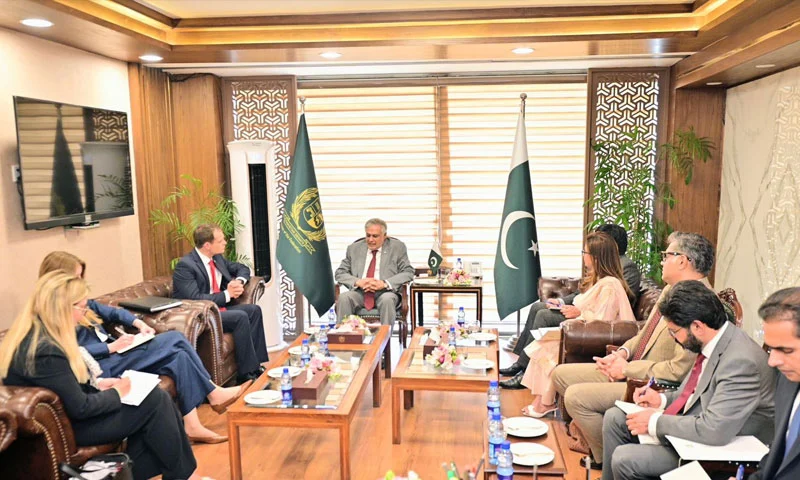
The United Kingdom has announced an additional £8 million funding package for Pakistan to strengthen efforts against illegal migration, people smuggling and organised crime, as both countries seek closer cooperation on border security and law enforcement. UK Minister Hamish Falconer announced the funding during a visit to Islamabad. The British High Commission confirmed the commitment in a statement on Tuesday. The new funding aims to enhance border and visa systems, improve information-sharing mechanisms and strengthen Pakistan’s capacity to investigate criminal networks involved in human trafficking and migrant smuggling. The British High Commission said the support would also help facilitate the return of individuals who have no legal right to remain in the UK. “This includes support for improving identity and information-sharing processes, strengthening law enforcement capability to investigate smuggling networks, and expanding community-based prevention programmes that reduce vulnerability to exploitation,” the statement said. The initiative forms part of broader UK efforts to curb irregular migration routes and disrupt organised criminal groups that profit from illegal cross-border movement. Focus on Smuggling Networks and Visa Fraud Falconer described cooperation between London and Islamabad as increasingly important in addressing shared security challenges. “The UK-Pakistan partnership is critical for safeguarding global and UK national security, and tackling terrorist threats, visa fraud and serious organised crime,” he said. DPM/FM Senator Mohammad Ishaq Dar @MIshaqDar50 received Mr. Hamish Falconer MP @HFalconerMP Parliamentary Under-Secretary of State at the FCDO. Mr Falconer conveyed deep appreciation for Pakistan’s constructive diplomatic role in facilitating the US–Iran agreement. The two… pic.twitter.com/KDSuxH9b1Z— Ministry of Foreign Affairs – Pakistan (@ForeignOfficePk) June 15, 2026 “We are taking this partnership and our cooperation to a new level, with additional funding to deter illegal migration and target drivers from the source,” he added. British officials said part of the funding will support community-based programmes in areas considered vulnerable to illegal migration, with the goal of addressing economic and social factors that often push people toward dangerous migration routes. The UK has intensified efforts in recent years to reduce irregular migration and strengthen cooperation with countries of origin and transit. According to official UK government data, immigration enforcement and border security remain key priorities as authorities seek to dismantle criminal networks that facilitate unlawful travel and document fraud. During the second day of his visit, Falconer is expected to attend a live demonstration of joint operations involving Pakistani law enforcement agencies. The exercise will showcase efforts to identify and intercept non-genuine visa holders at Pakistani airports before departure. Officials said the programme helps ensure that only legitimate travellers and students enter the UK. Pakistan’s Role in US-Iran Deal Recognised Beyond migration issues, Falconer used the visit to acknowledge Pakistan’s recent diplomatic role in facilitating dialogue between Washington and Tehran. According to the British High Commission, the minister personally thanked Deputy Prime Minister and Foreign Minister Ishaq Dar for Pakistan’s contribution to efforts that led to the recently announced US-Iran agreement. “The news of a US-Iran deal is a hugely significant moment and I am pleased to convey my personal thanks, and that of the UK, to Pakistan during my visit here in Islamabad,” Falconer said. He described Pakistan’s role as critical in supporting regional stability and helping create conditions for dialogue. “We remain grateful for the role Pakistan has played in facilitating negotiations. The UK and our partners will continue to work together to see the full reopening of the Strait of Hormuz,” he added. The visit highlights expanding cooperation between Pakistan and the UK across security, migration management and regional diplomacy at a time of growing geopolitical and economic challenges.
Trump to Netanyahu: ‘There Would Be No Israel Without Me’
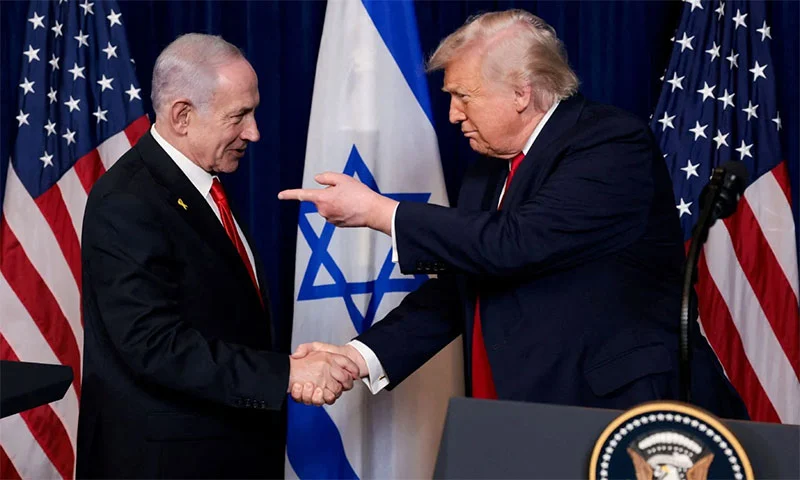
US President Donald Trump on Tuesday intensified his criticism of Israeli Prime Minister Benjamin Netanyahu, declaring that “there would be no Israel” without American support and his own leadership, as tensions grow over Israel’s military operations in Lebanon. Speaking at the G7 summit in Évian-les-Bains, France, Trump suggested that Israel’s actions risk undermining ongoing diplomatic efforts between Washington and Tehran aimed at ending months of conflict across the region. “Without the US, there would be no Israel. Without me, there would be no Israel because no other president was willing to do what I did. I have had a great relationship with Bibi. Now Bibi has to be more responsible with respect to Lebanon,” Trump said. The comments marked some of the strongest public criticism Trump has directed at Netanyahu since returning to the White House. The disagreement comes at a sensitive moment. Washington recently announced a preliminary agreement with Iran designed to extend a ceasefire and lay the groundwork for broader negotiations on regional security, sanctions and Tehran’s nuclear programme. However, Israel has continued military operations against Hezbollah in Lebanon despite the diplomatic progress. Lebanon Strikes Spark Tensions Between Allies Trump’s frustration reportedly escalated after an Israeli airstrike targeted a suburb of Beirut on Sunday. The strike took place on the same day Trump announced that a new agreement with Iran would be signed electronically. According to the Israeli military, the operation came in response to Hezbollah firing three projectiles into northern Israel. Netanyahu defended Israel’s position and made clear that his government would continue military operations in Lebanon. “The struggle has not ended,” Netanyahu said on Monday. “I want to make clear: We will remain in the security zones as long as required in order to defend our country.” The remarks highlighted a growing gap between Washington’s diplomatic approach and Israel’s security strategy. Trump: “Without me, there would be no Israel … I’ve had a great relationship with Bibi, but now Bibi has to be more responsible with respect to Lebanon … I’m not happy with the way Israel has handled themselves with Lebanon and Hezbollah.” pic.twitter.com/xvLlEhYqWj — Aaron Rupar (@atrupar) June 16, 2026 Trump later expressed his anger during an interview with Axios. “Why did Bibi have to do a f—ing attack?” Trump said. “I was so p—ed off. I let him know. He has no f—ing judgment. I let him know that.” The unusually blunt language underscored the strain between the two longtime political allies. Peace Efforts Face Fresh Challenges The dispute comes as negotiators work to transform the recently announced US-Iran framework into a broader and more durable agreement. The proposed deal includes extending the ceasefire, reopening the Strait of Hormuz and launching further discussions on Iran’s nuclear activities. Regional diplomats view the agreement as the most significant diplomatic breakthrough since the conflict began earlier this year. Yet Lebanon remains one of the biggest obstacles. Iran has insisted that any long-term settlement must include a halt to hostilities involving Hezbollah, while Israeli officials continue to argue that military pressure remains necessary to protect national security. Analysts say Trump’s latest comments reflect growing concern within the White House that continued military escalation could jeopardise a fragile diplomatic opening. Despite the public disagreement, US officials stressed that Washington remains committed to Israel’s security while pursuing a broader regional peace framework. For now, attention has shifted to upcoming negotiations and whether the ceasefire can survive amid continuing tensions on Israel’s northern border.

50K Followers to Millions: How Vozinha’s Life Changes Overnight
Cape Verde’s FIFA World Cup debut delivered one of the tournament’s biggest surprises on Monday as the African nation held former world champions Spain to a remarkable 0-0 draw, thanks largely to an extraordinary performance by veteran goalkeeper Vozinha. Spain dominated possession and created 27 shots throughout the Group H encounter in Atlanta. Yet they could not find a way past the 40-year-old goalkeeper, who produced a series of crucial saves to secure a historic point for Cape Verde in its first-ever World Cup appearance. As the final whistle blew, the emotion of the moment overwhelmed the goalkeeper. Vozinha fell to the ground near his goal and broke into tears. “I work all my life for this, for this moment, for this dream,” he said after the match. For Cape Verde, the draw represented far more than a single point. It marked a landmark achievement against one of football’s traditional powerhouses and instantly turned Vozinha into one of the faces of the tournament. A Journey Few Thought Would Reach the World Cup Unlike many World Cup stars who emerge through elite academies, Vozinha’s path to football’s biggest stage was long and uncertain. Born in Cape Verde, he did not make his professional debut until the age of 25 with Angolan club Progresso. His career then took him across Moldova, Cyprus, Slovakia and Portugal’s lower leagues. Spain brought tactics. Cape Verde brought Vozinha pic.twitter.com/RHiMtS3vRZ — Natch (@dammies100) June 16, 2026 Today, he plays for Portuguese club Chaves, far from the spotlight enjoyed by Europe’s biggest stars. He joined Cape Verde’s national team setup in 2012 and admitted in previous years that retirement crossed his mind more than once. However, persistence and determination kept him going. His nickname also reflects his unusual journey. “Vozinha,” which translates to “grandmother” in Portuguese, began as a teasing nickname from older teammates. He later embraced the name himself when sharing a similar name with another player created confusion within the squad. Monday’s performance showed why he never gave up. Spain repeatedly tested the goalkeeper through crosses, long-range efforts and close-range opportunities. Time and again, Vozinha responded with calm saves and confident positioning. Overnight Fame and What Comes Next The result transformed Vozinha into an internet sensation almost instantly. Before kickoff, his Instagram account had roughly 50,000 followers. Within hours of the draw, that figure surged beyond 1.5 million. Reports later indicated the number was rapidly approaching six million as football fans around the world celebrated his performance. The result also leaves Group H wide open. Spain will remain in Atlanta to face Saudi Arabia on June 21 before concluding their group campaign against Uruguay in Mexico. Cape Verde will travel to Miami for a clash with Uruguay on the same day before meeting Saudi Arabia in Houston on June 26. Regardless of what happens next, Vozinha has already written one of the most compelling stories of the 2026 FIFA World Cup. His journey from football obscurity to global recognition serves as a reminder that some of the game’s greatest moments belong not to superstars, but to dreamers who refuse to quit.

Mayo Clinic Wants to Build an AI Patients Can Actually Trust
Millions of people now use artificial intelligence chatbots to seek health information online. In response, Microsoft and Mayo Clinic have launched a major partnership to develop an AI model trained specifically on healthcare data, medical research and clinical expertise. The project aims to address concerns about the reliability of health advice generated by mainstream AI systems. Most popular chatbots rely on broad internet content, which can sometimes produce inaccurate or unsafe responses. Microsoft unveiled the initiative during its Build developer conference. The project marks one of the industry’s most ambitious attempts to create a healthcare-focused AI system for both patients and medical professionals. “We needed to have the right data and the right people in the right place to be able to do this, and we firmly believe that will result in better healthcare outcomes for people who use the model,” Mayo Clinic CEO Gianrico Farrugia told CNN ahead of the announcement. Built on Medical Expertise and Clinical Data The new model differs from general-purpose AI chatbots. It will use Mayo Clinic’s extensive medical records, research findings and clinical expertise to generate responses. Mayo Clinic will own the model. Microsoft will provide AI technology and cloud computing support. The organizations plan to deploy the system first within Mayo Clinic’s healthcare network. Clinicians will test the technology and help improve its performance before a wider rollout. The partnership could eventually support AI tools across Mayo Clinic hospitals. The organizations may also license the technology to other healthcare providers. They also plan to create an AI healthcare assistant for patients. Users could access it through Mayo Clinic’s online portal. According to Microsoft AI CEO Mustafa Suleyman, the technology could help patients understand diagnoses, explore treatment options and learn more about preventive care. However, Suleyman warned that public deployment will take time. “It will take many years” to train and refine the model to a level where people can trust it for high-stakes health decisions, he said. The announcement comes as technology companies compete aggressively in the growing AI healthcare market. Studies published in journals such as Nature Medicine show that advanced AI systems perform well on some medical benchmarks. However, researchers continue to warn about inaccuracies, hallucinations and bias. Competition Intensifies in AI Healthcare Race Microsoft and Mayo Clinic’s move follows similar healthcare efforts by major technology firms. Google recently expanded its AI health tools. OpenAI and Anthropic have also added health-related features to their platforms. Mayo Clinic believes its clinical experience could provide a competitive advantage. The institution has already developed AI systems that help detect heart disease and assist with pancreatic cancer diagnosis. The healthcare provider said it anonymized patient data before using it for AI training. The two organizations declined to reveal the project’s financial details. Suleyman said both sides were making “very material, long-term commitments to one another.” Farrugia acknowledged concerns about artificial intelligence. However, he said healthcare systems around the world need innovative solutions to meet growing demand. “Globally, but even United States, there’s still so much need for better healthcare that we should embrace AI,” he said, “because it helps us get better results.” As interest in AI-powered health advice grows, Microsoft and Mayo Clinic hope their model can deliver more reliable and medically grounded guidance for patients and healthcare professionals.
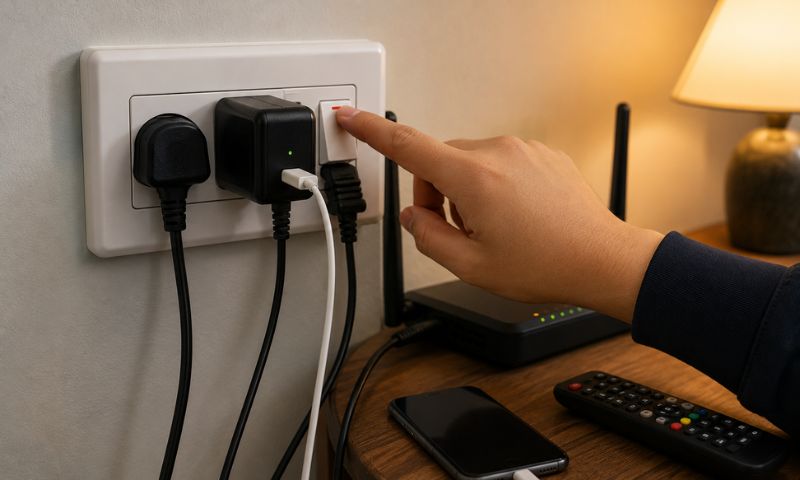
Your Appliance Looks Off. Why Is It Still Using Electricity?
Many households leave electrical switches on throughout the day, assuming that no electricity is consumed if an appliance is not actively running. However, energy experts say the answer depends on the type of appliance connected to the power source. The issue has gained attention as consumers worldwide look for ways to reduce electricity bills amid rising energy costs. Modern homes contain dozens of electronic devices that remain connected to power even when they appear to be switched off. According to the International Energy Agency (IEA), standby power consumption accounts for a noticeable share of household electricity use in many countries. Experts often refer to this hidden energy use as “phantom load” or “vampire power.” When Electricity Is Still Being Used Devices such as televisions, gaming consoles, microwave ovens, set-top boxes, internet routers and smart speakers often continue drawing power when they are not actively in use. This happens because many modern appliances remain in standby mode. They stay ready to receive signals from remote controls, maintain internet connections or preserve settings and internal clocks. Read More: BYD Bets on Pakistan With 73-Acre Electric Vehicle Project For example, a television switched off with a remote control may still consume a small amount of electricity. A microwave displaying the time continues to use power. Internet routers consume electricity continuously as long as they remain plugged in. The U.S. Department of Energy estimates that standby power can account for 5% to 10% of residential electricity consumption. While the amount used by a single device may seem small, dozens of devices operating around the clock can add up over a year. Energy efficiency researchers say chargers left plugged into wall sockets can also draw a small amount of electricity, even when they are not charging a device. When No Electricity Is Wasted Not all appliances consume electricity when they are turned off. Traditional electrical devices with mechanical switches usually stop drawing power completely once switched off. Examples include many electric fans, incandescent light bulbs and basic household appliances without digital displays or smart features. If the wall switch is turned off or the appliance is unplugged, electricity consumption generally falls to zero. Experts recommend checking whether a device has indicator lights, clocks, wireless connectivity or remote-control functionality. These features often signal that the appliance continues to consume electricity in standby mode. The International Energy Agency advises consumers to unplug rarely used electronics or switch them off at the wall socket where practical. According to energy experts, reducing standby consumption will not dramatically lower monthly electricity bills overnight. However, small savings from multiple devices can accumulate over time. As homes become increasingly connected through smart technology, understanding standby power use has become more important. A switch left on may not always mean significant energy waste, but in many cases electricity continues to flow long after an appliance appears to have stopped working.

Which Countries Are Banning Social Media for Children? The Growing List
A growing number of countries are moving to restrict children’s access to social media, citing concerns about cyberbullying, addiction, mental health problems and online safety. The latest country to join the trend is the United Kingdom, where Prime Minister Keir Starmer announced on June 15 that the government plans to ban social media use for children under 16. The proposed UK restrictions would apply to major platforms including Snapchat, TikTok, YouTube, Instagram, Facebook and X. Messaging services such as WhatsApp and Signal would remain exempt. The government also plans to introduce age limits for certain artificial intelligence services, requiring AI “romantic companion” chatbots to restrict access to users over 18. Experts have questioned whether a blanket ban would work in practice. However, Starmer defended the proposal and said he believes authorities can enforce it. He added that the restrictions could take effect by spring 2027. The UK’s announcement comes as governments around the world introduce stricter controls on young users’ access to social media platforms. Australia Leads Global Crackdown Australia became the world’s first country to implement a nationwide social media ban for children under 16 in December 2025. The law blocks access to Facebook, Instagram, Snapchat, Threads, TikTok, X, YouTube, Reddit, Twitch and Kick. The Australian government excluded WhatsApp and YouTube Kids from the restrictions. Authorities require social media companies to use multiple age verification methods and prohibit them from relying solely on self-declared ages. Companies that fail to comply could face fines of up to A$49.5 million, equivalent to about $34.4 million. Read More: The End of Social Media for Under-16s? UK Unveils Tough Plan Several European countries have followed Australia’s lead. Austria plans to ban social media for children up to age 14, while Denmark aims to prohibit access for users under 15. Denmark’s government has also developed a “digital evidence” application that includes age verification technology. France’s lower house approved legislation in January that would ban social media access for children under 15. The measure still requires Senate approval. French President Emmanuel Macron has supported the proposal as a way to reduce excessive screen time among young people. Germany, Spain, Poland and Slovenia have also discussed or drafted legislation targeting social media access for minors. Governments Cite Safety Concerns Many governments argue that social media platforms expose children to harmful content and unhealthy online behavior. Greek Prime Minister Kyriakos Mitsotakis announced that Greece will block social media access for children under 15 beginning in January 2027. He said the move aims to tackle rising anxiety, sleep problems and addictive platform designs. Outside Europe, Indonesia plans to ban social media use for children under 16, targeting platforms such as YouTube, TikTok, Facebook, Instagram, Threads, X, Bigo Live and Roblox. Malaysia also intends to introduce similar restrictions this year. Read More: Students Watched Online: UK Universities Accused of Spying on Students’ Social Media Turkey’s parliament recently passed legislation restricting social media access for children under 15. President Recep Tayyip Erdogan must still approve the bill before it becomes law. Supporters argue that stronger protections are necessary as children spend more time online. Critics disagree. Amnesty Tech and other digital rights groups have warned that age verification systems may threaten privacy and increase government surveillance. Despite those concerns, momentum continues to build. More governments now view stricter regulation as a key tool to protect young users from online risks while reshaping how future generations engage with social media.
A 15-Year Residency in Kuwait? Here’s What You Need to Qualify
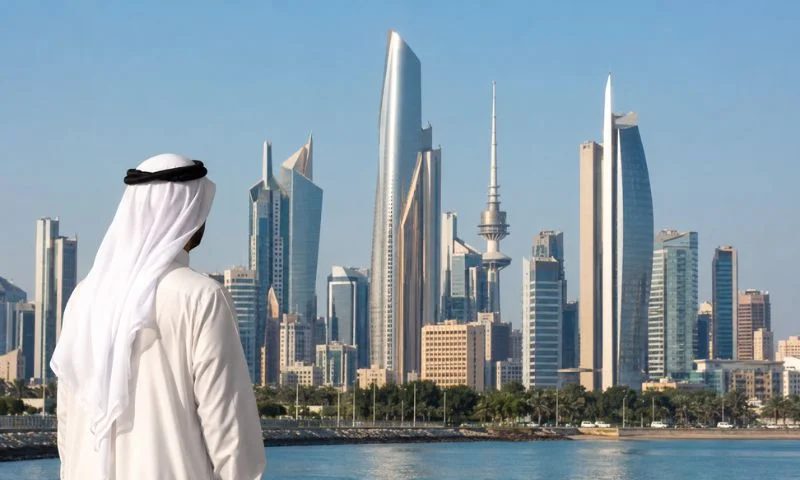
Kuwait has launched a new long-term residency programme that will allow eligible foreign investors and their families to obtain residency permits for up to 15 years, marking one of the country’s most significant steps to attract foreign capital and strengthen its investment climate. The new residency framework, announced on June 15, forms part of Kuwait’s broader effort to position itself as a leading regional destination for investment and diversify its economy beyond oil revenues. Authorities said the initiative aims to provide long-term certainty for investors seeking to establish and expand businesses in the Gulf state. Under the new rules, residency permits of up to 15 years will be available to qualified foreign investors, their immediate family members, accredited senior executives and approved partners linked to investment entities operating in Kuwait. Strict Eligibility Conditions To qualify, investors must own investment entities licensed by the Kuwait Direct Investment Promotion Authority (KDIPA). They must also maintain active business operations in Kuwait, meet employment requirements for Kuwaiti nationals and invest in approved economic activities with a minimum capital of KD1 million. In addition, licensed entities must maintain an investment value of at least KD5 million. Applicants must hold valid passports, provide criminal record certificates and comply with registration requirements set by relevant authorities. The residency permits will be issued through Kuwait’s Ministry of Interior based on recommendations from KDIPA under Cabinet Resolution No. 651 of 2026. The framework was published in the official gazette and developed through coordination between residency authorities and investment regulators. Officials said the programme builds on the objectives of Law No. 116 of 2013, which governs the promotion of direct investment in Kuwait. The government hopes the new measures will strengthen the country’s legal and regulatory environment while encouraging high-value investment projects. Kuwait Joins Regional Competition for Talent The move places Kuwait among a growing number of Gulf countries offering long-term residency options to attract investors, entrepreneurs and skilled professionals. Countries across the region have introduced similar initiatives as they compete for international talent and business investment. The policy follows wider residency reforms introduced in Kuwait over the past year. New immigration regulations that took effect in late 2025 expanded residency periods for several categories, including investors who can now qualify for permits lasting up to 15 years. The announcement also draws comparisons with the UAE’s Golden Visa programme, launched in 2019. The UAE scheme grants eligible investors, entrepreneurs, skilled professionals, scientists, students and creatives residency of up to 10 years without the need for a national sponsor. It also allows holders to sponsor immediate family members. According to Kuwait’s Ministry of Interior, the latest residency initiative aligns with the country’s leadership vision to transform Kuwait into an attractive financial and commercial centre while enhancing its competitiveness across the Gulf region. The government believes the programme will encourage long-term business commitments and support economic diversification efforts in the years ahead.
