The United Kingdom has announced an additional £8 million funding package for Pakistan to strengthen efforts against illegal migration, people smuggling and organised crime, as both countries seek closer cooperation on border security and law enforcement.
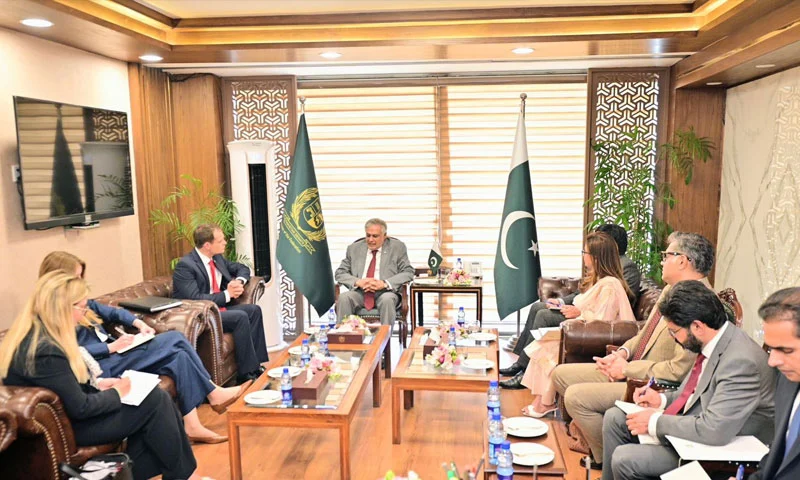
UK Minister Hamish Falconer announced the funding during a visit to Islamabad. The British High Commission confirmed the commitment in a statement on Tuesday.
The new funding aims to enhance border and visa systems, improve information-sharing mechanisms and strengthen Pakistan’s capacity to investigate criminal networks involved in human trafficking and migrant smuggling.
The British High Commission said the support would also help facilitate the return of individuals who have no legal right to remain in the UK.
“This includes support for improving identity and information-sharing processes, strengthening law enforcement capability to investigate smuggling networks, and expanding community-based prevention programmes that reduce vulnerability to exploitation,” the statement said.
The initiative forms part of broader UK efforts to curb irregular migration routes and disrupt organised criminal groups that profit from illegal cross-border movement.
Focus on Smuggling Networks and Visa Fraud
Falconer described cooperation between London and Islamabad as increasingly important in addressing shared security challenges.
“The UK-Pakistan partnership is critical for safeguarding global and UK national security, and tackling terrorist threats, visa fraud and serious organised crime,” he said.
“We are taking this partnership and our cooperation to a new level, with additional funding to deter illegal migration and target drivers from the source,” he added.
British officials said part of the funding will support community-based programmes in areas considered vulnerable to illegal migration, with the goal of addressing economic and social factors that often push people toward dangerous migration routes.
The UK has intensified efforts in recent years to reduce irregular migration and strengthen cooperation with countries of origin and transit.
According to official UK government data, immigration enforcement and border security remain key priorities as authorities seek to dismantle criminal networks that facilitate unlawful travel and document fraud.
During the second day of his visit, Falconer is expected to attend a live demonstration of joint operations involving Pakistani law enforcement agencies.
The exercise will showcase efforts to identify and intercept non-genuine visa holders at Pakistani airports before departure.
Officials said the programme helps ensure that only legitimate travellers and students enter the UK.
Pakistan’s Role in US-Iran Deal Recognised
Beyond migration issues, Falconer used the visit to acknowledge Pakistan’s recent diplomatic role in facilitating dialogue between Washington and Tehran.
According to the British High Commission, the minister personally thanked Deputy Prime Minister and Foreign Minister Ishaq Dar for Pakistan’s contribution to efforts that led to the recently announced US-Iran agreement.
“The news of a US-Iran deal is a hugely significant moment and I am pleased to convey my personal thanks, and that of the UK, to Pakistan during my visit here in Islamabad,” Falconer said.
He described Pakistan’s role as critical in supporting regional stability and helping create conditions for dialogue.
“We remain grateful for the role Pakistan has played in facilitating negotiations. The UK and our partners will continue to work together to see the full reopening of the Strait of Hormuz,” he added.
The visit highlights expanding cooperation between Pakistan and the UK across security, migration management and regional diplomacy at a time of growing geopolitical and economic challenges.