
Many households leave electrical switches on throughout the day, assuming that no electricity is consumed if an appliance is not actively running. However, energy experts say the answer depends on the type of appliance connected to the power source.
The issue has gained attention as consumers worldwide look for ways to reduce electricity bills amid rising energy costs. Modern homes contain dozens of electronic devices that remain connected to power even when they appear to be switched off.
According to the International Energy Agency (IEA), standby power consumption accounts for a noticeable share of household electricity use in many countries. Experts often refer to this hidden energy use as “phantom load” or “vampire power.”
When Electricity Is Still Being Used
Devices such as televisions, gaming consoles, microwave ovens, set-top boxes, internet routers and smart speakers often continue drawing power when they are not actively in use.
This happens because many modern appliances remain in standby mode. They stay ready to receive signals from remote controls, maintain internet connections or preserve settings and internal clocks.
Read More: BYD Bets on Pakistan With 73-Acre Electric Vehicle Project
For example, a television switched off with a remote control may still consume a small amount of electricity. A microwave displaying the time continues to use power. Internet routers consume electricity continuously as long as they remain plugged in.
The U.S. Department of Energy estimates that standby power can account for 5% to 10% of residential electricity consumption. While the amount used by a single device may seem small, dozens of devices operating around the clock can add up over a year.
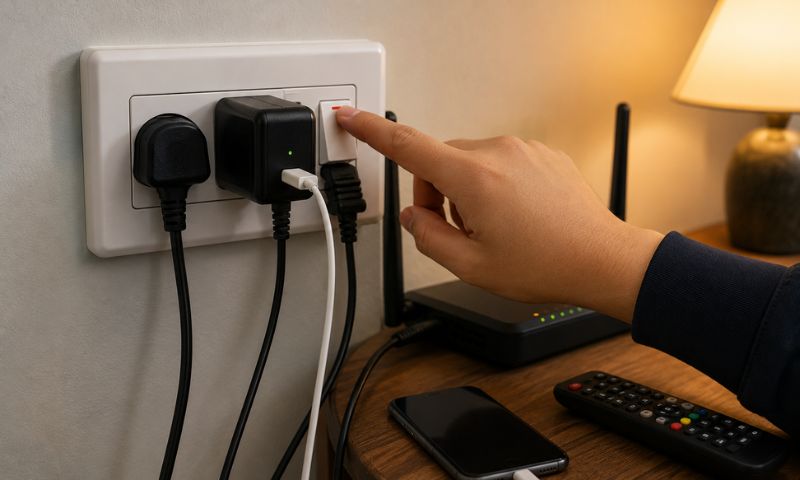
Energy efficiency researchers say chargers left plugged into wall sockets can also draw a small amount of electricity, even when they are not charging a device.
When No Electricity Is Wasted
Not all appliances consume electricity when they are turned off.
Traditional electrical devices with mechanical switches usually stop drawing power completely once switched off. Examples include many electric fans, incandescent light bulbs and basic household appliances without digital displays or smart features.
If the wall switch is turned off or the appliance is unplugged, electricity consumption generally falls to zero.
Experts recommend checking whether a device has indicator lights, clocks, wireless connectivity or remote-control functionality. These features often signal that the appliance continues to consume electricity in standby mode.
The International Energy Agency advises consumers to unplug rarely used electronics or switch them off at the wall socket where practical.
According to energy experts, reducing standby consumption will not dramatically lower monthly electricity bills overnight. However, small savings from multiple devices can accumulate over time.
As homes become increasingly connected through smart technology, understanding standby power use has become more important. A switch left on may not always mean significant energy waste, but in many cases electricity continues to flow long after an appliance appears to have stopped working.