

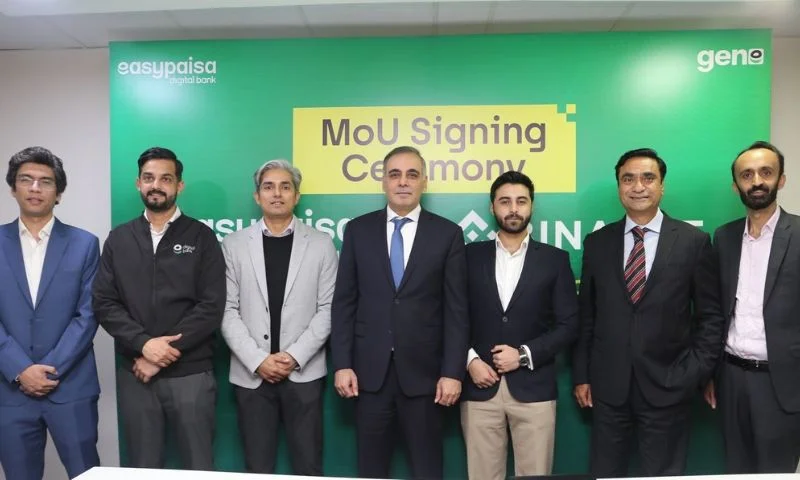
Easypaisa Digital Bank and Binance have signed a Memorandum of Understanding (MoU) to explore emerging financial technologies, digital savings solutions and innovative investment opportunities in Pakistan. The agreement marks a notable development in Pakistan’s growing digital finance sector. It also reflects increasing interest in technology-driven financial services. Jahanzeb Khan, President and Chief Executive Officer of Easypaisa Digital Bank, and Tarik Erk, Regional Head for MENAT and Senior Executive Officer Abu Dhabi at Binance, signed the MoU in Islamabad. Senior officials from both organisations attended the ceremony. Under the agreement, both sides will hold exploratory discussions on potential areas of collaboration. These discussions will focus on strengthening Pakistan’s digital savings and investment ecosystem. However, any future initiatives will require regulatory approvals. They must also comply with all applicable licensing and legal requirements. Focus on compliance, education and digital inclusion Easypaisa said the partnership aligns with its commitment to innovation, security and responsible financial inclusion. The bank added that it wants to learn from global expertise while operating within Pakistan’s regulatory framework. Commenting on the collaboration, Jahanzeb Khan said: “easypaisa digital bank is committed to making digital banking easy and secure for our customers. Leveraging Binance’s expertise in emerging areas of financial technology presents an opportunity for us to learn and explore in line with the guidelines of the PVARA. We look forward to working with Binance to explore safer and more reliable ways to support digital financial access and innovation in Pakistan.” Binance is the world’s largest blockchain ecosystem and cryptocurrency exchange by users. The company serves more than 300 million registered users globally. It offers blockchain services, digital financial products, educational programmes and Web3-based solutions. At the same time, Binance continues to emphasise security and regulatory compliance in its operations. Earlier, Binance obtained Anti-Money Laundering registration from the Pakistan Virtual Assets Regulatory Authority (PVARA). The move strengthened its position within Pakistan’s regulated digital assets sector. Tarik Erk said Pakistan has emerged as an important market for future financial technology growth. “Partnering with easypaisa reflects Pakistan’s growing potential as a forward-looking market for emerging financial technologies, supported by scale, trust, and increasing regulatory engagement. With rising awareness and interest across Pakistan, we believe Binance’s global expertise, combined with easypaisa’s local reach and scale, can help support responsible innovation and long-term ecosystem development.” In addition, the proposed collaboration may include awareness campaigns, educational programmes and capacity-building initiatives. These efforts could help improve understanding of emerging financial technologies among consumers and businesses. Pakistan’s digital economy continues to expand Pakistan’s digital finance sector has recorded strong growth in recent years. Mobile banking, branchless banking and digital payments continue to gain popularity across the country. As a result, technology companies increasingly view Pakistan as a promising market for innovation-led investment. Easypaisa remains one of the country’s largest digital financial platforms. According to the bank, its customer base represents one in every five Pakistanis. Women account for 31% of its users. The bank also reported processing more than 4.5 billion transactions during 2025. Those transactions exceeded PKR 15 trillion in value. The amount equals roughly 13% of Pakistan’s GDP. Therefore, the new MoU highlights growing confidence in Pakistan’s digital economy. It also signals stronger cooperation between local financial institutions and global technology firms.

60-Year-Old Luton Grandmother Qualifies for Hyrox World Championships
A 60-year-old retired midwife from Luton is preparing to represent Great Britain at the Hyrox World Championships in Sweden after securing a place among some of the world’s top fitness athletes. Martina McIntyre will travel to Stockholm for the global competition, which begins on Thursday. Her selection follows an impressive performance earlier this year when she won her age category at a Hyrox event in London. McIntyre, who retired from Luton and Dunstable Hospital in 2020 after a career in midwifery, said she never expected her fitness journey to lead to an international championship. “I was a bit shocked when I got the call, but delighted to be taking part,” she told the BBC. “I’ve been training hard. I’m nervous, but I’m looking forward to going out there and doing my best.” Her achievement highlights the rapid growth of Hyrox, a fitness racing competition that has gained popularity across Europe, North America and Asia. The sport combines endurance running with functional fitness challenges and attracts both professional athletes and everyday fitness enthusiasts. From Hospital Ward to World Championship Stage Following retirement, McIntyre pursued a new career in fitness. She qualified as a personal trainer and gym instructor and now works at a gym in Luton. She credits colleagues and fellow trainers for encouraging her to push beyond her comfort zone. “They’ve encouraged and supported me and brought me down avenues I never thought I’d go to,” she said. McIntyre had long enjoyed running. While helping others train for Hyrox events, she became interested in competing herself. The sport features eight rounds of 1-kilometre running segments. Each run is followed by a demanding workout station that can include sled pushes, sled pulls, rowing, burpee broad jumps, kettlebell carries and wall balls. Founded in Germany in 2017, Hyrox has grown into one of the world’s fastest-expanding fitness competitions. Organisers describe it as a race format designed to test strength, endurance and mental resilience in equal measure. Winning Performance Earns Team GB Selection McIntyre earned her place at the world championships after competing at Olympia London earlier this year. She completed the race in one hour and 23 minutes and finished first in her age category. The result secured her invitation to the championship event in Stockholm. The competition will bring together elite athletes and age-group champions from around the world. Despite the challenge ahead, McIntyre remains focused on enjoying the experience. “I’m with some top athletes,” she said. “Just to go and represent is the achievement.” Her story has resonated with many in the fitness community because it challenges common assumptions about age and athletic performance. As she prepares to compete on one of the sport’s biggest stages, McIntyre hopes her journey will inspire others to pursue new goals regardless of age or background. For the former midwife, retirement marked the start of an unexpected chapter that has now taken her all the way to a world championship.

Inside Rolex’s Stunning New Store 3,000 Metres Above Sea Level
Rolex has opened what it describes as the world’s highest boutique. The luxury showroom sits more than 3,000 metres above sea level in the Swiss Alps. The boutique stands atop Mount Titlis, a famous alpine peak between the Swiss cantons of Obwalden and Bern. It lies around 40 kilometres south of Lucerne. Visitors reach the location through a scenic cable car ride that climbs high above the mountains. Moreover, the opening strengthens Rolex’s long-standing connection with exploration and mountaineering. The Swiss watchmaker has supported major expeditions for decades. As a result, the new boutique aligns closely with the brand’s identity. The new showroom occupies a prime position inside the recently redeveloped Titlis Tower, a striking structure that now serves as one of the Alps’ most distinctive visitor attractions. Inside the Architectural Landmark on Mount Titlis The Titlis Tower was designed by renowned Swiss architecture firm Herzog & de Meuron, winner of the prestigious Pritzker Architecture Prize. Instead of demolishing an existing telecommunications tower built in the 1980s, the architects transformed the 56-metre-high steel structure into a modern landmark. View this post on Instagram A post shared by NC (@nonstopclassy) They inserted two fully glazed horizontal volumes through the tower, creating a dramatic cross-shaped design that extends outward above the mountain landscape. Engineers used galvanized steel, reinforced concrete and high-performance glass to ensure the structure could withstand harsh alpine conditions, including heavy snowfall, strong winds and extreme temperatures. The tower now houses several attractions. These include the Horizon Deck observation platform, Joseph’s Restaurant, the Alpine Lounge and the newly opened Rolex boutique. Industry observers view the project as an example of how luxury brands increasingly seek unique destinations that offer experiences rather than traditional retail environments. Luxury Watches Meet Alpine Views The showroom is operated by Bucherer, the Swiss luxury watch retailer acquired by Rolex in 2023. Inside, the boutique combines Rolex’s familiar design language with the natural beauty of the surrounding mountains. A striking Verde Alpi marble wall forms one of the centrepieces of the interior. Designers also incorporated natural wood and stone finishes that reflect the alpine setting. Floor-to-ceiling glass windows provide uninterrupted panoramic views of the glacier-covered summit of Mount Titlis and the Bernese Alps. The location allows visitors to browse Rolex collections while overlooking some of Europe’s most dramatic scenery. The opening comes as luxury brands continue expanding experiential retail concepts aimed at attracting international travellers and affluent consumers seeking exclusive destinations. For Rolex, the mountaintop boutique represents more than a retail space. It serves as a statement about the brand’s Swiss heritage, engineering excellence and enduring relationship with exploration. With its combination of architecture, luxury retail and alpine scenery, the new boutique is expected to become one of Switzerland’s most talked-about destinations for watch enthusiasts and tourists alike.
From Iran to the US: 10 Places Running Out of Water
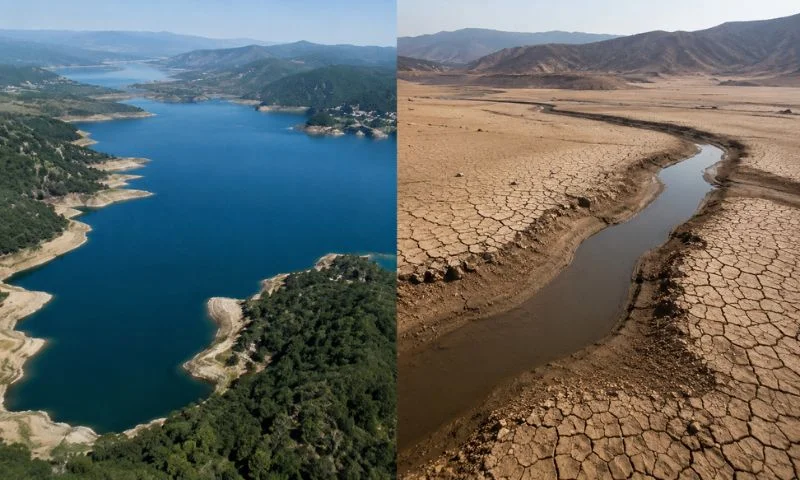
The world is losing freshwater at an alarming pace as climate change, prolonged droughts and unsustainable water use place growing pressure on rivers, lakes and wetlands. According to a 2025 World Bank report cited by Al Jazeera, the planet loses an estimated 324 trillion litres of freshwater every year. That amount is enough to meet the annual needs of about 280 million people. Read More: Scientists Create Solar Device That Turns Desert Air Into Drinking Water The phenomenon, known as “continental drying”, has become a growing concern for scientists and policymakers. To mark the World Day to Combat Desertification and Drought on June 17, Al Jazeera examined satellite imagery showing how water bodies across the globe have shrunk over recent decades. Parana River, Argentina The Parana River stretches nearly 4,900 kilometres and serves as a vital trade route connecting Brazil, Paraguay and Argentina. Satellite images comparing 1990 and 2026 show a sharp decline in water levels near Rosario. The reduction has disrupted grain exports, lowered hydroelectric output at the Itaipu Dam and exposed large areas of riverbed. Lake Poope, Bolivia Lake Poope once ranked as Bolivia’s second-largest lake, covering around 1,000 square kilometres. Satellite imagery from 1984 and 2020 shows that the lake has almost completely disappeared. Drought, rising temperatures and water diversions transformed much of the area into a salt flat, devastating fisheries and Indigenous Uru communities. Lake Ngami, Botswana Located on the edge of the Okavango Delta, Lake Ngami depends heavily on seasonal inflows. Images from 1984 and 2020 reveal dramatic fluctuations. Severe droughts and declining water inflows nearly erased the lake at its lowest point, damaging fishing grounds and livestock pastures before partial recovery occurred. Laguna de Aculeo, Chile Laguna de Aculeo, near Santiago, was once a popular recreational destination. Satellite comparisons between 2007 and 2026 show that the lake has largely dried up. Years of drought and increasing water stress have dramatically altered the landscape and affected nearby communities. Lake Urmia, Iran Lake Urmia was once the Middle East’s largest saltwater lake, spanning nearly 6,000 square kilometres during the 1990s. Today, it covers only about 581 square kilometres. Consecutive droughts, river diversion projects, agricultural demand and groundwater extraction have reduced the lake to less than 10 percent of its former size. Al Chibayish Marshes, Iraq The Al Chibayish Marshes form part of Iraq’s UNESCO-listed Mesopotamian Wetlands. Satellite imagery from 1984 and 2020 highlights extensive drying caused by drainage projects and drought. However, increased rainfall and restoration efforts have helped some parts of the marshes recover in recent years. Ambovombe, Madagascar Southern Madagascar has endured some of the country’s harshest drought conditions. Images comparing 1985 and 2020 show worsening environmental degradation around Ambovombe. Water shortages, stronger sandstorms and declining agricultural productivity have increased hardship for local communities. Lake Faguibine, Mali Near the Sahara Desert, Lake Faguibine has suffered decades of decline. Satellite images show that reduced flooding from the Niger River, combined with sediment buildup and drought, has caused the lake to shrink dramatically and accelerated desertification across the region. Lake Mead, United States Lake Mead, located on the Nevada-Arizona border, is the largest reservoir in the United States by capacity.\ Satellite imagery from 1984 and 2020 reveals a dramatic fall in water levels. Prolonged drought, rising temperatures and heavy water consumption have exposed vast stretches of previously submerged land. South Aral Sea, Uzbekistan The South Aral Sea remains one of the world’s most severe environmental disasters. Decades of river diversions for irrigation have shrunk the lake by more than 90 percent. Satellite images from 1984 and 2020 show vast expanses of exposed lakebed where water once existed. Scientists warn that continued freshwater losses could threaten food production, biodiversity, energy generation and water security for millions of people. The satellite images highlighted by Al Jazeera provide a stark reminder of how rapidly landscapes can change when water resources come under sustained pressure.

Four Leading AI Models Failed This Elite Maths Challenge
AI has demonstrated impressive abilities in coding, scientific research and problem-solving. Yet a new study suggests that the world’s most advanced AI systems still struggle to match elite human mathematicians when faced with original research questions. The finding comes from First Proof, a project designed to test whether AI can solve genuine mathematical problems at the frontier of research. The initiative challenged four leading AI systems with ten unpublished research-level mathematics problems. Professional mathematicians had recently solved these questions, but researchers had not yet published the solutions. The project released its results on June 10. Expert mathematicians anonymously reviewed and graded every submission. Read More: Mayo Clinic Wants to Build an AI Patients Can Actually Trust The outcome was clear. “Not one model matched the standard of a top human mathematician.” Researchers say the trial is the first benchmark to combine three critical elements. It used genuine research-level questions, ensured the problems were absent from training data and relied on formal evaluation by experts. According to reports published by First Proof and discussed by Nature, earlier AI benchmarks often faced criticism because models may have encountered test questions during training. As a result, strong performance could reflect memorisation rather than genuine reasoning. First Proof attempted to eliminate that concern by sourcing problems directly from unpublished mathematical research. OpenAI joins test as hallucinations remain a concern OpenAI was the only major technology company to enter a commercially available model. The company submitted ChatGPT 5.5 Pro. The remaining systems came from academic teams at UCLA, Princeton University and ETH Zurich. Some notable AI projects did not participate. These included Google’s Aletheia and the unreleased version of Anthropic’s Claude Mythos. Organisers said they could not independently verify whether those systems operated without human assistance. Read More: How SpaceX Turned Elon Musk Into the World’s First Trillionaire The study also highlighted a familiar problem for large language models. Even when researchers instructed the AI systems to verify references and reasoning, the models still generated inaccurate information. “The models also displayed a familiar weakness, hallucination.” Experts say hallucinations remain one of the biggest barriers to deploying AI in advanced scientific and mathematical work, where a single error can invalidate an entire proof. Human experts remain ahead, but AI continues to improve The findings arrive only weeks after an OpenAI chatbot reportedly solved an 80-year-old mathematical problem posed by the late Hungarian mathematician Paul Erdős. That achievement fuelled speculation that AI could soon transform mathematical research. However, First Proof researchers argue that solving an existing puzzle differs significantly from tackling a completely new problem that nobody has published before. “Cracking an old puzzle is a very different thing from solving a brand-new research problem.” The team believes future versions of the benchmark could help researchers understand where AI adds value. Potential applications include checking proofs, identifying mistakes and suggesting new research directions. For now, however, the results send a clear message. “The humans are still winning.”
Qatar Cuts Residency Grace Period to 14 Days, Expats Face Daily Fines
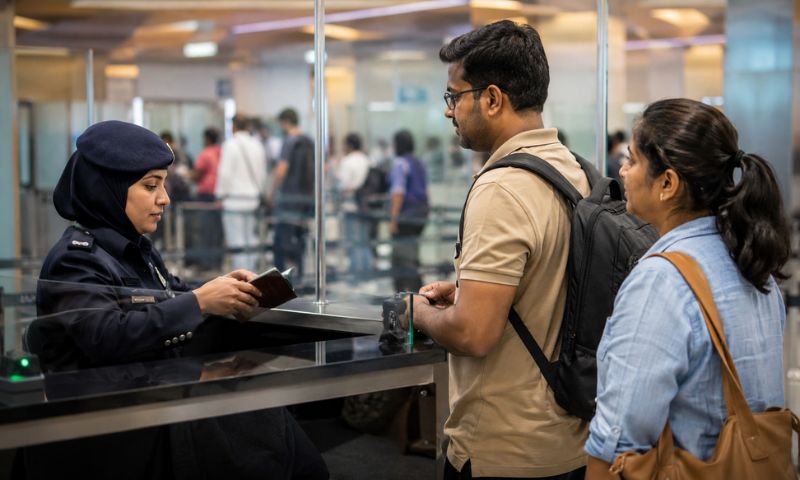
Qatar has reduced the grace period for expatriates whose residence permits are cancelled. Affected residents now have only 14 days to leave the country before penalties begin to apply. The announcement came from Captain Ali Ahmed Ali Al Kuwari of the Airport Passports Department during a webinar on safe travel procedures. The Ministry of Interior’s Public Relations Department organised the event. Al Kuwari confirmed that authorities have shortened the post-cancellation grace period. “Earlier it was 30 days, but currently it is two weeks,” Al Kuwari said. The change affects thousands of expatriates who may need time to settle personal matters, complete employment transitions or arrange departure plans after their residence permits are cancelled. Officials warned that anyone who remains in Qatar after the 14-day deadline will face financial penalties. “He added that individuals who remain in the country beyond the 14-day period would be subject to a fine of QR10 per day.” The move comes as Qatar continues to modernise immigration services and tighten compliance with residency regulations. Authorities have increasingly shifted visa and residency procedures to digital platforms in recent years. Visitors Face Much Higher Overstay Penalties Al Kuwari also reminded visitors to check the duration of stay shown on their visa stamps before travelling. He stressed that visit visa holders face much heavier penalties if they overstay. “He noted that overstaying a visit visa carries a penalty of QR200 per day.” The official urged residents and visitors to review their status through the Metrash mobile application before travelling. Users can check visa validity, traffic fines, overstay penalties and other outstanding dues through the platform. Metrash has become one of Qatar’s most important digital government services. The application allows residents to access immigration, residency and passport-related services without visiting government offices. Al Kuwari also encouraged travellers to use electronic gates at Hamad International Airport to speed up immigration procedures. The Airport Passports Department operates 76 e-gates across arrival and departure terminals. The system helps reduce waiting times and improve passenger flow at one of the region’s busiest airports. Newborn Residency Requirements Highlighted During the webinar, Al Kuwari also outlined residency procedures for newborn children. He said residents must report births through passport authorities and obtain the necessary documentation for residency processing. The official said a child born in Qatar must obtain a residence permit under the father’s sponsorship. Parents must first secure the required documents from the relevant embassy. “Without a residence permit, a newborn would not be able to re-enter Qatar after leaving the country,” he said. The latest guidance highlights the importance of complying with immigration deadlines and residency requirements. Authorities continue to encourage residents to use digital platforms to manage travel and residency matters efficiently.

‘easypaisa Is Here To Stay’: Company Responds to Viral Claims
easypaisa has rejected rumours circulating on social media regarding its future operations, describing the claims as false and reassuring customers that the platform remains fully operational and financially secure. In a public statement issued on Tuesday, Pakistan’s leading digital bank said reports questioning its continuity were “false and constitute fake news.” The company stressed that it continues to serve more than 60 million registered users across Pakistan and remains committed to expanding financial inclusion in the country. “Rumors circulating about easypaisa’s continuity are false and constitute fake news. easypaisa is here to stay,” the company said. The clarification comes after online speculation raised concerns among some users about the platform’s future following a recent service disruption. easypaisa acknowledged the outage and apologised for the inconvenience caused to customers. However, it emphasized that the disruption resulted from a technical issue rather than any operational or financial challenge. The company said it has already taken steps to strengthen system reliability and resilience. Pakistan’s First Digital Wallet Highlights Growth Journey easypaisa noted that it has played a pioneering role in Pakistan’s digital financial sector since its launch in 2008. The platform introduced Pakistan’s first mobile wallet and helped millions of people gain access to formal financial services, particularly in underserved and rural areas. “Since 2008, as Pakistan’s first wallet we have empowered Pakistanis with secure, reliable and revolutionary financial services,” the statement said. Pakistan’s digital payments sector has expanded rapidly in recent years as smartphone usage and internet penetration increased nationwide. The State Bank of Pakistan has actively encouraged digital banking and branchless banking services to improve financial inclusion and reduce reliance on cash transactions. In 2025, easypaisa became Pakistan’s first fully operational digital bank regulated by the State Bank of Pakistan, a milestone that strengthened its position in the country’s fintech sector. The company said customer deposits remain protected under the country’s banking regulations. “Now as Pakistan’s first and leading digital bank since 2025 regulated by the State Bank of Pakistan, we ensure customer funds fully are safe and secure.” Focus Remains on Financial Inclusion easypaisa said serving customers remains its highest priority and reaffirmed its commitment to providing secure and accessible financial services. The platform offers digital payments, money transfers, savings products, bill payments, merchant solutions and other financial services through its mobile application and nationwide network. “We acknowledge a recent service disruption caused by a technical issue and sincerely regret the inconvenience caused. Our customers are our highest priority, and we have strengthened system reliability and resilience going forward.” Industry analysts note that digital banking continues to gain momentum in Pakistan as consumers increasingly adopt mobile-based financial services. With more than 60 million registered users, easypaisa remains one of the country’s largest digital financial platforms and a key player in Pakistan’s drive toward a cashless economy.

Pakistan Tightens Visa Verification Process for Russian Applicants
Pakistan has introduced a new requirement for Russian nationals seeking Pakistani visas, making sponsor biometric verification through the PakID mobile application mandatory for visa processing. The Embassy of Pakistan in Russia announced the measure on Tuesday and advised applicants to follow the updated procedure to avoid delays or rejection of their visa requests. According to the embassy, authorities will not process visa applications submitted without the sponsor’s biometric verification. The move forms part of Pakistan’s broader efforts to strengthen identity verification and enhance the security of its online visa system. “The embassy said visa applications submitted without the sponsor’s biometric verification will not be processed and urged applicants to comply with the updated requirement.” Pakistan has expanded its digital immigration and identity management systems in recent years through initiatives led by the National Database and Registration Authority (NADRA). The PakID application serves as a digital platform for biometric verification and identity-related services. Officials say the system helps improve transparency and reduce the risk of fraudulent applications. Online Tourist Visa Process Remains in Place The embassy clarified that Russian citizens can continue applying for tourist visas through the online visa portal operated by Pakistan’s Ministry of Interior. Applicants must submit a valid passport and a recent photograph when filing their applications. According to the embassy, tourist visas issued under the programme remain valid for 90 days and allow multiple entries into Pakistan. However, officials stressed that visa issuance remains solely at the discretion of the Government of Pakistan. The embassy also encouraged travellers to submit their travel intentions at least 24 hours before departure in order to obtain a Visa Grant Notice. Pakistan has increasingly promoted its online visa programme to attract tourists and business travellers. The country expanded visa-on-arrival and e-visa facilities for dozens of nationalities as part of efforts to boost tourism and investment. Government officials have repeatedly highlighted digital visa reforms as a key component of improving ease of travel and simplifying immigration procedures. Embassy Issues Additional Travel Advisory The embassy also reminded applicants about restrictions related to border crossings. It said foreign nationals holding a Visa Prior to Arrival cannot enter or leave Pakistan through the Chaman and Torkham land border crossings. Those crossings connect Pakistan with Afghanistan and remain subject to specific immigration and security regulations. The latest advisory comes as Pakistani authorities continue to modernise border management systems and strengthen verification procedures for foreign visitors. Officials believe the use of biometric verification will help ensure greater accuracy in visa processing while enhancing national security measures. The embassy urged all applicants to review the updated requirements carefully before submitting visa requests. Failure to complete sponsor verification through the PakID application could result in processing delays or the rejection of applications.

Zidane Iqbal Makes History as First Player of Pakistani Heritage at FIFA World Cup
Midfielder Zidane Iqbal has etched his name into football history after becoming the first player of Pakistani heritage to appear in a men’s FIFA World Cup match. The 23-year-old Iraq international reached the milestone when he came off the bench during Iraq’s opening match against Norway at the 2026 FIFA World Cup in the United States. Iqbal entered the game in the 59th minute at Boston Stadium in Foxborough, Massachusetts, as Iraq suffered a 4-1 defeat to Norway. The match also marked a memorable World Cup debut for Norwegian striker Erling Haaland, who scored twice to help secure victory for his side. While the result disappointed Iraq, the occasion carried historic significance for Iqbal and millions of football fans with Pakistani roots around the world. Born in Manchester, England, Iqbal represents Iraq through his mother’s side of the family. His father is Pakistani, giving him a unique connection to two nations with deep personal significance. A Historic Moment for Pakistani Heritage in Football Speaking to BBC Sport, Iqbal admitted he did not initially realise the significance of his achievement. “To be honest, I didn’t even know it myself,” Zidane Iqbal told BBC Sport. “I followed the account that posted it [that he was the first player of Pakistani heritage to play at a men’s World Cup] and sent it to my dad straight away. I think we were both surprised. When I tried to qualify for the World Cup with Iraq, I didn’t think of anything like this.” The midfielder paid tribute to his father, whom he credits as one of the most influential figures in his football journey. “My dad is Pakistani. He’s my father, the man I respect the most in my life, who helped me so much in my career.” “I play for Iraq, grew up in England, but my dad was born in Pakistan. My grandad was a first-generation there, so I have a lot of respect for that side of my family.” Iqbal’s achievement comes at a time when football continues to grow in popularity among Pakistanis both at home and abroad. Pakistan has yet to qualify for a FIFA World Cup, making his appearance even more symbolic for many supporters. Carrying Two Flags With Pride Iqbal has often spoken about embracing both sides of his heritage. He revealed that he honours his family background by wearing the Iraqi and Pakistani flags on his boots. “I wear the Iraqi flag on my left side and the Pakistani flag on my right side,” he said. “I think that’s because I respect both sides.” “When people ask me what I feel more connected to, I can’t answer. For me, they’re both equal. It’s about respect and something I carry with a lot of pride.” Iqbal began his professional career at Manchester United, where he progressed through the club’s academy system before making his senior debut. He later moved to Dutch football and has continued his development at club level while becoming an important figure for Iraq’s national team. Although Iraq’s World Cup campaign started with defeat, Iqbal’s appearance ensured the match will be remembered for more than the scoreline. For many football fans of Pakistani heritage, it represented a groundbreaking moment on the sport’s biggest stage.

Relief for Parents? Senate Panel Makes Big Decision on School Stationery Tax
Pakistan’s Senate Standing Committee on Finance has supported a major demand from the stationery industry by recommending the restoration of sales tax exemption on educational stationery items from July 1, 2026, amid concerns that higher taxes could increase the financial burden on students and families. The committee, chaired by Senator Saleem Mandviwalla, reached the decision during its fourth consecutive session on the Finance Bill 2026-27 at Parliament House. Lawmakers reviewed a broad range of fiscal, trade and taxation measures as part of the federal budget discussions. The recommendation comes after the government proposed imposing an 18 percent sales tax on stationery products as part of wider efforts to broaden the tax base and reduce exemptions. IMF Concerns Meet Resistance from Lawmakers During the meeting, Dr. Najeeb Memon, Director General of the Tax Policy Unit at the Ministry of Finance, informed committee members that the International Monetary Fund (IMF) had urged Pakistan to reduce its reliance on sales tax exemptions. He told the committee that stationery products do not fall under the category of essential food items and therefore do not qualify for exemption under the government’s taxation framework. However, senators voiced strong reservations over the proposal, arguing that educational supplies should not face the same treatment as non-essential consumer goods. Committee members highlighted the impact that higher taxes could have on school-going children and families already struggling with inflation and rising education costs. The debate follows ongoing discussions between Pakistan and the IMF over fiscal reforms aimed at increasing revenue collection and improving tax compliance. The IMF has consistently encouraged Pakistan to narrow exemptions and expand documentation of the economy as part of broader economic reform programmes. Industry Warns of Rising Education Costs Representatives of the Federation of Pakistan Chambers of Commerce and Industry’s Stationery and Taxation Committee urged lawmakers to withdraw the proposed levy. Riyaz-ud-Din told the committee that educational materials such as sharpeners, exercise books, glue, writing pads and colour pencils should remain exempt from taxation. He noted that the government had previously decided against imposing the full 18 percent sales tax on stationery products and argued that such a measure would be inappropriate because of its direct effect on education expenses. Members of the committee echoed those concerns. They said the proposed tax could make basic educational supplies more expensive and place additional pressure on households already managing higher living costs. The committee subsequently recommended restoring tax exemptions on essential educational items, including pencils, pens, geometry boxes and other school supplies. Lawmakers said the move would help ensure students retain access to affordable learning materials while preventing additional financial strain on parents. The committee also reviewed taxation proposals relating to educational and charitable institutions. Following consultations with relevant authorities, members recommended amendments to existing legal provisions to improve transparency, effectiveness and alignment with public interest objectives. The committee’s recommendations will now form part of the ongoing parliamentary review of the Finance Bill 2026-27 before final budget approvals.
