

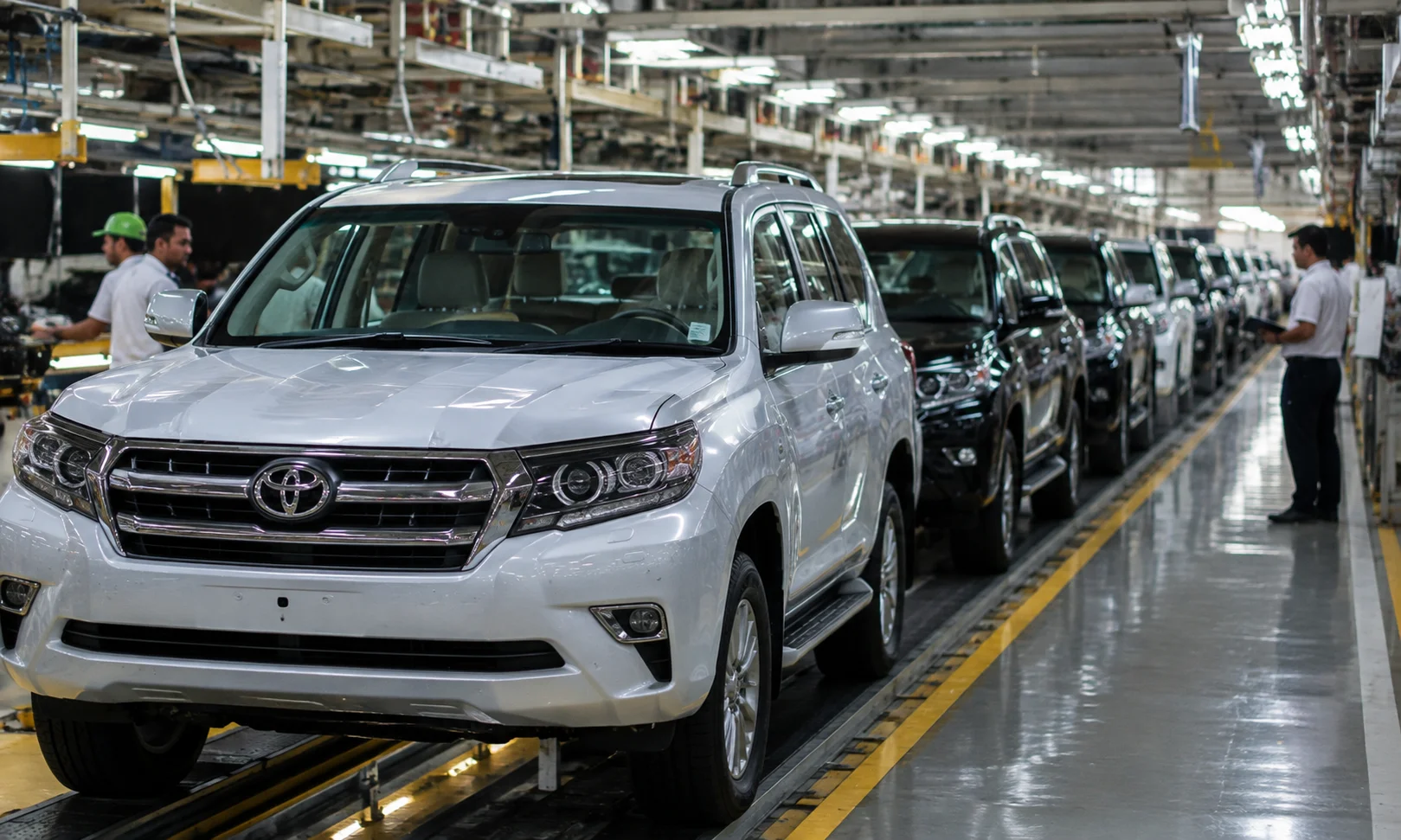
Indus Motor Company Limited posted an 11% increase in profit after tax for the year ended June 30, 2026, as stronger vehicle sales, improved localization and cost efficiencies supported its bottom line. The company reported profit after taxation of Rs25.51 billion in FY26, compared with Rs23.01 billion in FY25. Basic and diluted earnings per share rose to Rs324.50 from Rs292.74, marking an increase of 10.85%. The Board of Directors also recommended a final cash dividend of Rs47 per ordinary share, or 470%, for FY26. This takes the total cash dividend for the year to Rs195 per share after the company had already paid interim dividends totaling Rs148 per share. Indus Motor’s FY26 performance came amid a substantial increase in vehicle sales. Total CKD and CBU sales climbed 33% to 45,035 units from 33,757 units a year earlier. The company maintained a domestic market share of approximately 14.7%. Vehicle production also increased sharply, rising 37% to 45,597 units from 33,251 units in FY25. Revenue climbs 20% as gross profit expands Revenue from contracts with customers increased 20.27% year-on-year to Rs258.75 billion from Rs215.14 billion. Cost of sales rose 20.94% to Rs222.46 billion, broadly in line with revenue growth. Despite the higher costs, gross profit increased 16.35% to Rs36.30 billion from Rs31.20 billion. The company attributed the improvement in margins to a relative decline in material costs. A favorable exchange rate environment, cost reduction initiatives and greater localization of parts and components supported the improvement. Distribution expenses provided another major boost, falling 53.45% to Rs1.05 billion from Rs2.26 billion. Administrative expenses, however, increased 19.50% to Rs4.30 billion, while other operating expenses almost doubled to Rs484.16 million. Workers’ Profit Participation Fund and Workers’ Welfare Fund increased 49.02% to Rs3.13 billion, reflecting the company’s stronger profitability. As a result, net profit from operations rose 18.87% to Rs27.32 billion from Rs22.98 billion. Other income remains key profit contributor Other income increased 6.18% to Rs15.87 billion from Rs14.95 billion. Returns on investments and bank placements remained an important contributor to this income stream. The company also recognized an unrealized gain from the remeasurement of its long-term liability related to Sindh Infrastructure Development Cess under IFRS requirements. Finance costs increased 40.40% to Rs370.28 million from Rs263.73 million, although they remained relatively small compared with the company’s earnings. Profit before taxation and levy rose 13.68% to Rs42.82 billion. Levy fell sharply by 92.78% to Rs13.08 million from Rs181.14 million, taking profit before taxation to Rs42.81 billion, up 14.20% year-on-year. Taxation increased 19.52% to Rs17.31 billion from Rs14.48 billion. The higher tax charge absorbed part of the pre-tax improvement, resulting in the 10.85% increase in final net profit. The FY26 results continue the recovery in Indus Motor’s operating performance. During the nine months ended March 2026, the company had already reported CKD and CBU sales of 33,572 units, up 53.4% year-on-year, while net revenue reached Rs191.98 billion and profit after tax stood at Rs19.40 billion. Pakistan Stock Exchange records Indus Motor as an automobile assembler formed through a joint venture involving House of Habib companies, Toyota Motor Corporation and Toyota Tsusho Corporation. The company assembles and markets Toyota vehicles in Pakistan and acts as the country’s sole distributor of Toyota and Daihatsu vehicles.
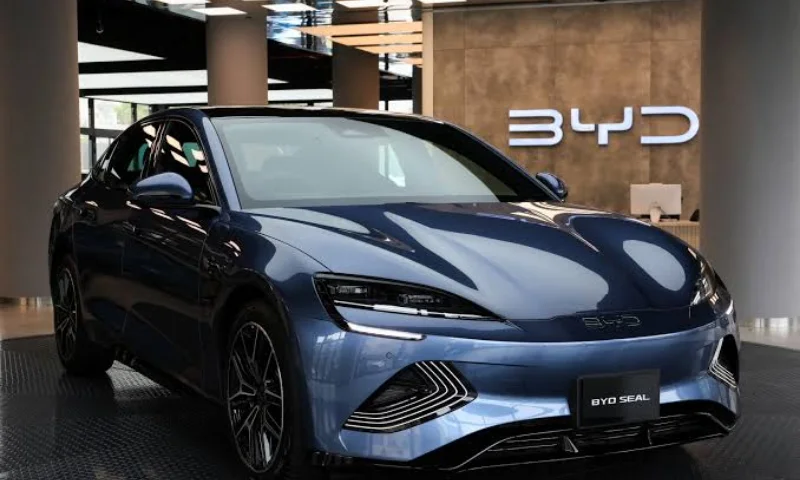
BYD Shares Slide Despite a Surprising Profit Recovery
Shares of Chinese electric-vehicle giant BYD fell nearly 5 per cent in Hong Kong on Monday after its first-half results exposed continuing pressure in its home market. The decline followed BYD’s interim results on Friday. Investors weighed a quarterly profit recovery against weaker six-month earnings, falling revenue and fierce competition across China’s automotive industry. Quarterly profit rebounds but revenue slips BYD’s second-quarter net profit reached 8.2 billion yuan, or about $1.2 billion, according to Citi. Profit increased 30 per cent from a year earlier, marking its first quarterly rise in more than a year. However, quarterly revenue fell 3 per cent to 194.6 billion yuan. The result showed that improving profitability had not yet restored revenue growth. For the six months ending June 30, BYD reported revenue of 344.8 billion yuan. That represented a 7.1 per cent decline from the same period in 2025. Net profit attributable to shareholders dropped 20.5 per cent to 12.3 billion yuan. BYD linked the decline to weakness in its new-energy vehicle business and foreign-exchange losses. The company’s Hong Kong-listed stock fell around 5 per cent during early trading. The sell-off suggested investors remained concerned about whether the second-quarter improvement could continue. China competition squeezes BYD margins BYD said China’s auto industry experienced “sluggish domestic demand and robust export growth” during the first half. Consumers remained cautious as purchase incentives changed and tax exemptions for new-energy vehicles were phased out. Industry competition also intensified as new brands and models fought for market share. Automakers faced higher prices for commodities, raw materials and computer chips. BYD said these pressures further squeezed industry profit margins. Official industry figures cited by BYD showed China’s total vehicle production fell 4 per cent during the period. Sales declined 4.1 per cent to about 15 million units. Despite the slowdown, Chinese new-energy vehicle sales increased 7.3 per cent to 7.45 million units. Monthly domestic penetration also moved above 60 per cent. Exports provide powerful growth engine BYD’s exports surged 67.8 per cent from a year earlier to 792,000 vehicles. Overseas expansion helped offset softer demand and intense price competition in China. Reuters reported that overseas operations generated 53 per cent of BYD’s total revenue. The overseas gross margin reached 22 per cent, while the group’s overall first-half margin improved to 18.85 per cent from 18.01 per cent. BYD also reported strong demand for its higher-end brands. Combined sales of FANGCHENGBAO, Denza and Yangwang rose 61 per cent year on year. Those brands accounted for 12.8 per cent of the group’s passenger vehicle sales. BYD said new technology and product updates supported their growth despite domestic pressure. Analysts remain cautiously optimistic about the remainder of 2026. Citi expects BYD’s third-quarter core earnings to reach 13.5 billion yuan. The bank forecasts full-year net profit of 41.2 billion yuan, which could exceed market consensus by 8 per cent. That outlook depends heavily on continued export growth and BYD’s ability to defend margins against rising costs and aggressive Chinese rivals.
What PSO Just Announced for Its 3,600 Fuel Stations
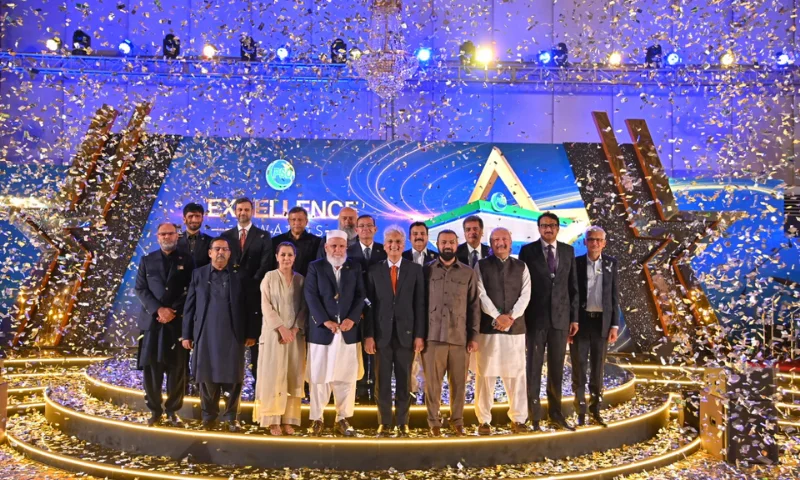
Pakistan State Oil has honoured leading dealers at the PSO Excellence Awards 2026, describing its nationwide dealer network as essential to Pakistan’s energy security. The national energy company held the ceremony in Karachi on August 31. It recognised dealer partners who help maintain fuel availability across cities, highways and remote areas. Dealers recognised for performance and safety PSO Chief Executive Officer Jawwad Ahmed Cheema attended the event alongside Chief Commercial Officer Amir Zaib Khan and other senior managers. Dealers from across Pakistan also joined the ceremony. The company presented awards to top-performing dealers across four main areas. These covered commercial results, health, safety and environment standards, customer service and industry best practices. PSO also honoured members of its commercial team for their contribution to the company’s retail operations and dealer partnerships. The awards highlighted the role of forecourt operators in maintaining service standards while responding to changing fuel demand. PSO said its obligation extends beyond operating the country’s largest retail network. Cheema promises daily fuel supply “When supply is tight, when demand surges, when a region is remote, the country looks to PSO. Our commitment is simple: fuelling Pakistan, every day, no exceptions. That commitment is delivered at the forecourt, by our dealers, one customer at a time,” Cheema said. He said the fuel market was changing rapidly and acknowledged the need for PSO to recover lost ground. Cheema said the company would pursue “better sites, better service, better standards, better technology,” with zero compromise on quality, safety and customer experience. The message placed dealers at the centre of PSO’s strategy. Their stations form the company’s direct link with motorists, transporters, farmers and communities that depend on reliable fuel supplies. PSO’s latest reported figures underline that responsibility. The company expanded its network to 3,663 outlets during the first nine months of fiscal year 2026, including 59 newly commissioned sites. During that period, PSO held 42.6 per cent of Pakistan’s white-oil market. Its shares in diesel and motor gasoline stood at 42.4 per cent and 37.8 per cent respectively. PSO outlines major retail transformation At the awards, PSO outlined what it called its most ambitious retail transformation so far. The programme includes new station development, modernisation and greater automation across the network. It also plans to rebuild its digital and customer loyalty platform. PSO will upgrade non-fuel retail services to improve convenience and create new business opportunities at stations. The company described its network of more than 3,600 forecourts as the “cornerstone” of energy security and future growth. PSO’s official profile says its outlets represent about 37 per cent of Pakistan’s total retail stations. The company also supplies more than 2,000 industrial units, businesses, power plants and airlines. Its wider system includes installations, depots, storage sites and fuel movement through roads, railways and pipelines. That infrastructure supports dealers, but customers experience the network through individual forecourts. The Excellence Awards therefore linked PSO’s national supply responsibilities with performance at station level. The company said stronger dealer standards would support its effort to rebuild market share and maintain uninterrupted fuel access.
Cabbage Waste Beats Concrete in Surprising Strength Test
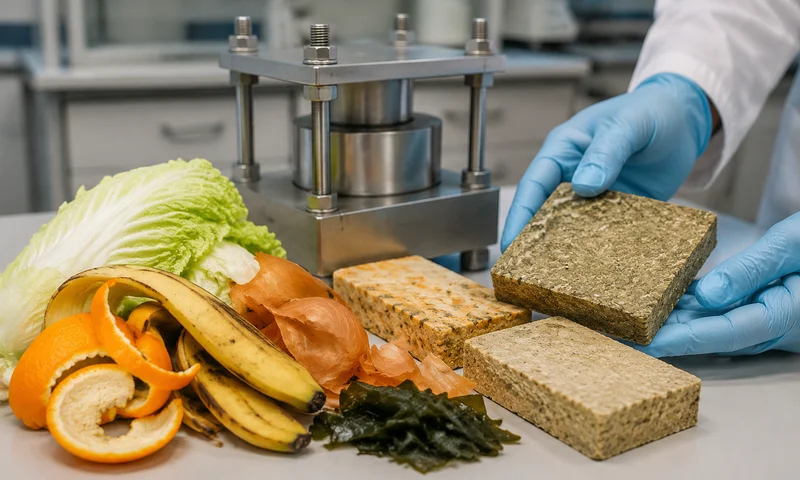
University of Tokyo researchers have transformed food scraps into small, rigid prototype materials, with Chinese cabbage waste producing the strongest result. The sample reached nearly 18 megapascals in bending strength, about four times the team’s benchmark for ordinary concrete. It suggests a new use for food waste, but does not establish cabbage as structural concrete. The 2021 work appeared as a conference paper and non-peer-reviewed preprint. Food scraps pressed into solid material Kota Machida and materials engineer Yuya Sakai used orange, onion, pumpkin and banana peels. They also tested outer leaves from Chinese and ordinary cabbage, plus seaweed. The team cut and dried the scraps at 105 degrees Celsius or used vacuum drying. They then ground them with a blender or disk mill. After adding water and sometimes edible seasonings, the researchers compressed the powder inside a heated mould. Read More: From Farm Waste to Fashion: Pakistan Launches Banana Fiber Initiative Test conditions ranged from 60 to 180 degrees Celsius and from 6 to 50 MPa of pressure. One common setting used 100 degrees, 50 MPa and 10 minutes. Each ingredient required its own combination of temperature, moisture and pressure. No petroleum-based resin held the particles together. Heat softened glucose and other sugar-rich components, which filled gaps between plant fibres and hardened after cooling. “Initially, I thought we could make lumps from these materials, but I never imagined they would be so strong,” Sakai said. Chinese cabbage delivers standout strength A three-point bending test put the Chinese cabbage sample at 17.7 MPa. The researchers used 5 MPa as their ordinary-concrete comparison, making the sample about 3.5 times stronger. University accounts rounded that result to four times. Most other food-based specimens met or exceeded the 5 MPa target. Pumpkin fell short, but adding 25 percent Chinese cabbage lifted the mixture to about 10 MPa. Sakai said strength depends on particle size, drying method, moisture and processing temperature. The balance between sugar and dietary fibre also matters. The university has since reported usable materials from about 30 food-waste types. Still, flexural strength measures resistance to bending. Concrete usually carries buildings through compressive strength. The tests therefore do not establish suitability for columns, foundations or reinforced slabs. Edible claim comes with limits The untreated samples contained food-derived ingredients, and the authors tasted them. Salt improved flavour and sometimes strength, while sugar and natural edible clay were also tested. Vacuum-dried pieces kept more colour, smell and taste. Oven-dried samples often darkened and became bitter. Yet the project included no formal food-safety, toxicology or shelf-life assessment. “Edible” means the experimental pieces contained food ingredients, not that future building panels would be safe to eat. Read More: From Waste to Wonder: Beaconhouse Students Redefine Sustainable Art Moisture also weakened uncoated samples. Researchers saw no visible mould, rot, insects or worms during four months indoors, but long-term durability remains unproven. Urethane coatings can improve water resistance, although they remove the material’s edible and all-food character. Machida later co-founded University of Tokyo spin-off fabula. The company has made tableware, promotional items and furniture, including cacao-husk bench surfaces used at Expo 2025 Osaka. The wider waste problem remains vast. UNEP estimates that consumers discarded 1.05 billion tonnes of food in 2022, including inedible parts.
Alibaba Cloud Shows Strong Interest in Punjab’s Growing IT Sector
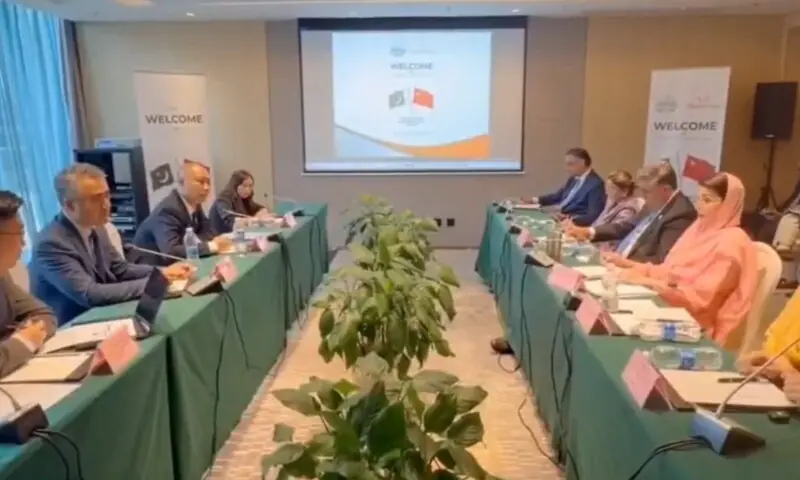
Chinese technology giant Alibaba Cloud has expressed strong interest in Punjab’s information technology sector as the provincial government seeks deeper cooperation on artificial intelligence and digital public services. Punjab Chief Minister Maryam Nawaz held talks with a high-level Alibaba Cloud delegation during her visit to China. The company’s officials praised Punjab’s efforts to integrate AI into governance and public service delivery. The meeting focused on using artificial intelligence in agriculture, healthcare, socio-economic programmes and climate forecasting. Both sides also considered a strategic partnership for wider use of AI in public services. Maryam said Punjab was moving quickly to incorporate new technologies into government operations. “We are pursuing a policy of using artificial intelligence and other technologies today rather than tomorrow,” she said. Punjab Seeks Wider AI Cooperation With Alibaba Cloud Maryam welcomed Chinese cooperation in artificial intelligence and other IT technologies. She said Punjab had become Pakistan’s first province to establish an artificial intelligence policy. The provincial government approved its first AI Roadmap earlier this year and has set a target to become South Asia’s most AI-enabled province by 2029. The government has also created a dedicated AI Office and is building AI tools into its governance structure. Earlier this year, Maryam and members of the Punjab cabinet took part in an AI training programme. Experts from Google for Education briefed ministers on the practical use of AI in governance and policymaking. Maryam told the Alibaba delegation that government officials and cabinet members had received AI training. She also linked Punjab’s technology push with education reforms. “The idea of teaching artificial intelligence to children in government schools came after seeing students in Beijing,” she said. The chief minister said Punjab would increasingly expose schoolchildren to emerging technologies so they could compete in the global digital economy. Punjab officials have said AI education is being introduced from Grade 1. The government has also been developing teacher training and digital education programmes with international technology partners. Maryam said Punjab has the fourth-largest young, skilled workforce and holds a leading position in the digital economy. AI Scanner Pilot Planned for Punjab Healthcare Healthcare emerged as another major area of discussion with Alibaba Cloud. During the meeting, Maryam reviewed an AI-powered multi-disease screening system and directed health authorities to prepare a pilot project for Punjab. The technology uses non-contrast CT scans and can potentially screen for several diseases within about two minutes. Officials said the system could help detect pancreatic, liver, gastric, esophageal and colorectal cancers. It can also assist with cardiovascular risk assessment, osteoporosis and fatty liver detection. The technology would support doctors rather than replace conventional diagnostic methods. The system could help speed up screening and allow doctors to identify serious diseases at an earlier stage. Alibaba Cloud officials also discussed the potential role of AI in cancer diagnosis and treatment. Senior Vice President Li Jiaping briefed Maryam about the company’s operations and technological capabilities. Alibaba Cloud also welcomed an MoU signed in the presence of Prime Minister Shehbaz Sharif. Company representatives said discussions were underway regarding the possible establishment of a data centre in Pakistan. Maryam also briefed the delegation on Punjab’s major healthcare projects. She said the province was building what she described as the world’s largest public-sector cancer hospital. The Nawaz Sharif Institute of Cancer Treatment and Research is under construction in Lahore. Punjab government documents describe it as a 915-bed facility, while the provincial budget puts its cost at around Rs75 billion. The government plans to provide treatment for advanced cancer patients at the hospital. China Visit Focuses on Punjab’s Digital Economy The talks with Alibaba Cloud form part of Maryam Nawaz’s wider technology-focused engagements during her China visit. She has also met representatives of other major Chinese technology companies. During a meeting with Huawei, Maryam invited the company to invest in Nawaz Sharif IT City and discussed a strategic partnership aimed at making Punjab more AI-enabled. She also addressed a big data industry expo during the visit and outlined Punjab’s plans for sovereign cloud infrastructure, digital identity and interoperable government systems. “We want to be able to secure data, store it, process it and unlock its real value,” she said at the event. Punjab has already started using AI in several government areas. Officials told the Alibaba delegation that AI applications are operating in Safe Cities, agriculture, healthcare, education and infrastructure. The meeting also covered small and medium enterprises and possible opportunities for overseas Pakistanis. For Punjab, cooperation with Alibaba Cloud could provide access to global expertise in cloud computing, artificial intelligence and data infrastructure. No final investment amount or timetable for a formal strategic partnership was announced. However, Alibaba Cloud’s interest adds to Punjab’s efforts to attract Chinese technology companies while expanding the use of AI across government services. The provincial government is now seeking to turn its AI roadmap into operational projects, with healthcare, education, agriculture and public administration among its main priorities.
