Indus Motor Company Limited posted an 11% increase in profit after tax for the year ended June 30, 2026, as stronger vehicle sales, improved localization and cost efficiencies supported its bottom line.
The company reported profit after taxation of Rs25.51 billion in FY26, compared with Rs23.01 billion in FY25. Basic and diluted earnings per share rose to Rs324.50 from Rs292.74, marking an increase of 10.85%.
The Board of Directors also recommended a final cash dividend of Rs47 per ordinary share, or 470%, for FY26. This takes the total cash dividend for the year to Rs195 per share after the company had already paid interim dividends totaling Rs148 per share.
Indus Motor’s FY26 performance came amid a substantial increase in vehicle sales. Total CKD and CBU sales climbed 33% to 45,035 units from 33,757 units a year earlier. The company maintained a domestic market share of approximately 14.7%.
Vehicle production also increased sharply, rising 37% to 45,597 units from 33,251 units in FY25.
Revenue climbs 20% as gross profit expands
Revenue from contracts with customers increased 20.27% year-on-year to Rs258.75 billion from Rs215.14 billion.
Cost of sales rose 20.94% to Rs222.46 billion, broadly in line with revenue growth. Despite the higher costs, gross profit increased 16.35% to Rs36.30 billion from Rs31.20 billion.
The company attributed the improvement in margins to a relative decline in material costs. A favorable exchange rate environment, cost reduction initiatives and greater localization of parts and components supported the improvement.
Distribution expenses provided another major boost, falling 53.45% to Rs1.05 billion from Rs2.26 billion. Administrative expenses, however, increased 19.50% to Rs4.30 billion, while other operating expenses almost doubled to Rs484.16 million.
Workers’ Profit Participation Fund and Workers’ Welfare Fund increased 49.02% to Rs3.13 billion, reflecting the company’s stronger profitability.
As a result, net profit from operations rose 18.87% to Rs27.32 billion from Rs22.98 billion.
Other income remains key profit contributor
Other income increased 6.18% to Rs15.87 billion from Rs14.95 billion. Returns on investments and bank placements remained an important contributor to this income stream. The company also recognized an unrealized gain from the remeasurement of its long-term liability related to Sindh Infrastructure Development Cess under IFRS requirements.
Finance costs increased 40.40% to Rs370.28 million from Rs263.73 million, although they remained relatively small compared with the company’s earnings.
Profit before taxation and levy rose 13.68% to Rs42.82 billion. Levy fell sharply by 92.78% to Rs13.08 million from Rs181.14 million, taking profit before taxation to Rs42.81 billion, up 14.20% year-on-year.
Taxation increased 19.52% to Rs17.31 billion from Rs14.48 billion. The higher tax charge absorbed part of the pre-tax improvement, resulting in the 10.85% increase in final net profit.
The FY26 results continue the recovery in Indus Motor’s operating performance. During the nine months ended March 2026, the company had already reported CKD and CBU sales of 33,572 units, up 53.4% year-on-year, while net revenue reached Rs191.98 billion and profit after tax stood at Rs19.40 billion.
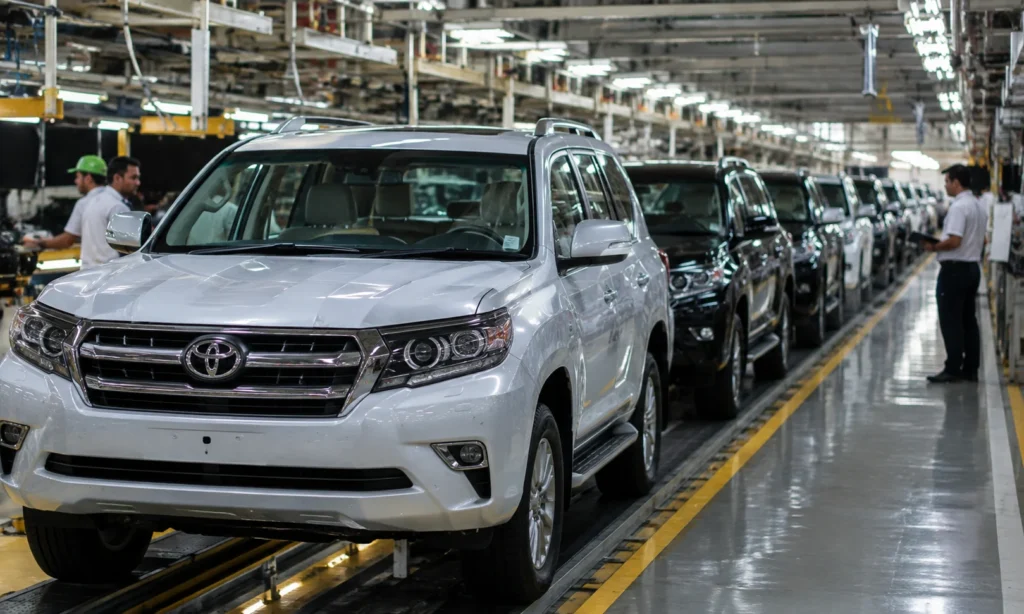
Pakistan Stock Exchange records Indus Motor as an automobile assembler formed through a joint venture involving House of Habib companies, Toyota Motor Corporation and Toyota Tsusho Corporation. The company assembles and markets Toyota vehicles in Pakistan and acts as the country’s sole distributor of Toyota and Daihatsu vehicles.