

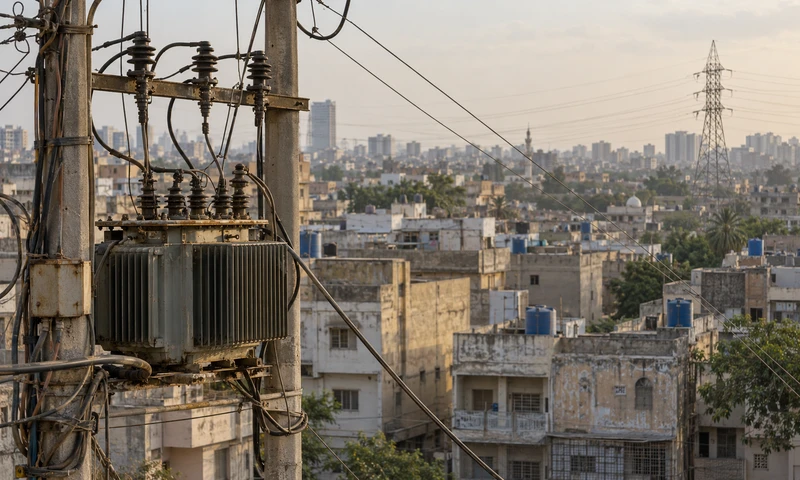
K-Electric faces a reported Rs65 billion financing squeeze as tariff uncertainty strains its finances, raising concerns over Karachi’s electricity supply. According to the supplied reporting, banks have stopped fresh financing and withdrawn Rs30 billion in existing funding. Another Rs35 billion in proposed Islamic bonds, or sukuk, remains stalled because of the tariff dispute. The combined figure represents withdrawn and unavailable financing, rather than Rs65 billion in cash withdrawals. Public documents reviewed for this report do not independently establish those amounts. Read More: K-Electric Bill Shock: Karachi Consumers to Pay More for Electricity Sources cited in the reporting say financial pressure has begun affecting procurement, routine operations and investment in transmission and distribution infrastructure. They say the utility increasingly prioritises emergency work, while supply difficulties have started emerging across its network. The dispute concerns K-Electric’s multi-year tariff framework for FY2024–FY2030. Published records show that NEPRA approved an average Rs39.97 per unit tariff in May 2025. It subsequently reduced that figure to Rs32.37 through review decisions dated October 20, 2025. These dates differ from the supplied account’s description of a reversal after two months. The central issue therefore concerns the disputed tariff’s final settlement, rather than a complete absence of tariff determinations. K-Electric challenged the revisions before the NEPRA Appellate Tribunal. Its April 7, 2026 disclosure records a Sindh High Court order dated April 2 directing the tribunal to decide within three months. The court also continued interim protection against coercive action until the tribunal’s final decision. The supplied reporting describes the appeal as pending. The April notice alone cannot confirm its September status. Financial expert Samiullah Tariq, cited in the supplied material, estimates that Rs37–38 per unit would bring K-Electric close to break-even. He warns that a lower tariff would leave substantial losses and threaten the utility’s ability to sustain Karachi’s power supply. Tariq puts the earlier tariff at roughly Rs39 and the revised level at approximately Rs32.5. He estimates that recalculating FY2024 results would turn approximately Rs4 billion in profit into losses exceeding Rs80 billion. Those figures represent his assessment, rather than verified audited results. The reporting also says K-Electric has yet to issue FY2024, FY2025 and FY2026 financial statements, linking the delay to litigation. Read More: K-Electric Signs Power Deal to Fuel BYD’s Pakistan Manufacturing Plant Its April 17 disclosure specifically addresses FY2024 and FY2025. It records permission to transmit those accounts and hold annual general meetings by June 30, 2026. It does not address FY2026. PACRA confirmed on June 4 that tariff uncertainty had delayed financial reporting. At that point, FY2023 remained the latest audited year. However, PACRA’s June assessment also described adequate expected liquidity, sufficient working-capital lines and stable operating cash flows. It maintained AA/A1+ ratings with a stable outlook and a rating watch. That earlier assessment provides a dated benchmark against which the latest financing claims require verification.
Why Rural Pakistanis Aren’t Using Mobile Internet More
Slow speeds are the biggest individual obstacle preventing rural Pakistani mobile internet users from increasing their usage, GSMA research shows. The State of Mobile Internet Connectivity 2026 report found that 20% of rural users identified slow speeds as their main constraint. The corresponding figure for urban users was 14%, a gap of six percentage points. The findings concern people who already use mobile internet. They highlight difficulties in using it more extensively, rather than reasons for remaining offline. Rural users put connection quality first Connectivity experience ranked as the leading overall barrier among rural Pakistani users. Safety and security concerns came second, followed by literacy and digital skills. Urban respondents reported a different order of priorities. Literacy and digital skills ranked first, safety and security second, and connectivity experience third. A lack of confidence in using mobile internet remained a shared concern. Some 16% of both rural and urban users identified it as their single most important obstacle. These findings distinguish individual problems, such as slow speeds, from broader categories containing several related barriers. That distinction helps explain why the rankings cover more than connection performance alone. For rural users, the results suggest that access to a network does not necessarily deliver a satisfactory internet experience. For urban users, skills and confidence remain significant constraints even after adoption. Survey examines existing users’ experience GSMA groups slow speeds and inconsistent or unavailable coverage under connectivity experience. Safety concerns cover issues including fraud, information security, harmful content and unwanted contact. The Pakistan comparisons draw on the GSMA Consumer Survey conducted in 2025. The relevant tables cover mobile internet users aged 18 and above. Respondents selected the single most important factor stopping them from using mobile internet more. The results therefore reflect users’ reported priorities, rather than measured network download speeds. Across 14 low- and middle-income countries, the wider survey involved more than 16,200 respondents. GSMA describes it as an annual, face-to-face, nationally representative survey. Coverage alone cannot close the gap The Pakistani findings sit within a broader global challenge: network availability does not automatically translate into adoption or greater usage. GSMA estimates that 4.8 billion people used mobile internet on their own devices by the end of 2025. That represented 59% of the global population. However, 3.4 billion people still did not use mobile internet. Some 38% of the world’s population lived within mobile broadband coverage without using it, while 3% lacked coverage altogether. For Pakistan, the rural and urban differences suggest a need for responses tailored to users’ circumstances. Faster connections and more dependable service could address rural users’ leading concern. Digital skills support and stronger online safety measures would address barriers in both settings. The findings indicate that expanding coverage remains only part of the task. Encouraging greater use also requires attention to service quality, confidence and the ability to navigate online risks.
JBS Adds Apple to Its Portfolio in New Enterprise Partnership
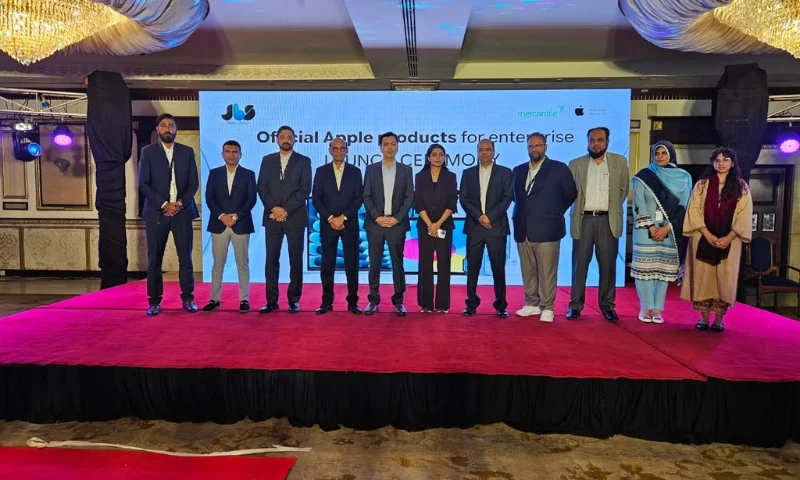
Jaffer Business Systems (JBS) and Mercantile announced a partnership on September 21 to expand official Apple product access for Pakistani businesses. JBS will become Mercantile’s Preferred Partner for Enterprise in Pakistan. It will add Apple products to its computing portfolio, alongside its existing infrastructure and workplace technology offerings. The agreement also marks JBS’s first expansion into handheld devices. The companies say it will help organisations integrate Apple technology into existing IT environments with local support. Deployment and after-sales support The offering extends beyond purchasing devices. JBS will support deployment, device management, ongoing service and the wider lifecycle of customers’ Apple equipment. Services will include support for Apple Business, Automated Device Enrolment, Managed Apple Accounts and device management guidance. Customers will also have access to warranty and after-sales services through Mercantile and Mercantile Care. Read More: Apple Launches iPhone Duo, but Is It Worth the $1,999 Price? The companies said authorised sourcing would provide greater confidence around product authenticity, deployment and support when buying at scale. Apple explains that Automated Device Enrollment allows devices to enrol when employees first turn them on. Managed Apple Accounts help separate business and personal information. JBS links devices with AI infrastructure JBS CEO Veqar ul Islam connected the agreement with businesses’ growing artificial intelligence requirements. “As AI data centers continue to evolve and intelligence moves closer to everyday devices, JBS is completing its compute story, extending from data centers and infrastructure to the devices people use every day. Pakistan has made AI a national priority, and AI-native organizations need more than models; they need secure infrastructure, managed endpoints, trained people and governed access to technology. With our strong presence across Windows platforms and now the addition of the Apple ecosystem through our partnership with Mercantile, the partnership gives customers a trusted route across both Windows and Apple platforms. From infrastructure and enterprise applications to AI-driven solutions, this expanded ecosystem allows us to better support customers across their technology needs. By connecting devices, infrastructure, and intelligence, we are helping build AI native organizations in Pakistan.” Enterprise adoption and digital growth Nauman Durrani, CEO Pakistan and SVP SAGE Mercantile, said: “Mercantile is committed to strengthening authorized access, service confidence, and enterprise adoption of Apple products in Pakistan. By partnering with JBS as our enterprise partner, we are bringing together Mercantile’s authorized Apple ecosystem with JBS’s experience of working with complex enterprise technology environments. Together, we look forward to helping organizations adopt Apple products with greater confidence.” JBS has more than four decades of experience serving enterprises in Pakistan and international markets. Mercantile operates as an Apple authorised distributor and service provider in Pakistan. Read More: Apple TV for Rs200 in Pakistan? There’s a Catch! The partnership comes as Pakistan’s ICT exports reached $4.6 billion in FY2025–26, according to the government’s Press Information Department. The companies linked wider enterprise technology access with sustaining that growth. They said the agreement aims to improve productivity and digital adoption while keeping devices manageable throughout their working lives.
IESCO Privatisation Draws 10 Investors, Including Three Turkish Firms
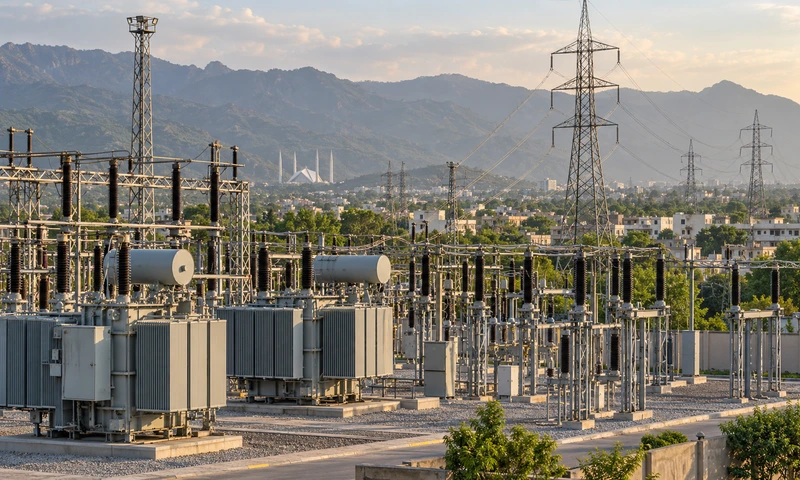
Ten domestic and international investors have expressed interest in acquiring 51% to 100% of Islamabad Electric Supply Company (IESCO), including management control. The Privatisation Commission received their Expressions of Interest (EOIs) by the September 21 deadline. Three Turkish companies and seven Pakistani companies or consortiums submitted applications. The commission had announced the deadline extension on August 29 to facilitate the transaction. Turkish firms and Pakistani groups participate The Turkish applicants comprise Aktor Elektrik Enerji Yatırımları San. ve Tic. A.Ş., Genvera Enerji A.Ş. and Cengiz Enerji Sanayii ve Ticaret A.Ş. Individual Pakistani applicants include Engro Energy Limited, Sapphire Fibers Limited, Novatex Limited and Bestway Cement Limited. Artistic Milliners (Private) Limited submitted interest through a consortium. Its partners include The Lake City Holdings, Fatima Capital Limited, Din Ventures (Pvt) Limited and Fazal Cloth Mills Limited. Read More: Arif Habib’s identity misused to seek funds, company tells NCCIA The Hub Power Holding Limited consortium includes Lucky Cement Limited, Kohat Cement Limited and Metro Ventures (Private) Limited. Hasnaat Brothers Construction Co. (Pvt) Limited also leads a consortium. Its members include Dhilal Holding Group, Pak Steel, Bio-Labs (Pvt) Limited and Farid Steel Casting (Pvt) Limited. The commission welcomed engagement during domestic and international roadshows, describing the response as confidence in Pakistan’s power-sector reforms. Commission outlines reform objectives Muhammad Ali, adviser to the prime minister on privatisation and commission chairman, welcomed the submissions. “This is an important milestone in the privatisation of DISCOs. The strong response received for IESCO reflects that investors have confidence in the potential of Pakistan’s electricity distribution sector and in the Government’s commitment to a transparent, competitive and professionally managed process,” he said. “The Commission now looks forward to engaging constructively with the prequalified investors through the due-diligence process and to seek alignment on an equitable, transparent and predictable post-privatisation regime. The privatisation is intended to improve operational efficiency, modernise distribution infrastructure, strengthen customer service, reduce losses to support a more financially sustainable power sector, which Over time, will lead to more affordable and reliable power for consumers,” he added. These statements describe the government’s intended outcomes. The EOI stage does not constitute a completed sale or establish a purchase price. Applications move to prequalification The commission will evaluate the EOIs and accompanying Statements of Qualification against approved prequalification criteria. Applicants meeting the requirements will advance to the next transaction stage. They will receive access to a Virtual Data Room for detailed buyer due diligence. IESCO forms part of DISCOs Batch-I alongside Faisalabad Electric Supply Company (FESCO) and Gujranwala Electric Power Company (GEPCO). Read More: Inside LDC’s First Company-Owned Industrial Site in Pakistan The commission has prequalified ten interested parties for FESCO. GEPCO attracted eleven EOIs, which remain under evaluation for prequalification. The statement, issued through spokesperson Imran Ghaznavi, reiterated the commission’s commitment to an open, transparent and competitive process. It placed the transactions within the federal government’s broader power-sector reform programme and public-interest objectives.
Media Unveiled 2026: Iqra University’s Student Creativity on Display
Iqra University’s Department of Media Science brought student research, advertising concepts and visual storytelling together at “Media Unveiled 2026”. The exhibition featured work from students across different semesters, including final-year advertising theses, art direction projects and an interior design installation. Students presented app designs, product ideas and service concepts alongside work exploring the physical elements of visual production. According to the university’s event account, the showcase connected classroom learning with practical creative work. It also highlighted faculty guidance in helping students develop ideas into completed projects. Advertising theses combine research and design Final-year BS Media Science Advertising students presented thesis projects covering App Design, Product Design and Service Concepts. The students developed their work through a year-long research and creative process. Their projects explored problem-solving, contemporary advertising and user experience, bringing research into the development of proposed products and services. The range of submissions placed digital interfaces alongside physical products and service ideas. Together, they showed the different formats students used to address design and communication challenges. The thesis display formed one part of a broader exhibition that also included coursework from other semesters. This brought different stages of students’ academic development into the same showcase. Iqra University’s official department page lists advertising, film and television, and animation among its undergraduate specialisations. It also identifies storytelling, modern media tools and preparation for creative careers as priorities. Art direction and interiors take physical form Students developed the Art Direction projects under the guidance of Irfan Ul Haq. Their work examined how set design, props, costumes, colour and composition contribute to visual storytelling. Camera angles and lighting also formed part of the projects, connecting the design of a scene with its presentation on screen. Read More: Career City 2026 Showcases Talent, Innovation, and Industry Collaboration at Habib University The exhibition brought these production elements together, showing how individual creative decisions contribute to a visual narrative. Samina Mumtaz supervised the Interior Design project, which used timber wood and stage materials to create a physical setup. The installation highlighted design planning, material selection, spatial arrangement and execution. It gave students an opportunity to demonstrate how they could turn an interior concept into a constructed environment. Practical work supports media education The exhibition’s focus on production and design reflects subjects listed in Iqra University’s undergraduate media curriculum. Its published course overview includes Art Direction, Camera and Lighting Techniques, Fundamentals of Design, Photography and TVC Production. Other subjects cover digital illustration, compositing, marketing and documentary production. Read More: Free Care for 200,000 Patients a Year: Inside Karachi’s New University Medical Complex The programme also lists research, visual communication, digital content creation and teamwork among its learning outcomes. The university described Media Unveiled 2026 as part of its commitment to experiential learning and education relevant to industry needs. It said the showcase recognised both students’ creative work and the faculty’s mentoring role. The stated aim was to prepare emerging professionals to contribute to Pakistan’s media, advertising and design sectors.

Why 164 Countries Backed a Push to ‘Correct the Map’
The United Nations General Assembly has backed a resolution encouraging maps that show continents in their correct relative proportions. The vote renews scrutiny of the centuries-old Mercator projection and its misleading portrayal of Africa’s size. The “Correct the Map” resolution passed on September 4 with 164 countries supporting it, including France and the United Kingdom. The United States cast the only opposing vote, while six countries abstained. Togo sponsored the initiative with African Union support. It promotes equal-area alternatives, including the Equal Earth projection, which cartographers developed in 2018. What the UN vote means The African-led campaign urges governments, schools and technology companies to reconsider maps that make Africa appear disproportionately small. The UN’s Office of the Special Adviser on Africa described the vote as the culmination of efforts against misleading cartographic representations. Its account confirmed the overwhelming support for maps that better reflect continental sizes. The initiative concerns how people represent the planet on a flat surface. It does not change the physical size of countries or continents. Its central argument is particularly clear when comparing Africa with Greenland. On a standard Mercator world map, the two can appear similar in size. In reality, Africa covers roughly 14 times Greenland’s area. Why Mercator distorts the world Flemish cartographer Gerardus Mercator introduced his projection in 1569 to help sailors navigate. The method preserves local angles and represents routes of constant compass bearing as straight lines. These properties made it useful for plotting a ship’s course. However, a straight route on the map does not necessarily represent the shortest journey. Mercator belongs to the cylindrical family of projections. Its rectangular grid offers a mathematical way to represent the curved Earth on a flat surface. The problem arises when readers use it to compare land areas. Scale increases towards the poles, making northern regions appear much larger relative to equatorial areas. Africa therefore looks smaller in comparison with heavily enlarged Greenland, Europe and northern North America. The effect reflects the projection’s mathematical design, rather than any change in geography. How Equal Earth changes the picture Bojan Šavrič, Tom Patterson and Bernhard Jenny developed Equal Earth in 2018. Their projection preserves the relative areas of countries and continents while offering a familiar-looking world map. Its appearance resembles the Robinson projection, but Equal Earth maintains proportional areas. That makes it useful for world maps showing geographic distributions and information requiring accurate area comparisons. Esri’s technical documentation notes that NASA’s Goddard Institute for Space Studies quickly adopted the projection. Equal Earth still involves compromises. It distorts shapes, directions, angles and distances, even while preserving area. No flat world map can preserve every property of the curved Earth simultaneously. The practical choice depends on the task: navigating a route requires different priorities from comparing continents in a classroom.

Mbappe: Zidane as France Coach Feels ‘Like a Film’
Kylian Mbappe says playing under new France coach Zinedine Zidane feels like “something from a film”, 15 years after their first meeting. The France captain spoke on Monday as Les Bleus prepared for Zidane’s opening match against Turkiye in Izmit on Friday. The Nations League fixture begins a new chapter following Didier Deschamps’s departure after 14 years in charge. From Madrid trial to France reunion Mbappe recalled meeting Zidane during a trial for Real Madrid’s youth teams in an interview with Spanish daily AS. “He was the first person who picked me up to take me to Real Madrid, to the training complex. I was 13 or 14, so it was a long time ago,” Mbappe said. “Now he’s my national team coach. It’s like a film, but it’s amazing. It’s real.” Read More: Messi Loses World Cup Record as Mbappe Hits Historic 22nd Goal The former Real Madrid manager succeeds Deschamps after a disappointing finish to France’s World Cup campaign. Spain comfortably defeated the two-time world champions in July’s semi-finals, ending Deschamps’s final tournament. Mbappe now faces a different voice in the dressing room as France turn their attention towards the next European Championship. Euro 2028 preparations begin France will play four Nations League matches during the expanded international break. Alongside the Turkiye fixture, they face Belgium twice and host Italy at the Stade de France. “We’re starting a new process with France. We have two years to prepare for the European Championship and that’s what we’re focused on now,” Mbappe said. “It’s a new era with a new coach. We have the Nations League coming up, four games, and we’ll see how they go. “It’s going to be new for everyone because all we’ve known is Deschamps. It’s going to be a change for us, but I think everything is going to go very well.” UEFA’s confirmed Euro 2028 schedule includes 51 matches across nine venues in eight cities. England, the Republic of Ireland, Scotland and Wales will stage the tournament. Madrid pressure follows derby defeat Mbappe also addressed Real Madrid’s difficult start under returning manager Jose Mourinho, despite his own eight goals in eight appearances across competitions. He failed to score in Sunday’s 2-1 derby defeat against Atletico Madrid. Madrid already trail reigning La Liga champions Barcelona by six points. Mourinho returned to the Santiago Bernabeu with the task of ending two seasons without a major trophy. Read More: Mbappé Overtakes Messi Without Scoring More Goals “Other people can talk, but we have to do more and work to bring the excitement back to Real Madrid and bring the trophies back,” Mbappe said. While Mourinho criticised the derby officiating, Mbappe declined to follow his manager’s approach. “I have my thoughts, but I keep them to myself. I’ve never been that kind of player and I’m not going to start now,” he said. “The referee is human and makes mistakes, and there were mistakes, but I don’t want to get into that.”
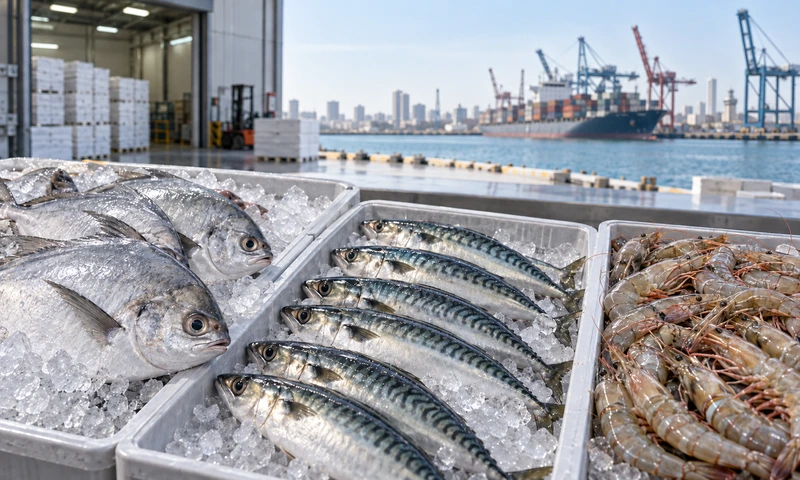
Pakistan Eyes $300m Seafood Export Opportunity in Russia
Pakistani seafood attracted strong interest from Russian buyers at a St Petersburg exhibition, according to Seagreen Enterprises chief executive Asim Abrar. Abrar led Pakistan’s participation in collaboration with the Pakistan Trade Mission in Russia. He described the response from buyers and visitors as highly encouraging, pointing to substantial opportunities for Pakistani seafood exports. The exhibition appearance follows Russia’s approval earlier this year of 16 Pakistani seafood processing plants, opening another market for the industry. Russian buyers show interest Abrar credited the Pakistan Trade Mission, Ministry of Maritime Affairs and Marine Fisheries Department with helping facilitate access to the Russian market. “Seagreen Enterprises’ growing interest from the Russian market represents a significant achievement,” he said. He described the development as encouraging for Pakistan, saying it demonstrated the ability of the country’s seafood products to compete internationally. Read More: Pakistan and Iran Agree to Keep Border Trade Open 24 Hours Separate reporting by Daily Times said Russian visitors appreciated the quality of Pakistani products. Abrar also expressed hope that Pakistani seafood would soon reach Russian supermarket shelves. The report did not announce confirmed supermarket listings or disclose sales contracts. The ninth Global Fishery Forum and Seafood Expo Russia ran from September 16 to 18 at St Petersburg’s Expoforum convention centre. Its programme brought together discussions on fisheries, seafood distribution, technology and consumer demand. Trade officials pursue commercial links The St Petersburg Chamber of Commerce and Industry separately confirmed engagement with Pakistan’s trade representatives during the event. Its external relations director, Irina Karpenko, met Shabana Mumtaz, the Pakistani embassy’s trade representative, on September 16. Their discussions covered stronger commercial ties between Pakistani businesses and St Petersburg companies, including supplies of Pakistani fisheries products. Read More: Big Boost for Pakistan: $300M Seafood Opportunity Opens in Russia The chamber said they also discussed finding Pakistani partners for local importers. Karpenko visited Seagreen Enterprises’ exhibition stand, providing another point of contact between the exporter and the city’s business community. Seagreen’s website identifies the business as a family-owned company established in 1980 by Abrar Ahmed, with Asim Abrar joining subsequently. The Karachi Fish Harbour-based exporter lists shrimp, squid, cuttlefish, sole and pomfret among its products. Its stated quality policy covers seafood processing, packaging, hygiene and food safety controls. Russian approvals support export expansion On April 17, Maritime Affairs Minister Muhammad Junaid Anwar Chaudhry announced that Russia had approved 16 Pakistani seafood processing plants. He credited diplomatic and technical efforts with securing the registrations, which allow the approved plants to export to Russia. The minister projected that Russian demand could initially generate about $300 million in exports. He also forecast growth in Pakistan’s annual seafood exports from around $500 million to $800 million in coming years. Read More: US imposes new tariffs on 60 trade partners, including Pakistan Those figures represent government projections rather than confirmed earnings from the exhibition. Chaudhry identified warm-water species, including shrimp and ribbonfish, as potential strengths for Pakistani suppliers. He also highlighted sea, air and overland transport options, while calling for better infrastructure and policy support to expand exports.
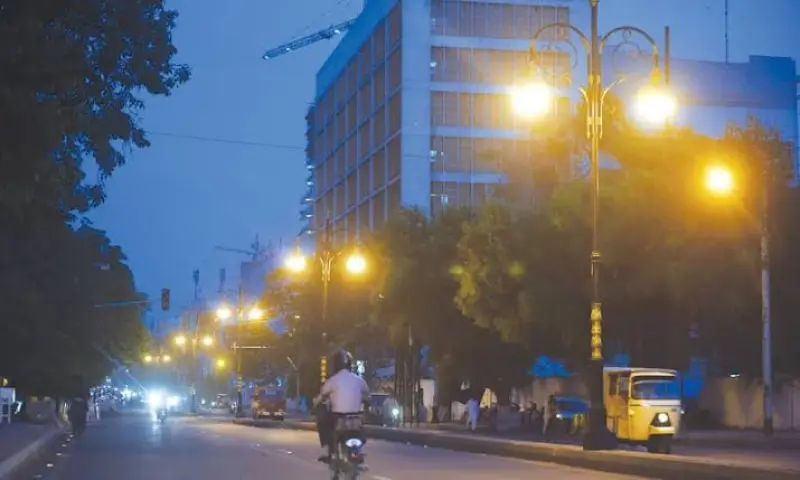
Karachi, lights out: an unsustainable tariff breaking the city of teeming millions
Karachi was promised light. Instead, it was handed a bill dressed up as relief. There is a particular kind of exhaustion that settles over a city that has been lied to one time too many. It is not the loud anger of a single betrayal. It is quieter than that. It is a mother in Korangi doing the same subtraction she has done every month for years, watching the numbers refuse to shrink no matter how carefully she rations the fan, the fridge, the single bulb left burning after dark. It is a factory owner in Karachi staring at a fuel cost adjustment line he did not create and cannot challenge, wondering for the hundredth time whether this is the year the machines finally stop for good. Karachi has absorbed disappointment after disappointment from the very institutions meant to protect it, and in October 2025, it absorbed one more, delivered in the gentlest possible language, a tariff cut of Rs7.6 per unit, presented as mercy. Nine months on, the mercy has revealed itself as arithmetic done in the regulator’s favour, but the city is left holding the difference as usual. Before anything else, sit with what Karachi actually is, because the tragedy here is not that a city was shortchanged. It is that the city being shortchanged is the one holding the rest of the country up. Karachi generates the largest share of Pakistan’s tax revenue. Its port moves the exports that earn the foreign exchange the whole nation depends on to buy fuel, wheat, medicine. Its textile mills, packaging plants, trading houses employ millions of families who have no second city to fall back on if the machines go quiet. When Karachi’s energy becomes unaffordable, it is not a local inconvenience. It is a wound opened at the exact point the country can least afford to bleed. Every rupee added to a factory’s energy bill here is a rupee that cannot go into a worker’s wage, a rupee that makes a Karachi made shirt more expensive than a Bangladeshi one on the same shelf in the same European store, a rupee that quietly, without ceremony, becomes one fewer job in a city that already has too many people chasing too few of them. This is not abstraction. This is a father who used to work a night shift in Korangi and now does not, because the mill could not carry the new fuel cost adjustment and stay open. The first wound is the Rs28-billion the tariff cut never mentioned. NEPRA’s October decision did not simply reduce a rate. In the same breath, it reopened two years of Fuel Cost Adjustment calculations that had already been settled, already been credited back to electricity users who had, for once, believed something had gone their way. Those calculations were then revised upward, clawing back roughly Rs28 billion from people who had already spent that relief on rent, on school fees, on the small mercies a slightly lighter bill allows a household to imagine. The retrospective charge translates into an extra Rs2.5 to Rs3.5 per unit for a full year, sitting entirely outside the Uniform FCA structure most electricity users have never been told exists, let alone understand. Karachi’s industrial electricity users were obviously desperate enough to take the fight to the Sindh High Court, and a stay currently holds that Rs28 billion in suspension while the matter waits for a resolution nobody can promise a date for. But a stay is not a victory. It is a held breath. Every month it continues is another month a factory cannot quote a firm price to a foreign buyer, another month a household budgets around a number that could still turn against it without warning. There is something quietly devastating about being told you have been given something, only to learn months later that it was measured out so it could be taken back. The second wound runs deeper than any single number, because it is about whether anything here can be trusted at all. NEPRA’s October reversal did not just revise a figure. It tore up its own determination from May of the same year, a ruling reached only after more than two years of hearings, submissions, and public consultation. To dismantle that in a matter of months is to tell every investor, every lender, every ordinary user of electricity trying to plan a year ahead that nothing set down on paper here is actually final. The market understood this instantly and reacted the way markets react to fear. The share price of the Karachi’s power utility, K Electric, fell. Shareholders began speaking openly of international arbitration, Shanghai Electric Power, after years of pursuing a $1.77 billion acquisition of the company, simply walked away, naming regulatory unpredictability as the reason. More horrifically, financial analysts now project that KE’s roughly Rs4 billion profit in FY24 could collapse into losses of Rs70 to 80 billion, with investors bracing for cumulative annual losses approaching Rs100 billion. Behind those figures is a harder truth still. The utility’s investors who cannot trust its own regulator, has no reason to invest in the grid that keeps Karachi’s lights on, and every incentive to pass every future shock straight down to the people least able to absorb it. The country’s only private power utility, and the government’s own hopes of privatising the sector nationwide, are both being tested in real time, and what is failing that test is not Karachi. It is the promise that the rules, once written, would hold. The third wound is the one that asks no questions and offers no hearings, because it has simply gone unanswered for years. Karachi’s industries are still owed Rs33 billion in Covid-era relief subsidy, money that was earmarked specifically for them, announced with the usual fanfare, and never disbursed. This is not a contested claim working its way through some tribunal. It is a promise that was made and then, quietly, allowed to be forgotten, while the same industries
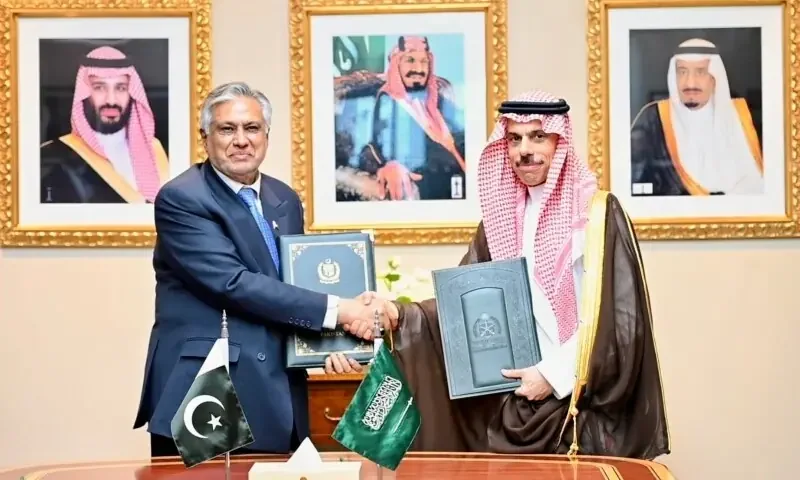
Saudi Arabia’s $3bn Export Goal: What It Means for Pakistan
Pakistan and Saudi Arabia have outlined plans to expand agricultural trade, strengthen defence cooperation and ease travel through a series of agreements and initiatives. The developments include a goal to raise Pakistani agricultural and food exports to the kingdom to $3 billion. They also cover a joint defence agreement involving Turkiye and a multiple-entry Umrah visa. Frequent high-level diplomatic exchanges underpin the relationship, with recent contacts covering security, trade and travel. The measures span both government cooperation and opportunities for Pakistani exporters and travellers. Agricultural exports targeted at $3 billion Pakistan and Saudi Arabia agreed in August to boost Pakistani agricultural and food exports to the Gulf state up to $3 billion. The understanding came during a visit by a Saudi delegation led by Minister of Environment, Water and Agriculture Engineer Abdulrahman Al-Fadley. The export goal places agriculture and food supplies among the priorities for bilateral economic cooperation. For Pakistan, the proposed expansion would mean greater access to the Saudi market for these products. Read More: Trump Backs Major Saudi Fighter Upgrade With $24.3bn F-35 Plan However, the supplied account does not specify a deadline for reaching the $3 billion figure. It also provides no breakdown of the products covered or their current export value. The figure represents an agreed expansion goal, rather than exports already achieved. Further details would establish how the two countries intend to translate that goal into commercial orders. Defence agreement brings Turkiye into cooperation On August 7, Pakistan and Saudi Arabia signed a joint defence agreement alongside Turkiye. The three countries pledged to strengthen collective security, deepen defence cooperation and promote peace and stability in the region and beyond. Deputy Prime Minister/Foreign Minister Senator Mohammad Ishaq Dar @MIshaqDar50 met with His Highness Prince Faisal bin Farhan Al Saud @FaisalBinFarhan, Foreign Minister of Saudi Arabia, on the sidelines of the 81st Session of the UN General Assembly in New York today. The two… pic.twitter.com/QyrhzdriyG — Ministry of Foreign Affairs – Pakistan (@ForeignOfficePk) September 22, 2026 The agreement adds a three-country security framework to Pakistan and Saudi Arabia’s existing bilateral relationship. Its stated objectives extend beyond defence cooperation to wider regional peace and stability. The supplied material does not outline operational arrangements or specific military commitments under the agreement. High-level diplomatic exchanges remain a central feature of Pakistan-Saudi relations. The August developments show how those contacts encompass economic cooperation alongside security matters. Umrah and tourist visa measures widen access Saudi Arabia also launched a multiple-entry Umrah visa in July, with one-year validity from the date of issuance. Under the arrangements described in the supplied report, pilgrims can enter the kingdom several times during that period. Their cumulative stay can total up to 90 days each year. Pleased to announce that on the sidelines of #UNGA2026, I signed today with my brother, His Highness Prince Faisal bin Farhan @FaisalbinFarhan, the “Agreement between Islamic Republic of Pakistan and Kingdom of Saudi Arabia on the abolition of visa requirements for holders of… pic.twitter.com/9w1F2z41f5 — Ishaq Dar (@MIshaqDar50) September 21, 2026 The distinction between visa validity and permitted stay matters for travel planning. A visa valid for one year does not provide permission to remain in Saudi Arabia throughout that period. Read More: Saudi Arabia Targets Over 500,000 Jobs With New SME Strategy Separately, Riyadh eased tourist visa requirements for Pakistani travellers in 2024. The change allowed applicants to submit a bank statement showing a minimum monthly credit amount of $750 or its equivalent. That financial requirement concerns tourist visa applications, while the July measure concerns Umrah travel. Together, the reported initiatives add a travel dimension to a relationship that also covers agricultural trade and defence.
