

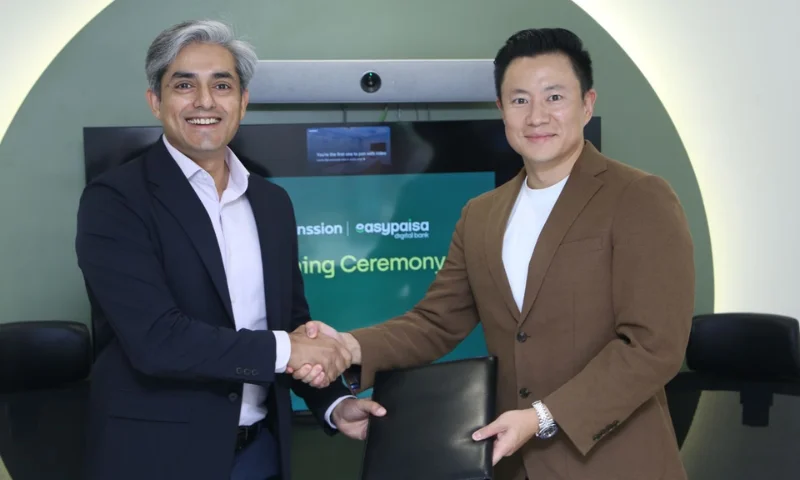
Easypaisa digital bank has partnered with smartphone manufacturer Transsion to pre-install its app on more than five million new smartphones in Pakistan. The initiative will cover Infinix, TECNO and itel devices. The companies announced the agreement on September 24. They aim to make digital financial services available from the moment users activate their phones. Farhan Hassan, easypaisa’s chief digital officer, and Michael Wang, Transsion’s vice president for global partnerships, signed the agreement in Islamabad. Senior representatives from both organisations attended the signing. Smartphone partnership targets underserved users The collaboration focuses on expanding financial access as more Pakistanis adopt smartphones and mobile internet. The announcement cited 3G/4G device uptake of 71.6%. It identified unbanked and underserved populations as important beneficiaries, including people using smartphones for the first time. The companies expect pre-installation to increase app penetration, attract customers and encourage greater engagement with formal financial services. Read More: New Easypaisa Feature Could Bring Millions of Investors to PSX Hassan said: “At easypaisa, our mission has always been to simplify access to financial services and create opportunities for every Pakistani. This partnership with Transsion represents a significant step forward in making digital banking available at the point where consumers begin their digital journey. By embedding access to financial services directly onto smartphones, we are removing barriers, expanding reach, and bringing millions more people into the formal financial ecosystem. Together, we are helping accelerate Pakistan’s journey towards a more inclusive and digitally empowered economy.” Infinix, TECNO and itel devices included The arrangement connects Transsion’s smartphone distribution network with easypaisa’s digital banking products and services. It places access to the banking app directly on new devices. The announcement did not specify individual smartphone models or a completion date for the rollout. Muhammad Abdul Qadeer, country manager of Transsion Pakistan, said: “This partnership reflects the power of combining technology, scale and local market understanding to create meaningful digital experiences for consumers. With millions of smartphones entering the hands of Pakistani consumers through our brands, integrating access to trusted digital financial services such as easypaisa creates an opportunity to make financial inclusion a natural part of the smartphone journey. We are proud to collaborate with easypaisa on an initiative that can deliver meaningful impact at scale across Pakistan.” Digital banking expansion builds on SBP licence Easypaisa says it has more than 60 million registered users. It continues to expand its financial products and partnerships for existing customers and people outside formal banking. The State Bank of Pakistan awarded Easypaisa Bank Limited the country’s first Digital Retail Bank licence on January 28, 2025. The licence authorised the institution, formerly Telenor Microfinance Bank Limited, to commence commercial digital banking operations. Read More: easypaisa Introduces Digital Takaful Savings for Pakistanis At that licensing ceremony, SBP emphasised affordable services for underserved customers and small businesses. It also highlighted digital literacy and cybersecurity as priorities for protecting customer trust. Easypaisa described the Transsion agreement as part of its contribution to SBP’s financial inclusion objectives. The bank said its partnerships aim to make financial services simpler, safer and more accessible.
K-Electric Questions Tribunal Decision as NEPRA Notifies Tariff Cut
K-Electric has warned that NEPRA’s notification of disputed tariff decisions threatens the financial sustainability of its seven-year tariff framework. The company said it would consider legal remedies after receiving the NEPRA Appellate Tribunal’s written order. In a September 24 disclosure, K-Electric informed shareholders, investors and market participants that NEPRA had notified its October 20, 2025 decisions. The regulator acted following the tribunal’s order on appeals filed by the utility. K-Electric said the tribunal had not yet communicated that order to the company. Its disclosure followed an earlier announcement dated April 7, 2026. Company questions consideration of its submissions K-Electric raised concerns about the tribunal’s handling of arguments presented by its legal counsel. “From this, it appears that NEPRA Appellate Tribunal has not considered the views/submissions of KEL’s counsel while passing its Order.” That statement represents the company’s assessment while it awaits the written order, rather than an independently established finding about the proceedings. The utility said the development would substantially affect its Multi-Year Tariff, or MYT, covering FY2024 to FY2030. K-Electric Limited (KEL) would like to apprise its shareholders, investors and market participants that in pursuance of the Order of the NEPRA Appellate Tribunal, in the matter of appeals filed by KEL against NEPRA’s decisions dated 20 October 2025, that is yet to be communicated… pic.twitter.com/AnNjjXUOcH — Imran Rana, Spokesperson, K-Electric (@imranrana21) September 24, 2026 “This development translates into a substantial adverse impact on the Multi-Year Tariff (MYT) of KEL for the control period from FY2024 to FY2030 and therefore, it is not considered as financially sustainable for KEL.” Chief Risk Officer and Company Secretary Rizwan Pesnani signed the disclosure submitted to the Pakistan Stock Exchange and securities regulator. Revised tariff falls to Rs32.37 per unit The notification gives effect to an average base tariff of Rs32.37 per unit, according to reporting on the regulatory decision. That represents a Rs7.60 reduction, or approximately 19%, from the earlier determination of Rs39.97 per unit. The revised framework uses FY2024 as its base year. Subsequent adjustments account for inflation and exchange-rate movements through FY2030. However, the reduction does not automatically translate into an equivalent cut in Karachi consumers’ electricity bills. K-Electric customers pay tariffs under the federal government’s uniform tariff policy, which aligns their rates with those of other distribution companies. The utility’s determined tariff instead affects its regulated revenue framework and the government’s subsidy obligations. Reports estimate the revision could reduce federal subsidy payments by around Rs200 billion over the seven-year period. Legal dispute awaits company’s next move The dispute extends beyond the latest notification. K-Electric challenged NEPRA’s revised determinations through appeals and constitutional petitions before the Sindh High Court. According to earlier disclosures reported by Mettis Global, the tribunal was initially non-functional. The high court granted protection against coercive action in November 2025. In April 2026, the court disposed of the petitions and directed the operational tribunal to decide the pending appeals within three months. It maintained interim protection until the tribunal’s final ruling. K-Electric has now reserved its decision on further proceedings until it receives the order. “KEL awaits receipt of the Order of NEPRA Appellate Tribunal after which it will consider adopting available legal remedies.”
Hanif Gohar Wins ABAD Chairmanship Without a Contest
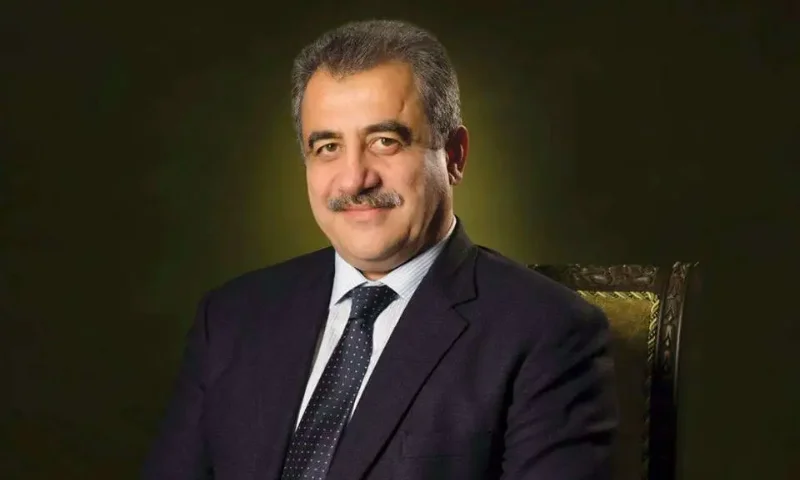
Hanif Gohar has won election unopposed as chairman of the Association of Builders and Developers of Pakistan, according to an ABAD statement. Allied Panel patron-in-chief and former ABAD chairman Mohsin Sheikhani congratulated Gohar, describing his selection as a reflection of members’ unity and confidence. The statement, issued by Falak Almas of ABAD’s media cell, said candidates Hanif Memon and Fayyaz Ilyas withdrew in Gohar’s favour. Sheikhani thanked both for putting the association’s wider interests first. Sheikhani welcomes members’ unanimous decision “I extend my heartfelt congratulations to Hanif Gohar on his unopposed election as ABAD chairman,” Sheikhani said in the Urdu statement. He welcomed the unanimous decision of the core committee and members regarding the association’s leadership. “I am grateful to all respected ABAD members and candidates for honouring the core committee’s decision,” he said. Read More: Sazgar Engineering Plans Rs1.47 Billion Real Estate Investment in Lahore Sheikhani said members had entrusted Gohar with the leadership through mutual agreement and trust. He added that their decision demonstrated full confidence in Gohar’s abilities and services to the association. The statement placed particular emphasis on the agreement among members and candidates that allowed the leadership selection to proceed without a contest. Rival candidates withdraw in association’s interest Sheikhani credited Memon and Ilyas for stepping aside in support of Gohar. “Election candidates Hanif Memon and Fayyaz Ilyas withdrew in favour of Hanif Gohar in ABAD’s wider interest,” he said. “I am deeply grateful to both members for withdrawing in his favour.” He described the outcome as evidence of consensus within the builders’ organisation. “Hanif Gohar’s unopposed election reflects consensus and trust within ABAD,” Sheikhani said. Turning to expectations from the incoming leadership, he expressed hope that Gohar would actively address the construction industry’s concerns. “We hope the newly elected chairman will play a strong role in resolving the construction sector’s problems,” he said. Gohar brings previous leadership experience to the position. ABAD’s official list of former chairmen records his earlier tenure in 2015–2016. The same record lists Ilyas as chairman during 2020–2021 and Memon from July to September 2022. Sheikhani has also headed the association during several terms. Construction issues await new leadership Established in 1972, ABAD represents builders and developers across Pakistan and maintains an affiliation with the Federation of Pakistan Chambers of Commerce and Industry. Its stated responsibilities include assisting the government with housing policy, coordinating with public agencies and addressing problems members encounter during construction projects. Recent association meetings show the range of issues facing its leadership. Read More: Pakistani Investors Struggle to Recover Millions From Dubai In August, ABAD discussed housing finance and Islamic financing facilities for builders with Meezan Bank. Gohar attended that meeting alongside other association representatives. ABAD also held discussions with Sindh Police about extortion, threats, land grabbing and encroachment affecting the sector. Those engagements provide context for Sheikhani’s call for the newly elected chairman to focus on resolving construction industry problems.

More Than 100 Sports Modes: Inside Oppo Watch S2’s Fitness Features
Oppo has launched the Watch S2 alongside its Find X10 smartphone series, adding personalised workout guidance and expanded health tracking. The smartwatch combines a slim stainless steel case with an AMOLED display and battery life reaching 10 days under specified conditions. The company also unveiled a Titanium Moon colour option for its existing Watch X3. Both watches go on sale in China on September 24. The Watch S2 starts at approximately $238, while the Titanium Moon Watch X3 costs around $418. Slim design and brighter outdoor display The Oppo Watch S2 features a 1.46-inch AMOLED screen with a 464 × 464-pixel resolution, according to Oppo’s official store listing. Its stainless steel body measures 8.9mm thick, excluding the rear sensor bump, and weighs 34.5 grams. Read More: Game-Changer: This New Oppo Phone Works Even in Heavy Rain Buyers can choose Dynamic Orange, Mist Pink or Mountain Shadow Gray. Oppo has paired the watch with a segmented fluoroelastomer strap, which it describes as thinner and more breathable than previous designs. The display provides 600 nits of standard brightness. It can reach a peak of 3,000 nits in selected outdoor sports modes under strong sunlight. That distinction means the maximum brightness figure does not describe the screen’s output during ordinary use. FatMax adds personalised workout targets FatMax is a central addition to the Watch S2’s fitness features. It calculates a personalised fat-burning heart-rate target using height, weight, resting heart rate and VO2 max. During exercise, the watch provides real-time prompts to help users remain within their target range. It also estimates the amounts of fat and carbohydrates burned during a workout. These figures are estimates generated by the watch, rather than direct measurements of body-fat loss. The Watch S2 supports more than 100 sports modes and includes dual-frequency GPS for outdoor route tracking. Its sensor array comprises an eight-channel optical heart-rate sensor, a 16-channel blood-oxygen sensor, an ECG electrode and a temperature sensor. A 60-second health check records 13 health metrics in one session. Other functions include sleep monitoring, sleep apnoea screening and all-day blood-oxygen tracking. Together, these features extend monitoring beyond exercise to overnight sleep and readings collected throughout the day. Dual-phone connectivity and battery options The Watch S2 runs ColorOS Watch 17 and supports Fluid Cloud live updates. These include information such as transit details and food-delivery status. Users can connect the watch to two smartphones simultaneously and receive notifications from both. Oppo also includes NFC support for transit cards and gesture controls. Read More: IWC Unveils Space-Ready Watch Designed for Astronaut Missions The company claims up to seven days of battery life with standard use. Battery-saver mode extends that figure to 10 days, while enabling the always-on display reduces it to around four days. The headline battery figure therefore depends on the operating mode users select. For durability, the Watch S2 carries a 5ATM water-resistance rating alongside IP69 and IP69K dust and water protection certifications.

University of Amsterdam Opens Six Paid PhD Positions Across Five Projects
Pakistani researchers can consider five University of Amsterdam PhD projects offering six salaried positions, with application deadlines in October 2026. The Netherlands-based university lists gross monthly pay of €3,204 in the first year, rising to €4,051 in the final year. Candidates receive an 8% holiday allowance and an 8.3% year-end allowance. These are employment positions involving 38-hour working weeks and doctoral research lasting up to four years. Extensions beyond initial contracts depend on satisfactory assessments. Ecology projects close on October 18 The agrochemical project examines how pesticides and fertilisers affect microbial and viral communities in agricultural drainage-ditch sediments. Based at the Institute for Biodiversity and Ecosystem Dynamics, it investigates carbon pools, carbon cycling and greenhouse gas emissions. Research combines fieldwork, laboratory experiments, environmental chemistry, microbial ecology and data analysis. Applicants need a relevant master’s degree, such as ecology, environmental science or microbiology, alongside suitable research skills. The vegetation project investigates how plant traits and structure influence soil conditions, microorganisms and carbon cycling, including during drought and heat. It combines field observations, remote sensing, soil measurements, ecosystem carbon-flux data and process-based modelling. Field campaigns include work at the ICOS Loobos ecosystem station. Each project offers one position, closes on October 18 and seeks a candidate who can start as soon as possible. Language and AI research opportunities Two further positions examine children translating or interpreting for parents in multilingual families. Both belong to the NWO-funded project Small Voices, Big Words: Effects of Child Language Brokering in Immigrant Families. The socio-emotional position investigates emotions, attitudes, family communication and relationships. Methods include interviews, diaries, judgement tasks, attitude scales and parent-child activities. The linguistic position examines translation strategies, family beliefs, heritage-language maintenance, second-language development and learning opportunities. It uses observations, interviews, controlled language tasks and statistical network analysis. Both close on October 19, with preferred starts on February 1, 2027. The Agents of Doubt project offers two positions studying adolescents’ responses to AI-generated text, audio, images and video. Researchers will examine uncertainty, independent judgement and trust through quantitative and qualitative methods. Applications close on October 16, with a preferred January 1, 2027 start. Eligibility and how to apply Applicants must match each vacancy’s academic and research requirements. The language projects require relevant master’s qualifications; Agents of Doubt seeks communication science or related social science graduates. Dutch proficiency is essential for the language projects. The socio-emotional role requires B2 Dutch. The linguistic role requires C1 or native-level Dutch plus working proficiency in a heritage language, or the reverse. The supplied report lists IELTS 7.0, TOEFL iBT 100 and Cambridge C1 Advanced 190. The reviewed vacancies do not establish these as universal thresholds. They also do not confirm a separate living allowance alongside salary or a common tuition-coverage package. Candidates should apply through UvA’s vacancy pages, following project-specific document instructions. These may request a CV, motivation letter, qualifications, transcripts, writing samples or referee details. PhD project Field Positions Application deadline Expected start Agrochemical Impacts on Microbial Carbon Cycling in Aquatic Ecosystems Ecology and environmental sciences 1 October 18, 2026 As soon as possible Vegetation Influences on Soil Microbial Processes and Carbon Cycling Across Scales Ecology and environmental sciences 1 October 18, 2026 As soon as possible Socio-Emotional Effects of Child Language Brokering in Multilingual Families Multilingualism and family communication 1 October 19, 2026 February 1, 2027 Linguistic Effects of Child Language Brokering in Multilingual Families Linguistics and language development 1 October 19, 2026 February 1, 2027 Agents of Doubt: Synthetic Content and Adolescents’ Knowledge Formation Communication science, AI and social sciences 2 October 16, 2026 January 1, 2027 Total Five projects 6 Salary for all positions: €3,204 gross per month in the first year, rising to €4,051 in the final year, plus 8% holiday allowance and 8.3% year-end allowance. Language requirements: The socio-emotional project requires at least B2 Dutch. The linguistic project requires C1 or native-level Dutch plus working proficiency in a heritage language, or the reverse.
Pakistan Explores Agriculture and AI Cooperation With Bill Gates
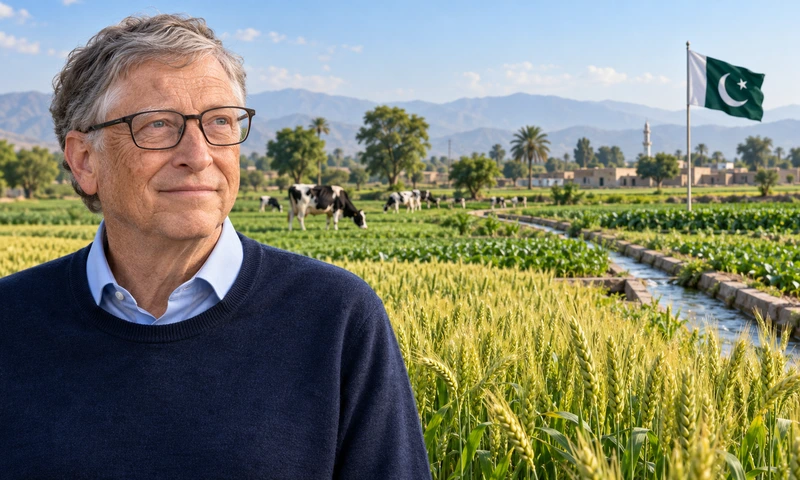
Prime Minister Shehbaz Sharif and Gates Foundation Chair Bill Gates have agreed to explore cooperation on improved seeds, livestock genetics and agricultural technologies. The discussions formed part of broader talks on public health, digital innovation and artificial intelligence in New York. The two met on the sidelines of the 81st United Nations General Assembly session, according to the Prime Minister’s Office. Shehbaz outlined Pakistan’s agricultural reform priorities and expressed interest in expanding the country’s partnership with the foundation beyond existing areas of cooperation. Improved seeds and livestock genetics in focus The prime minister briefed Gates on reforms centred on innovation, biotechnology, climate resilience, research and capacity building for farmers. Both sides agreed to explore opportunities involving improved seeds, livestock genetics and emerging agricultural technologies. The meeting readout did not announce a funding amount, implementation timetable or signed agricultural project. The proposed cooperation overlaps with the Gates Foundation’s established agricultural development work across South Asia and sub-Saharan Africa. Read More: Bill Gates Cancels India AI Summit Keynote Amid Epstein Controversy According to its official programme overview, the foundation supports crop breeding, livestock health and digital services for smallholder farmers. Its investments include crop varieties suited to changing climate conditions, livestock vaccines and digital soil maps. The foundation also supports research that helps farmers respond to drought, flooding, higher temperatures, pests and crop diseases. These are areas of its wider programme, rather than projects announced specifically for Pakistan at the New York meeting. Polio eradication remains a priority Public health remained a central part of the talks, alongside the agricultural agenda. Shehbaz reaffirmed Pakistan’s commitment to completely eradicate polio and thanked the foundation for its longstanding support. Gates stressed the importance of eliminating the disease to protect future generations. He also appreciated the prime minister’s guidance to provincial governments on the polio vaccination programme. Prime Minister Muhammad Shehbaz Sharif met Mr. Bill Gates, Chair of the Gates Foundation on the sidelines of the 81st Session of the United Nations General Assembly (UNGA 2026) Session. Recalling Gates Foundation Team’s recent visit to Pakistan earlier this month, the Prime… pic.twitter.com/Q6EA4pPNxT — Government of Pakistan (@GovtofPakistan) September 23, 2026 The Prime Minister’s Office said discussions covered maternal and child health, nutrition and immunisation. The two sides also reviewed cooperation on digitisation and financial inclusion. Shehbaz expressed interest in broadening collaboration across public health, agriculture, digital innovation and artificial intelligence. Both sides committed to continued engagement aimed at supporting sustainable development, technological advancement and better social sector outcomes. Talks build on earlier climate discussions The agriculture and technology agenda follows earlier exchanges between Pakistan and the foundation on climate resilience. In June 2024, Pakistan’s climate ministry and the foundation agreed to work together on strengthening the country’s ability to withstand climate impacts. An official account of an Islamabad roundtable recorded discussions on agriculture, water, energy, food, health and education. Gates also met private-sector innovators working in health, agriculture, technology and climate finance. Read More: Pakistan Bets Big on AI: $1 Billion Plan That Could Change the Economy At that meeting, he highlighted artificial intelligence’s potential to address problems at scale and reiterated support for Pakistan’s climate adaptation efforts. The latest talks identified seeds, livestock genetics and agricultural technology as areas for further engagement. Shehbaz concluded by inviting Gates to visit Pakistan at his earliest convenience.
Pakistan Imports $81.4m Worth of Cars in Just Two Months
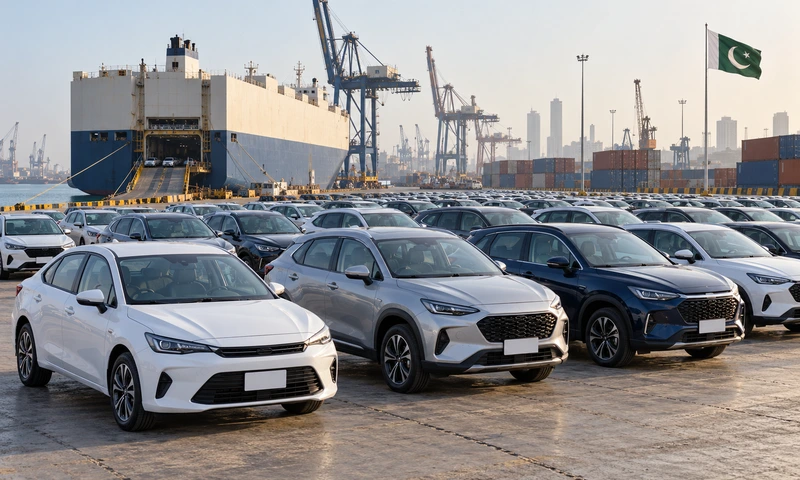
Pakistan’s new and used car imports climbed to $81.4 million in July-August 2026 as new entrants brought in vehicles ahead of local assembly. The increase has renewed concerns among domestic parts manufacturers about production demand and employment. Figures attributed to the Pakistan Bureau of Statistics put imports at $59 million in the corresponding period last year. The supplied report describes the increase as 36 percent. However, the stated dollar values imply growth of approximately 38 percent, leaving a discrepancy in the reported figures. Used car arrivals rise after baggage scheme ends The government abolished the personal baggage scheme for used vehicle imports in January. It also introduced mandatory pre-shipment inspections for vehicles entering through the gift and transfer of residence schemes. Indus Motor Company’s FY26 annual report recorded approximately 38,000 used vehicle imports, down from 42,000 in FY25, according to the report. However, former Pakistan Association of Automotive Parts and Accessories Manufacturers chairman Aamir Allawala said vendors remained concerned about continuing arrivals. He said they believed used car dealers were still arranging imports through different schemes. Allawala cited 48 used vehicle imports in May, followed by 843 in June, 1,938 in July and 1,445 in August. The gift scheme accounted for most arrivals during June, July and August. He put combined used car imports for July and August at around 3,200 units. The individual monthly figures he cited, however, total 3,383 vehicles. Chinese vehicle imports draw vendors’ attention Allawala said leading Chinese companies were importing between 1,500 and 2,000 new energy vehicles each month. The arrivals come as new market entrants introduce vehicles before starting local assembly. Vendors argue that the impact on domestic manufacturing extends beyond used cars to new, fully imported models. Allawala said several locally assembled vehicles contained more than 50 percent locally produced content by value. He estimated that local content averaged approximately Rs1.5 million per vehicle. He argued that completely built-up vehicle imports reduced demand for Pakistani auto parts, whether the imported vehicles were new or used. Lower demand also affected employment across the vendor industry, he said. Allawala urged the government to prioritise job creation and preservation of Pakistan’s industrial base. January rules also restrict vehicle transfers The Ministry of Commerce’s SRO 61(I)/2026, dated January 15, provides additional context for the changes governing overseas Pakistanis’ vehicle imports. The notification removed personal baggage provisions from the Import Policy Order. It also barred transfers of vehicles imported under gift or transfer of residence schemes for one year after importation. The changes retained these two schemes while tightening their conditions, rather than ending vehicle imports through them. The latest figures highlight vendors’ concern that continued imports could limit demand for locally manufactured components. Their argument centres on how much value Pakistan retains through domestic assembly and parts production as new brands expand.
Karachi Umrah Pilgrims Get 15-Day Extension Amid Certificate Delays
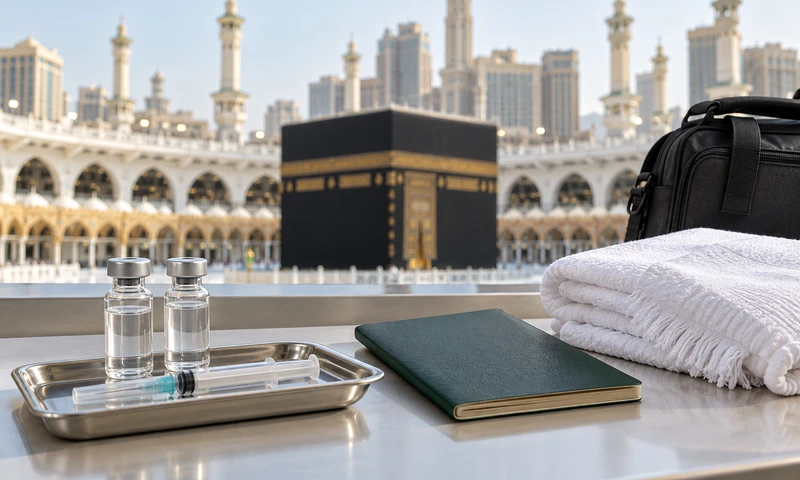
Authorities have extended the vaccination deadline for Umrah pilgrims by another 15 days, allowing travel under the reported exemption until October 10. The decision comes as passengers struggle to obtain digital vaccination certificates in Karachi. Focal person Dr Murtaza Shah said the extension would facilitate pilgrims and give authorities time to improve arrangements. The announcement concerns local travel processing. Saudi Arabia’s published health requirements separately require meningococcal vaccination for Umrah pilgrims, so travellers should not interpret it as a Saudi exemption. More facilities planned for pilgrims Shah said authorities had established five NADRA facilitation centres at the Karachi Airport dispensary. Vaccination services at the Jacob Lines dispensary would begin the following week. The expansion follows complaints about overcrowding at the Federal Civil Dispensary near the airport’s Old Terminal. The federal Ministry of Health established the vaccination centre there to serve pilgrims and other international passengers. Read More: King Salman Opens Doors to 1,000 International Umrah Guests According to the September 23 report, thousands of passengers faced difficulties because only one vaccination centre was serving them. Its single-room arrangement caused congestion, with elderly passengers, women and infants particularly affected by inadequate facilities. Passengers and Umrah pilgrims demanded additional vaccination centres and better facilities to reduce delays. Digital certificates create departure pressure Authorities have started issuing digital vaccination certificates for Umrah pilgrims and people travelling abroad. The federal government has linked the process with NADRA to help prevent forged certificates. Under the reported procedure, passengers must register through NADRA’s Pak ID app. International travellers can also register through NADRA e-Sahulat centres. The report said Pakistan’s arrangements made influenza and meningitis vaccinations mandatory for Umrah pilgrims. Several passengers complained that they had waited at the centre since 8am without receiving clear information. Others said their flights would depart within 12 to 15 hours, but they still lacked vaccination certificates. The Ministry of Health advised passengers to approach vaccination centres 10 days before travelling abroad. Separately, The Express Tribune reported plans for a round-the-clock International Traveller Vaccination Centre at Karachi airport from September 24. It listed meningitis vaccination at Rs2,785 and influenza vaccination at Rs1,720, with polio vaccination free. Saudi vaccination requirements remain separate Saudi Arabia’s Ministry of Health outlines its own requirements in its published 2026 Umrah guidance. It requires meningococcal vaccination at least 10 days before arrival. The guidance accepts qualifying conjugate vaccines administered within the previous five years. It accepts the quadrivalent polysaccharide vaccine within a three-year validity period. Read More: Saudi Arabia Breaks Umrah Record with 904,000 Pilgrims on Ramadan Day 4 Saudi guidance also requires travellers arriving from Pakistan to receive a qualifying polio vaccine, regardless of age or previous vaccination status. The document places seasonal influenza vaccination under recommendations, rather than its list of mandatory vaccines. That distinction matters because Pakistan’s reported processing requirements and Saudi entry rules do not necessarily match. Pilgrims should confirm applicable vaccination and certificate requirements with their airline and authorised health centre before departure.
DIB Opens Sarai Alamgir Branch, Targets 75 New Branches
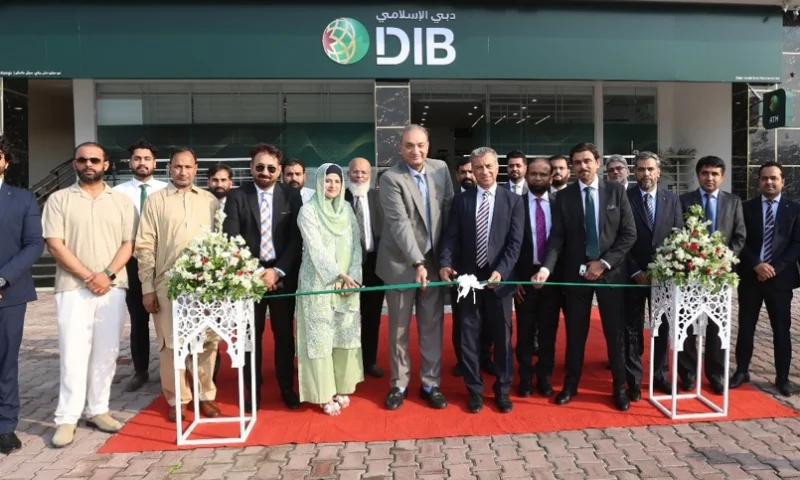
Dubai Islamic Bank Pakistan has opened a branch at New Metro City, Sarai Alamgir, as it pushes ahead with nationwide expansion. The bank says it remains on track to open another 75 branches during 2026. In a statement issued from Lahore on September 23, DIB Pakistan said leading local community figures welcomed the opening. It described the initial response as strong, with the branch gaining momentum from its first day. The opening forms part of the bank’s “Monumental Expansion” initiative, which aims to extend its footprint across Pakistan. CEO outlines nationwide expansion plans Muhammad Ali Gulfaraz, chief executive officer of DIB Pakistan, inaugurated the branch. Business leaders, community representatives and key stakeholders from Sarai Alamgir and surrounding areas attended the ceremony. Speaking at the inauguration, Gulfaraz said, “DIB is expanding at a remarkable pace. Building on our strong momentum from last year, we are on track to open another 75 branches this year. Our objective is to establish a powerful, comprehensive presence across every region of Pakistan while delivering a world-class international banking experience to our valued customers”. Read More: How DIB Helped Nishat Group Pull Off a $101 Million Acquisition The bank said its expansion targets fast-growing commercial centres and aims to bring international banking closer to communities nationwide. It also seeks to expand its physical network alongside its digital capabilities, giving customers more ways to access banking services. Local businesses highlight account and deposit needs During the visit, DIB Pakistan’s management met members of the local business community to discuss the region’s evolving financial requirements. Their discussions covered company accounts, remittance accounts and foreign currency deposits. These areas formed a specific focus of the management team’s engagement with businesses and other stakeholders. According to the bank’s statement, customers welcomed the addition of a modern banking branch in the area. They expressed hope that it would support regional economic development and business growth. The Sarai Alamgir opening adds a local service point within the bank’s wider expansion programme. DIB said it would continue investing in network infrastructure, service quality and technology to support that programme. The bank linked these investments to sustainable growth, greater customer access and economic activity across urban and regional centres. Expansion builds on established Pakistan presence DIB Pakistan began operations in 2006 and is a wholly owned subsidiary of Dubai Islamic Bank in the United Arab Emirates. Its parent bank dates back to 1975, giving the Pakistani operation an international connection within the Islamic banking sector. Beyond branch expansion, DIB Pakistan has also developed links to support business customers engaged in international trade. Read More: DIB Pakistan Reveals New Look and Big Plans for Digital Banking The bank announced an Issuing Bank Agreement with the International Finance Corporation under its Global Trade Finance Program in 2024. An IFC project disclosure described an unfunded trade finance facility of up to $20 million for DIB Pakistan. The facility covers transactions with tenors of up to one year, adding context to the bank’s broader business banking activities.
Pakistan’s $7bn IMF Programme Faces Next Review as Leaders Meet
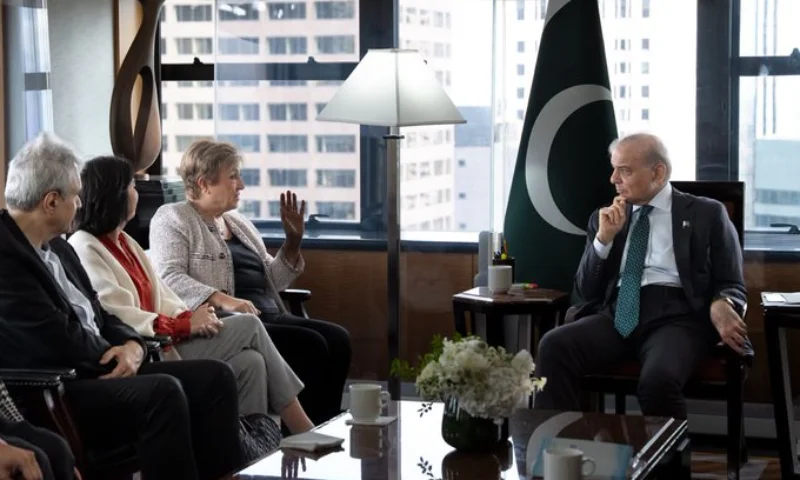
Prime Minister Shehbaz Sharif met IMF Managing Director Kristalina Georgieva in New York as the lender began Pakistan’s next programme review. Their discussions focused on economic reforms, recovery and protecting vulnerable households. The meeting took place on the sidelines of the 81st United Nations General Assembly. An IMF mission started talks with Pakistani authorities the same day. Those discussions cover the $7 billion Extended Fund Facility (EFF) and the Resilience and Sustainability Facility (RSF). Georgieva later acknowledged Pakistan’s progress in a post on X. “Strong implementation has helped preserve stability, restore confidence and regain market access. Continued reforms will help lift growth & improve people’s lives.” Shehbaz pledges continued economic reforms According to the Prime Minister’s Office, Shehbaz thanked the IMF for its continued support for Pakistan’s economy. He reaffirmed his government’s commitment to successfully implementing the IMF-supported reform programme. He particularly appreciated Georgieva’s personal role in strengthening Pakistan’s constructive partnership with the lender. Read More: IMF Imposes Rs1.73 Trillion Fuel Levy Target on Pakistan Shehbaz reiterated the government’s ownership of the economic reform agenda and its determination to maintain momentum. He pledged further structural measures to strengthen the economy and lay the foundations for sustainable, inclusive growth. The prime minister said Pakistan was moving from macroeconomic stabilisation towards recovery despite regional conflict and external inflationary pressures. He credited prudent fiscal and monetary policies for supporting that transition. Tariff changes, revenue and privatisation in focus Shehbaz highlighted stronger fiscal discipline, improved external buffers and growing investor confidence during the meeting. He cited the National Tariff Regime, enhanced domestic revenue mobilisation and progress on privatisation as examples of Pakistan’s reform efforts. He also stressed that the government would protect vulnerable groups while maintaining economic reforms. According to the Prime Minister’s Office, Georgieva praised Pakistan’s performance under the IMF programme. She also acknowledged that the government’s stabilisation efforts were delivering tangible results. I had the opportunity to meet with Prime Minister @CMShehbaz on the margins of #UNGA to discuss Pakistan’s reforms. Strong implementation has helped preserve stability, restore confidence & regain market access. Continued reforms will help lift growth & improve people’s lives. pic.twitter.com/jiELSQysYw — Kristalina Georgieva (@KGeorgieva) September 23, 2026 Both leaders discussed the forthcoming programme review and continued cooperation on reforms, economic resilience and sustainable growth. Deputy Prime Minister and Foreign Minister Senator Mohammad Ishaq Dar and Finance Minister Muhammad Aurangzeb attended the meeting. Adviser on Privatisation Muhammad Ali, Special Assistant to the Prime Minister Tariq Fatemi and other senior officials also participated. IMF review follows May funding approval The talks follow the IMF Executive Board’s completion of Pakistan’s third EFF review and second RSF review on May 8, 2026. That decision unlocked approximately $1.1 billion under the EFF and $220 million under the RSF. It brought total disbursements under both arrangements to about $4.8 billion. Read More: Pakistan, IMF Review Budget Strategy as Govt Signals Tax Relief The IMF approved Pakistan’s 37-month EFF arrangement on September 25, 2024. Its priorities include rebuilding reserves, broadening the tax base, reforming state-owned enterprises and improving energy sector finances. The lender subsequently approved the approximately $1.4 billion RSF arrangement in May 2025. That facility supports measures to reduce Pakistan’s exposure to natural disasters and strengthen climate resilience.
