


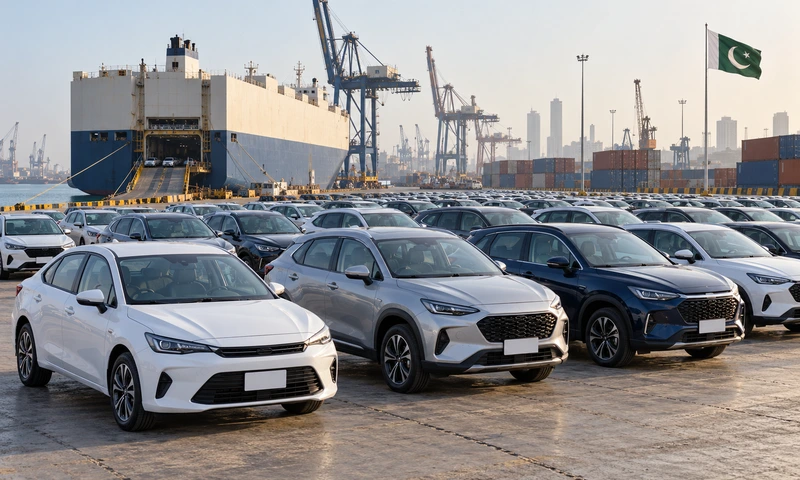
Pakistan’s new and used car imports climbed to $81.4 million in July-August 2026 as new entrants brought in vehicles ahead of local assembly. The increase has renewed concerns among domestic parts manufacturers about production demand and employment.
Figures attributed to the Pakistan Bureau of Statistics put imports at $59 million in the corresponding period last year.
The supplied report describes the increase as 36 percent. However, the stated dollar values imply growth of approximately 38 percent, leaving a discrepancy in the reported figures.
Used car arrivals rise after baggage scheme ends
The government abolished the personal baggage scheme for used vehicle imports in January. It also introduced mandatory pre-shipment inspections for vehicles entering through the gift and transfer of residence schemes.
Indus Motor Company’s FY26 annual report recorded approximately 38,000 used vehicle imports, down from 42,000 in FY25, according to the report.
However, former Pakistan Association of Automotive Parts and Accessories Manufacturers chairman Aamir Allawala said vendors remained concerned about continuing arrivals. He said they believed used car dealers were still arranging imports through different schemes.
Allawala cited 48 used vehicle imports in May, followed by 843 in June, 1,938 in July and 1,445 in August. The gift scheme accounted for most arrivals during June, July and August.
He put combined used car imports for July and August at around 3,200 units. The individual monthly figures he cited, however, total 3,383 vehicles.
Chinese vehicle imports draw vendors’ attention
Allawala said leading Chinese companies were importing between 1,500 and 2,000 new energy vehicles each month.
The arrivals come as new market entrants introduce vehicles before starting local assembly. Vendors argue that the impact on domestic manufacturing extends beyond used cars to new, fully imported models.
Allawala said several locally assembled vehicles contained more than 50 percent locally produced content by value. He estimated that local content averaged approximately Rs1.5 million per vehicle.
He argued that completely built-up vehicle imports reduced demand for Pakistani auto parts, whether the imported vehicles were new or used. Lower demand also affected employment across the vendor industry, he said.
Allawala urged the government to prioritise job creation and preservation of Pakistan’s industrial base.
January rules also restrict vehicle transfers
The Ministry of Commerce’s SRO 61(I)/2026, dated January 15, provides additional context for the changes governing overseas Pakistanis’ vehicle imports.
The notification removed personal baggage provisions from the Import Policy Order. It also barred transfers of vehicles imported under gift or transfer of residence schemes for one year after importation.
The changes retained these two schemes while tightening their conditions, rather than ending vehicle imports through them.
The latest figures highlight vendors’ concern that continued imports could limit demand for locally manufactured components. Their argument centres on how much value Pakistan retains through domestic assembly and parts production as new brands expand.

























