
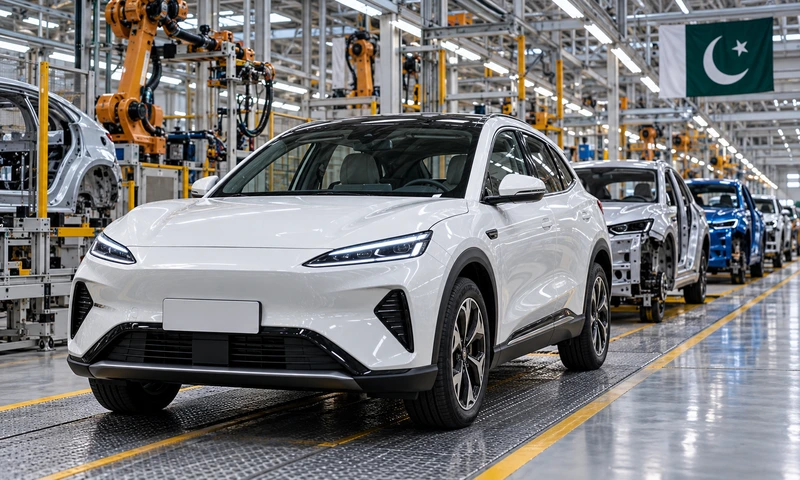
BYD’s vehicle manufacturing plant in Pakistan is expected to begin operations by mid-December 2026, according to a Topline Securities research note. Management aims to achieve initial sales of 1,000 to 1,500 vehicles per month as production increases. The October 20 note followed Hub Power Company’s annual general meeting. It outlined plans for local sourcing, additional models and expansion in Pakistan’s automotive market. The project will move BYD’s Pakistan business towards domestic assembly after its initial reliance on imported vehicles. Local sourcing to follow imported inputs The plant will initially depend entirely on imported raw materials and components. However, management plans to increase local sourcing gradually as the manufacturing operation develops. Its long-term objective is to source up to 80% of production inputs locally. Management expects greater localisation to improve cost competitiveness and reduce dependence on imports. Read More: BYD Hits 10,000 Vehicles in Pakistan Before Local Assembly Begins The report does not specify a deadline for achieving that target. It also does not identify which components local suppliers would produce first. The initial monthly sales objective represents management’s commercial target as operations expand, rather than the plant’s maximum production capacity. An initial capacity of 25,000 vehicles annually on a double shift was previously reported. In July 2025, BYD Pakistan executive Danish Khaliq said construction had started that April near Karachi. More models planned for Pakistan Management intends to introduce additional BYD models in phases, prioritising vehicle segments with the strongest potential for substantial sales volumes. It also sees changing purchasing habits as an opportunity. Younger buyers increasingly appear willing to replace vehicles sooner than the traditional ownership cycle of five to 10 years. Management believes competitive pricing and product quality could help BYD gain market share as its local presence expands. However, the latest report does not disclose the next models or their launch dates. It also provides no prices for locally assembled vehicles. BYD entered Pakistan through a partnership with Mega Motor Company, associated with Hub Power Holdings. The partnership began introducing the Chinese automaker’s new-energy vehicles locally in 2024. Customer deliveries of the initial models started in 2025. The manufacturing project now aims to support the transition from imported vehicles towards domestic production. Power arrangements support factory rollout K-Electric and Mega Motor Company signed a memorandum of understanding in January 2026 for a dedicated electricity connection serving the manufacturing operation. The agreement envisages an initial 5-megawatt connection, with provision to increase capacity to 7.5 megawatts as requirements grow. Read More: Pakistan’s EV Industry Set for Major Shift as BYD Factory Nears Launch The mid-December expectation provides a more specific target within management’s broader end-2026 launch window. Separately, Business Recorder reported that HUBCO management denied a plant delay at the annual general meeting and reiterated that year-end target. For buyers, the announcement establishes production and sales ambitions but leaves important commercial details unresolved. Management has yet to announce the locally assembled lineup, delivery schedule or any resulting price changes.
Bank of Punjab Leads Rs17bn Deal for Islamabad Hospital With UK Affiliation
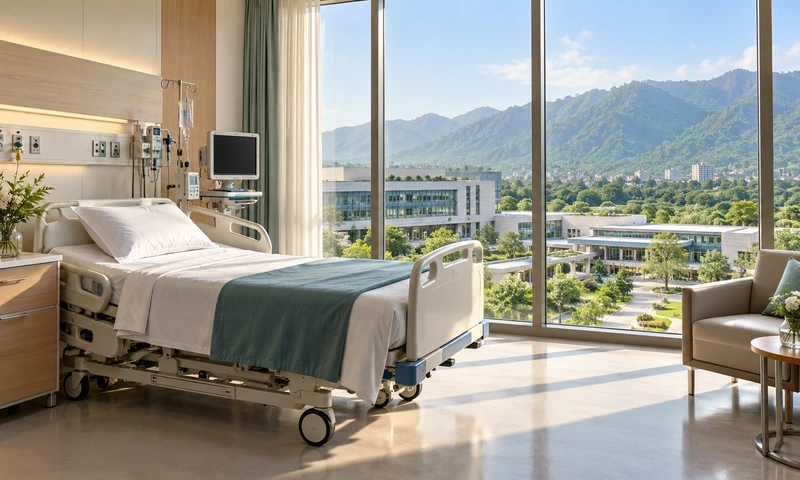
The Bank of Punjab has led a Rs17 billion syndicated Islamic financing facility for Novacare Hospitals to develop a 250-bed hospital in Islamabad. The financing will also support a feeder clinic, bringing together six financial institutions for the healthcare project. According to the bank, sponsors will contribute Rs11.5 billion in equity towards the estimated Rs28.5 billion project cost. BOP has committed Rs5.8 billion, representing approximately one-third of the syndicated facility. The bank announced financial close at a signing ceremony attended by the project’s sponsors, management and participating institutions. Six institutions back hospital financing BOP structured the facility as intercreditor agent and joint mandated lead adviser and arranger. United Bank Limited and Habib Bank Limited joined as joint mandated lead advisers and arrangers. Pak China Investment Company Limited served as co-arranger. PAIR Investment Company Limited and Pak Libya Holding Company Limited participated as financiers. BOP described the transaction as Pakistan’s first greenfield hospital project financed through a syndicated Islamic project finance facility. Read More: Pakistan IMF-World Bank Meetings: 5 Key Takeaways President and Chief Executive Zafar Masud said the framework could make long-term capital more accessible for future healthcare projects. “Healthcare touches every one of us,” Masud said at the ceremony. He emphasised the importance of completing construction and commissioning so the hospital could begin serving patients. Novacare Chief Executive Hans Kedzierski thanked the participating institutions. He said the hospital aims to deliver international healthcare standards, with patient care and empathy central to its approach. Islamabad hospital plans specialist services The hospital project sits in DHA Phase V, Islamabad. Novacare’s affiliation with Imperial College Healthcare NHS Trust will support clinical standards, staff development and hospital planning. The British High Commission says the hospital plans comprehensive care across 28 clinical specialties. These include cardiology, oncology, orthopaedics, neurology and maternal health. Read More: Pakistan to Chair World Bank, IMF Boards in 2027 An International Finance Corporation project disclosure provides further details of the development. It identifies Novacare as a wholly owned subsidiary of Maple Leaf Cement Factory Limited. According to that disclosure, construction began in July 2024. Phase one plans include 250 beds, 11 operating theatres and 80 outpatient clinics. The planned services also cover paediatrics, emergency and trauma care, laboratory testing and diagnostic imaging. UK affiliation supports training and patient care Imperial’s role includes specialist advice on staffing, training and hospital planning, according to the British High Commission. The arrangement offers Novacare clinicians opportunities to observe multidisciplinary meetings and obtain second opinions from UK specialists. It also provides for training aligned with NHS protocols. Doctors may refer complex cases to Imperial’s private facilities in London. The Trust will reinvest affiliation fees into its NHS services. The IFC disclosure identifies Andalus Holdings as responsible for project development, financial structuring, construction and hospital operations. The bank’s announcement focuses on financing the hospital and feeder clinic. It does not specify patient charges or an exact opening date.

He Hoped to Marry Her, but the Woman in the Videos Was AI
A Brazilian bricklayer sold his belongings and travelled more than 1,900 kilometres to meet a woman he hoped to marry. After reaching his destination, he discovered that she was an artificial intelligence-generated character. Edimar Rocha Martins, 49, left Imperatriz in Maranhão for Belo Horizonte, the capital of Minas Gerais. Brazilian outlets put the journey at approximately 2,100 kilometres. He believed the woman behind a popular social media profile would offer him companionship and a new life on a farm. Farm videos promise a fresh start The profile featured Jéssica Oliveira, also known as Jéssica Fazendeira, and reportedly attracted more than 300,000 TikTok followers. Its videos portrayed a woman living on a farm and looking for a partner. She offered the prospect of accommodation and financial security. Martins told local broadcaster TV Mirante that he believed the woman was real. He sold his possessions to finance the bus trip on October 9 and arrived two days later. Read More: AI Fraud Boom: Fake Insurance Claims Are Getting Harder to Detect “I sold all my things, I got rid of everything,” Martins said, according to the English translation published by Hindustan Times. Once in Belo Horizonte, he searched for the woman and showed her photographs to people, asking whether they recognised her. Nobody could help him find her. He eventually approached a local radio station, where journalists explained that the woman did not exist. Account operator denies private contact The person behind the profile subsequently acknowledged that Jéssica was an AI-generated character and denied communicating directly with Martins. Folha de S.Paulo reported that the account published a video denying private conversations or any personal invitation to Belo Horizonte. It described the profile’s purpose as generating engagement for sales. That account conflicts with Martins’ belief that he had received messages and invitations from a prospective partner. The available reporting does not establish who, if anyone, communicated privately with him. His belief in a relationship therefore remains distinct from the operator’s account. Martins also described the loneliness he experienced after his mother’s death. CNN Brasil reported that he viewed the woman in the videos as a chance to start again. City helps him return Without enough money to travel home, Martins sought assistance. Belo Horizonte’s municipal migrant support service provided food, shelter and a bus ticket. Rádio Itatiaia later reported that he left Belo Horizonte on October 13, initially heading towards Tocantins. He became unwell during the journey and received medical attention. He then continued to Imperatriz, arriving on October 15 and staying with his sister. Read More: How Visa and Mastercard Want to Make AI Shopping Safer In an October 16 update, Martins thanked those who helped him. He told Itatiaia he wanted to return to Belo Horizonte in 2027 to visit friends. Following the publicity, Belo Horizonte’s city administration warned residents about AI-generated images, videos and conversations. CNN Brasil reported on October 14 that civil police had not received a formal complaint about the case at that time.
Pakistan Used Car Imports: PAAPAM Claims Rs60bn Loss
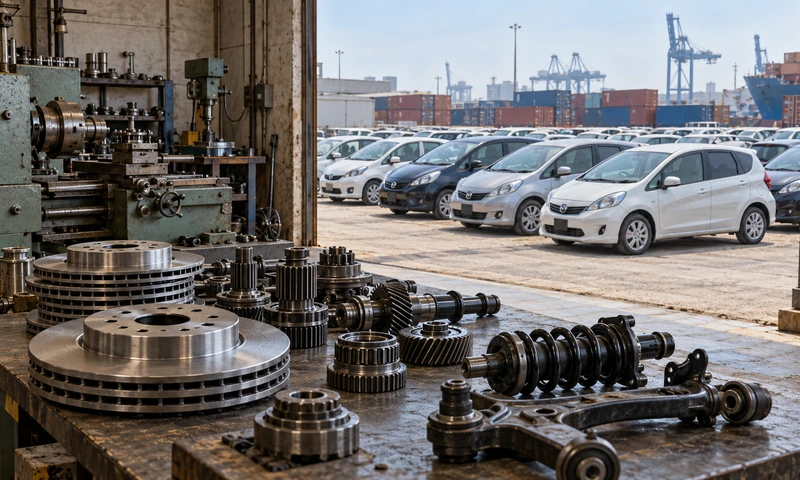
Pakistan’s used car import policy has cost domestic parts manufacturers over Rs60 billion and more than 40,000 jobs, a PAAPAM leader claims. Shehryar Qadir, senior vice chairman of the Pakistan Association of Automotive Parts and Accessories Manufacturers, criticised the policy in a June 19 PakWheels interview. His comments concerned the proposed Auto Policy 2026-31 and plans to gradually reduce completely built unit (CBU) import duties over five years. Manufacturers challenge import competition “No automobile manufacturing country in the world allows used car imports,” Qadir said. “They work to strengthen their local manufacturers as well as part manufacturing industries.” That sweeping claim has exceptions. Britain permits vehicle imports subject to registration, taxation and applicable safety and environmental requirements. Read More: Pakistan Announces Relief for Used Car Imports, What It Means Qadir advocated cascading tariffs, with raw materials attracting lower duties than semi-knocked-down and completely knocked-down kits, followed by finished vehicles. “To safeguard their local industries, a cascading tariff is maintained whereby raw materials fall under the lowest tariff slab and CBU units in the highest slab with a reasonable differential that allows the local industry to operate. India, Thailand, Vietnam, and Indonesia all do this,” he said. “In Pakistan, it is absurd that imported used cars are actually made to compete with new locally manufactured vehicles. This is not a competition or a level playing field.” Industry cites revenue and employment losses “Imported used cars took up 25% of local market share last year, which is unheard of,” Qadir said. “This caused a loss of over Rs. 60 billion to the local auto parts manufacturers as locally manufactured vehicles were replaced with used imported vehicles.” “It also resulted in over 40,000 job losses in the local industry. This is not called healthy competition.” These figures represent PAAPAM’s estimates. The supplied report provides no independent verification or detailed methodology. Safety rules and foreign exchange concerns Qadir contrasted ministry and Engineering Development Board oversight of domestic manufacturers with alleged historical screening gaps for used imports. “Especially when Pakistan is a signatory to the UNECE WP.29 safety and environmental standards, which the MoIP has implemented on all locally manufactured vehicles, whereas imported used vehicles had no safety or environmental standards applicable to them, which is completely illogical.” Pakistan joined the relevant UN vehicle regulations agreement in 2020. Its September 2025 commercial import framework explicitly required safety and environmental compliance. Read More: Punjab Car Fitness Rules: Exemptions, Age Limits and Fees Qadir also alleged resistance to enforcement: “Now, when the ministry has imposed these conditions on imported used vehicles, the corrupt mafia involved in this trade has gone up in arms against the ministry with false & baseless allegations through the senate.” The supplied report offers no independent substantiation of that allegation or response from those criticised. Qadir argued that imports also strain foreign exchange reserves. “Pakistan is not a country that can afford the luxury of free imports,” he said. “We simply do not have the foreign exchange reserves available for this. The local parts manufacturing industry alone provides import substitution of about $1.5 billion annually.”
SIM Swap Fraud: Two Pakistani MNAs Lose Rs3.5 Million
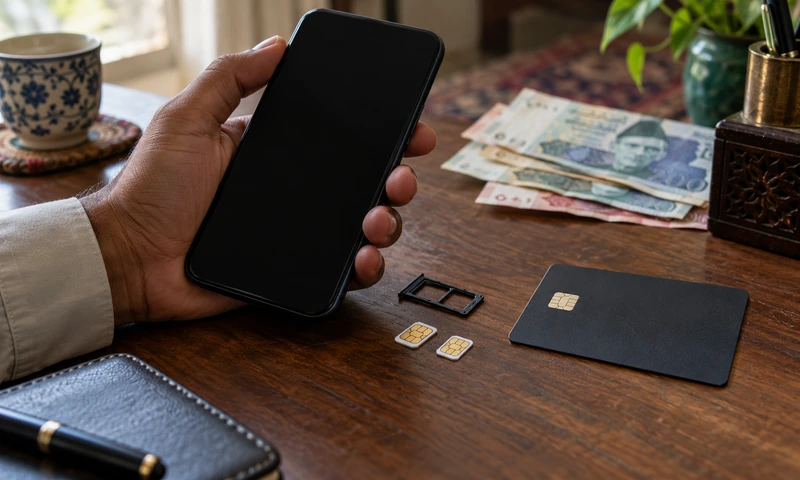
Two National Assembly members lost Rs3.5 million to SIM swap fraud after criminals obtained duplicate connections and accessed their bank accounts. A Karachi businessman lost another Rs8.5 million in a similar case. An investigation by The News linked the thefts to weaknesses in biometric verification and suspected misuse of banking information. The cases have renewed scrutiny of safeguards across Pakistan’s telecom and banking sectors. Duplicate SIM leaves lawmaker disconnected MQM lawmaker Farhan Chishti discovered his phone had stopped working after landing at Islamabad airport on January 12. He initially suspected a network problem. However, a service centre informed him that someone had obtained a duplicate SIM against his number from Karachi’s Malir area. Read More: NCCIA Raids Two Karachi Call Centres Over Alleged US Credit Card Fraud Fraudsters registered him for online banking and transferred Rs1.5 million into mule accounts across South Punjab and Sindh. Chishti had never used electronic banking channels, according to the investigation. Another MNA, Shaharyar Mahar, lost Rs2 million in a separate incident. Karachi businessman Sunny Kumar suffered a larger loss. Someone obtained a duplicate SIM in his name at a retail outlet in Dhabeji, Thatta, on September 29, 2025. Criminals subsequently withdrew Rs8.5 million from his account. Bank insider emerges in investigation Investigators found that a bank officer in Mardan had accessed Kumar’s account before the duplicate SIM’s issuance. The officer had accessed around 30 accounts, with suspected fraud linked to those accounts reaching approximately Rs25 million. The Pakistan Telecommunication Authority imposed fines of Rs77.8 million each in the Chishti and Kumar cases, totalling Rs155.6 million. The operator argued that a third party had deceived its retailer. PTA rejected that explanation, citing Regulation 4(4) of the Subscribers Regulations, which places responsibility for SIM sales on operators. According to the investigation, authorities ordered banks to reimburse victims but imposed no further action against them. Kumar recovered his money. Investigators believe criminals harvest biometric information in bulk from leaked databases and misuse it to obtain connections. Authorities seek stronger identity checks The wider problem also reached the National Assembly’s interior committee in September, before publication of the investigation. PTA Chairman Hafeezur Rehman acknowledged that fraudsters were bypassing biometric safeguards. He said criminals obtained fingerprint data from locations including airports, passport offices and driving licence centres. Authorities had blocked 18.2 million illegal SIMs over roughly two and a half years, officials told lawmakers. Read More: AI Fraud Boom: Fake Insurance Claims Are Getting Harder to Detect The National Cyber Crime Investigation Agency reported recovering 195 active SIMs and 81 ATM cards from scammers. “They are exploiting gaps to carry out their activities,” NCCIA Director Irfanullah Khan told the committee. Joint operations covered 110 facilities, produced 171 arrests and recovered data belonging to approximately 600,000 people. Authorities also blocked 29,000 illegal SIMs during those operations. The committee directed the Interior Ministry to coordinate with SBP, PTA, NCCIA and telecom operators on legislative and technical safeguards. Minister of State for Interior Talal Chaudhry also proposed facial and iris recognition to strengthen identity checks.
Pakistan’s Economy Hits $450.4 Billion, Yet Growth Falls Short
Pakistan revised FY26 GDP growth to 3.65% from 3.70% on Monday, missing its original 4% target as industry and services weakened. The National Accounts Committee approved the figures at its 118th meeting at the Pakistan Bureau of Statistics. The government had lowered its growth estimate to 3.70% in May. Agriculture growth rose to 3.50% from 2.89%. Industry slowed to 3.34% from 3.51%, while services eased to 3.81% from 4.09%. Fourth-quarter growth slows to 2% Quarterly growth estimates now stand at 3.89%, 4.31% and 4.42% for July-March, against earlier estimates of 3.92%, 4.05% and 3.99%. Growth then slowed to 2% in the fourth quarter. The committee cut FY25 growth to 3.11% from 3.18% and incorporated revised import data covering FY21-FY25. Pakistan’s economy reached $450.4 billion, or Rs126.4 trillion, with services, industry and livestock supporting expansion. Dawn reported FY25 GDP at $410.96 billion; other reports citing the revised accounts put it at $408.7 billion. Read More: Government Puts Private Sector in Charge of Pakistan’s Economy Per capita income increased to $1,896 from $1,824, using population projections based on the 2023 census. Earlier readings stood at $1,551 in FY23, $1,766 in FY22 and $1,677 in FY21. Dawn described the latest income figure as “lowest in region”, highlighting inflation’s pressure on purchasing power, savings and investment. The revised growth broadly matches lender forecasts: IMF 3.6%, World Bank and Asian Development Bank 3.7%, and SBP close to 3.7%. Crops improve, manufacturing loses pace Important crops grew 1.59%, against 0.65% previously, following stronger wheat and maize output. Other crops improved to 4.28% from 2.43%. Production increased for pulses (6.3%), fruits (1.3%), tomatoes (44%), oilseeds (5.4%) and green fodder (2.4%). Higher fodder inputs lowered livestock growth to 3.71% from 3.75%. Forestry and fishing grew 10.80% and 1.39%, respectively. Mining growth improved to 1.52% from 0.38%, supported by gas (2.84%), crude oil (5.12%) and coal (2.73%). Read More: Pakistan’s Economy Gets Fresh Boost as Exports Rise 13% in July However, large-scale manufacturing growth, measured through the Quantum Index of Manufacturing, fell to 5.01% from 6.11%. Gainers included automobiles (57.77%), transport equipment (42.36%), furniture (22.69%), football manufacturing (16.62%) and electrical equipment (14.25%). Rubber products grew 14.19%, tobacco 12.61%, petroleum products 9.7% and food 7.03%. Pharmaceuticals contracted 8.87%, iron and steel 7.84%, chemicals 2.53% and leather products 1.95%. Electricity also contracted 10.24%. Construction growth strengthened to 6.30% from 5.73%, reflecting higher public-sector construction expenditure. Services show uneven performance All services constituents recorded positive growth, although several lost momentum. Wholesale and retail trade growth dropped to 2.37% from 3.71% as manufacturing and imports weakened. Transport and storage improved to 3.23% from 2.31%, following upward revisions in railways, water transport and aviation. Information and communication accelerated to 9.53% from 7.52%. Finance and insurance improved to 4.23% from 0.32%, supported by insurance activity. Public administration and social security slowed to 5.67% from 8.54%. Education eased to 4.17% from 5.23%, while health and social work slowed to 5.52% from 6.85%.