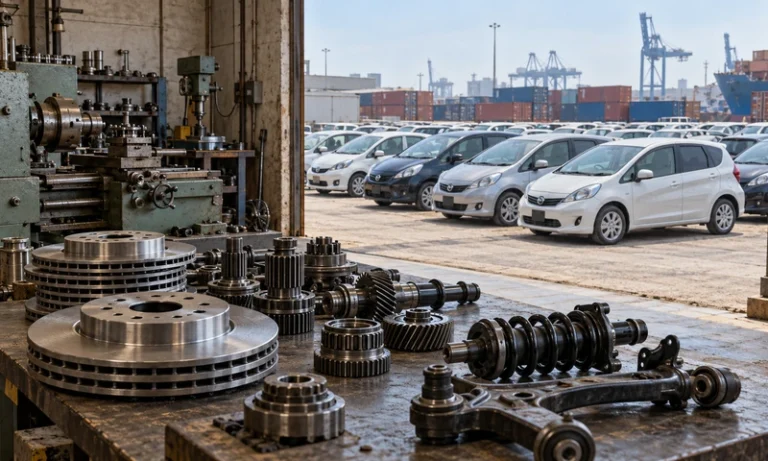


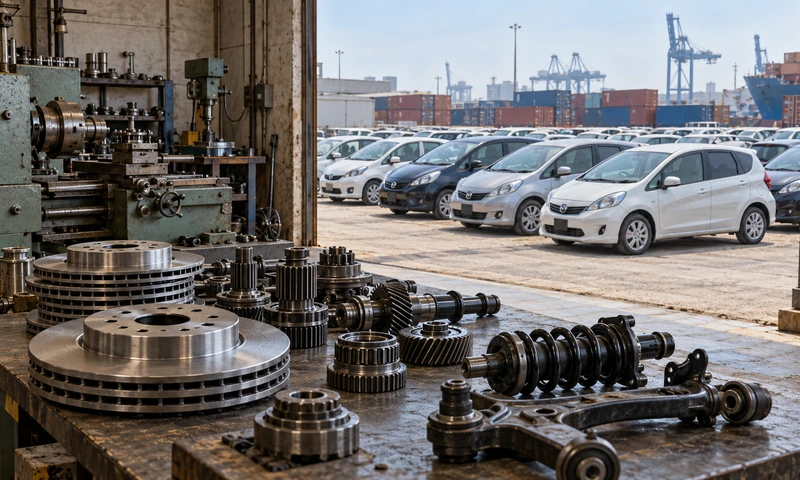
Pakistan’s used car import policy has cost domestic parts manufacturers over Rs60 billion and more than 40,000 jobs, a PAAPAM leader claims.
Shehryar Qadir, senior vice chairman of the Pakistan Association of Automotive Parts and Accessories Manufacturers, criticised the policy in a June 19 PakWheels interview.
His comments concerned the proposed Auto Policy 2026-31 and plans to gradually reduce completely built unit (CBU) import duties over five years.
Manufacturers challenge import competition
“No automobile manufacturing country in the world allows used car imports,” Qadir said. “They work to strengthen their local manufacturers as well as part manufacturing industries.”
That sweeping claim has exceptions. Britain permits vehicle imports subject to registration, taxation and applicable safety and environmental requirements.
Read More: Pakistan Announces Relief for Used Car Imports, What It Means
Qadir advocated cascading tariffs, with raw materials attracting lower duties than semi-knocked-down and completely knocked-down kits, followed by finished vehicles.
“To safeguard their local industries, a cascading tariff is maintained whereby raw materials fall under the lowest tariff slab and CBU units in the highest slab with a reasonable differential that allows the local industry to operate. India, Thailand, Vietnam, and Indonesia all do this,” he said.
“In Pakistan, it is absurd that imported used cars are actually made to compete with new locally manufactured vehicles. This is not a competition or a level playing field.”
Industry cites revenue and employment losses
“Imported used cars took up 25% of local market share last year, which is unheard of,” Qadir said.
“This caused a loss of over Rs. 60 billion to the local auto parts manufacturers as locally manufactured vehicles were replaced with used imported vehicles.”
“It also resulted in over 40,000 job losses in the local industry. This is not called healthy competition.”
These figures represent PAAPAM’s estimates. The supplied report provides no independent verification or detailed methodology.
Safety rules and foreign exchange concerns
Qadir contrasted ministry and Engineering Development Board oversight of domestic manufacturers with alleged historical screening gaps for used imports.
“Especially when Pakistan is a signatory to the UNECE WP.29 safety and environmental standards, which the MoIP has implemented on all locally manufactured vehicles, whereas imported used vehicles had no safety or environmental standards applicable to them, which is completely illogical.”
Pakistan joined the relevant UN vehicle regulations agreement in 2020. Its September 2025 commercial import framework explicitly required safety and environmental compliance.
Read More: Punjab Car Fitness Rules: Exemptions, Age Limits and Fees
Qadir also alleged resistance to enforcement:
“Now, when the ministry has imposed these conditions on imported used vehicles, the corrupt mafia involved in this trade has gone up in arms against the ministry with false & baseless allegations through the senate.”
The supplied report offers no independent substantiation of that allegation or response from those criticised.
Qadir argued that imports also strain foreign exchange reserves.
“Pakistan is not a country that can afford the luxury of free imports,” he said. “We simply do not have the foreign exchange reserves available for this. The local parts manufacturing industry alone provides import substitution of about $1.5 billion annually.”