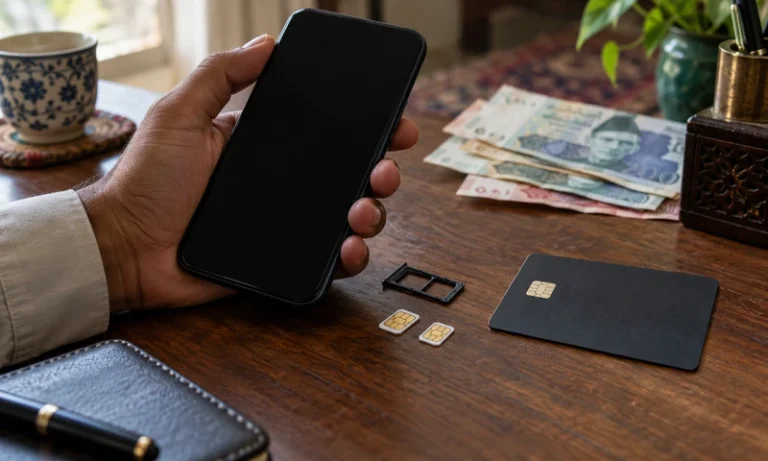
Two National Assembly members lost Rs3.5 million to SIM swap fraud after criminals obtained duplicate connections and accessed their bank accounts. A Karachi businessman lost another Rs8.5 million in a similar case.
An investigation by The News linked the thefts to weaknesses in biometric verification and suspected misuse of banking information. The cases have renewed scrutiny of safeguards across Pakistan’s telecom and banking sectors.
Duplicate SIM leaves lawmaker disconnected
MQM lawmaker Farhan Chishti discovered his phone had stopped working after landing at Islamabad airport on January 12. He initially suspected a network problem.
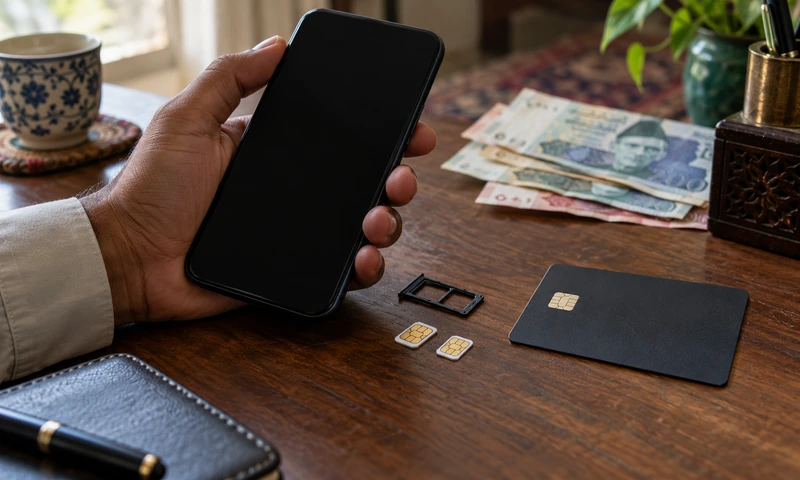
However, a service centre informed him that someone had obtained a duplicate SIM against his number from Karachi’s Malir area.
Read More: NCCIA Raids Two Karachi Call Centres Over Alleged US Credit Card Fraud
Fraudsters registered him for online banking and transferred Rs1.5 million into mule accounts across South Punjab and Sindh. Chishti had never used electronic banking channels, according to the investigation.
Another MNA, Shaharyar Mahar, lost Rs2 million in a separate incident.
Karachi businessman Sunny Kumar suffered a larger loss. Someone obtained a duplicate SIM in his name at a retail outlet in Dhabeji, Thatta, on September 29, 2025. Criminals subsequently withdrew Rs8.5 million from his account.
Bank insider emerges in investigation
Investigators found that a bank officer in Mardan had accessed Kumar’s account before the duplicate SIM’s issuance.
The officer had accessed around 30 accounts, with suspected fraud linked to those accounts reaching approximately Rs25 million.
The Pakistan Telecommunication Authority imposed fines of Rs77.8 million each in the Chishti and Kumar cases, totalling Rs155.6 million.
The operator argued that a third party had deceived its retailer. PTA rejected that explanation, citing Regulation 4(4) of the Subscribers Regulations, which places responsibility for SIM sales on operators.
According to the investigation, authorities ordered banks to reimburse victims but imposed no further action against them. Kumar recovered his money.
Investigators believe criminals harvest biometric information in bulk from leaked databases and misuse it to obtain connections.
Authorities seek stronger identity checks
The wider problem also reached the National Assembly’s interior committee in September, before publication of the investigation.
PTA Chairman Hafeezur Rehman acknowledged that fraudsters were bypassing biometric safeguards. He said criminals obtained fingerprint data from locations including airports, passport offices and driving licence centres.
Authorities had blocked 18.2 million illegal SIMs over roughly two and a half years, officials told lawmakers.
Read More: AI Fraud Boom: Fake Insurance Claims Are Getting Harder to Detect
The National Cyber Crime Investigation Agency reported recovering 195 active SIMs and 81 ATM cards from scammers.
“They are exploiting gaps to carry out their activities,” NCCIA Director Irfanullah Khan told the committee.
Joint operations covered 110 facilities, produced 171 arrests and recovered data belonging to approximately 600,000 people. Authorities also blocked 29,000 illegal SIMs during those operations.
The committee directed the Interior Ministry to coordinate with SBP, PTA, NCCIA and telecom operators on legislative and technical safeguards.
Minister of State for Interior Talal Chaudhry also proposed facial and iris recognition to strengthen identity checks.