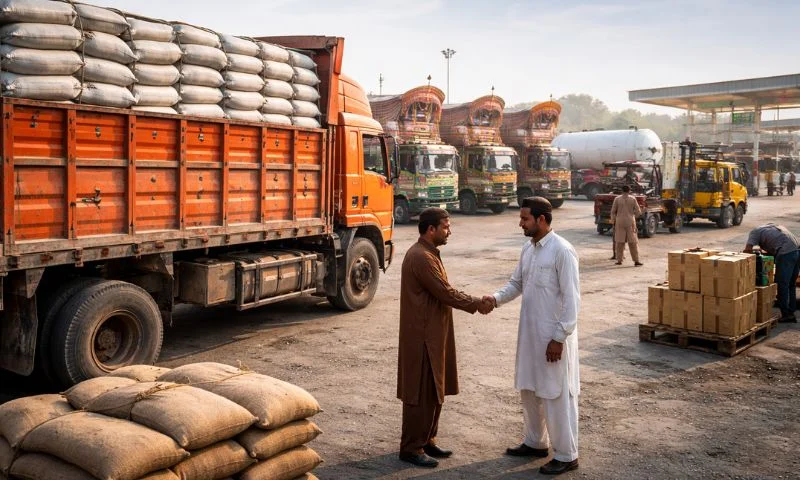
Transporters across Pakistan have announced a sharp 40 percent reduction in freight charges following a significant drop in fuel prices, a move expected to ease inflationary pressures and bring down the cost of essential goods in the coming weeks.
The decision was confirmed by the Pakistan Goods Transport Alliance, whose leadership said the reduction would be implemented immediately as a direct response to the government’s recent cut in petroleum prices.
Prime Minister Shehbaz Sharif earlier approved a reduction in fuel prices, with petrol lowered by Rs11.83 per litre and diesel seeing a much larger cut of Rs134.81 per litre.
Since diesel powers the bulk of trucks and goods carriers across the country, the steep reduction has significantly lowered operating costs for transporters, prompting them to pass on the benefit to businesses and consumers.
Immediate impact on transport and markets
Industry representatives described the move as a rare instance of cost savings being transferred quickly to the wider economy.
Malik Shahzad Awan, president of the alliance, welcomed the government’s decision and expressed hope that further reductions in fuel prices would continue to support the sector.
Economists say freight costs are a key component of pricing across supply chains, affecting everything from vegetables and flour to construction materials and manufactured goods.
“A substantial fall in freight charges should put downward pressure on prices of daily necessities,” industry observers noted, although they cautioned that the effect may take time to fully materialise in retail markets.
Typically, analysts estimate that it takes between two to six weeks for reductions in transport costs to reflect in consumer prices, depending on existing inventory levels and supply contracts.
A reversal of recent price surge
The development marks a sharp reversal from earlier this month, when transport fares and freight rates surged by up to 40 percent following a spike in fuel prices, contributing to higher costs of food and construction materials nationwide.
That earlier increase had intensified inflationary pressures, with businesses passing on higher transport costs directly to consumers.
The latest reduction, therefore, is being seen as a much-needed correction, particularly for households already struggling with rising living expenses.
Calls for broader policy support
Despite the relief, transporters have urged the government to introduce additional measures to sustain lower costs, including reductions in toll taxes and withholding taxes.
Industry leaders argue that without broader fiscal relief, the benefits of lower fuel prices may not be fully realised or sustained over time.
Economists also point out that while the freight cut is significant, other inflation drivers such as electricity tariffs, exchange rate fluctuations and global commodity prices could offset some of the gains.
Still, the move has been welcomed by traders and consumers alike, with expectations that reduced transport costs will help stabilise prices and improve market sentiment.
As Pakistan navigates economic uncertainty and fluctuating global energy prices, the transport sector’s response highlights how quickly fuel price changes can ripple through the broader economy, shaping both business costs and household expenses.