A new generation of clean cooking technology is gaining attention as a plug-and-play hydrogen stove capable of turning water into fuel promises to reduce dependence on traditional energy sources such as liquefied petroleum gas.
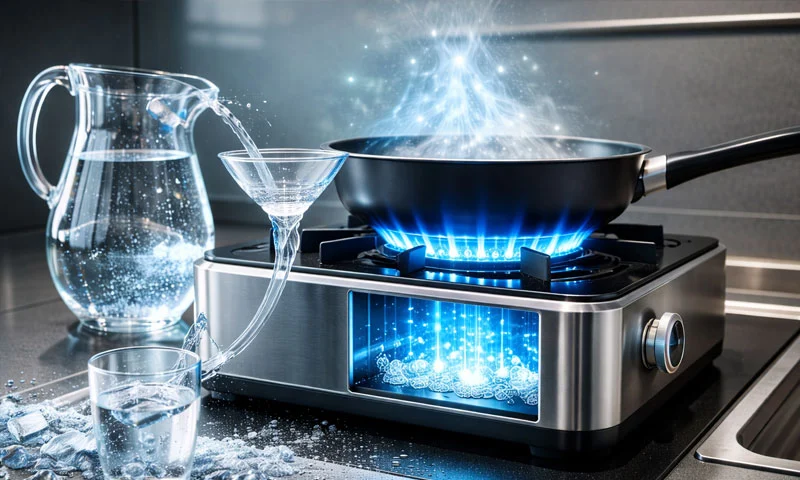
Developed by clean-tech firm Greenvize, the compact system produces hydrogen on demand by splitting water into hydrogen and oxygen through electrolysis. The hydrogen is then immediately used as a cooking fuel, eliminating the need for external gas supply or storage infrastructure.
The innovation comes at a time when rising energy costs and supply disruptions have pushed countries to explore alternative and sustainable energy solutions, particularly in regions heavily reliant on imported fuels.
Cooking powered by water and electricity
The hydrogen stove requires only about 100 milliliters of distilled or reverse osmosis water and roughly one kilowatt-hour of electricity to operate. This is enough to provide up to six hours of continuous cooking, according to the developers.
The system integrates a proton exchange membrane electrolyzer directly into the cooking unit, allowing users to generate hydrogen instantly by simply turning a knob. The fuel is consumed in real time, which removes the need for large storage tanks or distribution networks.
“In its standard configuration, the electrolyzer is directly coupled with the cooking unit, with hydrogen generated and consumed in real time,” said Sanjeev Choudhary, co-founder of Greenvize.
The only emission from the stove is water vapor, while oxygen released during the process can improve surrounding air quality, making it an environmentally friendly alternative to fossil fuel-based cooking.
Efficiency and real-world applications
Developers say the system offers advantages over conventional induction cooktops, which can consume up to two kilowatts per burner. Over extended use, the hydrogen-based system is designed to use less electricity by converting it into a burnable fuel that delivers consistent heat.
The stove can also be paired with rooftop solar panels, allowing it to function in off-grid or low-power environments. This makes it particularly relevant for rural areas, community kitchens and commercial settings where reliable energy access is a challenge.
While the base model is priced at around $1,100, higher-capacity versions are available for larger kitchens, indicating that the technology is currently targeted more toward commercial and institutional use rather than individual households.
Experts say hydrogen-based cooking systems could play a role in the broader transition toward green hydrogen, which is increasingly being explored as a clean energy source across industries.
However, challenges remain, including cost, scalability and the efficiency of hydrogen production. Some critics also question whether converting electricity into hydrogen and then back into heat is more efficient than direct electric cooking.
Despite these concerns, the plug-and-play design and minimal infrastructure requirements position the technology as a potential alternative in areas where gas supply is limited or unreliable.
As countries continue to push for cleaner energy solutions, innovations such as hydrogen cooking systems highlight how emerging technologies could reshape everyday utilities like cooking while contributing to global sustainability goals.