A new investigation has revealed that several fashion brands operating in Lahore are failing to address serious labour rights violations within Pakistan’s textile recycling sector, exposing a troubling gap between sustainability claims and ground realities.
The findings, based on research conducted by the Labour Education Foundation in collaboration with European rights group Arisa, show that while brands increasingly promote recycled textiles as environmentally responsible, they have limited oversight of the workers handling textile waste in their supply chains.
The report examined around 20 major fashion brands and found that most lacked visibility into wages, working conditions, and labour protections in recycling operations tied to their production networks.
Harsh conditions behind “green fashion”
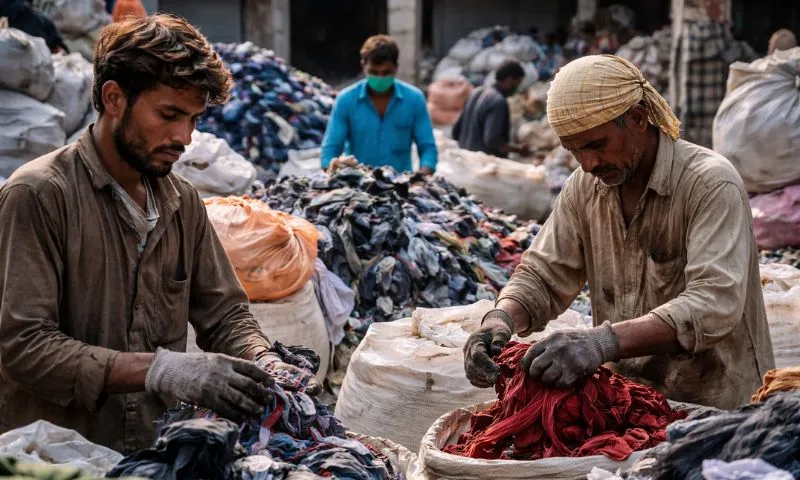
Field research conducted in Pakistan’s key recycling hubs, including Faisalabad and Karachi, uncovered difficult working conditions in what remains a largely informal sector.
Workers reported shifts stretching up to 12 hours a day, often seven days a week, without formal employment contracts or job security. Payments were frequently made in cash, with earnings described as insufficient to meet basic living costs.
“Research finds workers being subjected to exploitative wages, poor workplace environment,” the report stated.
The findings highlight a stark contradiction. While global fashion companies increasingly market recycled fabrics as part of a circular economy, the labour that underpins this system remains largely unregulated and overlooked.
Experts say the issue is not limited to recycling alone. Broader studies on Pakistan’s garment sector have repeatedly flagged excessive overtime, wage theft and lack of social protections, particularly in supply chains linked to international brands.
Read More: From Waste to Wonder: Beaconhouse Students Redefine Sustainable Art
Structural gaps in oversight
Analysts note that the informal nature of Pakistan’s textile recycling industry makes accountability difficult. The sector operates with minimal regulation, fragmented supply chains, and weak traceability, allowing brands to distance themselves from labour practices further down the chain.
Pakistan is among the world’s leading textile exporters, with millions of workers employed across production and recycling segments. Yet labour costs remain low, and enforcement of workplace protections continues to lag behind legal standards.
The growing push toward sustainability has added another layer of complexity. Recycling has been promoted as a solution to the fashion industry’s massive waste problem, with Pakistan itself handling significant volumes of textile waste, both domestic and imported.
However, rights groups argue that environmental gains should not come at the expense of worker welfare.
Read More: Hydrogen stove uses water to deliver hours of clean cooking power
Calls for accountability
Labour advocates are urging both local and international brands to take greater responsibility for conditions across their supply chains, including the recycling stage, which has historically received less scrutiny.
They are also calling for stronger government oversight, improved labour inspections, and formalisation of the recycling sector to ensure minimum wage compliance and workplace safety.
The report underscores a growing challenge for the global fashion industry, as consumers increasingly demand both sustainable and ethically produced clothing.
Without meaningful reforms, experts warn that the push for “green fashion” risks masking deeper inequalities faced by workers who remain invisible in the supply chain.