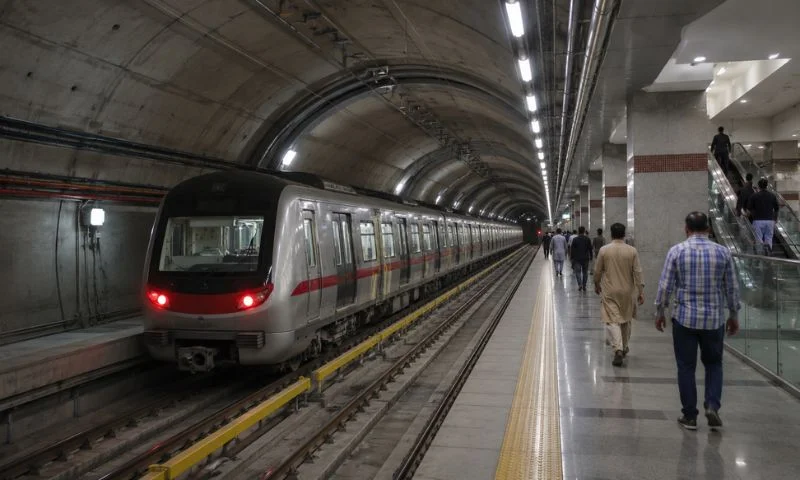
The Pakistan Academy of Engineering (PAE) has proposed an underground railway network for Karachi as a long term solution to the city’s worsening traffic congestion and rising transportation demand. The proposal aims to introduce a modern mass transit system that can serve millions of daily commuters while improving the efficiency of urban mobility.
PAE presented the proposal during a symposium on underground transportation. Engineers, urban planners and transport experts from Pakistan, the United States and China attended the event. They discussed international best practices and explored how underground rail systems have transformed major cities around the world.
Participants stressed that an underground railway could play a key role in modernising Karachi’s public transport network. They said the project would help the city manage rapid population growth while offering faster, safer and more reliable travel.
Experts at the symposium said “an underground rail network could play a vital role in transforming Karachi’s public transport infrastructure.”
Karachi, Pakistan’s commercial hub, is home to more than 20 million people. The city faces severe traffic congestion because of rapid urbanisation, increasing vehicle ownership and an overstretched public transport system. Long commuting hours and traffic bottlenecks have become a daily challenge for residents and businesses alike.
Two priority routes identified for the first phase
As part of the proposed first phase, engineers recommended two priority underground corridors. The first route would connect Numaish Chowrangi with Merewether Tower. The second would run from FTC on Sharea Faisal to I.I. Chundrigar Road and Tower.
The proposed routes pass through some of Karachi’s busiest commercial and business districts. Experts believe these corridors can reduce pressure on heavily congested roads while improving connectivity between major economic centres.
According to the proposal, the underground railway would significantly reduce travel times, ease traffic congestion, lower carbon emissions and improve connectivity across the city. It would also complement Karachi’s existing transport network instead of replacing it.
The project aligns with global urban transport trends. Cities such as London, Beijing, Shanghai, Istanbul and Delhi have expanded underground rail systems to accommodate growing populations and reduce dependence on private vehicles.
Experts see long term economic and environmental benefits
Transport specialists believe the proposal could support Karachi’s long term economic growth if authorities move towards detailed feasibility studies and implementation planning. Faster commuting can improve business productivity, attract investment and lower fuel consumption across the city.
The experts also highlighted environmental benefits. Reduced road congestion can lower vehicle emissions and improve air quality in one of Pakistan’s most densely populated cities. Better public transport can also encourage more people to shift from private cars to mass transit.
Karachi already operates the Green Line and Red Line Bus Rapid Transit projects, but transport experts say the city’s expanding population requires additional high capacity systems. They believe an underground railway could become a cornerstone of Karachi’s future transport strategy if the proposal receives government support and funding.