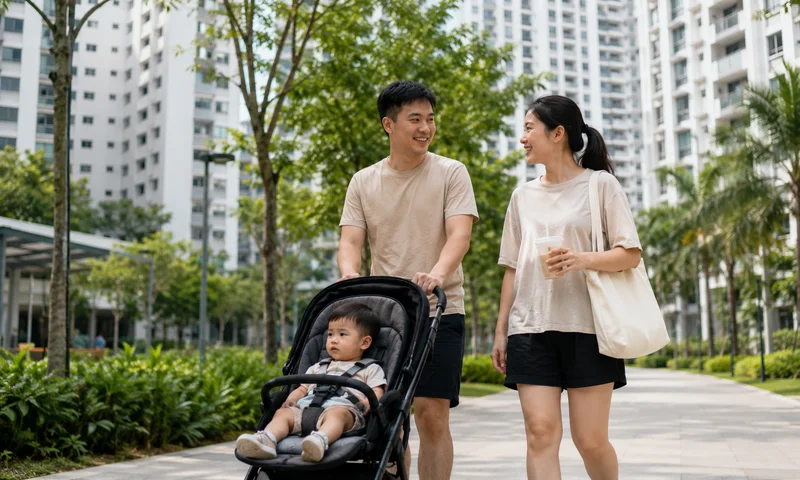
Singapore has announced a major financial support package worth almost S$70,000, or about US$55,150, for every citizen child. The move aims to ease parenting costs as the country confronts a record-low birth rate and a rapidly ageing population.
Prime Minister Lawrence Wong announced the measures during his National Day Rally speech on Sunday. He said the government wanted to “make it easier for Singaporeans who want children to start and raise a family”.
“We want every family to know: if you choose to have children, the government will stand with you,” Wong said. “We will provide more support and over more years.”
Singapore Child Support Package Explained
Under the new structure, each Singaporean child will receive almost S$70,000 in direct financial assistance from birth to age 17.
The SG Child Support Package will provide up to S$62,000 per child, regardless of birth order. It includes a S$10,000 cash gift during the first year and S$32,000 in Child Credits. The government will pay these credits in annual S$2,000 instalments from ages one to 16.
Read More: Punjab Workers’ Children Can Now Study Free at GCU Lahore
Parents will also receive a S$5,000 Child Development Account grant and up to S$5,000 in government matching contributions. At age 17, the child will receive S$10,000 in a post-secondary education account. Existing MediSave and Edusave support takes the overall value close to S$70,000.
Singapore will also expand childcare leave, particularly for larger families. The government plans to cover more of the related costs for employers. Families with children will also receive greater support when buying their first subsidised home.
Fertility Rate Falls to 0.87
Singapore’s fertility rate fell to a record 0.87 children per woman in 2025. It stood at 0.97 in 2024 and now sits close to South Korea’s rate of 0.8. Demographers generally consider 2.1 children per woman necessary to maintain a stable population without immigration.
The country has also entered the “super-aged” category, with more than 21 percent of citizens aged 65 or above. By 2030, one in four Singaporeans may be in that age group.
Wong acknowledged that financial support alone might not reverse the trend. Many young adults delay parenthood while seeking financial security, while others decide not to have children.
“Despite all that we do to support families, we have to be realistic: our total fertility rate is still likely to fall far short of replacement,” he said.
Immigration Will Continue at a Measured Pace
Wong said Singapore would continue using immigration to supplement domestic population growth.
“If we relied only on births, our citizen population will shrink. We would age more rapidly. And there would be fewer younger Singaporeans to support a growing number of seniors.”
Read More: Why England Is Banning Energy Drinks for Children
In 2024, Singapore granted permanent residence to 35,264 people and citizenship to 22,766 people. However, immigration remains sensitive because residents link it with higher property prices and increased job competition.
Wong said newcomers would arrive “at a measured and sustainable pace” so that “Singaporeans remain the majority in our own country”.
“All this means that in the coming years our overall population will grow more slowly. And our labour force will grow more slowly too,” he added.