
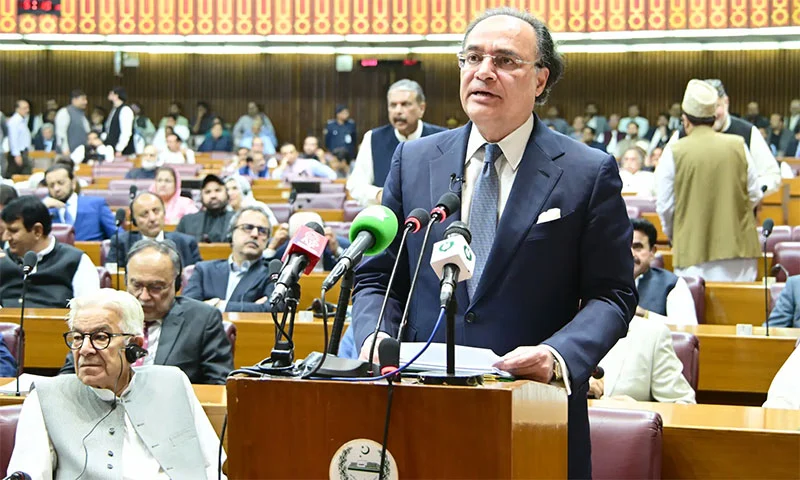
Finance Minister Muhammad Aurangzeb on Friday unveiled a Rs18.8 trillion federal budget for fiscal year 2026-27, outlining tax relief for salaried individuals, increased defence spending, higher development allocations and a roadmap aimed at sustaining economic recovery. The budget was presented in the National Assembly amid noisy protests by opposition lawmakers. The session began nearly two hours behind schedule and witnessed slogan chanting, desk thumping and brief confrontations between treasury and opposition members. Presenting his third budget, Aurangzeb said Pakistan’s international standing had improved significantly over the past year. “This budget is being presented at a time when Pakistan has achieved the status in the eyes of its people and the world as a country whose voice is listened to, and whose friendship is desired.” He added that Pakistan’s military and diplomatic achievements had strengthened its global position. “Today, the world acknowledges Pakistan’s defensive strength,” he said, while also highlighting Pakistan’s role in efforts aimed at securing peace between Iran and the United States. Key Economic Targets for FY2026-27 The government has projected economic growth of 4 percent for the next fiscal year, while average inflation is expected to remain at 8.2 percent. The fiscal deficit is projected at 3.6 percent of GDP, while the primary surplus is targeted at 2 percent. Tax revenue has been estimated at Rs15.264 trillion, representing an increase of 17.6 percent compared to the outgoing fiscal year’s collection target. The finance minister said the tax-to-GDP ratio had increased from 8.5 percent to 10.3 percent during the last three years. He also highlighted improvements in fiscal stability. “Our fiscal deficit in June 2023 was 7.8% of GDP, which by the end of the current financial year will come down to 4%.” Defence and Debt Servicing Receive Largest Allocations The largest share of the budget has been allocated for debt servicing. Aurangzeb said Rs8.045 trillion has been earmarked for markup payments, accounting for the biggest component of federal expenditure. Defence spending has been allocated Rs3 trillion. The finance minister described defence as the government’s highest priority, citing regional security challenges and Pakistan’s strategic interests. Meanwhile, civil administration expenditures have been budgeted at Rs1.071 trillion. The government has also allocated Rs1.169 trillion for pension payments and Rs1.091 trillion for subsidies, mainly in the power sector. Rs1 Trillion Development Programme Approved The federal Public Sector Development Programme has been allocated Rs1 trillion for FY2026-27. After including investments by state-owned enterprises and public-private partnership projects, the total development envelope rises to Rs1.451 trillion. Aurangzeb said provincial development programmes would receive Rs2.224 trillion, while Rs451 billion has been allocated for investments through state-owned enterprises. “This allocation reflects the new distribution of responsibilities following the 18th Constitutional Amendment.” He said more than 60 percent of federal development spending would focus on transport, communications, water resources and energy projects. Affordable Housing and Urban Development The government has allocated Rs54.6 billion for sustainable urban development and housing initiatives. According to the finance minister, the allocation will support the construction of 150,000 affordable and climate-resilient housing units across Pakistan. The programme also includes digital master plans for 10 major cities and improvements in urban water supply and sanitation infrastructure. Tax Relief for Salaried Class The government proposed income tax reductions for salaried individuals across four income slabs. For annual incomes between Rs2.2 million and Rs3.2 million, the tax rate would decline from 23 percent to 20 percent. For those earning between Rs3.2 million and Rs4.1 million, the rate would fall from 30 percent to 25 percent. Taxpayers earning between Rs4.1 million and Rs5.6 million would see their rate reduced from 35 percent to 29 percent. Meanwhile, individuals earning between Rs5.6 million and Rs7 million would pay 32 percent instead of 35 percent. The government also proposed removing taxes on sanitary pads and contraceptives. Government employees will receive a 7 percent salary increase, while pensions will rise by 7 percent. The minimum wage has also been proposed to increase by 10 percent. Super Tax Reduced for Businesses Aurangzeb announced the abolition of the super tax for businesses earning between Rs150 million and Rs500 million annually. For companies earning more than Rs500 million, the super tax rate would be reduced from 10 percent to 8 percent. The government said the measure aims to improve the business environment and encourage investment. Health, Education and Technology Spending Increased The federal government has allocated Rs25.1 billion for health projects. These include expansion of tertiary healthcare facilities, cancer treatment centres, emergency care services and disease surveillance systems. For higher education, Rs46 billion has been allocated, up from Rs34.9 billion last year. The allocation includes scholarships, research initiatives, digital learning programmes and AI-based education systems. Additionally, Rs3.6 billion has been earmarked for science and technology projects. Energy Reforms and LNG Savings The finance minister said Pakistan’s energy sector was undergoing its deepest reform phase. He said the government saved more than Rs143 billion in electricity subsidies during FY2025-26. According to Aurangzeb, Pakistan also achieved net-zero accumulation of circular debt in the power sector. He added that renegotiated LNG agreements with Qatar and Italy would reduce 35 LNG cargoes in 2026, generating savings of approximately $1.2 billion in foreign exchange. Economy Shows Signs of Recovery Aurangzeb said Pakistan’s economy grew by 3.7 percent during the outgoing fiscal year. Large-scale manufacturing expanded by 6.1 percent, while the services sector grew by 4.1 percent. The country’s economic size reached $452 billion, while per capita income increased to $1,901 from $1,751 a year earlier. Foreign exchange reserves rose to $17 billion compared to $4 billion three years ago. The finance minister also said remittances are expected to exceed a record $41 billion by the end of FY2025-26. Corporate Sector, Stock Market and Privatisation The finance minister said corporate profits increased by 22 percent during January-March 2026 compared to the same period last year. The Pakistan Stock Exchange also witnessed a record increase in investor participation. According to Aurangzeb, 11 initial public offerings were launched this year, the highest number in two decades. More than 39,000 new
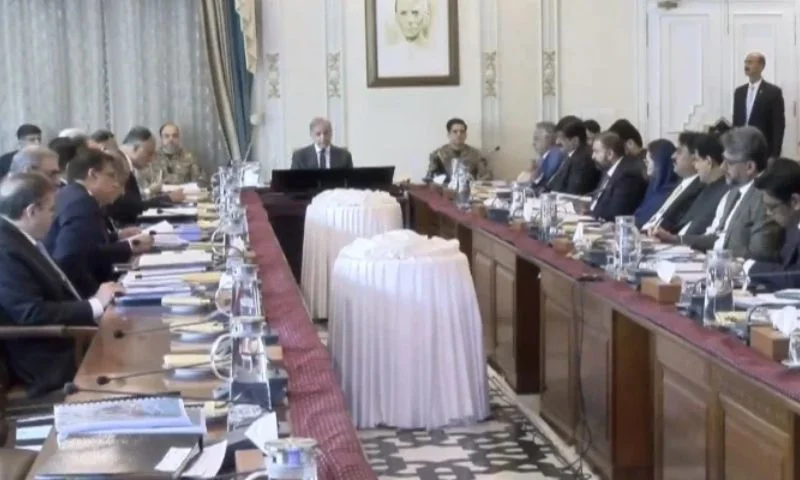
PM Praises Provinces as NEC Finalises Major Economic Decisions
Prime Minister Shehbaz Sharif on Wednesday praised the provinces for their cooperation in tackling Pakistan’s economic challenges, saying collective efforts helped the country achieve macroeconomic stability despite significant domestic and external pressures. Addressing a meeting of the National Economic Council (NEC), the prime minister said the federal and provincial governments worked together to steer the economy through a difficult period. “We made decisions in the best interest of Pakistan as a team,” PM Shehbaz told participants. The NEC meeting came just days before the presentation of the federal budget for fiscal year 2026-27 and focused on development priorities, economic targets and resource allocation. The prime minister acknowledged that Pakistan faced major economic challenges during the past year. However, he said coordinated policymaking helped improve stability and maintain progress under the country’s reform agenda. Referring to recent regional tensions, PM Shehbaz noted that oil prices had risen sharply in international markets. He said the government provided Rs128 billion in relief to consumers through fuel price measures. The premier recalled that long queues formed at petrol stations in several countries during recent disruptions. In contrast, he said timely government action ensured uninterrupted fuel supplies in Pakistan. The prime minister also highlighted ongoing consultations with provincial governments regarding the upcoming budget. “The federal government was in consultations with provinces for several weeks for the upcoming budget,” he said. According to PM Shehbaz, discussions focused on generating additional resources and improving fiscal management. He stressed that maximising available resources remains a key government objective. He also reaffirmed the government’s commitment to the International Monetary Fund programme. “We tried to meet the expectations of the people,” he said, adding that progress became possible through collective teamwork. NEC Approves Development Budget and Growth Targets During the meeting, Planning Minister Ahsan Iqbal briefed participants on budget proposals and key economic indicators. He announced that the NEC had approved a Rs3.66 trillion national development budget and set a 4 percent GDP growth target for fiscal year 2026-27. The approved development package includes Rs1 trillion for the federal Public Sector Development Programme, Rs2.21 trillion for provincial development spending and Rs451 billion for federal enterprises. Read More: Budget 2026-27: Why Punjab and Sindh Agreed to Major Spending Cuts Furthermore, the council approved a proposal to hold NEC meetings every quarter to improve policy coordination and implementation. Iqbal said Pakistan’s development spending had fallen significantly over recent years. “The Public Sector Development Programme has declined from 2.6% of GDP in 2018 to 0.6%,” he said. He argued that Pakistan now requires a “development emergency” to accelerate growth and improve competitiveness. Defence, Exports and Water Security Remain Key Priorities The planning minister warned that debt servicing continues to place pressure on public finances. According to Iqbal, nearly 74 percent of government revenue currently goes toward debt servicing. “We will have to increase foreign investment and exports,” he said while discussing long-term economic priorities. The NEC approved sector-specific targets for the next fiscal year. Agriculture growth has been set at 3.6 percent, industrial growth at 4.5 percent and services sector growth at 4.2 percent. Meanwhile, policymakers fixed the inflation target at 8.2 percent. Iqbal also identified water security as Pakistan’s foremost national priority. The minister confirmed that the federal PSDP would focus on ongoing projects. Therefore, authorities will not launch new schemes except those related to education and defence. PM Shehbaz also emphasised that ensuring adequate resources for national defence remains a key priority. He said Pakistan requires additional funding to address terrorism-related challenges and strengthen national security. The NEC’s decisions will now shape the government’s development agenda as Pakistan prepares to unveil its budget and pursue growth targets for the next fiscal year.
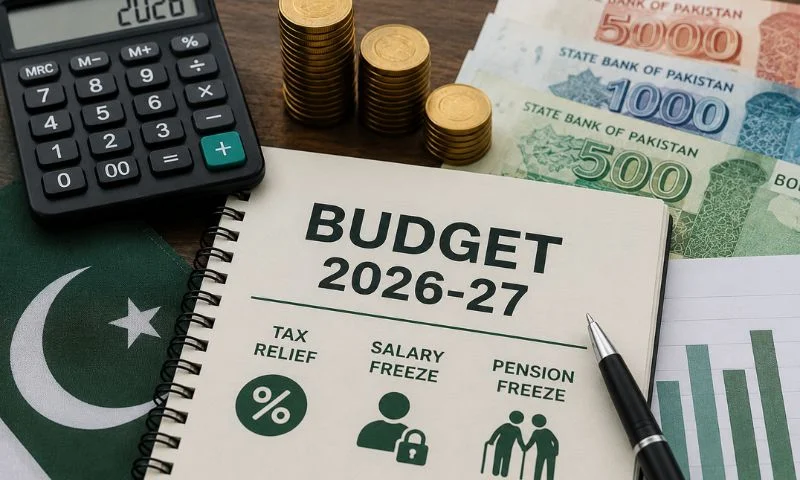
Why Pakistan’s Salaried Class Could Finally Get Relief in Budget 2026
Pakistan’s government is considering income tax relief for salaried individuals in the upcoming federal budget while likely keeping salaries and pensions unchanged. The proposal aims to ease pressure on salaried workers without sharply increasing government spending. Officials familiar with the discussions said Finance Minister Muhammad Aurangzeb wants to lower income tax rates and possibly raise the taxable income threshold. The move comes as salaried individuals continue to shoulder one of the country’s heaviest tax burdens. Officials said the government wants to acknowledge the contribution of salaried workers compared to sectors such as real estate, wholesale trade, retail and exports. An official involved in the budget talks said, “There is no reason to increase salaries if it pushes employees into higher taxable income brackets, leaving government employees with little to no increase in take-home pay.” The official said lower tax rates and higher taxable income thresholds would still benefit government employees financially. “Government employees would not be worse off financially. That is neither the idea nor the intention,” the official added. IMF Talks and Fiscal Pressure The government plans to discuss the proposals with an IMF mission during budget consultations beginning on May 15. Pakistan remains under pressure to maintain fiscal discipline while trying to stabilize the economy. Officials said the government may also reduce development spending to control the fiscal deficit. Last year, salary and pension increases added more than Rs170 billion to the federal government’s expenditures. Provincial governments faced an even bigger financial impact. Officials now believe part of those savings could fund tax relief for salaried workers. Government salaries have increased by more than 60 percent during the past four years. Private sector wages, however, have largely remained stagnant despite rising inflation and weak economic growth. Pakistan’s inflation crisis sharply increased household expenses over the last two years. Food, fuel and utility prices have remained under pressure. Salaried Class Pays Record Taxes Official estimates show the salaried class paid more than Rs425 billion in taxes during the first nine months of the current fiscal year. That amount exceeded the real estate sector’s contribution of around Rs200bn. The figure also surpassed the combined tax revenue from wholesalers, retailers and exporters. Economists have repeatedly argued that Pakistan relies too heavily on documented salaried income while several sectors remain under-taxed. Meanwhile, the government has protected salary increases announced last month for employees working on Public Sector Development Programme projects. Authorities approved a 20 to 35 percent increase in minimum salaries for PSDP-funded employees starting July 1, 2026. Those employees had faced cuts of up to 28 percent in annual increments and 14 percent in maximum salaries under earlier revisions issued by the finance ministry. Pakistan is expected to announce the federal budget next month after IMF consultations and internal fiscal discussions conclude.
