

Copper prices around the world have been rising rapidly, driven by strong demand, concerns over future supply deficits, and growing investment interest in the metal as a critical component of electrification and clean energy infrastructure. Analysts now warn that copper could become much more expensive in the coming decade as production struggles to keep pace with demand. Benchmark copper futures hit multi-year highs on global exchanges in early 2026 as traders reacted to a weaker U.S. dollar and expectations of long-term demand growth tied to electric vehicles (EVs), renewable energy systems, and power grid expansion. Speculative buying and tighter market balances have also lifted price forecasts. Why Copper Demand Is Exploding Copper plays a central role in technologies fundamental to the energy transition. It is essential in electric motors, EV batteries and charging infrastructure, solar panels, wind turbines and modern power grids. Analysts at S&P Global project that global copper demand could rise about 50% by 2040, and deficits could widen without major new mining projects. According to the United States Geological Survey (USGS), copper’s end-use is heavily concentrated in: Building construction (about 42%) Electrical and electronic products (23%) Transportation equipment (18%) Other industrial and consumer products China remains by far the largest single consumer, accounting for a majority share of refined copper use globally, while major economies in Asia continue to absorb additional copper for infrastructure and industrial growth. Where the Largest Copper Reserves Are Chile and Peru dominate copper production and reserves globally, with Chile alone contributing around one-third of global production. Other major mining countries include the United States, the Democratic Republic of Congo and Australia. Pakistan’s Role: Reko Diq and Domestic Copper Reserves Pakistan is not just a consumer — it also holds some of the world’s largest undeveloped copper reserves. The Reko Diq project in the Chagai District of Balochistan is a globally significant copper-gold deposit, with estimated resources of approximately 5.9 billion tonnes of ore grading around 0.41% copper and large associated gold quantities. Once fully operational, Reko Diq is expected to produce 200,000 to 250,000 tons of copper annually in its initial phase, with potential expansion to produce up to 400,000 tons per year. The mine life is projected to span more than 40 years, with a total economic output exceeding $60 billion based on feasibility studies. Reko Diq is being developed jointly by Barrick Gold (50%), the Government of Pakistan (25%), and the Government of Balochistan (25%). Production is slated to begin as early as 2028, supported by international financing from institutions like the Asian Development Bank and the International Finance Corporation to help with infrastructure and sustainability efforts. If completed, Reko Diq will place Pakistan among the world’s key copper suppliers, attracting global industrial attention as nations seek to diversify sources of critical minerals. It could rank among the largest copper mines globally once fully operational. Challenges and Broader Impacts Despite its promise, the Reko Diq project faces challenges including historical legal disputes, infrastructure constraints, and environmental concerns, particularly regarding water usage in arid regions. Environmental advocates and local rights groups have called for strict oversight to ensure sustainable development that benefits local communities. For Pakistan, Reko Diq represents not just an economic opportunity but a chance to transform its mining sector and reduce reliance on imports for industrial metals. In a world rapidly shifting toward electrification and green technologies, copper’s strategic importance — and the value of reserves like Reko Diq — can hardly be overstated.
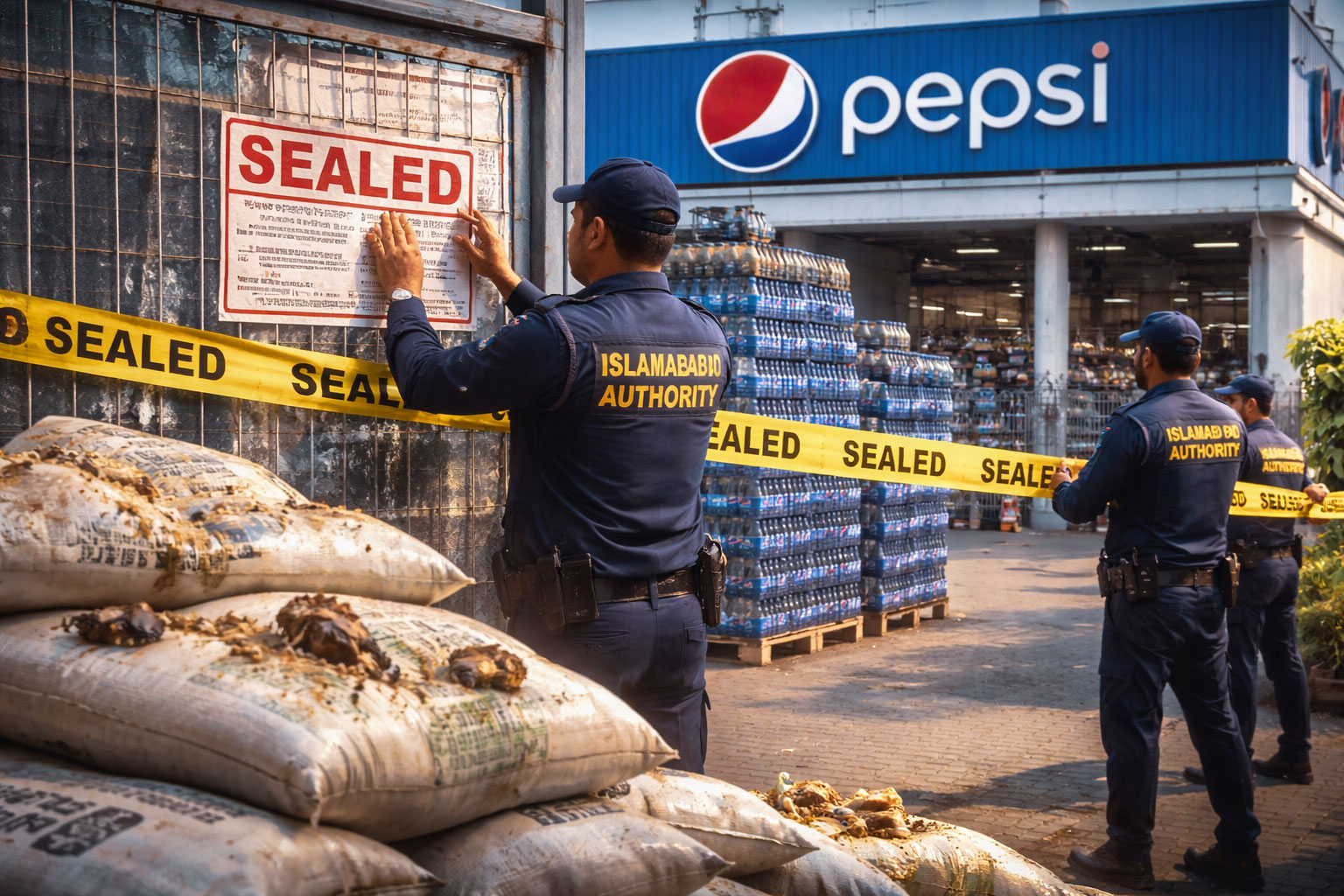
Fungus-Infested Sugar Sparks Shutdown of Pepsi Bottler Units in Islamabad
The Islamabad Food Authority has sealed two beverage manufacturing units in Islamabad after uncovering major food safety violations during an unannounced inspection. The action was taken against Haideri Beverages and Beverages Plus, both located in Humak Model Town, following a surprise raid carried out by the Islamabad Food Authority in coordination with the ICT Assistant Commissioner. The operation was launched after authorities received complaints regarding unsafe production practices. During the inspection, officials discovered expired sugar allegedly infested with fungus, which was reportedly being used in the production of beverages. The findings raised serious concerns about public health and consumer safety. According to the inspection report, authorities identified four major violations of food safety regulations. These included failure to comply with earlier directives issued by the Islamabad Food Authority, the presence of approximately 150 sugar bags with tampered expiry dates, cockroach infestation on sugar sacks, and improper storage of sugar directly on the floor, breaching hygiene standards. Food safety teams collected two separate sugar samples from the contaminated stock and sent them for laboratory testing to determine potential health risks. As a result of the violations, the authorities sealed a total of 54,874 sugar bags at both facilities and ordered an immediate suspension of all production, sales, and procurement activities until further notice. Officials said the value of the seized expired sugar alone runs into millions of rupees, underscoring the scale of the violation. The Islamabad Food Authority has reiterated its commitment to enforcing food safety laws and warned that strict action will be taken against any business found endangering public health.
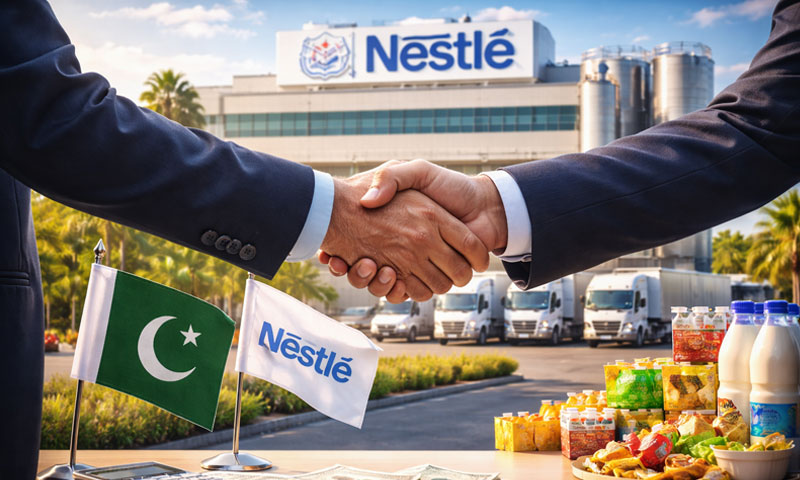
Nestle Reaffirms Long-Term Commitment to Pakistan with $60m Expansion Plan
Global food giant Nestle has announced a fresh $60 million investment in Pakistan, signalling a major expansion of its local operations and reaffirming its long-term commitment to the country. The announcement was made during a meeting between Finance Minister Muhammad Aurangzeb and Nestle executive vice president and CEO for Asia, Oceania and Africa Remy Ejel, held on the sidelines of the World Economic Forum annual meeting in Davos, according to a statement issued by the Ministry of Finance. The meeting took place during a high-level business roundtable chaired by Aurangzeb, which brought together chief executive officers and senior leaders from leading multinational corporations to discuss Pakistan’s reform agenda, investment climate, and long-term growth prospects. Nestlé Announces USD 60 Million Additional Investment in Pakistan at WEF Business Roundtable Federal Minister for Finance and Revenue, Senator Muhammad Aurangzeb, today chaired a high-level Business Roundtable on the sidelines of the World Economic Forum (WEF) Annual Meeting in… pic.twitter.com/NB5Vp3vOTK— Ministry of Finance, Government of Pakistan (@Financegovpk) January 22, 2026 According to the ministry, the roundtable was part of the government’s broader engagement with global investors aimed at improving policy predictability, accelerating economic formalisation, and promoting sustainable, export-oriented growth. “A key highlight of the discussion was the announcement by Remy Ejel of an additional investment of $60 million in Pakistan,” the statement said. “Nestle will undertake a robust expansion of its operations in the country, reaffirming its long-term commitment to Pakistan.” Ejel also revealed that Nestle plans to use Pakistan as a regional manufacturing and export hub, with the company set to export products to 26 countries from its Pakistani facilities. Expressing confidence in Pakistan’s economic outlook, he said Nestle expects strong growth in its local business in the coming years. The finance ministry noted that the announcement builds on recent engagements between Nestle and the government in Islamabad, where the company outlined a strategy focused on localisation, advanced manufacturing, sustainability, and agricultural transformation. Ejel highlighted that Pakistan’s large and youthful population, rising nutrition needs, and underdeveloped value-added food segments closely resemble growth patterns seen in Southeast Asian markets where Nestle has successfully expanded. Welcoming the announcement, Aurangzeb described the investment as a “strong vote of confidence” in Pakistan’s economic reforms and formalisation drive. He reaffirmed the government’s commitment to strengthening the tax ecosystem, ensuring policy consistency, and facilitating responsible long-term investment. The minister also underscored Pakistan’s potential in affordable nutrition, climate-resilient dairy, local sourcing, and export-oriented manufacturing, reiterating the government’s goal of positioning the country as a competitive base for regional production and global value chains.
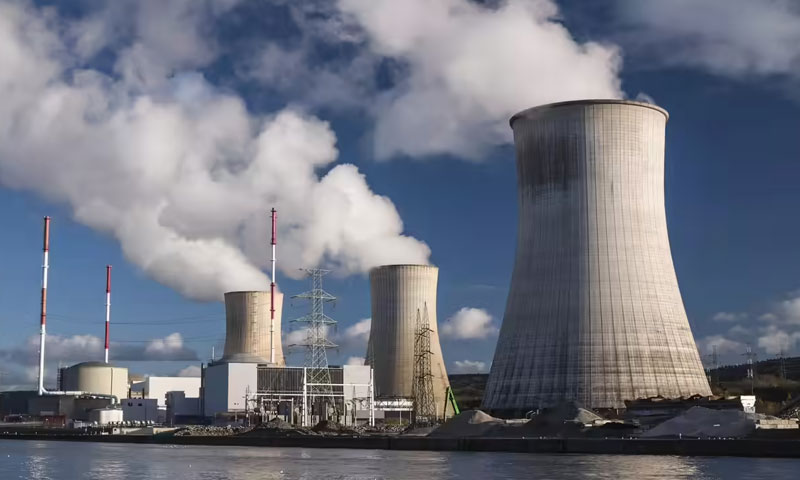
World’s biggest nuclear plant resumes operations in Japan after 13-year shutdown
Japan on Wednesday restarted the world’s largest nuclear power plant for the first time since the 2011 Fukushima disaster, a move that has reignited public anxiety and protests despite government assurances over safety. The restart of a reactor at the Kashiwazaki-Kariwa nuclear facility marks a significant milestone in Tokyo’s push to revive atomic energy after more than a decade of shutdowns following the country’s worst nuclear accident. The plant was brought back online at 7:02 pm local time, a spokesperson for Tokyo Electric Power Company (TEPCO) confirmed. Located in Niigata prefecture along the Sea of Japan coast, Kashiwazaki-Kariwa is the largest nuclear power complex in the world by potential generating capacity, although only one of its seven reactors has been restarted. The move follows approval by the regional governor last month, but public opinion in the area remains deeply divided. A survey conducted in September showed that around 60 per cent of residents oppose the restart, while just 37 per cent support it. On Tuesday, dozens of protesters — many of them elderly — gathered outside the plant in freezing conditions, voicing concerns over safety and evacuation plans. “It’s Tokyo’s electricity that is produced here, so why should the people of this region be put at risk?” said 73-year-old resident Yumiko Abe. “That makes no sense.” TEPCO said it would proceed cautiously, stressing that safety checks would continue even after the restart. The company pledged to “carefully verify the integrity of each facility and respond to any issues in an appropriate and transparent manner.” The Kashiwazaki-Kariwa facility was shut down in 2011 after a massive earthquake and tsunami triggered meltdowns at the Fukushima Daiichi Nuclear Power Plant, prompting Japan to suspend all nuclear reactors nationwide. Since then, only 14 reactors — mostly in western and southern Japan — have resumed operations under stringent safety regulations, with 13 currently running. Kashiwazaki-Kariwa is the first TEPCO-operated nuclear plant to restart since the Fukushima disaster. The utility also manages the crippled Fukushima Daiichi site, which remains under decommissioning — a process expected to take several decades. Opposition groups argue that serious risks remain. Residents point to the plant’s location near an active seismic fault line and recall a powerful earthquake that struck the area in 2007. Earlier this month, seven anti-nuclear groups submitted a petition signed by nearly 40,000 people to TEPCO and Japan’s Nuclear Regulation Authority, warning that evacuation during a major emergency would be nearly impossible. “I don’t think evacuation can realistically happen if something goes wrong,” said Chie Takakuwa, a 79-year-old resident of nearby Kariwa. Another protester, 81-year-old Keisuke Abe, said restarting the plant was “absolutely unacceptable” while Fukushima’s crisis remains unresolved. Although the facility has been upgraded with a 15-metre-high tsunami wall, elevated emergency power systems and other safeguards, critics remain wary. TEPCO has faced repeated criticism in recent years over safety lapses and data-handling issues, including a recent alarm failure during testing at the Kashiwazaki-Kariwa site. Japan’s renewed embrace of nuclear energy is driven by broader policy goals. Resource-poor Japan is seeking to cut its heavy dependence on imported fossil fuels, meet rising electricity demand — including from artificial intelligence technologies — and achieve carbon neutrality by 2050. Prime Minister Sanae Takaichi has publicly backed the expansion of nuclear power. In 2023, nearly 70 per cent of Japan’s electricity came from coal, gas and oil. Under a government-approved energy plan, that share is expected to fall to 30–40 per cent over the next 15 years, while nuclear power is projected to account for around 20 per cent of the country’s energy mix by 2040, up from about 8.5 per cent in fiscal year 2023–24.
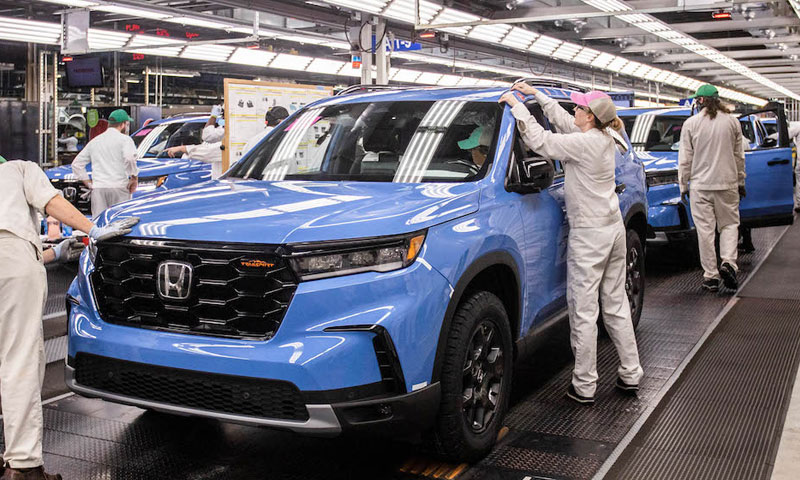
Honda’s China Plants Stay Offline as Semiconductor Supply Remains Unstable
Honda Motor Co. has announced an extended production halt at three of its joint-venture manufacturing plants in China, citing continued shortages of semiconductor chips. The facilities, operated in partnership with Guangzhou Automobile Group (GAC), will now remain idle until January 19, 2026, instead of resuming operations on January 5, according to Reuters. In a statement to Global Times, Honda described the extension as a short-term production adjustment, stressing that the impact on overall output would be “relatively control lable.” The automaker said it expects to make up for lost production later in the year and does not foresee delays in vehicle deliveries to customers. Ongoing chip supply pressures The move highlights the lingering strain on global automotive supply chains, where access to semiconductor chips remains uneven. While the most severe shortages seen during the peak of the COVID-19 pandemic have eased, automakers continue to face intermittent bottlenecks due to delivery delays, logistics disruptions, and uneven recovery among chip suppliers. Honda faced similar challenges earlier in 2025, when it was forced to scale back or temporarily suspend production at several North American plants. Industry analysts note that delays from major semiconductor manufacturers — including firms such as Nexperia — have affected multiple automakers, although Honda has not attributed the China halt to any single supplier. China’s role in Honda’s strategy China remains one of Honda’s most important global markets, with the Guangzhou joint-venture plants playing a key role in supplying vehicles for both domestic buyers and overseas markets. While the prolonged shutdown may temporarily widen the gap between planned and actual production volumes, Honda believes it can recover output once supply conditions stabilize. Longer-term industry response Automotive experts say the situation underscores the need for diversified chip sourcing, stronger supplier coordination, and more flexible production planning. Despite years of adaptation since the pandemic, the semiconductor supply chain remains vulnerable to disruptions — a challenge that continues to test automakers operating in highly competitive global markets. Honda’s decision reflects the delicate balance manufacturers must strike between managing supply constraints and meeting demand, even as the industry works toward more resilient long-term solutions.

A $1 Billion Citrus Opportunity Awaits Pakistan — But How Can It Be Achieved?
Pakistan’s citrus industry is emerging as a strong contender for major export-led growth, with the capacity to raise annual export earnings to $1 billion within the next six years by modernising production, introducing new citrus varieties, and expanding value-added processing. According to Shoaib Ahmed Basra, Member Board of Directors at the Pakistan Horticulture Export and Development Company (PHDEC) and chairman of its Citrus Export Sub-committee, industry assessments suggest the target is well within reach. He said growers are increasingly shifting towards seedless, early- and late-season citrus varieties, supported by improved orchard management and post-harvest handling practices. Pakistan has already demonstrated its export capability. Citrus exports reached nearly $250 million in 2021, a performance Basra described as evidence of the resilience and strength of local growers and exporters. He noted that adopting internationally preferred varieties would allow Pakistan to move into higher-value global markets, significantly lifting export volumes and returns. A key pillar of this growth strategy is diversification beyond Kinnow. Expanding into mandarins, tangerines, clementines, oranges, lemons, and grapefruit would allow Pakistan to supply international markets throughout the year, rather than being limited to a short seasonal window. Basra stressed that improving quality certification, traceability systems, clean nurseries, and access to imported germplasm would be critical in strengthening Pakistan’s competitiveness in premium markets. He also highlighted the importance of developing dedicated citrus clusters, particularly on virgin land in the Potohar region, to support export-focused, modern cultivation. While diversification is essential, Kinnow remains the backbone of the industry. Pakistan is expecting a record Kinnow harvest of around 2.8 million tonnes this season, almost double last year’s output. Basra said the surge presents a timely opportunity to expand value-added exports, helping farmers and exporters earn better margins. Processed citrus products—such as juices, concentrates, and packaged beverages—offer especially strong potential due to their longer shelf life and higher global demand. Pakistan already supplies fresh citrus by sea to markets across the Middle East, Indonesia, and the Philippines, while nearby Central Asian countries are becoming increasingly attractive due to proximity and rising consumption. Currently ranked as the world’s 18th-largest citrus exporter, Pakistan’s citrus sector accounts for nearly 30% of total fruit production. Kinnow alone represents about 85% of citrus output and roughly 80% of citrus exports, with production concentrated mainly in Punjab, particularly districts such as Sargodha, Sahiwal, Multan, and Khanewal. With Pakistan producing nearly 90% of the world’s Kinnow supply, the country holds a unique global advantage—one that can now be leveraged to build a more diversified, higher-value, and export-driven citrus economy.

Think Saudi Arabia Has the Most Oil? Here’s the Real Top 10 List
Fresh political upheaval in Venezuela has once again drawn global attention to a striking paradox: the country sitting on the largest confirmed oil reserves on Earth remains largely unable to turn that wealth into economic or energy power. Oil markets initially braced for disruption following the US removal of Venezuelan leader Nicolás Maduro. Analysts expected instability in Caracas to push fuel prices higher, particularly jet fuel. Instead, oil prices moved lower on Monday, reflecting broader supply dynamics and confidence that global output would remain sufficient. Venezuela’s reserves estimated at 303 billion barrels remain the largest proven stockpile in the world. Yet much of this oil is effectively locked underground, constrained by years of mismanagement, sanctions, underinvestment, and infrastructure decay. A world rich in oil, but uneven in power The renewed attention on Venezuela comes alongside a widely circulated list on social media ranking the world’s top countries by confirmed oil reserves. The comparison highlights a fundamental reality of today’s energy landscape: large reserves do not automatically translate into high production. Oil Reserve Barrels 🇻🇪 Venezuela — 303,200 M 🇸🇦 Saudi Arabia — 267,200 M 🇮🇷 Iran — 208,600 M 🇨🇦 Canada — 163,100 M 🇮🇶 Iraq — 145,000 M 🇦🇪 United Arab Emirates — 113,000 M 🇰🇼 Kuwait — 101,500 M 🇷🇺 Russia — 80,000 M 🇺🇸 United States — 74,400 M 🇱🇾 Libya — 48,400 M 🇳🇬 Nigeria —… pic.twitter.com/oPnbVqUeeM — Evelyn Janeidy Arevalo (@JaneidyEve) January 4, 2026 Venezuela tops the list in terms of proven reserves, yet its current output remains well below historical levels due to long-standing structural and economic constraints. In contrast, some countries with comparatively smaller reserves produce larger volumes of oil, driven by technological methods such as shale extraction and intensive field development. The disparity underscores a widening divide between nations that hold vast underground resources and those that are able to sustain high levels of production, illustrating how policy, investment, and infrastructure often matter as much as geology in determining energy influence. OPEC’s dominance — on paper The list also shows the continued dominance of OPEC members. Collectively, OPEC countries hold close to 1.7 trillion barrels, accounting for more than 60 percent of global proven reserves. After Venezuela, Saudi Arabia ranks second with around 267 billion barrels. Riyadh retains significant flexibility over supply, producing roughly 9 million barrels per day while coordinating output cuts through OPEC+ to manage prices. Iran and Iraq follow with approximately 209 billion and 145 billion barrels, respectively. Both countries play critical roles in regional energy flows, despite sanctions, political instability, and infrastructure pressures. Sanctions, chaos, and market reality Western sanctions on Venezuela, Iran, and Russia have tightened long-term supply forecasts, particularly looking toward 2026, according to Reuters. However, record output from the US and steady production from Canada and Brazil have helped prevent major shortages. Energy analysts warn that Venezuela’s instability is unlikely to ease quickly. As a result, markets increasingly rely on Middle Eastern stability and North American abundance to balance global demand. Beyond oil The renewed attention on oil reserves comes at a moment when the global energy transition is accelerating. As geopolitical shocks expose the fragility of oil dependence, investment continues to shift toward renewables and diversification. The lesson from the rankings is clear: oil reserves still matter, but technology, governance, and stability matter more.

From Hybrids to SUVs: How Hyundai and Kia Plan to Grow This Year
South Korea’s leading automakers Hyundai Motor and Kia have announced a combined global sales target of 7.51 million vehicles for the current year, aiming for measured growth amid shifting demand for electric and hybrid models. Under the plan, Hyundai is targeting sales of 4.16 million units, while Kia aims to sell 3.35 million vehicles worldwide. Of the total, the companies expect 1.27 million vehicles to be sold in South Korea and 6.23 million units in overseas markets. The target represents a 3.2 percent increase from last year’s combined global sales of 7.27 million vehicles, signaling cautious optimism as the industry navigates slowing electric vehicle demand, trade uncertainties, and regional market differences. In 2025, Hyundai sold 4.14 million vehicles globally, a marginal 0.1 percent decline from the previous year. Kia, however, recorded its best-ever annual performance, selling 3.14 million units, up 2 percent year-on-year. Both automakers said the growth push will rely heavily on hybrid electric vehicles, expanded eco-friendly model lineups, and increased production at overseas manufacturing facilities to better align supply with local demand. Despite challenges such as tariffs and geopolitical uncertainty, Hyundai said it strengthened its position in key global markets, particularly North America, by broadening its range of environmentally friendly vehicles. The company added that new overseas production bases would improve supply chain flexibility and responsiveness. Strong performance in the US market The United States remains a critical growth engine for the group. Hyundai Motor Group — which includes Hyundai, Kia, and luxury brand Genesis — posted its strongest-ever US sales performance last year. Combined US sales reached 1.83 million vehicles, a 7.5 percent increase year-on-year and the highest figure since the group entered the American market. By brand, Hyundai sold 901,686 vehicles, surpassing the 900,000 mark for the first time. Kia recorded 852,155 units, up 7 percent, while Genesis sales rose 9.8 percent to 82,331 vehicles. Industry analysts attributed the gains to a strategic pivot toward hybrids and sport utility vehicles, which helped offset weaker demand for fully electric vehicles and mitigate tariff-related pressures. Eco-friendly vehicle sales in the US climbed sharply. Hyundai and Kia sold 434,725 eco-friendly vehicles, a 25.5 percent increase from the previous year. Hybrid vehicles accounted for 331,023 units, marking a record high. “Hyundai closed 2025 on a high note, achieving our fifth consecutive year of record retail sales,” said Randy Parker, adding that the company also delivered its best-ever December performance. As global demand evolves, Hyundai and Kia appear focused on flexibility — balancing electrification ambitions with strong hybrid offerings to sustain growth across diverse markets.
