

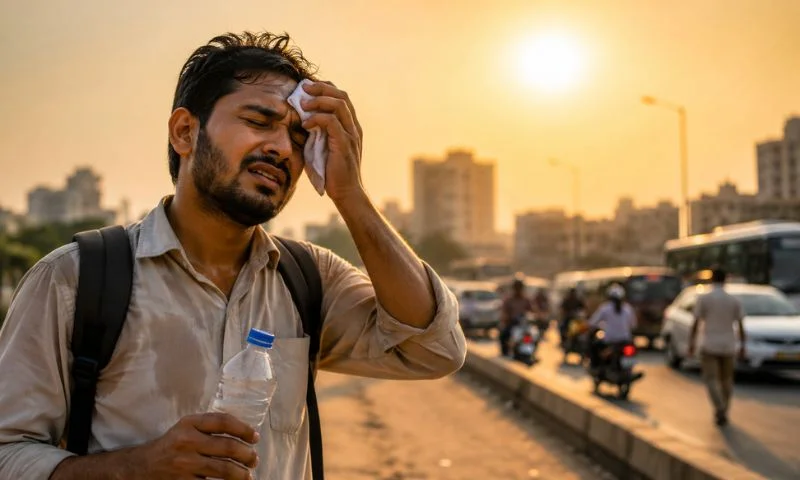
The World Health Organization has warned that prolonged heatwaves can quickly become a serious public health threat, urging people to take simple but effective steps to stay safe as temperatures continue to rise across many parts of the world. According to the WHO, heatwaves are becoming more frequent, longer and more intense because of climate change. Extreme heat already ranks among the deadliest weather related hazards. It increases the risk of illness, hospitalisation and death, especially among older adults, children, pregnant women, outdoor workers and people with chronic medical conditions. The agency said heat affects both cities and rural communities. Urban areas often experience even higher temperatures because of the urban heat island effect, while rural communities can face disruptions to livelihoods and essential services. “The body’s inability to regulate internal temperature and eliminate heat gain in such conditions increases the risk of heat exhaustion and heatstroke.” WHO added that heat places extra stress on the heart and kidneys. It can also worsen cardiovascular disease, respiratory illness, diabetes, mental health conditions and increase the risk of acute kidney injury. The overall impact depends on the intensity and duration of the heat event, as well as how well communities and health systems can adapt. WHO shares practical advice to stay safe The WHO recommends avoiding outdoor activities during the hottest part of the day and spending at least two to three hours in a cool place whenever possible. People should stay in the shade because direct sunlight can make temperatures feel 10 to 15 degrees Celsius hotter. The agency also advised following official heat warnings and avoiding swimming alone during extremely hot weather. To keep homes cooler, WHO recommends opening windows after sunset when outdoor temperatures fall below indoor levels. During the day, people should close windows, lower blinds and switch off unnecessary electrical devices. The agency also issued updated guidance on cooling methods. It said people should use electric fans only when temperatures remain below 40 degrees Celsius. At higher temperatures, fans can heat the body instead of cooling it. If using air conditioning, people should set the thermostat to 27 degrees Celsius and use a fan at the same time. According to WHO, this combination can make a room feel four degrees cooler while cutting cooling electricity costs by up to 70 percent. Children, older adults and vulnerable people need extra care WHO urged people to drink water regularly, recommending one cup every hour and at least two to three litres each day. It also advised wearing light coloured, loose fitting clothing, taking cool showers and using wet towels or damp clothing to cool the body. People should limit alcohol and excessive caffeine because both can increase dehydration. The agency stressed that parents should never leave children or animals inside parked vehicles because temperatures can become life threatening within minutes. It also advised keeping infants out of direct sunlight and warned against covering baby strollers with dry fabric because doing so traps heat. Instead, WHO recommends using a thin wet cloth and rewetting it regularly. Health officials also encouraged families to check regularly on older relatives, neighbours and people with heart, lung or kidney disease. They urged anyone who develops dizziness, nausea, confusion or other signs of heat illness to seek medical attention without delay.

Why WHO Wants Tougher Social Media Rules for Children
French President Emmanuel Macron and World Health Organization (WHO) Director General Tedros Adhanom Ghebreyesus have called for urgent action to protect children from the growing health risks linked to social media, online gaming and artificial intelligence. In a joint commentary published by the World Health Organization and Project Syndicate, the two leaders said digital technologies now shape how children learn, play and connect. They warned that the online world brings major benefits but also serious risks to children’s physical and mental well being. They urged governments and technology companies to act before those risks grow further. “Our task is not to celebrate or condemn technology. It is to face a simple truth: our digital environment not only promises far-reaching benefits but also poses grave risks for children’s health and development. Our responsibility is to maximize the first while preventing the second. It is not too late to act, but it is too late for merely incremental adjustments.” The commentary acknowledged that digital tools improve education, communication and access to healthcare. These benefits matter even more for children living in remote or crisis affected areas. Online communities can also give young people creativity, friendship and a sense of belonging. Still, the authors said these gains depend on responsible design and proper oversight. They argued that companies should put children’s interests ahead of commercial incentives. Governments tighten rules on children’s social media use Several countries have already introduced or proposed stricter rules for children’s online safety. Australia has approved the world’s first requirement that social media companies prevent children under 16 from holding accounts. France is moving ahead with legislation to ban social media access for children under 15. Indonesia has already introduced a similar restriction for under 16s. Spain has announced plans to follow the same path. Ireland is developing age assurance systems with European Union partners. Britain has also announced plans to stop platforms from offering services to children under 16. The proposal also includes limits on livestreaming and contact from strangers. Canada has introduced legislation that would restrict social media access for children under 16. It also requires stronger safety by design measures from technology companies. According to Macron and Tedros, these steps show that governments increasingly view online child safety as a public health priority. AI and harmful content increase concerns The authors stressed that digital environments are “not neutral” because their design and business models shape health outcomes. Current research links excessive screen exposure to anxiety, depression, poor sleep, aggression and, in severe cases, suicidality among vulnerable adolescents. The commentary also warned that algorithms often promote attention instead of accuracy. That allows health misinformation to spread more easily. Targeted advertising for tobacco, alcohol and gambling products adds to the concern. Rising cases of online sexual exploitation, AI generated abuse images and deepfake bullying also threaten children’s safety. The authors described generative AI as “a major force multiplier in terms of both risks and opportunities for child well-being.” “As long as that remains true, a precautionary approach is not anti-innovation. It is pro-child.” Macron and Tedros urged governments, technology companies, schools, parents and health experts to work together. They said young people should also help shape safer digital spaces through their own experiences. “Our children and young people are not experimental subjects, a captive market, or a commodity. Together, we can and must shape digital environments that protect and support their healthy development. The choices we make now will echo for generations.”
Pakistan’s North Reaches Highest Temperatures in 65 Years
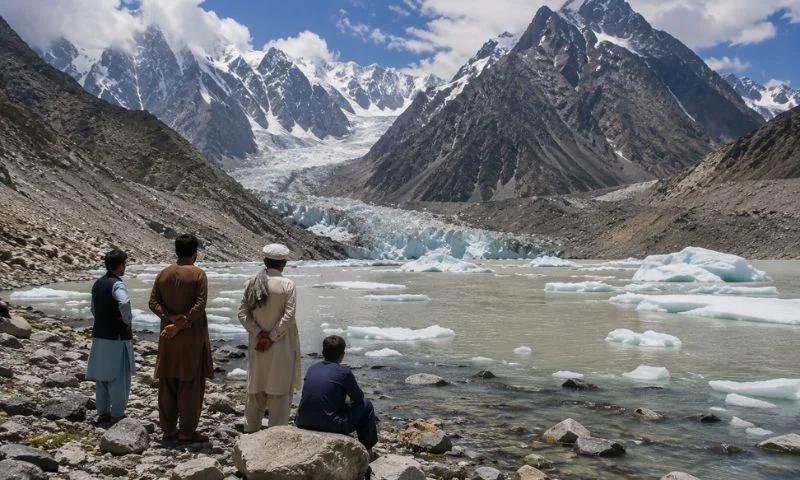
Pakistan experienced its second-warmest year in 65 years during 2025, continuing a worrying climate trend that economists and environmental experts say poses growing risks to the country’s economy, water resources and food security. According to the Economic Survey 2025-26, the country recorded a national annual mean temperature of 23.9°C in 2025. That figure stood 1.09°C above the long-term average of 22.8°C. The survey identified 2024 as the hottest year on record and 2025 as the second warmest, marking consecutive years of exceptionally high temperatures. Despite contributing less than 1% of current global greenhouse gas emissions and only 0.4% historically, Pakistan remains among the countries most vulnerable to climate change. “Climate change is no longer a distant or abstract threat to the country but a present reality,” the survey stated. Scientists note that Pakistan’s average temperature has increased by around 0.5°C over the past five decades. Climate projections indicate temperatures could rise by another 3°C to 5°C by the end of the century if global emissions remain high. Northern Regions See Sharpest Temperature Rise The strongest warming occurred in northern Pakistan during 2025. Temperature anomalies reached 1.24°C in Gilgit-Baltistan, 1.29°C in Khyber Pakhtunkhwa and 1.56°C in Azad Jammu and Kashmir. All three regions recorded their highest annual temperatures in 65 years. Pakistan received 288.5 millimetres of rainfall during the year, slightly below the long-term average of 297.6 millimetres. Rainfall patterns, however, remained highly uneven. Sindh, Punjab and Gilgit-Baltistan received above-average precipitation, while Khyber Pakhtunkhwa and Balochistan remained below average. The monsoon season from July to September brought rainfall levels 23% above normal. Earlier months remained unusually dry. Experts say rising temperatures are accelerating glacier melt across the Himalaya, Karakoram and Hindu Kush mountain ranges. The changes are also altering monsoon behaviour and increasing the likelihood of extreme floods. The survey noted that fewer rainy days and more intense downpours have shifted monsoon patterns southward. Those changes contributed to widespread flooding across Pakistan in 2025, echoing the devastation witnessed during the catastrophic floods of 2022. The government also warned that limited international climate financing could hinder Pakistan’s ability to meet its commitments under global climate agreements. The World Bank estimates Pakistan requires $565.7 billion in climate-related investments by 2030. Of that amount, approximately $217.7 billion remains unfunded. Global Heat Emergency Deepens The climate crisis is not limited to Pakistan. The World Health Organization reported that extreme heat has claimed more than 200,000 lives across Europe since 2022. “The impacts of climate change are a clear and present danger, and its most immediate and lethal manifestation is extreme heat,” said Hans Henri Kluge, the WHO’s regional director for Europe. Scientists are also monitoring the return of the El Nino climate pattern. The National Oceanic and Atmospheric Administration said there is a 63% chance that El Nino will strengthen into one of the most powerful events recorded since 1950. UN Secretary-General Antonio Guterres warned that “El Nino conditions will pour fuel on the fire of a warming world”. Meanwhile, India has already reported delays in monsoon progress and below-average rainfall, raising concerns about agricultural production across the region. As temperatures continue to rise, climate experts warn that South Asia faces increasing risks from extreme heat, floods, water shortages and economic disruption.
