

More than 720,000 people die by suicide every year, while many more attempt it, according to the World Health Organization. WHO’s latest estimates put the annual toll at about 727,000 deaths. For every suicide, the agency estimates there are about 20 attempts. The impact reaches far beyond the person who dies. Suicide affects families, communities and entire societies. Each loss is one too many. “Suicide is a public health issue, and together, we can prevent it,” the prevention message says. Young People and Poorer Countries Carry Heavy Burden Suicide ranked as the third leading cause of death among people aged 15 to 29 worldwide in 2021. It ranked second among young women and third among young men in that age group. Low- and middle-income countries recorded 73% of global suicides, WHO data shows. That concentration places much of the burden on health systems that often have limited mental health staff and services. More than half of all suicide deaths, or 56%, occurred before age 50. A previous attempt remains an important risk factor, making follow-up care especially important. The causes are complex and differ across people and settings. WHO links risk to social, cultural, biological, psychological and environmental factors across the course of life. Read More: Google Tightens Gemini Safeguards After Suicide Lawsuit Sparks Global Alarm Depression and alcohol use disorders have established links with suicide. However, many suicides happen impulsively during moments of crisis. Financial trouble, relationship disputes, chronic pain, illness and bereavement can overwhelm a person’s ability to cope. Conflict, disaster, violence, abuse, discrimination and isolation can also increase risk. WHO says timely, evidence-based and often low-cost interventions can prevent suicide. Its LIVE LIFE approach calls for restricting access to lethal means and promoting responsible media coverage. The framework also urges countries to build emotional and social skills among adolescents. Health services should identify, assess, manage and follow up people affected by suicidal behaviour early. What to Do When Someone May Be at Risk People who worry that someone may be suicidal should start a calm, direct conversation about how that person feels. Listening without judgment can open a path to support. They should encourage the person to seek help from a mental health professional, counsellor, doctor or crisis service. Regular check-ins matter, particularly after a recent crisis or suicide attempt. If the person faces immediate danger, contact local emergency services at once and do not leave them alone. Reduce access to anything they could use for self-harm, if this can be done safely. Read More: New AI-Powered Sarco ‘Suicide’ Pod Designed for Couples to Die Together Stigma and taboo still stop many people from seeking care. WHO says only 38 countries report having a national suicide prevention strategy. The agency argues that health care alone cannot solve the problem. Education, labour, agriculture, justice, business, politics and media all have roles in a coordinated national response. Anyone struggling now should contact local emergency services or a crisis hotline, or reach out to a trusted person and health professional.
Meta Set for Major Teen Restrictions After $18 Billion Deal
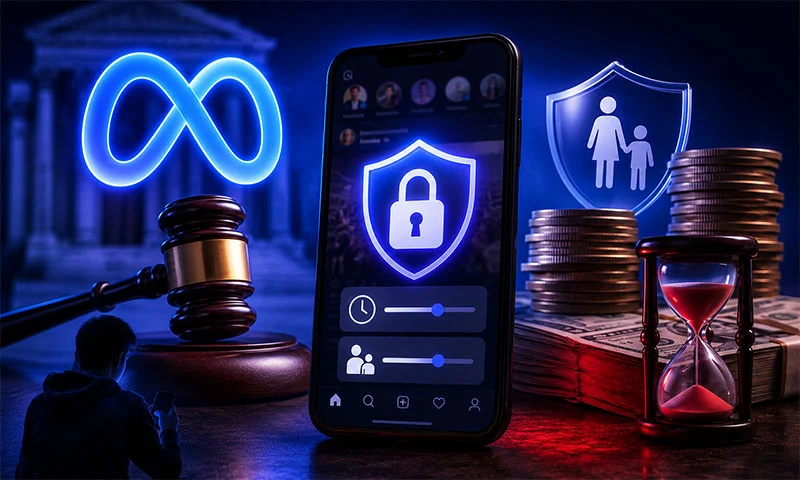
Meta Platforms will pay up to $18 billion over the next decade under sweeping settlements with nearly all US states. The agreements resolve claims that Meta designed Facebook and Instagram to addict children and misled the public about platform safety. The deal also forces major changes to how teenagers use both platforms. It ends a closely watched federal trial that began in Oakland, California, on August 18. California, Colorado, Kentucky and New Jersey had prepared to seek close to $200 billion in civil penalties, according to Reuters. Meta denied wrongdoing as part of the settlement. “The focus of this case was to protect our kids,” Colorado Attorney General Phil Weiser said in a statement. “The relief we are getting in this settlement is very meaningful and well beyond what any court has ordered or is likely to order.” The agreement could also become a model for thousands of other lawsuits against social media companies. Governments worldwide are tightening rules for young social media users. Australia, for example, has moved to ban social media access for children under 16. Facebook and Instagram Get Two-Hour Limit for Teens Meta will impose a default two-hour daily limit on Facebook and Instagram for users under 18. The limit applies across both platforms rather than separately to each app. Parents can provide permission to change the restriction. Meta will also block most use between midnight and 6am by default. During school hours, from 8am to 3pm, teenagers will not receive most push notifications. Direct messages and certain safety alerts will remain exempt. Meta will also show teenagers prompts after every 15 minutes of continuous use. The company has agreed to strengthen age-assurance technology. It will try to identify under-18 users even when they provide an adult birthday. Meta will also step up efforts to find accounts belonging to children under 13. The company must maintain stricter content settings for teenagers. It will also strengthen parental controls and protections against unwanted contact from suspicious adults. The restrictions could become tougher if Snapchat, TikTok and YouTube adopt comparable protections. Under that second stage, daily limits could fall to one hour per platform. Night restrictions could also expand from 10pm until 7am. However, the settlement does not force Meta to abandon personalized recommendations or targeted advertising. It also leaves some controversial content issues outside the agreement. These include posts that Meta researchers previously linked to body-image concerns among Instagram users. Meta said teen safety remains a priority. “Ensuring teens have a safe and productive experience on our platforms is an absolute imperative for Meta,” the company said. “We want to get this right for parents and teens.” Meta has also urged TikTok and YouTube to adopt the same protections. The company plans to push for wider industry action because teenagers often move between multiple social media platforms. Meta Faces Billions in Payments Reuters reported that Meta agreed to maximum payments of about $16.7 billion to 47 states, Washington, D.C., Puerto Rico, American Samoa and the Northern Mariana Islands. Texas reached a separate child-safety settlement worth more than $1 billion. The Texas attorney general confirmed the payment on Wednesday. California could receive about $2.2 billion, while New York could receive around $1.1 billion. Some states plan to direct parts of the money toward children’s mental health services. Others may place proceeds into general state accounts. The main settlement includes about $12.7 billion in guaranteed payments over a decade. Another $5 billion depends on whether Snapchat, TikTok and YouTube adopt similar protections and reach comparable agreements with states. “This is a big deal,” Northwestern University law professor James Speta said. “Meta and other companies were facing pressure to change business practices whether or not they lost the lawsuits, from the public and from Congress and state legislatures,” he said. “These restrictions will change the experience on Instagram and Facebook, and they are designed to reduce engagement.” Meta also agreed to pay $459 million to resolve separate privacy claims connected with the Cambridge Analytica scandal. The British consulting firm obtained personal information from millions of Facebook users without authorization. California, Illinois, New Mexico and Washington, D.C., brought those privacy claims. US District Judge Yvonne Gonzalez Rogers approved the main settlement late Wednesday. She had overseen the federal trial in Oakland. The judge called the agreement “a good step forward.” “I am quite happy to not have to finish up this trial,” she told lawyers for Meta and the states. Instagram chief Adam Mosseri had started testifying before the parties announced the settlement. Meta CEO Mark Zuckerberg had also been expected to testify. Meta shares rose as much as 4.1% during Wednesday’s trading. They closed the session up about 1.1%. Thousands of Social Media Lawsuits Remain The settlement does not end Meta’s wider legal problems over child and teen safety. Meta and other social media companies still face thousands of lawsuits in federal and state courts. Individuals, school districts, municipalities and government bodies accuse the companies of deliberately designing addictive products. The lawsuits link excessive social media use to anxiety, depression, suicide and other mental health problems among young people. Judge Gonzalez Rogers oversees many of those federal cases. The Meta trial included state consumer-protection claims from California, Colorado, Kentucky and New Jersey. Twenty-nine states also accused Meta of violating the federal Children’s Online Privacy Protection Act. They alleged that Meta knowingly collected children’s personal information without parental consent. They also accused it of using that data to train machine-learning and generative AI systems. Meta has argued that it could not mislead users about “social media addiction” because the term is not a recognized psychiatric condition. The settlement follows several recent legal setbacks for the company. Earlier in August, a New Mexico judge ordered Meta to pay $567 million and implement youth-safety measures. That came after a jury ordered another $375 million payment in the same New Mexico case in March. The combined penalties reached $942 million. Meta has said it will appeal. Also in March, a Los Angeles jury found
Instagram, TikTok and Facebook Face New Rules in New Zealand
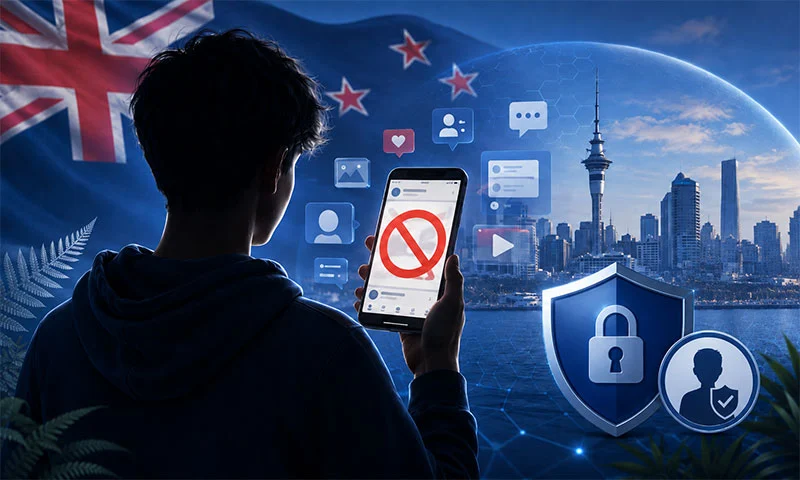
New Zealand has introduced legislation to stop children under the age of 16 from using social media platforms. The move follows similar action by Australia and other countries that want to limit young users’ access to platforms such as Instagram and TikTok. Prime Minister Christopher Luxon said the government wants to protect children from online risks. “We simply cannot accept the harm being done to a generation of New Zealand children,” Luxon said. He said many teenagers spend several hours daily on social media. Read More: The End of Social Media for Under-16s? UK Unveils Tough Plan “One in three children aged between 13 and 17 are now spending at least five hours on social media a day,” he said. Luxon said social media exposes young people to harmful content and addictive technology. “Social media is exposing them to harmful content, addictive technology and pressures they are not equipped to deal with, and it’s affecting their family life, mental health, sleep and education,” he added. Platforms Could Face Heavy Fines The proposed law would require companies to verify users’ ages before allowing access. Platforms including Instagram, TikTok, Snapchat and Facebook would need to take “reasonable steps” to confirm users are over 16. Companies could use existing account details, facial age estimation, digital identity services and official identification documents for verification. The government has proposed strict penalties for companies that fail to follow the rules. Technology firms could face fines of up to 10 percent of their global revenue. The bill would also require platforms to assess risks linked to their services. They would need to explain how they are reducing those risks for young users. Read More: Which Countries Are Banning Social Media for Children? The Growing List Education Minister Erica Stanford said the legislation places responsibility on social media companies. “The Bill places legal obligations on platforms,” Stanford said. She added that the law would not punish children, parents or caregivers. Political Support Remains Uncertain The bill faces challenges before it can become law. New Zealand’s coalition partners, ACT Party and NZ First, have raised objections. NZ First said it could not support the proposal. The party described Australia’s similar law as a “colossal failure”. ACT said teenagers could easily find ways around the restrictions. Read More: $16,000 Robot ‘Beggar’ Asks Humans for Money in Viral Video The opposition Labour Party has also asked for more details before deciding its position. Labour spokesperson Reuben Davidson said the party wants answers about age verification and affected platforms. “We take this legislation very seriously,” Davidson said. “The safety of young people in Aotearoa New Zealand is at stake and the risks they face in increasingly complex online environments are significant,” he added. New Zealand Follows Australia’s Move Australia became the first country to ban social media access for children under 16 in December. The Australian law targets platforms including Facebook, Instagram and TikTok. It aims to reduce online bullying, harmful content and exposure to addictive algorithms. However, researchers have questioned whether such restrictions will significantly reduce teenagers’ social media use. A peer-reviewed Australian study published in June found limited evidence that teenagers had moved away from social media after the ban. Read More: Survey Shows Public Support for 5% Tax on Social Media Creators New Zealand’s government will now seek parliamentary approval for the legislation. The proposal places the country among a growing group of nations debating stricter online protections for children.
No Likes, No Infinite Scroll? Meta May Be Forced to Change
Meta faces a landmark US trial that could force major changes to Instagram and Facebook, especially for children and teenagers. US District Judge Yvonne Gonzalez Rogers will oversee the case in Oakland, California. It involves claims brought by 29 state attorneys general over alleged harm to young users. Opening statements are scheduled for August 18. The states accuse Meta of designing Facebook and Instagram to keep children engaged for longer. They also allege Meta collected data from users under 13 without parental consent. Meta denies the allegations. States seek sweeping changes to Instagram and Facebook The states are seeking damages that Meta says could reach about $1.4 trillion. They also want major changes to features that shape daily use of Instagram and Facebook. Their demands include ending infinite scroll, removing visible “like” counts, limiting notifications and stopping autoplay for young users. They also want stronger parental verification for teenagers. The states want Meta to alter recommendation algorithms that they say encourage compulsive use and prioritise engagement over wellbeing. Read More: “I Gave Up on Having Kids”: Meta Employee Blames Job Insecurity Other demands include restrictions on appearance-changing filters, multiple accounts and disappearing posts such as Instagram Stories. Lawyers also want stricter age limits and deletion of AI models trained using children’s data. Meta has rejected claims that it deliberately harms young people. “We strongly disagree with these allegations and are confident the evidence will show our longstanding commitment to supporting young people,” the company said. New Mexico ruling adds pressure on Meta The California case comes shortly after Meta suffered a legal setback in New Mexico. A court there ordered Meta to pay $567 million into a fund addressing youth mental health and child safety. That came on top of an earlier $375 million civil penalty, bringing Meta’s total exposure in the state to $942 million. Judge Bryan Biedscheid also declared Meta’s platforms a “public nuisance” and imposed child-safety reforms for five years. The measures include hiding like counts for users under 18, tighter controls on adult interactions with minors and limits on certain notifications. Meta has said it will appeal. The New Mexico order applies only within that state. A broader defeat in the federal case could have much wider consequences. Trial could reshape social media for young users The case also focuses on the psychological effects of engagement features. State lawyers have pointed to Meta’s internal research linking social comparison on Instagram with loneliness, negative mood and body-image concerns. They argue that likes, recommendations and repeated notifications can intensify pressure on younger users. Meta argues that youth mental health has many causes. It says it has spent years adding protections for teenagers and families. Read More: Why Meta’s New Instagram AI Feature Didn’t Last a Week An advisory jury has been selected, but its findings will not bind Judge Gonzalez Rogers. She will make the final decision after the trial. Meta chief executive Mark Zuckerberg and Instagram head Adam Mosseri are expected to testify. The case is expected to run for several weeks. A ruling against Meta could become one of the most consequential legal decisions yet for social media platforms.
Why WHO Wants Tougher Social Media Rules for Children
French President Emmanuel Macron and World Health Organization (WHO) Director General Tedros Adhanom Ghebreyesus have called for urgent action to protect children from the growing health risks linked to social media, online gaming and artificial intelligence. In a joint commentary published by the World Health Organization and Project Syndicate, the two leaders said digital technologies now shape how children learn, play and connect. They warned that the online world brings major benefits but also serious risks to children’s physical and mental well being. They urged governments and technology companies to act before those risks grow further. “Our task is not to celebrate or condemn technology. It is to face a simple truth: our digital environment not only promises far-reaching benefits but also poses grave risks for children’s health and development. Our responsibility is to maximize the first while preventing the second. It is not too late to act, but it is too late for merely incremental adjustments.” The commentary acknowledged that digital tools improve education, communication and access to healthcare. These benefits matter even more for children living in remote or crisis affected areas. Online communities can also give young people creativity, friendship and a sense of belonging. Still, the authors said these gains depend on responsible design and proper oversight. They argued that companies should put children’s interests ahead of commercial incentives. Governments tighten rules on children’s social media use Several countries have already introduced or proposed stricter rules for children’s online safety. Australia has approved the world’s first requirement that social media companies prevent children under 16 from holding accounts. France is moving ahead with legislation to ban social media access for children under 15. Indonesia has already introduced a similar restriction for under 16s. Spain has announced plans to follow the same path. Ireland is developing age assurance systems with European Union partners. Britain has also announced plans to stop platforms from offering services to children under 16. The proposal also includes limits on livestreaming and contact from strangers. Canada has introduced legislation that would restrict social media access for children under 16. It also requires stronger safety by design measures from technology companies. According to Macron and Tedros, these steps show that governments increasingly view online child safety as a public health priority. AI and harmful content increase concerns The authors stressed that digital environments are “not neutral” because their design and business models shape health outcomes. Current research links excessive screen exposure to anxiety, depression, poor sleep, aggression and, in severe cases, suicidality among vulnerable adolescents. The commentary also warned that algorithms often promote attention instead of accuracy. That allows health misinformation to spread more easily. Targeted advertising for tobacco, alcohol and gambling products adds to the concern. Rising cases of online sexual exploitation, AI generated abuse images and deepfake bullying also threaten children’s safety. The authors described generative AI as “a major force multiplier in terms of both risks and opportunities for child well-being.” “As long as that remains true, a precautionary approach is not anti-innovation. It is pro-child.” Macron and Tedros urged governments, technology companies, schools, parents and health experts to work together. They said young people should also help shape safer digital spaces through their own experiences. “Our children and young people are not experimental subjects, a captive market, or a commodity. Together, we can and must shape digital environments that protect and support their healthy development. The choices we make now will echo for generations.”
Which Countries Are Banning Social Media for Children? The Growing List
A growing number of countries are moving to restrict children’s access to social media, citing concerns about cyberbullying, addiction, mental health problems and online safety. The latest country to join the trend is the United Kingdom, where Prime Minister Keir Starmer announced on June 15 that the government plans to ban social media use for children under 16. The proposed UK restrictions would apply to major platforms including Snapchat, TikTok, YouTube, Instagram, Facebook and X. Messaging services such as WhatsApp and Signal would remain exempt. The government also plans to introduce age limits for certain artificial intelligence services, requiring AI “romantic companion” chatbots to restrict access to users over 18. Experts have questioned whether a blanket ban would work in practice. However, Starmer defended the proposal and said he believes authorities can enforce it. He added that the restrictions could take effect by spring 2027. The UK’s announcement comes as governments around the world introduce stricter controls on young users’ access to social media platforms. Australia Leads Global Crackdown Australia became the world’s first country to implement a nationwide social media ban for children under 16 in December 2025. The law blocks access to Facebook, Instagram, Snapchat, Threads, TikTok, X, YouTube, Reddit, Twitch and Kick. The Australian government excluded WhatsApp and YouTube Kids from the restrictions. Authorities require social media companies to use multiple age verification methods and prohibit them from relying solely on self-declared ages. Companies that fail to comply could face fines of up to A$49.5 million, equivalent to about $34.4 million. Read More: The End of Social Media for Under-16s? UK Unveils Tough Plan Several European countries have followed Australia’s lead. Austria plans to ban social media for children up to age 14, while Denmark aims to prohibit access for users under 15. Denmark’s government has also developed a “digital evidence” application that includes age verification technology. France’s lower house approved legislation in January that would ban social media access for children under 15. The measure still requires Senate approval. French President Emmanuel Macron has supported the proposal as a way to reduce excessive screen time among young people. Germany, Spain, Poland and Slovenia have also discussed or drafted legislation targeting social media access for minors. Governments Cite Safety Concerns Many governments argue that social media platforms expose children to harmful content and unhealthy online behavior. Greek Prime Minister Kyriakos Mitsotakis announced that Greece will block social media access for children under 15 beginning in January 2027. He said the move aims to tackle rising anxiety, sleep problems and addictive platform designs. Outside Europe, Indonesia plans to ban social media use for children under 16, targeting platforms such as YouTube, TikTok, Facebook, Instagram, Threads, X, Bigo Live and Roblox. Malaysia also intends to introduce similar restrictions this year. Read More: Students Watched Online: UK Universities Accused of Spying on Students’ Social Media Turkey’s parliament recently passed legislation restricting social media access for children under 15. President Recep Tayyip Erdogan must still approve the bill before it becomes law. Supporters argue that stronger protections are necessary as children spend more time online. Critics disagree. Amnesty Tech and other digital rights groups have warned that age verification systems may threaten privacy and increase government surveillance. Despite those concerns, momentum continues to build. More governments now view stricter regulation as a key tool to protect young users from online risks while reshaping how future generations engage with social media.
The End of Social Media for Under-16s? UK Unveils Tough Plan
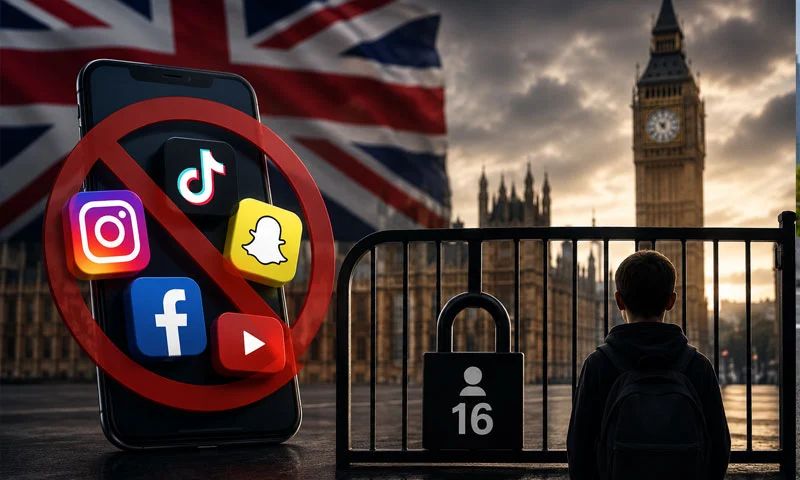
British Prime Minister Keir Starmer has announced a sweeping ban on social media use for children under the age of 16, describing the measure as one of the toughest online safety policies introduced by a democratic country. Speaking at a press briefing on Monday, Starmer said the government would move ahead with legislation aimed at restricting under-16s from accessing major social media platforms. “Today I can announce the government will ban access to social media for all children under the age of 16,” Starmer said. “I am not prepared to compromise on the safety and happiness of our children. That is why this ban must happen and it is why this ban will happen.” The proposal goes beyond restrictions introduced by Australia last year and forms part of a wider package designed to strengthen child safety online. Starmer said the government would also introduce what he described as “world-leading action” to stop children from communicating with strangers on gaming services and live-streaming platforms without supervision. The Labour government plans to pass legislation by the end of 2026 and implement the restrictions in spring 2027. Authorities will use age verification technology to enforce the rules. However, educational and child-focused services such as YouTube Kids and Google Classroom will remain exempt. Government Targets Addictive Online Features Starmer acknowledged the policy would generate debate but argued that growing evidence justified tougher action. “This is not something I do lightly and I will not present it as cost-free,” he said. He accused social media companies of designing products that encourage excessive use among young people. “Social media is designed to be addictive,” Starmer said, criticising “features like infinite scroll” that he argued prevent children from studying, reading, socialising and maintaining healthy sleep habits. The announcement reflects a growing international debate about the impact of social media on children’s mental health, wellbeing and development. Several countries have recently explored stronger regulations for technology platforms as concerns rise over online addiction, cyberbullying and harmful content exposure. When asked whether the move could trigger criticism from US technology firms or President Donald Trump, Starmer rejected suggestions that innovation and online safety were incompatible. “This is about fighting for what we think is right. I’m a fan of tech and AI,” he said. Political Debate Intensifies Over Timing The announcement comes during a politically sensitive period for the British prime minister. Starmer is attending the Group of Seven summit in France while also facing questions about domestic challenges, including defence spending and cabinet resignations. Several opponents have already criticised the proposal. Ian Russell, whose daughter died in 2017 after exposure to harmful online content, told the BBC it would be “deplorable” if the government rushed the policy for political reasons. The Liberal Democrats also criticised the proposal, accusing Labour of “rushing through a half-baked policy just to secure a political legacy.” Supporters of the plan argue that stronger safeguards are necessary as children spend increasing amounts of time online. Lawmakers will continue debating the proposal as they prepare legislation and technology companies assess how age verification systems could operate at scale. If lawmakers implement the plan, the UK will become one of the most restrictive countries in the democratic world regarding children’s access to social media and could create a model that other governments follow.
