The long-held belief that blue light from smartphones is a major cause of poor sleep is being challenged by new research, with scientists saying the impact of screen light may be far smaller than widely assumed.
According to recent findings highlighted by BBC Future, studies examining real-world sleep patterns suggest that eliminating blue light exposure alone does not significantly improve sleep quality. Researchers found that while light does influence the body’s internal clock, the intensity of light emitted by smartphones is relatively low compared to natural daylight or even indoor lighting.
This has led experts to question whether blue light has been unfairly blamed for sleep problems that may actually stem from broader behavioral factors.
Light matters, but not as much as you think
Scientists have long known that blue wavelengths can suppress melatonin, the hormone that regulates sleep cycles. However, new research suggests that the effect of phone screens is limited in everyday conditions.
“Screen light has low power,” one expert noted, adding that it is unlikely to significantly disrupt sleep on its own.
Studies also show that daylight exposure plays a far greater role in regulating circadian rhythms. Outdoor light can be thousands of times brighter than a phone screen, helping the body distinguish between day and night more effectively.
Research from Oxford University further supports this view, suggesting that simply reducing blue light is not enough to fix sleep patterns. “Reducing blue light may not be effective, especially if done in isolation,” scientists found.
The real culprit: how we use our phones
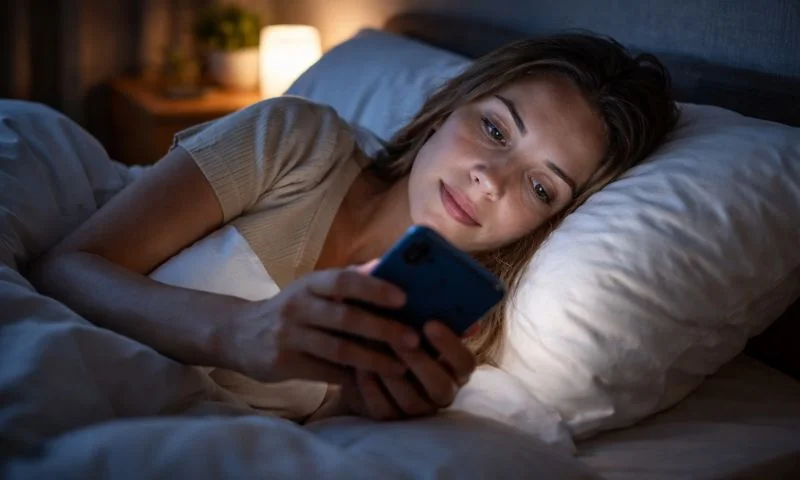
Experts increasingly argue that the problem lies less in the light itself and more in how people use their devices at night. Activities such as scrolling social media, watching videos or reading stimulating content can keep the brain active, delaying sleep.
“The brain stays active during late-night scrolling,” researchers observed, pointing to engagement rather than light exposure as the main issue.
Other studies have found little evidence that screen use before bed significantly delays sleep, with one analysis noting no strong link between smartphone light exposure and difficulty falling asleep.
Instead, factors such as emotional stimulation, stress and irregular sleep routines appear to have a much stronger influence on sleep quality.
Rethinking sleep advice
The findings are prompting experts to rethink common advice around blue light filters and special glasses, which have become a popular solution for improving sleep.
While blue light can affect circadian rhythms in controlled laboratory settings, real-world conditions are more complex. Brightness, duration of exposure and overall sleep habits play a much larger role than previously thought.
Health specialists now recommend focusing on broader sleep hygiene practices, including maintaining a consistent sleep schedule, reducing screen time before bed and increasing exposure to natural light during the day.
Experts also suggest dimming lights in the evening and avoiding highly stimulating content at night to help the body wind down naturally.
As research evolves, scientists say the narrative around blue light is shifting from a simple cause-and-effect explanation to a more nuanced understanding of how modern lifestyles impact sleep.
For now, the message is clear: your phone may not be ruining your sleep in the way you think, but how you use it still matters.