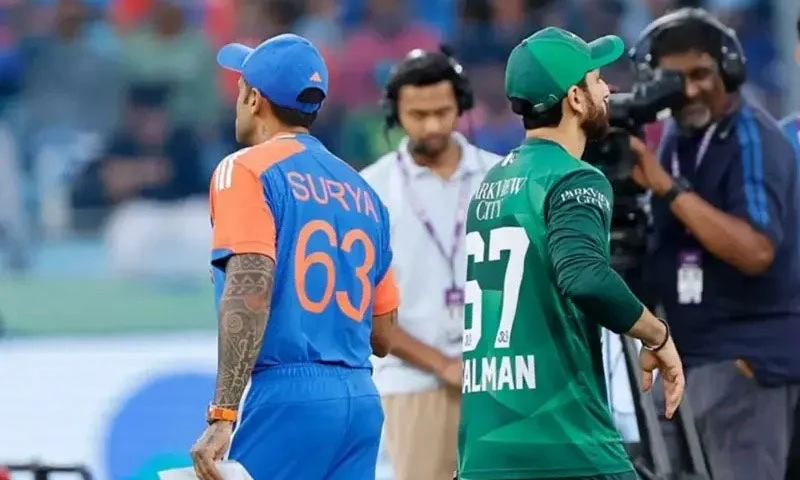
Pakistan’s decision to boycott its group-stage match against India in the ICC Men’s T20 World Cup has sparked intense debate across the cricketing world. While Indian media has framed the move as damaging to Pakistan’s tournament prospects, former Pakistan captain Rashid Latif and other experts argue that the boycott is unlikely to block Pakistan’s route to the next round.
Under ICC playing conditions, India will receive a walkover and two points if Pakistan does not take the field. However, tournament formats are designed around multiple group matches, not a single fixture. Analysts point out that Pakistan’s group composition still allows the team to qualify comfortably by securing wins against other opponents and maintaining a healthy net run rate.
Rashid Latif, speaking to local media, described the situation as a strategic rather than fatal setback.
“This is not checkmate. Pakistan has enough matches to control its destiny. One walkover does not end a World Cup campaign,” Latif said, adding that teams qualify by winning games, not narratives.
How Pakistan Can Still Reach the Next Round
In the group stage, Pakistan is scheduled to play multiple matches besides India. Cricket analysts note that two or three strong victories would likely be sufficient for qualification, even with the forfeited points. Historically, teams have advanced in ICC tournaments despite losing or forfeiting high-profile matches, provided they performed consistently elsewhere.
Latif emphasized that Pakistan’s strength lies in balance and adaptability, particularly in pressure situations.
“If Pakistan focuses on execution instead of controversy, qualification should not be a problem,” he said.
What Happens in the Knockout Stage
Importantly, the knockout phase operates independently of group-stage controversies. Once qualified, Pakistan would compete purely on cricketing merit. Experts say a potential India–Pakistan clash in the knockouts would depend on both teams progressing — and at that stage, no walkover rules apply.
Former players argue that Pakistan has historically thrived in knockout pressure, citing previous ICC tournaments where the team peaked at crucial moments.
ICC’s Response
The International Cricket Council (ICC) has acknowledged Pakistan’s stance and confirmed that tournament rules will be applied strictly but neutrally. ICC officials reiterated that participation decisions taken on government directives are treated differently from unilateral board actions, limiting the scope of punitive measures beyond match points.
While the boycott carries commercial consequences, the ICC has so far avoided any indication of broader sanctions, focusing instead on keeping the tournament competitive and inclusive.
From Pakistan’s perspective, the boycott is a principled stand rather than a competitive surrender. With multiple matches still to play and clear qualification scenarios available, Pakistan’s World Cup journey remains firmly in its own hands — both in the group stage and beyond.