Every year, millions of Muslims across the world celebrate Eid al-Adha with prayers, family gatherings and the sacrifice of animals such as sheep, goats, cows and camels.
For many non-Muslims, and even some younger Muslims, the ritual often raises questions. Why does Islam require animal sacrifice? Is it simply tradition, or does it hold a deeper spiritual meaning?
Islamic scholars say the answer begins with one of the most powerful stories in Islamic tradition: the story of Prophet Ibrahim and his son Prophet Ismail.
Muslims believe Prophet Ibrahim, peace be upon him, saw in a dream that Allah commanded him to sacrifice his beloved son Ismail. In Islam, prophets’ dreams carry divine instruction.
Despite the emotional weight of the command, Ibrahim obeyed without hesitation. When he informed Ismail, the son also accepted Allah’s command with patience and faith.
The Qur’an quotes Ismail as saying: “Father, do as you are commanded. You will find me, if Allah wills, among the patient.”
As Ibrahim prepared to carry out the sacrifice, Allah replaced Ismail with a ram.
Islamic scholars say the event was never about bloodshed. Instead, it symbolized faith, obedience and willingness to surrender personal attachment for the sake of God.
That tradition continues today through Qurbani, the ritual sacrifice Muslims perform during Eid Al Adha.
More Than Sacrifice
The Qur’an emphasizes that the spiritual meaning behind Qurbani matters more than the act itself.
Allah says in the Qur’an: “Their meat and blood do not reach Allah. What reaches Him is your piety and consciousness of Him.”
Scholars explain that Muslims sacrifice valuable animals to demonstrate gratitude, generosity and devotion.
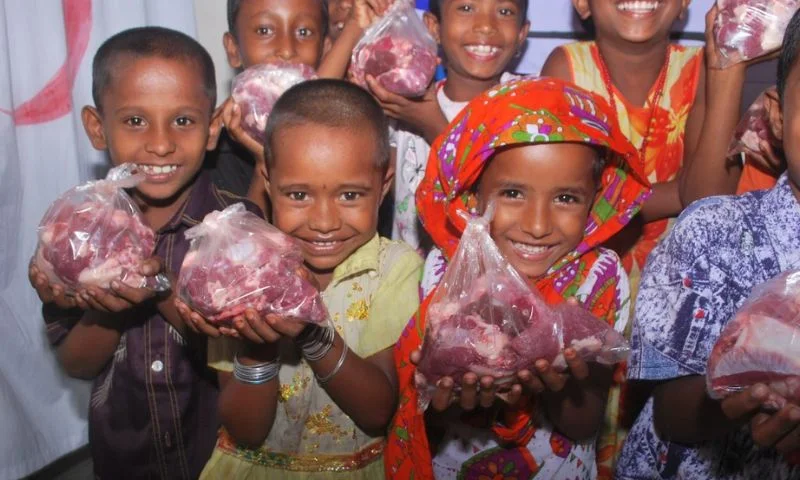
The ritual also carries a strong social purpose because families distribute meat among relatives, neighbors and poor communities.
The Prophet Muhammad, peace be upon him, encouraged Muslims to divide the meat into three portions: one for the family, one for relatives and friends, and one for the poor.
In many countries, Eid Al Adha becomes a time when underprivileged families gain access to fresh meat that they rarely afford during the rest of the year.
Religious scholars say the tradition strengthens compassion and social solidarity within Muslim societies.
Islam also sets clear rules regarding the sacrifice.
Only livestock animals qualify for Qurbani, including sheep, goats, cows and camels. The animals must meet minimum age requirements and remain healthy without visible illness or defects.
The sacrifice begins after the Eid prayer on the 10th of Dhul Hijjah and continues until sunset on the 13th.
“If someone sacrifices before the Eid prayer, it does not count as Qurbani. It is simply meat for the family,” scholars often explain based on prophetic teachings.
A Lesson in Letting Go
Islamic scholars describe Qurbani as a spiritual lesson in detachment and generosity.
Muslims give away a significant portion of meat from an animal that could otherwise provide personal financial benefit.
They say the ritual trains believers to release attachment to wealth, comfort and material possessions.
Islam also exempts people who cannot financially afford the sacrifice.
Children, the mentally incapacitated and financially struggling individuals are not required to perform Qurbani.
Religious scholars stress that Eid Al Adha remains a celebration of faith, gratitude and community, even for those unable to sacrifice an animal.
For millions of Muslims, the ritual ultimately serves as a reminder that true devotion lies not in the animal itself, but in the sincerity of the heart behind the sacrifice.