


State Bank of Pakistan (SBP) has launched a nationwide “Go Cashless” campaign for Eid-ul-Azha 2026 to promote digital payments in cattle markets and reduce dependence on cash transactions during one of Pakistan’s busiest seasonal trading periods. The central bank said the campaign forms part of its broader strategy to accelerate digitisation of Pakistan’s payment ecosystem and improve financial inclusion across the country. Every year, cattle markets generate billions of rupees in economic activity ahead of Eid-ul-Azha, with most transactions traditionally taking place through cash payments. Recognising the scale of this informal market, SBP has increasingly used Eid-related trading activity to encourage adoption of digital payment systems over recent years. This year, the campaign has expanded significantly. According to the central bank, the number of cattle markets covered under the initiative has increased from 54 markets in 2025 to 96 markets nationwide in 2026. Under the programme, 22 participating banks will establish dedicated camps and kiosks inside assigned cattle markets. The banks will help onboard cattle sellers, transporters and related service providers onto digital payment systems through account opening services and QR code-based payment solutions. Banks to deploy mobile vans, ATMs and QR payment systems SBP said banks would also deploy mobile banking vans, automated teller machines and cash deposit machines where feasible to improve access to financial services around cattle markets. The central bank has additionally introduced temporary relaxations in transaction and account balance limits to support higher payment volumes during the Eid season. The relaxed limits will remain effective from May 14 to June 5, 2026. SBP encouraged citizens to use mobile banking applications, branchless banking wallets, Raast-enabled services and QR code payments for Eid-related transactions. “Digital payments not only provide greater convenience and security, but also help reduce risks associated with carrying cash and contribute towards development of a more efficient, transparent, and inclusive financial ecosystem in Pakistan,” the central bank said. Pakistan has witnessed rapid growth in digital payments during recent years, particularly after the launch of Raast, the country’s instant payment system introduced by SBP. According to central bank data, Raast transactions crossed billions of rupees in monthly value as more consumers and businesses shifted toward digital transfers and QR-based payments. Eid cattle markets remain largely cash-driven Despite progress in digital banking, cattle markets continue operating largely through cash transactions because of limited financial access and low digital adoption among traders. Analysts say the Eid cattle economy represents one of Pakistan’s largest informal seasonal markets and provides an important opportunity for banks to attract new users into formal financial channels. Experts also believe digital payments can reduce theft risks, improve transaction transparency and lower cash-handling costs during the Eid season. Pakistan’s banking sector has accelerated efforts to expand branchless banking and QR payment infrastructure as smartphone usage and internet penetration continue growing across the country. Industry observers say the success of the campaign may encourage wider adoption of digital payments in other large informal sectors of the economy.

India, UAE Deepen Military Ties Amid Iran War Tensions
Narendra Modi and leaders of the United Arab Emirates agreed on a framework for a strategic defence partnership on Friday as both countries moved to deepen security and energy cooperation amid continuing instability in the Gulf region. According to a statement from India’s foreign ministry, the agreement covers defence industrial collaboration, maritime security, cyber defence, military training and advanced technology cooperation. “The two sides have agreed on deepening defence industrial collaboration and cooperation on innovation and advanced technology, training, exercises, maritime security, cyber defence, secure communications and information exchange,” the ministry said. Read More: India Faces Economic Shock as Modi Warns Citizens to Cut Spending The agreement came during Modi’s visit to Abu Dhabi as regional tensions linked to the Iran conflict continue reshaping geopolitical alliances and energy strategies across the Middle East. India and the UAE also signed agreements on strategic petroleum reserves and supplies of liquefied petroleum gas. Before the visit, Indian officials told Reuters that Modi planned to discuss long-term energy supply arrangements and seek support for expanding India’s strategic oil reserves. The UAE, India’s third-largest trading partner, has become increasingly important for New Delhi’s energy security strategy. Earlier this year, both countries signed a $3 billion liquefied natural gas agreement. The two sides also signed a letter of intent in January to work toward a formal strategic defence partnership. Iran conflict and Hormuz disruption reshape regional ties The latest agreements come as the US-Israeli war against Iran enters its third month. The conflict has disrupted regional trade and energy markets, particularly after the closure of the Strait of Hormuz. The waterway handles nearly 20% of global oil shipments and remains one of the world’s most critical energy chokepoints. Read More: Pakistan Rejects Claims of Targeted Deportations From UAE Iranian missile and drone strikes previously targeted Gulf countries, including the UAE, before a fragile ceasefire emerged last month. Analysts say Gulf states have accelerated defence and energy partnerships to protect supply chains and strengthen regional security coordination. The UAE’s recent decision to leave OPEC could also increase oil production and help major importers such as India secure stable supplies. Pakistan-Saudi ties remain part of regional calculations The Indian foreign ministry’s announcement also highlighted fresh UAE investments worth $5 billion in India. The statement pointed to deals including Emirates NBD’s acquisition of a 60% stake in RBL Bank for $3 billion and Abu Dhabi-based IHC’s $1 billion investment in Sammaan. Meanwhile, regional analysts say India’s growing Gulf outreach also reflects concern over strengthening Pakistan-Saudi strategic cooperation. Read More: Big Relief or Bigger Pressure? Pakistan Repays $2 Billion to UAE Last year, Pakistan and Saudi Arabia signed a mutual defence agreement. Pakistan has also emerged as a key mediator between Washington and Tehran during efforts to end the Iran conflict. Islamabad recently increased defence coordination with Riyadh after Iranian missile and drone attacks targeted Saudi infrastructure. Saudi Arabia last month pledged an additional $3 billion in financial support to Pakistan to help cover upcoming debt repayments to the UAE. Experts say the rapidly changing Gulf security environment continues pushing regional powers to strengthen alliances focused on defence, energy and trade stability.
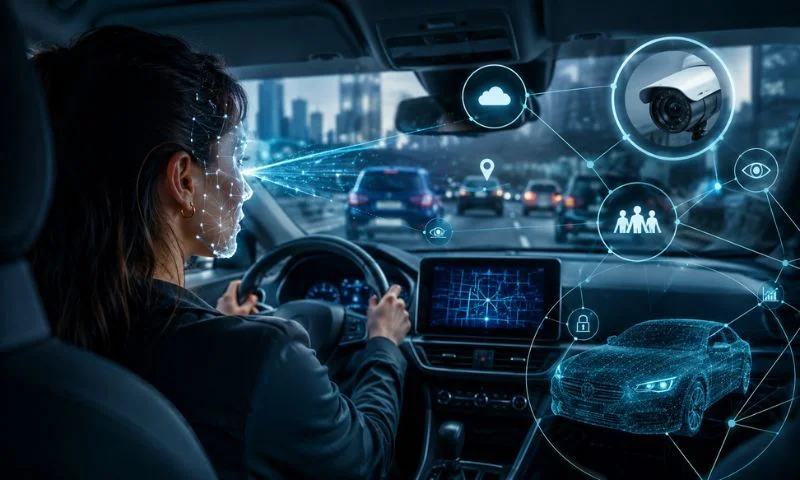
Your Car Is Secretly Watching You and Selling Your Data
Modern cars no longer serve only as machines for transport. Privacy experts say they now operate like rolling data centres that monitor drivers constantly. Internet-connected vehicles collect huge amounts of personal information. They track your location, driving habits, seatbelt use and braking patterns. Some cars even monitor facial expressions, body language and eye movement. “People would be shocked at the number of data points that their car collects and transmits to other people, either the manufacturer or third-party applications,” said Darrell West from the Brookings Institution. “It basically means your life can be recreated almost on a second-by-second basis.” Experts say many drivers do not realise how much information companies gather through modern vehicles. Most car owners agree to lengthy privacy policies while setting up infotainment systems or mobile apps. Research firm McKinsey estimated that half of all cars on the road had internet connectivity in 2021. The company expects that figure to rise to 95% by 2030. A 2023 study by Mozilla Foundation reviewed privacy policies from 25 car brands. Mozilla concluded that every company failed its minimum privacy standards. The group called cars “the worst product category we have ever reviewed for privacy”. The report found that some manufacturers reserve the right to collect sensitive details. These include age, weight, race, health information and psychological trends. Kia faced criticism after its privacy policy mentioned “sex life” and health data. The company later clarified it had never collected such information. Insurance Firms Use Driving Data Privacy advocates warn that automakers now profit from customer information through data-sharing deals. US authorities recently acted against General Motors over allegations that the company sold location and driving data without proper consent. Reports showed that data broker LexisNexis gathered more than 130 pages of driving records on one customer within six months. The customer later told The New York Times that his insurance premium jumped by 21%. An insurance agent reportedly linked the increase to the vehicle data. Read More: Five New Chinese EVs in The Price of One Car in US: The Price Gap Shaking the Auto Industry “Insurance companies have been collecting vast amounts of consumer data, especially on consumer driving data, and using it to try and charge people higher premiums,” said Michael DeLong from the Consumer Federation of America. Mozilla privacy researcher Jen Caltrider warned that companies use car data to build detailed personal profiles. “They’re taking all the information they collect on you, which is a lot, and using it to make inferences about who you are, how intelligent you are, what your psychological profile is, what your political beliefs are,” she said. New Technology Raises More Privacy Concerns Privacy experts fear upcoming US safety laws could increase surveillance inside vehicles. Federal rules will soon require automakers to install advanced impaired-driving prevention systems in new cars. These systems may use infrared biometric cameras to monitor drivers for signs of fatigue or intoxication. Supporters say the technology could save lives by stopping impaired drivers. Critics argue that lawmakers failed to add clear protections for the sensitive data these systems collect. “We need to keep drunk drivers off the road, and it would be great if there was a guarantee that the data won’t be used for other purposes, but that’s not what’s happening,” Caltrider said. Experts advise drivers to avoid insurance telematics programmes if privacy matters to them. They also recommend checking infotainment privacy settings and limiting app permissions. Privacy advocates warn that cars could soon become the most invasive consumer products in modern life.

Pak Suzuki’s Karachi Plant Goes Green With New Energy Facilities
Pak Suzuki Motor Company has launched a biogas plant and a large-scale solar power facility at its manufacturing site in Karachi as the automaker expands efforts to reduce carbon emissions and increase renewable energy use. The company announced that both facilities have already started operations at the Karachi plant. According to a company statement, the projects form part of Pak Suzuki’s broader strategy to achieve carbon neutrality and promote environmentally friendly manufacturing practices in Pakistan. Read More: Suzuki Fronx Price Revealed: Offers Hybrid Power At A Surprising Price The newly commissioned biogas plant has a capacity of 100 cubic meters per day and covers an area of 360 square meters. The company said the plant uses Napier grass, which is widely available in Pakistan, along with organic waste generated from company cafeterias. Meanwhile, the solar power facility has an output capacity of 920 kilowatts and is expected to generate nearly 1.4 million kilowatt-hours of electricity annually. “The commissioning of our biogas plant and solar power facility demonstrates our commitment to integrate clean energy into our operations and contribute meaningfully to Pakistan’s environmental priorities,” said Hiroshi Kawamura. “We remain committed to adopting environmentally friendly manufacturing practices and will continue to invest in technologies that support a greener future,” he added. Pakistan’s renewable energy boom gains momentum Pakistan has witnessed rapid growth in renewable energy adoption during recent years, especially in solar power. Rising electricity costs, recurring energy shortages and falling solar panel prices have accelerated demand across industries and households. A recent study showed Pakistan imported more than 50 gigawatts of solar panels during the last five years. The imported volume roughly equals the country’s entire national grid capacity. Read More: Before Bugatti and Rolls-Royce, Cristiano Ronaldo’s First Car Was a Suzuki Swift Analysts estimate the imports cost nearly $18 billion during the period. Several major manufacturers in Pakistan have recently expanded investment in solar energy to lower electricity costs and reduce reliance on the national grid. Experts say industrial adoption of renewable energy may also help Pakistan reduce pressure on imported fuel and foreign exchange reserves. Automakers increasingly focus on sustainability goals Global automakers have intensified environmental initiatives as governments tighten climate regulations and consumers demand greener manufacturing practices. Suzuki Motor Corporation, the parent company of Pak Suzuki, has also announced carbon reduction targets across several international markets. Industry analysts say Pakistan’s automotive sector has gradually started adopting renewable energy and sustainability-focused production methods despite broader economic challenges. Read More: Pakistan Plans EV Battery Policy as Chinese Investors Eye Market Pak Suzuki remains one of Pakistan’s largest automobile manufacturers and has historically dominated the country’s small car segment. The company stated that it would continue introducing environmental initiatives “tailored to the specific conditions of each region, including Pakistan.” Economists say projects such as solar and biogas facilities could help manufacturers improve long-term operational efficiency as energy prices remain volatile. Environmental experts also view industrial renewable energy investments as increasingly important for Pakistan, which remains among countries highly vulnerable to climate change.

India Faces Economic Shock as Modi Warns Citizens to Cut Spending
As the Iran war stretches into its third month with no end in sight, Indian Prime Minister Narendra Modi has issued an unusually direct appeal to citizens: spend less, travel less and save fuel as the country braces for mounting economic pressure from soaring energy prices. Speaking at a public event in Hyderabad, Modi urged Indians to avoid unnecessary foreign holidays, reduce gold purchases, use public transport, work from home when possible and consume less fuel. The message echoed the mass public campaigns seen during the Covid-19 pandemic, but this time the target is economic survival as India struggles to contain pressure on its foreign exchange reserves. India imports nearly 90% of its crude oil and almost half of its gas requirements. The prolonged closure of the Strait of Hormuz due to the Iran conflict has sharply raised import costs, putting intense pressure on the rupee and government finances. “What was initially seen as a temporary shock could now turn into a prolonged crisis. If that happens, India could be among the worst-affected economies,” said Rajeswari Sengupta, associate professor at Mumbai’s Indira Gandhi Institute of Development Research. Veteran banker Uday Kotak warned business leaders that the country must prepare for deeper economic pain. “My view is we should prepare for paranoia before the event,” Kotak said. “We must prepare for the worst.” He added: “We have not seen the impact in the last two months of the Middle East war in terms of energy price transmission… It’s coming and its coming big and consumers have not felt the pressure at all.” Dollar Pressure and Weakening Rupee India’s foreign exchange reserves remain strong at around $690 billion, enough to cover roughly 11 months of imports. Yet economists say pressure is building rapidly as demand for dollars begins to outpace supply. The country’s reserves have reportedly fallen by nearly $38 billion since the Iran conflict intensified. Rising imports of oil, gas, fertiliser and gold have widened the external payments gap while foreign investment inflows continue to weaken. According to Japanese brokerage Nomura, India’s fiscal deficit could widen to 4.6% of GDP by March 2027, above the government’s target of 4.3%. The balance of payments gap has already crossed $70 billion. “Modi’s comments signal that the pressure on the government fiscal finances is reaching a tipping point,” Nomura economists Aurodeep Nandi and Sonal Verma said in a note. India’s rupee has also emerged as one of Asia’s weakest-performing currencies this year, falling nearly 6-7% against the dollar. Economists say investor sentiment has weakened amid concerns about India’s competitiveness in sectors such as artificial intelligence, renewable energy, semiconductors and electric vehicles. “In my 30 years of investing, I have never seen such investor indifference toward India,” investor and author Ruchir Sharma said recently. Fuel Prices Rise as Government Faces Tough Choices After shielding consumers from higher energy costs for weeks due to state elections, India finally raised petrol and diesel prices on Friday for the first time in four years. Retailers in Delhi increased prices by three rupees per litre, more than a 3% jump. Meanwhile, the government has sharply raised import duties on gold and silver to 15% in a bid to curb dollar outflows. Economists say India can no longer fully shield consumers from global energy shocks. Rahul Ahluwalia, founder director of the Foundation for Economic Development, warned that delaying price adjustments could worsen shortages and increase pressure on state finances. “Consumers cannot and should not be completely insulated from global supply shocks, because that will cause even more pain later,” Ahluwalia told the BBC. HSBC has already described India’s latest inflation data as the “calm before the climb”, warning that higher fuel costs and extreme weather linked to El Niño could push inflation sharply higher in coming months. For now, Modi appears to be relying on patriotic restraint to reduce demand and stabilise the economy before the crisis deepens further.

Trump Says ‘Fantastic Trade Deals’ Signal New US-China Era
Donald Trump said Friday that he had secured “fantastic trade deals” with Xi Jinping during a high-stakes summit in Beijing that also focused on Iran, Taiwan and artificial intelligence. The two leaders held final meetings at Zhongnanhai, the central leadership compound near Beijing’s Forbidden City. Trump described Xi as a “great leader” and “friend” during the visit. “We’ve made some fantastic trade deals, great for both countries,” Trump told reporters as Xi accompanied him through the gardens of the compound. Read More: Iran, Taiwan and AI: What’s Really Happening at the Trump-Xi Summit Xi called the visit a “milestone visit” and said both countries had established “a new bilateral relationship, which is a relationship of constructive strategic stability.” The Chinese leader also promised to send seeds for the White House Rose Garden. The summit marked the first visit by a US president to Beijing in nearly a decade. Trump arrived in China hoping to secure agreements in agriculture, aviation and artificial intelligence while easing tensions between the world’s two largest economies. Iran and Hormuz discussions dominate talks The Middle East conflict emerged as a major issue during the summit. In an interview with Fox News, Trump said Xi assured him that China would not provide military support to Iran. “He said he’s not going to give military equipment … he said that strongly,” Trump said. WATCH IN FULL: President Donald J. Trump's interview with @FoxNews amid his historic state visit to China pic.twitter.com/YpyOixp9A0— Rapid Response 47 (@RapidResponse47) May 15, 2026 Trump also claimed Xi offered to help reopen the Strait of Hormuz after regional tensions disrupted global shipping routes. “He’d like to see the Hormuz Strait open, and said ‘if I can be of any help whatsoever, I would like to help,’” Trump added. China’s Foreign Ministry later called for “a comprehensive and lasting ceasefire” in the region. “Shipping lanes should be reopened as soon as possible in response to the calls of the international community,” the ministry said. Meanwhile, analysts say China remains cautious because it relies heavily on Gulf energy supplies, particularly Iranian oil imports. Boeing, soybeans and AI take center stage Trade discussions also dominated Friday’s meetings. Trump claimed Xi agreed to purchase “200 big” Boeing aircraft, although investors reacted cautiously and Boeing shares later fell. Read More: US-China Relations Enter Critical Moment as Trump Meets Xi The US president said China also showed interest in purchasing American oil and soybeans. China sharply reduced soybean imports from the United States during previous tariff disputes and instead increased purchases from Brazil. US Treasury Secretary Scott Bessent said Washington and Beijing also discussed creating “guardrails” for artificial intelligence cooperation. Bessent told CNBC that the world’s “two AI superpowers are going to start talking.” However, advanced semiconductor export restrictions remain a major source of tension between both countries. Taiwan also overshadowed the summit. Chinese state media reported that Xi warned Trump that mistakes on Taiwan could push both powers into “conflict.” Xi also referenced the “Thucydides Trap,” a theory suggesting war becomes more likely when a rising power challenges an established one. Read More: Trump Administration Waives $15,000 Visa Bond for World Cup Fans Trump later responded on Truth Social, saying Xi referred to America as “perhaps being a declining nation” under former president Joe Biden. “Now, the United States is the hottest Nation anywhere in the world,” Trump wrote.

Pakistan Raises $250 Million Through Historic Panda Bond Launch
Pakistan on Thursday launched its first-ever Panda Bond in China’s onshore capital market. The move marked a major milestone in Islamabad’s efforts to diversify foreign financing and deepen economic ties with China. Adviser to the Finance Minister Khurram Schehzad announced the development in a statement on X. “The inaugural Panda Bond is a 3-year fixed-rate instrument, making it Pakistan’s first-ever RMB-denominated sovereign issuance in China’s onshore capital market,” Schehzad wrote. 𝗘𝘅𝗰𝗹𝘂𝘀𝗶𝘃𝗲: 𝗣𝗮𝗸𝗶𝘀𝘁𝗮𝗻’𝘀 𝗜𝗻𝗮𝘂𝗴𝘂𝗿𝗮𝗹 𝗣𝗮𝗻𝗱𝗮 𝗕𝗼𝗻𝗱 𝗚𝗼𝗲𝘀 𝗧𝗵𝗿𝗼𝘂𝗴𝗵 – 𝗠𝗮𝗿𝗸𝘀 𝗛𝗶𝘀𝘁𝗼𝗿𝗶𝗰 𝗕𝗿𝗲𝗮𝗸𝘁𝗵𝗿𝗼𝘂𝗴𝗵 𝗶𝗻 𝗚𝗹𝗼𝗯𝗮𝗹 𝗖𝗮𝗽𝗶𝘁𝗮𝗹 𝗠𝗮𝗿𝗸𝗲𝘁𝘀Pakistan has successfully completed its inaugural Panda Bond issuance… pic.twitter.com/l6vTwLGSxX— Khurram Schehzad (@kschehzad) May 14, 2026 The issuance raised RMB1.75 billion, equal to nearly $250 million. Meanwhile, investor demand crossed RMB8.8 billion, or around $1.26 billion. As a result, the bond received subscriptions worth more than five times the offered amount. Schehzad said demand for the first tranche alone exceeded Pakistan’s total planned Panda Bond programme size of RMB7.2 billion. “Importantly, demand for the inaugural tranche alone exceeded Pakistan’s entire planned Panda Bond programme size of RMB 7.2bn (US$1 billion equivalent) — a powerful reflection of growing international investor confidence in Pakistan’s economic outlook and reform trajectory,” he said. Read More: Pakistan Plans Historic Yuan Bond Launch After IMF Lifeline Furthermore, Pakistan secured a highly competitive 2.5% coupon rate. “The strong order book enabled highly competitive pricing (2.5% coupon), demonstrating the market’s positive assessment of Pakistan’s improving macroeconomic fundamentals, external stability, disciplined fiscal management, and sovereign repayment capacity,” Schehzad added. Pakistan strengthens global market access The launch came a day after Finance Minister Muhammad Aurangzeb travelled to China to attend the issuance ceremony. The government has recently intensified efforts to restore investor confidence after years of economic pressure. Last month, Pakistan returned to international debt markets through a Eurobond issue aimed at raising $750 million. Additionally, the country secured $3 billion in deposits from Saudi Arabia. Pakistan also repaid $3.4 billion to the United Arab Emirates. Earlier this week, the State Bank of Pakistan confirmed receiving $1.3 billion from the International Monetary Fund under the Extended Fund Facility and Resilience and Sustainability Facility programmes. Consequently, analysts say investor sentiment towards Pakistan has improved in recent months. Read More: Pakistan Gets $1.3 Billion IMF Boost as SBP Reserves Rise Panda Bonds allow foreign governments and companies to raise funds in China’s domestic bond market using the Chinese yuan. Moreover, several countries and multinational institutions now use the market to diversify financing sources and strengthen ties with Beijing. Officials call issuance a turning point Schehzad described the launch as more than a financing transaction. “It marked Pakistan’s entry into China’s capital market and strengthened Pakistan-China financial cooperation,” he said. He added that the successful issuance sent “a powerful signal to global investors that Pakistan’s economic recovery is gaining international recognition.” Read More: Pakistan, IMF Review Budget Strategy as Govt Signals Tax Relief According to Schehzad, investors responded positively to Pakistan’s reform agenda, debt management efforts and improving fiscal indicators. “This milestone marks the beginning of a new chapter in Pakistan’s economic and financial engagement with the world,” he concluded. Economists believe the successful issuance could help Pakistan lower future borrowing costs if reforms continue and foreign reserves remain stable.
