

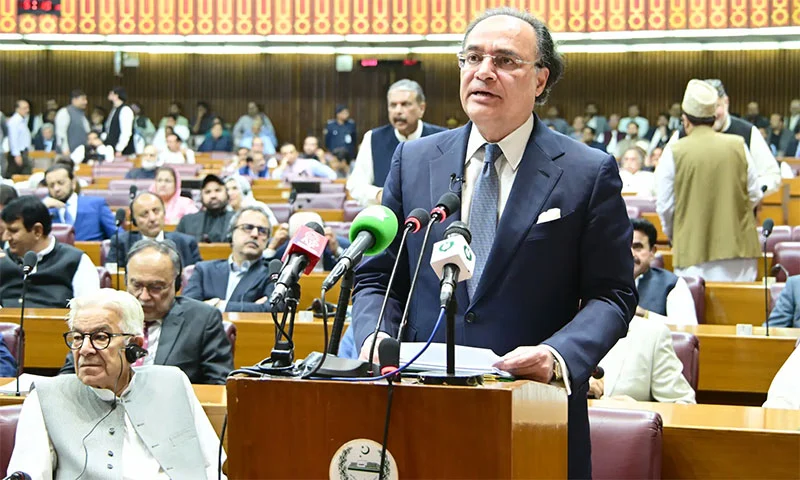
Finance Minister Muhammad Aurangzeb on Friday unveiled a Rs18.8 trillion federal budget for fiscal year 2026-27, outlining tax relief for salaried individuals, increased defence spending, higher development allocations and a roadmap aimed at sustaining economic recovery. The budget was presented in the National Assembly amid noisy protests by opposition lawmakers. The session began nearly two hours behind schedule and witnessed slogan chanting, desk thumping and brief confrontations between treasury and opposition members. Presenting his third budget, Aurangzeb said Pakistan’s international standing had improved significantly over the past year. “This budget is being presented at a time when Pakistan has achieved the status in the eyes of its people and the world as a country whose voice is listened to, and whose friendship is desired.” He added that Pakistan’s military and diplomatic achievements had strengthened its global position. “Today, the world acknowledges Pakistan’s defensive strength,” he said, while also highlighting Pakistan’s role in efforts aimed at securing peace between Iran and the United States. Key Economic Targets for FY2026-27 The government has projected economic growth of 4 percent for the next fiscal year, while average inflation is expected to remain at 8.2 percent. The fiscal deficit is projected at 3.6 percent of GDP, while the primary surplus is targeted at 2 percent. Tax revenue has been estimated at Rs15.264 trillion, representing an increase of 17.6 percent compared to the outgoing fiscal year’s collection target. The finance minister said the tax-to-GDP ratio had increased from 8.5 percent to 10.3 percent during the last three years. He also highlighted improvements in fiscal stability. “Our fiscal deficit in June 2023 was 7.8% of GDP, which by the end of the current financial year will come down to 4%.” Defence and Debt Servicing Receive Largest Allocations The largest share of the budget has been allocated for debt servicing. Aurangzeb said Rs8.045 trillion has been earmarked for markup payments, accounting for the biggest component of federal expenditure. Defence spending has been allocated Rs3 trillion. The finance minister described defence as the government’s highest priority, citing regional security challenges and Pakistan’s strategic interests. Meanwhile, civil administration expenditures have been budgeted at Rs1.071 trillion. The government has also allocated Rs1.169 trillion for pension payments and Rs1.091 trillion for subsidies, mainly in the power sector. Rs1 Trillion Development Programme Approved The federal Public Sector Development Programme has been allocated Rs1 trillion for FY2026-27. After including investments by state-owned enterprises and public-private partnership projects, the total development envelope rises to Rs1.451 trillion. Aurangzeb said provincial development programmes would receive Rs2.224 trillion, while Rs451 billion has been allocated for investments through state-owned enterprises. “This allocation reflects the new distribution of responsibilities following the 18th Constitutional Amendment.” He said more than 60 percent of federal development spending would focus on transport, communications, water resources and energy projects. Affordable Housing and Urban Development The government has allocated Rs54.6 billion for sustainable urban development and housing initiatives. According to the finance minister, the allocation will support the construction of 150,000 affordable and climate-resilient housing units across Pakistan. The programme also includes digital master plans for 10 major cities and improvements in urban water supply and sanitation infrastructure. Tax Relief for Salaried Class The government proposed income tax reductions for salaried individuals across four income slabs. For annual incomes between Rs2.2 million and Rs3.2 million, the tax rate would decline from 23 percent to 20 percent. For those earning between Rs3.2 million and Rs4.1 million, the rate would fall from 30 percent to 25 percent. Taxpayers earning between Rs4.1 million and Rs5.6 million would see their rate reduced from 35 percent to 29 percent. Meanwhile, individuals earning between Rs5.6 million and Rs7 million would pay 32 percent instead of 35 percent. The government also proposed removing taxes on sanitary pads and contraceptives. Government employees will receive a 7 percent salary increase, while pensions will rise by 7 percent. The minimum wage has also been proposed to increase by 10 percent. Super Tax Reduced for Businesses Aurangzeb announced the abolition of the super tax for businesses earning between Rs150 million and Rs500 million annually. For companies earning more than Rs500 million, the super tax rate would be reduced from 10 percent to 8 percent. The government said the measure aims to improve the business environment and encourage investment. Health, Education and Technology Spending Increased The federal government has allocated Rs25.1 billion for health projects. These include expansion of tertiary healthcare facilities, cancer treatment centres, emergency care services and disease surveillance systems. For higher education, Rs46 billion has been allocated, up from Rs34.9 billion last year. The allocation includes scholarships, research initiatives, digital learning programmes and AI-based education systems. Additionally, Rs3.6 billion has been earmarked for science and technology projects. Energy Reforms and LNG Savings The finance minister said Pakistan’s energy sector was undergoing its deepest reform phase. He said the government saved more than Rs143 billion in electricity subsidies during FY2025-26. According to Aurangzeb, Pakistan also achieved net-zero accumulation of circular debt in the power sector. He added that renegotiated LNG agreements with Qatar and Italy would reduce 35 LNG cargoes in 2026, generating savings of approximately $1.2 billion in foreign exchange. Economy Shows Signs of Recovery Aurangzeb said Pakistan’s economy grew by 3.7 percent during the outgoing fiscal year. Large-scale manufacturing expanded by 6.1 percent, while the services sector grew by 4.1 percent. The country’s economic size reached $452 billion, while per capita income increased to $1,901 from $1,751 a year earlier. Foreign exchange reserves rose to $17 billion compared to $4 billion three years ago. The finance minister also said remittances are expected to exceed a record $41 billion by the end of FY2025-26. Corporate Sector, Stock Market and Privatisation The finance minister said corporate profits increased by 22 percent during January-March 2026 compared to the same period last year. The Pakistan Stock Exchange also witnessed a record increase in investor participation. According to Aurangzeb, 11 initial public offerings were launched this year, the highest number in two decades. More than 39,000 new
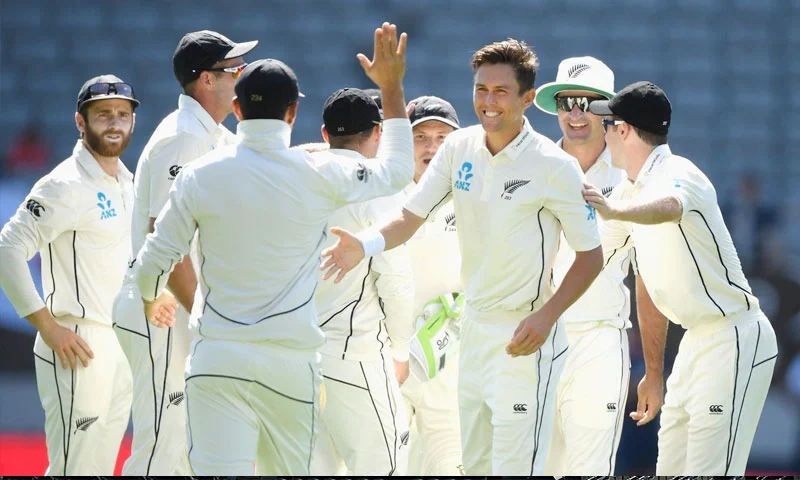
New Zealand Cricket Loses One of Its Greatest Ever Players
Kane Williamson has announced his retirement from international cricket with immediate effect, bringing an end to one of the most successful careers in New Zealand’s sporting history. The 35-year-old batter made the decision during New Zealand’s ongoing Test tour of England. The Lord’s Test has now become his final international appearance. New Zealand currently trail the series 1-0 after losing the opening match. Williamson confirmed the news in a statement released by New Zealand Cricket. “I’ve thought about it for a while, but over the last few days it’s become clear now is the right time,” Williamson said. “I’ve always felt a strong drive and hunger for international cricket, and I take pride in knowing I’ve given it my all in every match I’ve played for New Zealand.” “Continuing with anything less wouldn’t be right and I feel fortunate to step away on my own terms.” The former captain added that he remains optimistic about the future of New Zealand cricket. “I leave feeling optimistic about where this group is heading. There’s a huge amount of talent, and a real desire to do something special with this New Zealand team.” “It’s a team I love, and I feel incredibly fortunate to have been part of it for so long. It will continue to be dear to my heart.” Williamson’s retirement means he will not take part in the 2027 ICC Cricket World Cup, which will be hosted by South Africa, Zimbabwe and Namibia. A Career Defined by Runs and Leadership Williamson debuted in ODI cricket against India in August 2010 and scored a century on his Test debut against the same opposition in Ahmedabad three months later. He finishes as New Zealand’s highest run-scorer across all formats with 19,346 international runs and 48 centuries. His Test record stands among the finest in modern cricket. He scored 9,515 runs in 110 Tests at an average of 54.06, including 33 centuries and 38 half-centuries. In ODIs, Williamson amassed 7,256 runs in 175 matches at an average of 48.69. He also struck 15 centuries and 47 fifties. Across T20 internationals, he remained one of New Zealand’s most dependable performers and captains. His leadership record is equally impressive. Williamson captained New Zealand in 40 Tests, 91 ODIs and 75 T20Is. Under his leadership, New Zealand reached the 2019 ODI World Cup final, where he won the Player of the Tournament award. The Black Caps also reached the final of the 2021 T20 World Cup. However, his greatest achievement came in June 2021. Williamson led New Zealand to victory in the inaugural ICC World Test Championship final against India in Southampton. He scored 49 and an unbeaten 52 as New Zealand secured the title. Tributes Pour In for a Modern Great New Zealand head coach Rob Walter praised Williamson’s contribution to the game. “Kane’s always put the team first and although we’re disappointed to see him go, we’re happy to know he’s content and at peace with his decision. An incredible player, awesome teammate, a wonderful leader and a fantastic ambassador for our sport.” Former captain Sir Richard Hadlee also paid tribute to Williamson’s legacy. “Kane’s been a wonderful player and has been a fine leader,” Hadlee said. “He’s been an unflappable leader and the architect of some of our greatest moments in cricket. I commend him and thank him for everything he has contributed to cricket and wish him a happy retirement.” Williamson retires as New Zealand’s sixth-most capped men’s player, a four-time Sir Richard Hadlee Medal winner and the ICC Men’s Test Player of the Year for 2019. His calm leadership, technical excellence and consistency ensured his place among the finest batters of his generation.
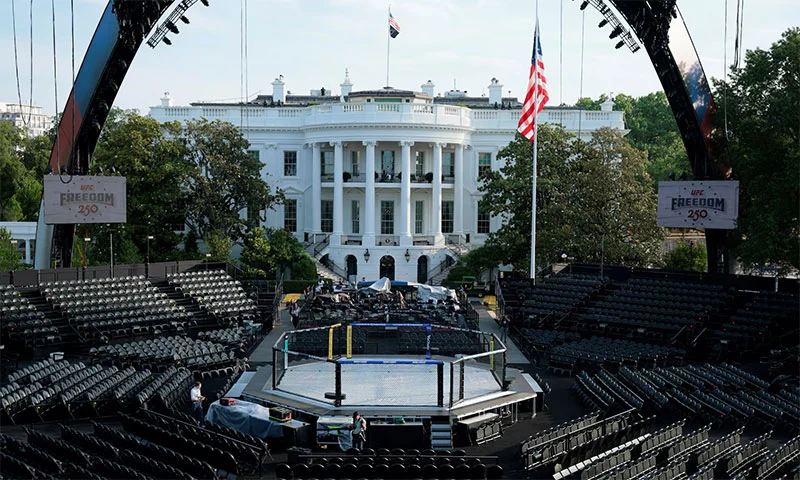
Trump’s 80th Birthday UFC Showdown Sparks Political Storm
President Donald Trump will celebrate his 80th birthday by hosting an unprecedented Ultimate Fighting Championship (UFC) event on the White House lawn, transforming the historic South Lawn into a giant fighting arena for the $60 million “UFC Freedom 250” tournament. The event, which also forms part of celebrations marking America’s 250th anniversary, has drawn both excitement and criticism across the United States. The event will feature 14 Ultimate Fighting Championship contestants competing inside the iconic Octagon cage. Organizers expect around 4,000 spectators inside the arena. More than 125,000 people could watch from a giant screen on the Ellipse, the public park just outside the White House. Trump has described the event as a unique way to mark the nation’s milestone anniversary. He has repeatedly stressed that UFC is covering the costs of the event, which media reports estimate at around $60 million. Speaking to the New York Post, Trump said: “They’re the roughest people you’ll ever meet. If you haven’t seen it much, you’re not going to believe it.” The president has maintained close ties with UFC President Dana White for years. White was among Trump’s most prominent supporters during recent election campaigns and frequently appeared at campaign events. ‘The Claw’ Becomes Center of Political Debate Preparations have transformed the South Lawn into a major sporting venue. According to organizers, the arena weighs about 600 tons, spans 154 feet across and reaches 92 feet in height. The structure stands taller than parts of the White House itself. The site carries deep historical significance. Former presidents used the same lawn for major diplomatic events, including the signing of the Oslo Accords in 1993 and presidential farewell ceremonies. Critics, however, argue that the event reflects misplaced priorities. The tournament comes as the United States faces economic pressures linked to rising prices and tensions in the Middle East following the conflict with Iran. Several advocacy groups challenged the event in court. They argued that the White House should not host a private sporting spectacle that could benefit the president’s political allies. The administration rejected those claims and defended the event as a public celebration. Secretary of State Marco Rubio strongly backed the initiative. After signing a partnership agreement with UFC aimed at promoting mixed martial arts internationally, Rubio said: “That’s what Sunday is about, it’s a gift to the American people.” He added that the tournament would attract “probably a billion people all over the world.” Trump’s Showmanship on Full Display Political analysts say the event reflects Trump’s long-standing approach to politics and public image. Peter Loge, director of George Washington University’s School of Media, told AFP: “Donald Trump has built a public persona throughout his life by being the Donald Trump show.” “It’s loud, it’s glitzy, it’s glossy, that’s what this is.” Loge said the event projects an image of strength and control during a turbulent period. “It’s gladiators,” he said. “In a time of chaos in the US, it is to say that the US is strength, it is force, and it is in control. There’s fireworks and two guys beating each other up.” Despite speculation that the arena could remain on White House grounds, officials insist it will not become a permanent feature. Joshua Fisher, Director for White House Management and Administration, said in court documents that “The Claw will be disassembled immediately after the event concludes.”
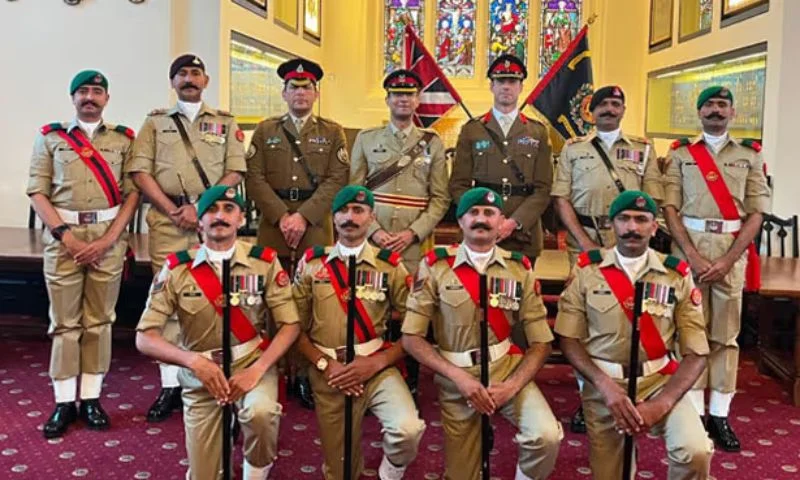
Pakistan Army’s Stunning Performance Earns International Recognition in UK
The Pakistan Army has achieved a major international milestone after winning the prestigious International Pace Sticking Competition 2026 at the Royal Military Academy Sandhurst in the United Kingdom. According to the Inter-Services Public Relations (ISPR), the Pakistan Military Academy (PMA) team delivered an outstanding performance and secured first place overall in the annual competition, which attracted military teams from around the world. The Pakistani contingent claimed the 1st Overall Team Trophy and also won the Best Pace Sticker and Best Driver awards, completing a clean sweep of the competition’s top honours. The nine-member team represented Pakistan Army under the leadership of Major Haider Gulzar, Adjutant of PMA. The contingent arrived in the United Kingdom on June 5 to prepare for the event. A total of 16 teams from different armies participated in the competition, making the victory one of Pakistan’s most significant achievements at an international military skills event in recent years. The ISPR said the success reflects the high standards of professional training, discipline and excellence maintained by the Armed Forces of Pakistan. What Is Pace Sticking? Pace sticking is a ceremonial military discipline that originated in the British Army and remains an important part of drill traditions at military academies across the Commonwealth. The pace stick itself is a hinged instrument traditionally used by drill instructors to measure the length of a soldier’s pace during marching exercises. Over time, pace sticking evolved into a highly skilled display of precision drill, leadership and coordination. Competitions test participants on marching accuracy, discipline, command presence and the ability to perform complex drill movements under strict judging criteria. The Royal Military Academy Sandhurst hosts the annual competition, attracting military academies and training institutions from several countries. Widely regarded as one of the world’s leading military training institutions, Sandhurst has trained generations of military officers from across Asia, Africa, Europe and the Middle East. Pakistan maintains a long-standing relationship with the academy. Many senior Pakistani military officers have attended professional courses there over the years. Recognition for Professional Excellence Military observers view the latest victory as another example of Pakistan Army’s strong performance in international military competitions. Pakistani teams have previously earned recognition in events related to military drills, marksmanship, physical endurance and professional military skills. Winning all major categories at Sandhurst carries particular significance because the competition focuses on discipline, ceremonial excellence and leadership, qualities considered fundamental in officer training. The achievement comes at a time when military-to-military engagement and professional exchanges continue to play an important role in strengthening international defence cooperation. For the Pakistan Military Academy team, the victory represents months of preparation and rigorous training. It also places Pakistan at the top of a competition that featured some of the world’s most respected military institutions.
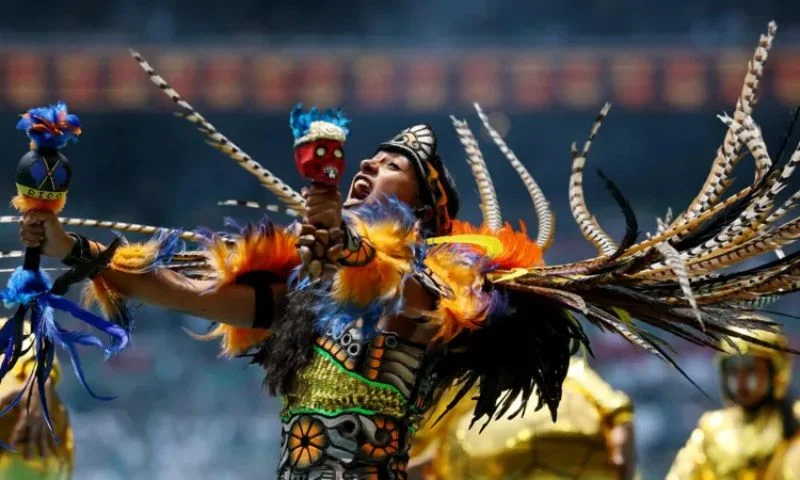
Shakira Steals the Show as Mexico Kicks Off World Cup With Victory
The FIFA World Cup 2026 officially began on Thursday in Mexico City with a colourful opening ceremony featuring global music stars, traditional cultural performances and a packed Azteca Stadium witnessing Mexico’s opening victory over South Africa. More than 80,000 fans filled the iconic stadium, which hosted World Cup matches in 1970 and 1986. The tournament marks the first time Mexico has hosted football’s biggest event in 40 years and makes history as the first nation to stage matches at three separate men’s World Cups. The ceremony blended music, football and Mexican culture before the opening match. “Bienvenida a México. Welcome to Mexico,” a performer announced. “We are a nation of diversity, heritage and pride. Football carries the same heartbeat, uniting generations.” Global superstar Shakira headlined the event alongside J Balvin, Burna Boy and Danny Ocean. Mexican singer Fher Olvera performed the classic “Oye Mi Amor”, while renowned tenor Andrea Bocelli and K-pop artist EJAE sang the tournament’s official anthem, DNA. Grammy-winning South African star Tyla performed South Africa’s national anthem before kickoff. Performers dressed in indigenous-inspired clothing and traditional Mexican attire filled the pitch, while fireworks illuminated the stadium in the colours of the Mexican flag. Mexico Starts With Victory Amid Tight Security The celebrations continued when Mexico defeated South Africa 2-0 to launch its campaign on a winning note. Fans arrived hours before kickoff, creating a festive atmosphere around the stadium. Javier Pérez, who attended the match with his family, described the experience as unforgettable. “We were lucky to get hospitality tickets and it’s a unique experience. I have never been to a World Cup before so to bring my family is wonderful,” he told the BBC. “I just want Mexico to get off on the right foot, win today and score a load of goals! And then we’ll see how far we can go!” Authorities deployed a heavy security presence around the 82,000-capacity venue. Mexican officials said nearly 200 hooded protesters broke away from two larger groups of around 800 demonstrators and clashed with police near the stadium. The unrest temporarily disrupted nearby metro services before security forces restored order. Protests Cast Shadow Over Global Celebration While football dominated headlines, activists used the global spotlight to highlight domestic issues. Teachers’ unions and families of people missing during Mexico’s long-running drug war staged demonstrations across the capital. The protests coincided with the opening of a tournament expected to attract billions of viewers worldwide. Mexico is co-hosting the World Cup alongside the United States and Canada. The two countries are scheduled to stage separate opening celebrations on Friday. FIFA has assembled a diverse lineup of artists for the tournament. Several performers also feature on the 18-track Official FIFA World Cup 2026 Album. Despite isolated unrest outside the stadium, the focus inside remained firmly on football, music and celebration as the world’s biggest sporting event officially got underway.
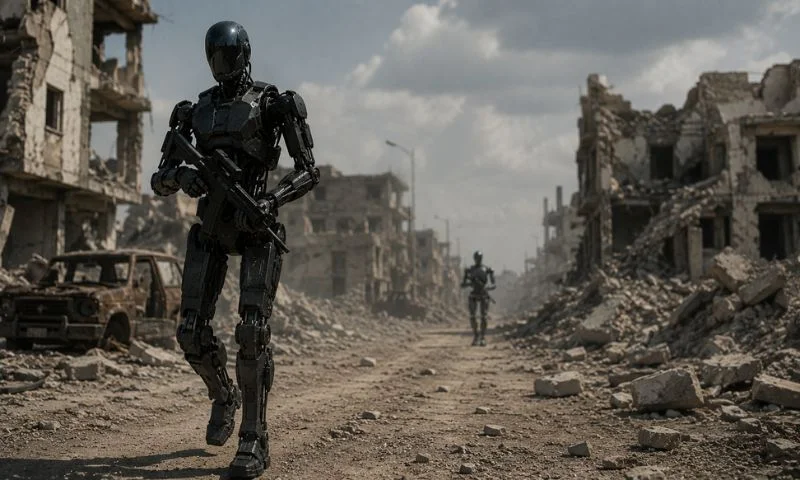
Is This the Beginning of the Age of Robot Soldiers?
A California technology startup is betting that humanoid robots could one day become a common sight on future battlefields, taking on dangerous military tasks that currently place human soldiers at risk. Foundation Robotics, a two-year-old company based in San Francisco, is developing a humanoid robot called Phantom for both civilian and military applications. While many robotics firms focus on warehouses, factories and household assistance, Foundation says it is the only US company building humanoid robots specifically for defence operations. The company’s founder and chief executive, Sankaet Pathak, envisions robots carrying out supply missions, reconnaissance, casualty recovery and hazardous inspections. He also sees a future where they take on combat roles. “Frontline weaponisation” is how Pathak describes that possibility. He argues that robotic soldiers could reduce risks to human troops and lower collateral damage by operating with greater precision in complex environments such as urban warfare. Foundation’s current robot, Phantom MK-1, remains a prototype. The machine weighs around 80 kilograms and can walk, balance and interact with objects. However, it lacks a battery, cannot withstand harsh weather and cannot recover after falling. The company is now building Phantom MK-2, which Pathak says will operate for up to six hours, survive difficult environmental conditions and regain its footing after a fall. Military Testing and Technological Challenges Foundation has secured $24 million in research contracts linked to military projects. The company says the US military is testing its technology for handling tasks, while the Ukrainian military is evaluating two units. According to Pathak, the US programme does not involve firing weapons. Ukraine’s testing includes weaponisation studies. The robot operates through an artificial intelligence system called Cortex. Cameras mounted in its helmet provide 360-degree vision and help the machine assess its surroundings. A reasoning model interprets assigned goals, while a world model predicts how the environment may respond. Pathak believes countries must invest in the technology to remain competitive. He argues that China is pursuing similar capabilities and says Western nations cannot afford to fall behind. The startup also attracted attention earlier this year when Eric Trump joined as an investor and adviser. Despite the enthusiasm, robotics experts remain cautious. Dean Fankhauser, founder of robotics advisory firm Robozaps, says military organisations clearly see potential in humanoid systems. However, he believes the technology still faces major obstacles. “If there was a war in Taiwan today, the likelihood that China is going to militarise these humanoids and fight effectively is fanciful,” he said. Experts note that current commercial humanoid robots still struggle with basic tasks that humans perform easily. Ethical Concerns and Global Debate Beyond technical challenges, ethical concerns continue to fuel debate. Nicole van Rooijen, executive director of the campaign group Stop Killer Robots, warns that autonomous weapons could lower the threshold for conflict and make accountability harder to establish. “The answer to the current technological arms race,” she argues, is stronger international regulation. Researchers also question whether humanoid robots represent the best solution for military operations. Some experts believe quadruped robots and drones may perform many battlefield tasks more efficiently. Robert Griffin of the Florida Institute for Human and Machine Cognition says unpredictable environments remain a major challenge. “You get an impression of human-level capability by seeing the human form… but [these autonomous systems] don’t know how to handle open-ended uncertainty yet,” he said. For now, humanoid robot soldiers remain largely experimental. Yet growing military investment and rapid advances in artificial intelligence suggest that the debate over robots in warfare is moving from science fiction toward reality.
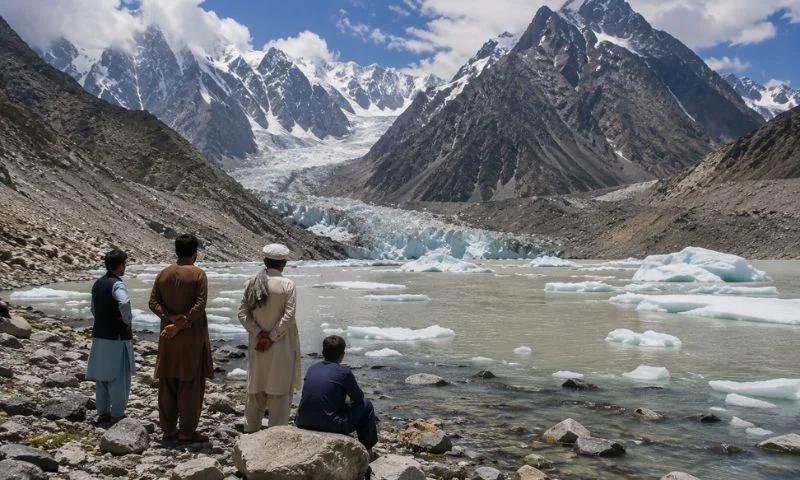
Pakistan’s North Reaches Highest Temperatures in 65 Years
Pakistan experienced its second-warmest year in 65 years during 2025, continuing a worrying climate trend that economists and environmental experts say poses growing risks to the country’s economy, water resources and food security. According to the Economic Survey 2025-26, the country recorded a national annual mean temperature of 23.9°C in 2025. That figure stood 1.09°C above the long-term average of 22.8°C. The survey identified 2024 as the hottest year on record and 2025 as the second warmest, marking consecutive years of exceptionally high temperatures. Despite contributing less than 1% of current global greenhouse gas emissions and only 0.4% historically, Pakistan remains among the countries most vulnerable to climate change. “Climate change is no longer a distant or abstract threat to the country but a present reality,” the survey stated. Scientists note that Pakistan’s average temperature has increased by around 0.5°C over the past five decades. Climate projections indicate temperatures could rise by another 3°C to 5°C by the end of the century if global emissions remain high. Northern Regions See Sharpest Temperature Rise The strongest warming occurred in northern Pakistan during 2025. Temperature anomalies reached 1.24°C in Gilgit-Baltistan, 1.29°C in Khyber Pakhtunkhwa and 1.56°C in Azad Jammu and Kashmir. All three regions recorded their highest annual temperatures in 65 years. Pakistan received 288.5 millimetres of rainfall during the year, slightly below the long-term average of 297.6 millimetres. Rainfall patterns, however, remained highly uneven. Sindh, Punjab and Gilgit-Baltistan received above-average precipitation, while Khyber Pakhtunkhwa and Balochistan remained below average. The monsoon season from July to September brought rainfall levels 23% above normal. Earlier months remained unusually dry. Experts say rising temperatures are accelerating glacier melt across the Himalaya, Karakoram and Hindu Kush mountain ranges. The changes are also altering monsoon behaviour and increasing the likelihood of extreme floods. The survey noted that fewer rainy days and more intense downpours have shifted monsoon patterns southward. Those changes contributed to widespread flooding across Pakistan in 2025, echoing the devastation witnessed during the catastrophic floods of 2022. The government also warned that limited international climate financing could hinder Pakistan’s ability to meet its commitments under global climate agreements. The World Bank estimates Pakistan requires $565.7 billion in climate-related investments by 2030. Of that amount, approximately $217.7 billion remains unfunded. Global Heat Emergency Deepens The climate crisis is not limited to Pakistan. The World Health Organization reported that extreme heat has claimed more than 200,000 lives across Europe since 2022. “The impacts of climate change are a clear and present danger, and its most immediate and lethal manifestation is extreme heat,” said Hans Henri Kluge, the WHO’s regional director for Europe. Scientists are also monitoring the return of the El Nino climate pattern. The National Oceanic and Atmospheric Administration said there is a 63% chance that El Nino will strengthen into one of the most powerful events recorded since 1950. UN Secretary-General Antonio Guterres warned that “El Nino conditions will pour fuel on the fire of a warming world”. Meanwhile, India has already reported delays in monsoon progress and below-average rainfall, raising concerns about agricultural production across the region. As temperatures continue to rise, climate experts warn that South Asia faces increasing risks from extreme heat, floods, water shortages and economic disruption.
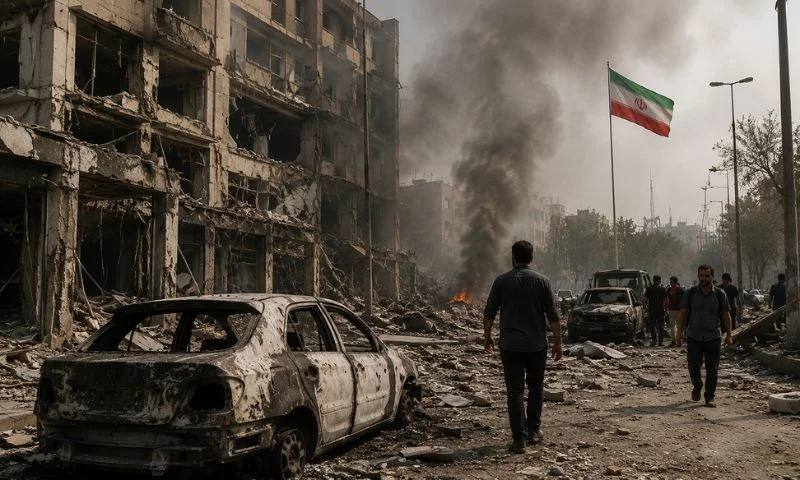
Trump Cancels Strikes and Reveals Possible Iran Peace Deal
US President Donald Trump said on Thursday that the United States and Iran could sign a peace agreement within days, raising hopes for an end to a conflict that has rattled global energy markets and destabilised the Middle East for more than three months. Speaking at the White House, Trump claimed negotiations had reached a decisive stage and suggested a formal signing could take place in Europe as early as this weekend. “We just made a great settlement of the war with Iran,” Trump told reporters. “The strait will officially open as soon as we sign, which could be soon, very soon, maybe over the weekend in Europe,” he added. Trump also said Vice President JD Vance could sign the agreement on behalf of the United States. When asked whether Iran’s Supreme Leader Ayatollah Mojtaba Khamenei had approved the arrangement, Trump replied: “I understand the answer is yes.” His remarks came shortly after he cancelled planned military strikes against Iran. In a statement posted on Truth Social, Trump said: “Based on the fact that discussions with the Islamic Republic of Iran have been brought to the highest level of Iranian leadership and approved, I have, as President of the United States of America, cancelled the scheduled strikes and bombings against Iran this evening.” However, Tehran quickly signalled caution. Iran’s semi-official Fars News Agency reported that Iranian leaders were likely to approve the agreement, while the country’s foreign ministry said reports of a finalised deal remained speculative. Conflict Escalates Despite Diplomatic Signals The diplomatic developments followed another night of military escalation. The US military said it struck Iranian military surveillance systems, communication networks and air defence positions across the country. According to US Central Command, American forces used precision munitions against targets that posed threats to US personnel and commercial shipping. Iran responded with missile attacks on American military assets in Bahrain, Jordan and Kuwait. The Islamic Revolutionary Guard Corps (IRGC) said it targeted 18 US military sites and struck key facilities, including air bases in Bahrain and Jordan. Iranian media reported explosions in Bandar Abbas, Kargan and Minab following the American attacks. Iran’s foreign ministry condemned the strikes and argued they had rendered the nearly two-month ceasefire “practically meaningless.” Parliament Speaker Bagher Ghalibaf also issued a warning to Washington. “Wrong strategies and impulsive decisions will reset the entire board for the worse, explode energy infrastructure and markets and create an endless quagmire that you will be stuck in for years,” he said. “You will see a different Iran.” Hormuz Closure Raises Global Concerns The crisis deepened after Iranian authorities confirmed a complete closure of the Strait of Hormuz until further notice. The strategic waterway handles roughly one-fifth of global oil shipments and remains one of the world’s most important energy routes. Iran’s Khatam al-Anbiya Central Headquarters warned that threats against Iranian energy infrastructure could trigger broader disruptions. “Either oil and gas exports are for everyone, or they will be available for no one,” the command said. Despite the tensions, oil prices fell after Trump announced the suspension of planned strikes. Brent crude dropped 2.7% to $90.60 per barrel, while US West Texas Intermediate crude fell 2.6% to $87.71. Saudi Arabia called for renewed diplomacy and backed mediation efforts led by Pakistan and Qatar. Pakistan also urged all sides to pursue dialogue and a negotiated settlement. The United Nations, China, Russia, Turkiye and the European Union issued similar calls for restraint as diplomats raced to prevent a wider regional conflict. Whether the proposed agreement materialises remains uncertain. However, the coming days could prove critical for both regional stability and global energy markets.
