

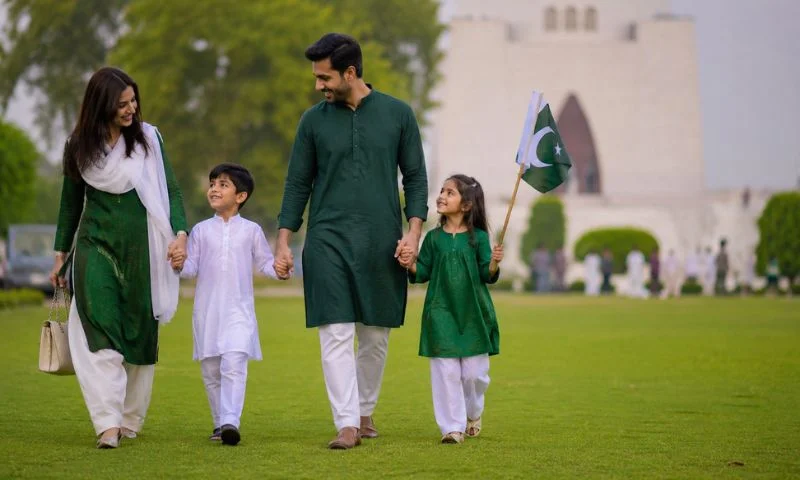
Pakistanis are set to receive seven non-working days in August 2026, as the month includes five Sundays and two federal public holidays. The Sundays will fall on August 2, 9, 16, 23, and 30. The federal government has also listed Friday, August 14, as the Independence Day holiday. Tuesday, August 25, appears in the official calendar for Eid Milad-un-Nabi, which marks 12th Rabi-ul-Awwal 1448 AH. The Cabinet Division included both occasions in its public and optional holidays calendar for 2026. The government published the annual notification on January 19. However, the seven-day total does not mean the government has announced seven separate public holidays. Five of those dates are regular weekly days off for employees whose workplaces close on Sundays. August 14 Could Bring a Long Weekend Independence Day will fall on a Friday this year. This timing could create a three-day break for employees who also receive Saturday and Sunday off. Such workers may remain away from offices from Friday, August 14, through Sunday, August 16. Offices following a six-day working week may reopen on Saturday, subject to their normal schedules. Pakistan observes Independence Day every year on August 14. The day commemorates the country’s emergence as an independent state in 1947. Official events usually include flag-hoisting ceremonies, public gatherings, cultural programmes, and special broadcasts. Government offices, educational institutions, banks, and many private businesses normally close for the national holiday. However, organisations providing essential services continue their operations according to separate duty arrangements. Eid Milad Holiday Listed for August 25 The federal holiday calendar lists Eid Milad-un-Nabi on Tuesday, August 25. The religious occasion falls on 12th Rabi-ul-Awwal and holds major importance for Muslims across Pakistan. The Cabinet Division’s annual calendar uses anticipated dates for Muslim festivals. Moon sighting can change these dates, and the government may issue a separate notification to confirm the final holiday. The August 25 holiday will not automatically create a long weekend because it falls on a Tuesday. Some employees may seek leave on Monday, August 24, to create a four-day break starting from Saturday. Any such arrangement will depend on approval from the relevant employer. Who Will Receive All Seven Days Off? Government employees with Sunday as their weekly holiday will receive the five regular weekly breaks. They will also observe the two listed federal holidays, taking the total to seven days during August. Many private-sector employees may follow the same schedule. However, private companies can apply their own leave policies. This particularly affects retail, healthcare, hospitality, media, transport, manufacturing, and other services that operate throughout the week. Employees should therefore check official notices from their departments or companies before making travel plans. Authorities may also issue a fresh notification closer to Eid Milad-un-Nabi after confirming the lunar date.
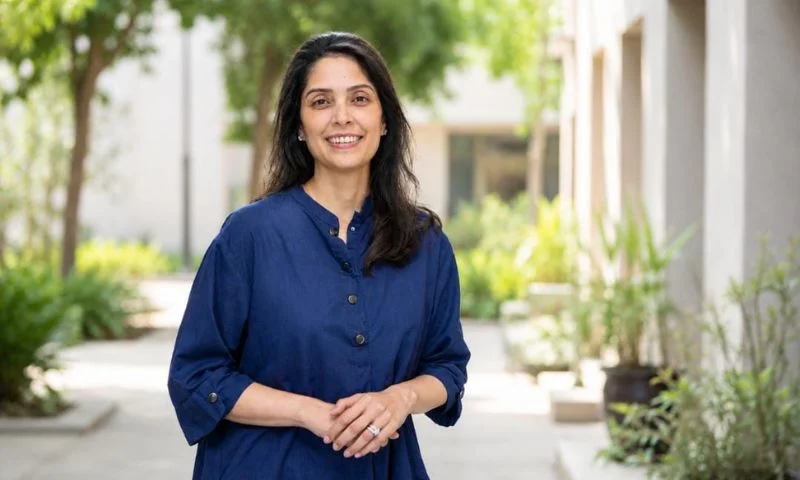
AKU Names Cancer Biologist Dr Kulsoom Ghias as New Dean
The Aga Khan University has appointed cancer biologist and academic leader Dr Kulsoom Ghias as Dean of its Faculty of Arts and Sciences. She took charge on July 27, 2026, succeeding Professor Stephen Lyon, who served as the Faculty’s inaugural Dean. Lyon said he would remain at FAS as Professor of Anthropology and support the leadership transition. AKU said Dr Ghias brings a research-driven vision and a strong commitment to interdisciplinary learning. Her career has connected cancer biology, medical education, ethics, and the humanities. A Career Across Sciences and Humanities Dr Ghias began her academic journey with a liberal arts foundation at the University of Virginia. She earned a Bachelor of Arts with Distinction there before completing her PhD at Northwestern University in Chicago. She later conducted postdoctoral research at Northwestern University’s Robert H. Lurie Comprehensive Cancer Center. She also earned an Advanced Diploma in Health Professions Education from AKU. Her listed research interests include cancer biology, ethics, and medical education. She is also a Senior Fellow of the Higher Education Academy in the United Kingdom. Read More: AKU, NED Implement Rooftop Rainwater Harvesting in Murree, Benefiting 1,100 Families Before the new appointment, Dr Ghias led AKU’s Department of Biological and Biomedical Sciences for seven years. The department credited her with strengthening its academic direction, mentoring colleagues, and building a collaborative culture. She has also worked to connect medical training with wider social and ethical questions. In 2016, she co-authored research on integrating humanities and social sciences into undergraduate medical education. She later co-edited the 2023 book Bioethics in Pakistan: Local Contexts, Local Cases. Priorities for the Faculty’s Next Chapter Dr Ghias said the Faculty would strengthen learner-centred education, interdisciplinary research, and partnerships. “Together, we will advance the Faculty of Arts and Sciences as a diverse, dynamic, and innovative academic community where learner-centered education, interdisciplinary research, and meaningful partnerships empower ethical, pluralistic, and socially accountable leaders to strengthen society and contribute meaningfully to a more just world,” said Dr Ghias. Read More: Career City 2026 Showcases Talent, Innovation, and Industry Collaboration at Habib University Her early priorities include expanding academic programmes and creating a stronger research culture. She also plans to invest in faculty and student success, deepen partnerships, and improve governance. The agenda aligns with FAS’s mission to prepare critical thinkers and ethical leaders for complex social challenges. AKU established the Faculty in September 2023 and enrolled its first students in a four-year Bachelor of Studies programme. Building on the Founding Dean’s Work The programme combines liberal arts education with social development, pluralism, and public service. Its current majors include Asian and Middle Eastern Studies, Environmental Studies, Social Development Studies, and Philosophy, Politics and Economics. AKU thanked Professor Lyon for establishing the Faculty and shaping its identity during its formative years. The University said his leadership created a strong base for the next phase of growth. Dr Ghias now takes responsibility for expanding programmes, research, partnerships, and the Faculty’s wider academic impact. Her appointment also places an experienced scientist and educator at the centre of AKU’s effort to bridge disciplinary boundaries.
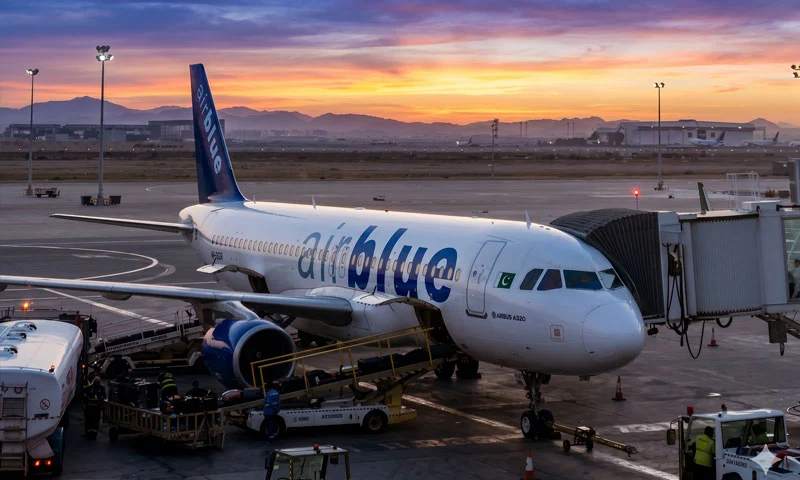
Airblue Offers Cabin Crew Careers to Multan and Sialkot Women
Airblue has announced cabin crew recruitment drives in Multan and Sialkot, offering young women opportunities to join the private airline. The Multan walk-in interviews will take place on August 11, 2026, from 9:00 am to 4:00 pm. Airblue will conduct the recruitment at Zainab Hall, Ramada by Wyndham Multan. Read More: Flying to Skardu? Airblue Has a New Offer for You The airline is also taking its cabin crew recruitment campaign to Sialkot for the first time. Candidates selected through the Sialkot drive will join Airblue’s Lahore base station. “We’re coming to Sialkot for the very first time for a cabin crew recruitment drive!” the airline said. “This is your chance to join our team with Lahore as the base station. Don’t miss out; apply now and take your career to new heights!” View this post on Instagram A post shared by Airblue Careers (@airblue_careers) Eligibility and Application Requirements The recruitment campaign targets female candidates between 18 and 28 years of age. Applicants must have a minimum height of 5 feet 2 inches, or 157.7 centimetres. Their weight must meet Airblue’s body mass index requirements. Candidates need an Intermediate qualification or an equivalent certificate with at least 60% marks. Airblue’s official career listing requires 12 years of education, good communication skills, computer knowledge and customer-handling abilities. No previous cabin crew experience is required. View this post on Instagram A post shared by Airblue Careers (@airblue_careers) Applicants must possess a valid passport. Personal details on the passport and CNIC must match the information recorded on their Matric certificate. Candidates must also submit board-verified educational certificates. The airline asks applicants to upload their photograph, government-issued identification and academic documents through its online portal. Read More: World’s Safest Airlines 2026: Full List of Top 25 Full-Service and Budget Carriers Students enrolled in regular degree programmes cannot apply. Airblue has also encouraged candidates from Multan, Sialkot and surrounding areas to participate. The deadline for pre-registration is August 2, 2026. Airblue’s careers page states that it accepts applications online, making advance registration essential before candidates attend the recruitment process. Documents Required for Interviews Applicants attending the Multan interviews must bring their original CNIC, passport, Matric certificate and Intermediate certificate. They must also carry police verification and board-verified academic documents. Airblue will not provide travelling or daily allowances to candidates attending the recruitment drives. Applicants should therefore arrange their own travel and accommodation. The official Airblue vacancies page currently lists 18 trainee cabin crew openings at Multan Airport and another 18 at Lahore Airport. The Lahore vacancies match the base station announced for candidates recruited through Sialkot. Read More: Emirates unveils viral new headrest to transform economy travel Airblue says it offers competitive salaries, employee benefits, travel privileges and opportunities for professional growth. However, the airline has not publicly disclosed the salary package or final training schedule for these recruitment drives. Candidates should rely on Airblue’s official careers portal and verified social media pages for updates. They should also avoid agents or individuals demanding money in return for interviews or employment.

Why Pakistan’s Housing Scheme Is Struggling to Deliver Homes
After food and clothing, people need a safe place to live. Once families can feed themselves and afford basic clothing, they usually begin to dream of owning a home. However, decent and affordable housing has become increasingly difficult to find around the world. Even New York, one of the most important cities in the world’s wealthiest country, faces a severe housing crisis. The issue became so politically important that Zohran Mamdani gained electoral support by placing affordable housing at the centre of his campaign. The problem extends far beyond the United States. Major commercial cities in the United Kingdom, France, Germany, China and several other countries also face growing pressure on housing. Read More: Asia-Pacific Leaders Back Climate-Resilient Housing in Karachi Pakistan faces similar challenges in cities, towns and rural areas. Thousands of families live in old, poorly maintained houses or buildings with weak foundations. These unsafe structures threaten lives and property, and several deadly accidents have occurred over the years. A World Bank report estimates that Pakistan faces a shortage of more than 12 million housing units. The shortage grows by around 350,000 homes every year. Urban areas account for between 40 and 47 percent of the deficit. The lack of affordable and properly constructed homes has also fuelled the rapid expansion of informal settlements. Karachi presents one of the clearest examples. Informal and unplanned neighbourhoods reportedly cover around 60 percent of the city, where millions of residents often lack basic civic services. Many families cannot afford to purchase a home, so they continue to live in rented properties. They pay rent for years, and sometimes for decades, but still fail to become homeowners. Successive governments have introduced housing programmes to address the shortage. However, most initiatives have failed to produce lasting results. The government launched one of Pakistan’s largest housing programmes in 1999 under the Pakistan Housing Scheme. A change of government disrupted the project and left it incomplete. Read More: Nepra Grants DHA City Historic Electricity Licences for 21 Years Later, governments led by the Pakistan Peoples Party, Pakistan Muslim League-Nawaz and Pakistan Tehreek-e-Insaf introduced low-cost housing initiatives. However, shifting priorities, political instability and changes in government prevented these programmes from continuing for long. For most citizens, the biggest barrier to home ownership remains the lack of affordable financing. Housing finance still represents a very small part of Pakistan’s banking sector. Banks and financial institutions have provided around Rs293 billion in loans to nearly 65,000 people for the purchase or construction of homes. The current government has also launched a subsidised loan scheme to help citizens purchase or build houses. Applicants can seek financing from commercial, Islamic and microfinance banks. The government has set the interest or profit rate at six percent and will cover the remaining financing cost through a subsidy. Borrowers will receive the discounted rate for the first 10 years. After that period, banks will link the profit rate to the Karachi Interbank Offered Rate, commonly known as KIBOR. The federal government has allocated Rs71 billion in the current financial year’s budget to support the housing subsidy. At the government’s request, the State Bank of Pakistan approved a more favourable financing structure. Applicants will contribute 10 percent of the property’s value, while banks will finance the remaining 90 percent. Under ordinary housing loans, borrowers usually contribute 15 percent and banks provide the remaining 85 percent. Applicants must hold Pakistani citizenship and possess a valid national identity card. Overseas Pakistanis can also apply by presenting a Pakistan Origin Card or a citizenship certificate. The programme also requires applicants to confirm that they do not already own registered property. The government has introduced property size limits to stop wealthy individuals from benefiting from subsidised financing. Applicants can use the loan for a house or plot measuring up to 10 marlas, or 2,720 square feet. For apartments, the covered area cannot exceed 1,500 square feet. Read More: Pakistan Could Become World’s 4th Most Populous Country in 5 Years The scheme offers loans of up to Rs10 million. However, its structure also allows low-income citizens to apply. Salaried individuals must provide salary slips for the previous three months, an employment letter and a bank statement covering one year. Business owners must submit proof of their business, including a tax registration number, tax documents and a one-year bank statement. Families can also combine their incomes. When an applicant’s monthly income falls below the bank’s requirement, the bank can include the income of parents, siblings, a spouse or children while assessing eligibility. The Ministry of Housing has developed an online portal for loan applications. However, many applicants say technical problems have made the process difficult and frustrating. State Bank officials have acknowledged these problems. They say officials are upgrading the portal and expect the application process to become faster and easier within 15 to 20 days. After applicants submit their documents, banks review their credit history and verify the information. The bank then approves or rejects the application. The Government of Pakistan guarantees the scheme, which should reduce unnecessary resistance from banks. Every Pakistani citizen can apply, whether they live in a city, town, village or informal settlement. Banks cannot reject applicants simply because of their profession or type of employment. The State Bank aims to provide housing loans to 300,000 people every year. Banks have received more than 100,000 applications so far. They have approved around 13,000 applications, while nearly 6,000 people have received loans worth Rs26 billion. These figures place the average loan amount at approximately Rs4.8 million. Loan approval does not automatically solve the housing problem. Applicants often struggle to find properties that meet the scheme’s legal requirements. Anyone who wants to purchase a completed house must find a seller who holds complete ownership documents, legal records and approved building plans. Many properties, especially those in older neighbourhoods and informal settlements, lack these documents. This problem prevents many potential buyers from using their approved loans. Read More: Pakistan Records Mysterious 6x Surge in Credit Card ATM Use Developers in new
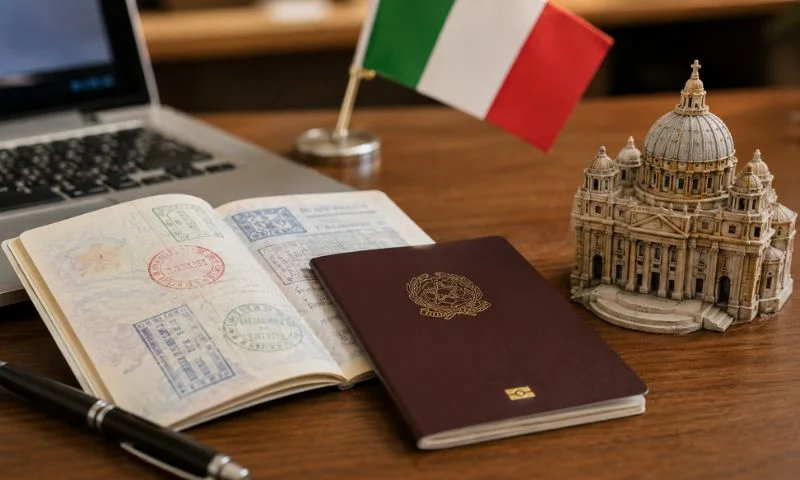
Italian Embassy Shares Key Update for Pakistan Visa Applicants
The Italian Embassy in Pakistan has issued fresh instructions for people seeking short-term, family reunion, work and study visas. It also warned applicants not to pay agents for appointments. In a notice published on July 25, the embassy said applications for short-term Schengen, family reunion and work visas must go through BLS Visa Application Centres. The designated centres are in Islamabad, Lahore, Multan and Faisalabad. Applicants must reserve slots through www.intianaitalyvisa.com, the portal named in the announcement. The embassy advised people to use only the correct channel, not intermediaries or unofficial websites. High demand has led officials to maintain a waiting list for family reunion and work visas. “All those who are registered in the waiting list will be granted an appointment,” the embassy said. Read More: Saudi Arabia Introduces One-Stop Tourist Visa for Seven Countries Earlier official notices said family reunion appointments follow chronological order and daily availability. Work visa slots also depend on registration order and the Visa Section’s capacity. The work waiting list covers seasonal employment, employed or highly skilled work, and self-employment or artist visas. Applicants cannot visit the service provider’s office without an appointment. Separate Process for Family Reunion and Study Visas People applying to reunite with an Italian or European Union citizen can contact the embassy directly. They must send an Italian certified email, known as PEC, to amb.islamabad.consolare@cert.esteri.it. The embassy’s website provides the required documentation for this category. This route differs from the standard family reunion process handled through BLS. Students seeking admission to an Italian university must first complete pre-enrolment on the Universitaly portal. BLS will contact them to arrange an appointment after their university confirms the application. The embassy’s May guidance for the 2026-2027 academic year says validated students will receive appointment details through their registered email. Officials will assign appointments by the university validation date. Read More: Saudi Arabia Cuts Instant Work Visas for Young Businesses to Just Five The guidance sets November 30, 2026, as the visa application deadline for that academic year. Students remain responsible for complete documents and meeting eligibility conditions. “If you follow these instructions and use the correct booking channel, you will receive an appointment,” the embassy said. Embassy Warns Applicants Against Appointment Fraud The embassy said intermediaries and agencies were illegally offering visa appointments in return for money. It said authorities were taking steps to counter the practice. “Visa appointments should never be purchased,” the warning said. “If you are approached by anyone offering an appointment for payment, please report it to the Embassy immediately.” Separate student visa guidance says the embassy and BLS-Intiana have no official WhatsApp or mobile number for contacting applicants. They also do not demand deposits, commissions or extra payments for securing study visa appointments. Applicants should rely on official embassy and service provider channels, check the correct visa category and follow the stated procedure.
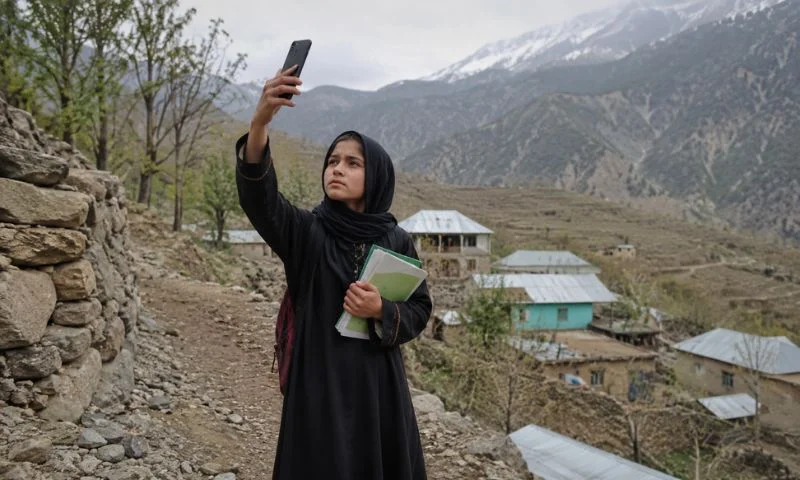
No Signal, No School: Internet Crisis Hits Girls’ Education in KP
Every morning, 16-year-old Khadija Bibi leaves her Kurram home and climbs a hill. She holds up her phone, searching for enough signal to download notes, submit assignments and attend online classes. “We live in an area where there is still no reliable internet signal,” Khadija told The Express Tribune. “We frequently miss online classes and cannot submit assignments on time.” Khadija studies BS Computer Science at Benazir Women University Peshawar. She described poor connectivity as an obstacle to her education. Read More: Millions Need Help but Funding Is Vanishing, UN Women Warns “The world is talking about 5G technology, but we are still deprived of even basic internet services. This is affecting our education and limiting our future opportunities,” she said. Her experience mirrors the challenges facing girls across Khyber-Pakhtunkhwa’s merged districts. Poverty, insecurity and inadequate schools already restrict education. Unreliable internet has created another barrier despite efforts to expand digital learning. Education and Internet Access Remain Critically Low Residents and education advocates say many schools lack computer labs. Some have designated labs but no computers or internet access. BISP data puts the out-of-school rate at 66 per cent in North Waziristan. It stands at 63 per cent in Bajaur and 61 per cent in South Waziristan. The rate is 51 per cent in Mohmand and Khyber, and 47 per cent in Kurram and Orakzai. The Khyber-Pakhtunkhwa Women Empowerment Policy 2026-2030 says only 11 per cent of women in the merged districts can access the internet. Female literacy stands at just 17 per cent. The province launched it in March 2026 with the KP Commission on the Status of Women and UN Women. Qamar Naseem, programme manager at Blue Veins and Malala Fund Education Champion for Pakistan, said remote communities remained excluded. “Even where network coverage exists, girls often do not own smartphones, cannot afford internet packages and have to rely on borrowed devices,” he said. “In many parts of Khyber-Pakhtunkhwa, particularly the merged districts, girls’ use of mobile phones and the internet is often viewed with suspicion. Families impose restrictions because of concerns over online safety, social pressure, and cultural norms,” he added. Naseem said 35 per cent of women using mobile internet borrow an enabled phone. Only 6 per cent of male users do the same. Experts Demand Connectivity and Better Transport World Bank digital inclusion consultant Karishma Zakiullah said signals alone would not solve the problem. Women also need improved mobility. “Extending Bus Rapid Transit (BRT) services to the merged districts would improve access to education, training centres and employment.” Read More: Pakistan Ends Taxes on Sanitary Pads and Contraceptives, Netizens React “Even today, girls in the merged districts continue to face inadequate digital infrastructure and limited educational opportunities. The government and telecommunications authorities must prioritise these districts and ensure they receive the same quality of internet services available in settled areas,” she said. The Express Tribune said KPITB and PTA did not answer repeated requests for comment.
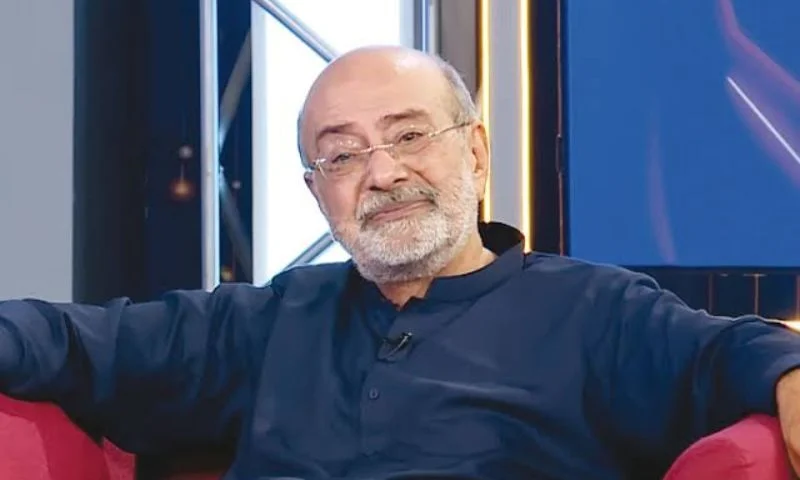
Mohammed Ahmed Exposes Rise of AI-Written Pakistani Dramas
Veteran actor and screenwriter Syed Mohammed Ahmed has criticised AI use in Pakistan’s television industry. He says some writers now use AI to produce complete 26-episode drama scripts. Speaking to Sheeba Khan on the Dareecha podcast, Ahmed said writers often lose control after producers take over. He named writer Sarah Majeed as an example. “Sarah Majeed is a good writer. She’s young, she has a knack for fun writing, but who are the ones getting this writing done, what do they do? They twist [writers’] arms.” Ahmed said producers had also ordered him to remove material from one of his serials. “My own serial, that I’d written 17 episodes of, did they not ask me to delete everything past episode 11?” Ahmed now lets producers alter his scripts when rewrites fail. “I gave them permission because my thoughts are my own. I can’t write as Sheeba, now can I?” he said. “So then I say, ‘Sheeba, this is what I’ve written, now you can tear it apart, do whatever you want to it.’” AI Dialogue Does Not Fit Pakistani Culture Ahmed said some writers have stopped making a serious effort because production teams will rewrite their work. “A lot of writers are now writing 26-episode scripts with the help of AI,” he said. “And you can tell it’s with AI, because these writers don’t even try to change the dialogue to fit our culture.” “It’s not in the language that we speak because AI just wrote it and gave it to you,” he added. Ahmed said he needs 10 to 11 months to write one serial. “Then how are they churning out four serials a day? It’s not humanly possible,” he exclaimed. He also raised concerns about uncredited labour. Ahmed said recognised writers use students, while content teams edit AI-generated drafts without credit. “Names sell. [Production houses] want so and so to write because their name sells,” he said. Why Ahmed Stopped Writing Dramas Ahmed said financial pressure leaves many writers unable to challenge studios. However, he chose to stop writing. “They’re desperate, everyone needs to earn money and run their household, I do too, I just decided not to write anymore,” he said. “I can’t write toxic mothers and daughters-in-law, I just can’t.” He recalled writing a drama about an issue that could empower women and girls. Producers responded with what he called “such a deafening silence.” “It would have exposed men,” Ahmed said. “This is a secret we’ve suppressed for so long because we need our daughters-in-law as punching bags.” He believed the drama would have made “men,” “mothers-in-law” and television channels cry. Yet, he said, “All these educated producers, or so-called educated producers, they went silent on it.” Ahmed warned that someone could later take his idea and ask another writer to develop it. He asked Khan to remember him if that happened.
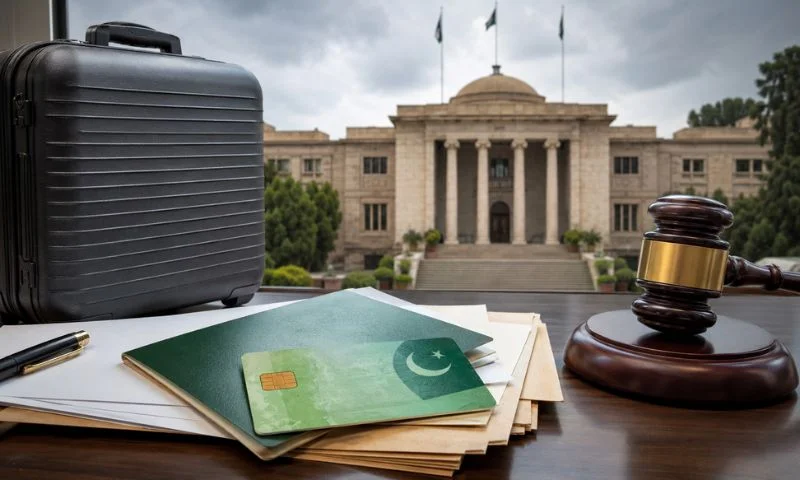
PHC Stops Deportation of Pakistani Man Named ‘Quaid-i-Azam’
The Peshawar High Court has stopped authorities from deporting a man named Quaid-i-Azam after Nadra blocked his national identity card. The court also ordered him to appear before the authority’s verification board. A two-member bench comprising Justice Waqar Ahmed and Justice Inamullah Khan heard the petition on Monday, July 27. Quaid-i-Azam had challenged the blocking of his Computerised National Identity Card, arguing that the action disrupted his personal and commercial affairs. Advocate Saifullah Mohib Kakakhel represented the petitioner. Shahid Imran Gigiyani, an assistant director legal at the National Database and Registration Authority, appeared for Nadra. After hearing both sides, the bench directed Quaid-i-Azam to present his case before Nadra’s verification board. It also barred the authorities from deporting him before his appearance before the board. Petitioner Cites Business and Tax Record Kakakhel told the court that his client conducts business in both Dubai and Pakistan. He maintained that Quaid-i-Azam is a Pakistani citizen who operates businesses and pays taxes to the government. The lawyer said the blocked identity card had penalised his client and caused him “immense hardship.” A valid CNIC supports access to banking, travel documents, property transactions and many routine public and private services. Read More: Senate Panel Approves Bill Allowing NADRA to Block CNICs Kakakhel also questioned Nadra’s demand that the petitioner produce his uncle during the verification process. He informed the bench that other members of the petitioner’s family already possess Pakistani identity cards. Gigiyani told the judges that Nadra had filed its formal response to the petition. However, he maintained that the authority considered Quaid-i-Azam’s identity card “suspicious” and had blocked it for that reason. The reported order did not resolve the petitioner’s citizenship claim at this stage. Instead, the court sent the matter to Nadra’s verification mechanism while granting him temporary protection from deportation. Legal Safeguards in Blocked CNIC Cases The order follows a recent PHC approach in disputed nationality cases. In June, the court directed applicants claiming Pakistani citizenship to first approach Nadra and complete verification before seeking constitutional relief. The PHC also told Nadra to refer complete cases to special verification boards. It ordered the authority to decide those cases within four months after receiving the applications and required documents. Read More: Digital CNIC Now Legally Equal to Physical ID, NADRA Clarifies Nadra’s official guidance states that a CNIC is issued to Pakistani citizens aged 18 or above. The card serves as a primary document for establishing a citizen’s identity. Pakistani courts have also stressed that Nadra must follow due process when restricting identity documents. A Sindh High Court judgment held that the authority must issue notice and provide a fair hearing before impounding a card under Section 18 of the Nadra Ordinance. That judgment described CNIC blocking as “an extreme act” because it can prevent a person from carrying out routine activities. In Quaid-i-Azam’s case, the PHC has placed verification first while protecting him from deportation before his board appearance.

New Hajj Policy Brings Major Changes for Pakistani Pilgrims
Pakistan’s religious affairs ministry has published its first four-year Hajj Policy and Plan for 2027 to 2030. The federal cabinet approved it on July 7 to improve long-term planning, service quality and efficiency. The 16-page policy allows three-to-four-year contracts in Saudi Arabia for flights, accommodation, catering, ground transport and baggage handling. Officials expect longer agreements to reduce costs and secure services earlier, subject to Saudi rules. The government will receive 60% of Pakistan’s Hajj quota, while private operators will manage 40%. Any change will require cabinet approval. Read More: Hajj 2027 Registration Opens in Pakistan Through Pak Hajj App Registration, Savings and New Options The ministry will introduce a multi-year registration list and Hajj Savings Scheme, allowing applicants to choose their intended Hajj year. A pilgrim who deposits 10% of the estimated cost will enter the priority waiting list. Selection will follow a first-come, first-served system. Government pilgrims may choose a standard package lasting about 38 to 42 days or a short package of 20 to 25 days. The ministry will calculate prices annually after finalising contracts and assessing exchange rates and Saudi charges. The policy states: “Any saving accruing to the Ministry of Religious Affairs and Interfaith Harmony after the completion of Hajj Operation shall be returned to the Hujjaj by the Ministry as per existing practice.” The plan ends cash and informal payments. Pilgrims under both schemes must pay through designated bank accounts and formal channels. Private-scheme funds will move through a government account maintained with the State Bank of Pakistan. “No cash or informal channel payments shall be accepted,” the policy says. Read More: New Hajj 2027 Registration Process Begins Across Pakistan Women may perform Hajj without a Mahram after submitting an affidavit. It must confirm family permission, travel with trustworthy women and no threat to their safety or dignity. Tougher Operator Rules and Pilgrim Protection Private companies must register with the Securities and Exchange Commission of Pakistan and use the Private Hajj Management Portal. The portal will connect with SECP, NADRA and the central bank. Operators must meet paid-up and authorised capital requirements and provide a 5% performance guarantee. Licences will run for three years, subject to annual reviews. Operators must book at least 2,000 pilgrims. Those missing the threshold will become inactive, lose half their security deposit and have their pilgrims transferred. The policy also bans quota trading, resale, outsourcing, subletting, cartels and anti-competitive practices. Mandatory training will cover Hajj rituals, Saudi laws, health precautions, hygiene, emergencies and mobile applications. The Cabinet Committee on Private Hajj Policy will set merit-based criteria for welfare assistants. Read More: Saudi Arabia Launches AI Translation Services for Hajj Pilgrims The Takaful-based Hujjaj Muhafiz Scheme will charge a non-refundable Rs1,000 contribution. It offers Rs2 million after a pilgrim’s death in Saudi Arabia and Rs250,000 for emergency medical evacuation without completing Hajj. An Emergency Response Team led by the Director General of Hajj will handle health crises, accidents, crowd incidents and natural disasters. The religious affairs minister may amend the framework to match changing Saudi directives.a
