

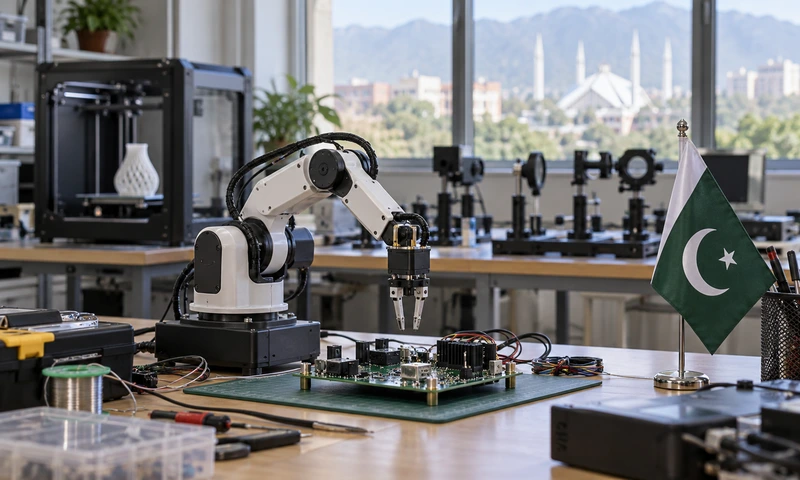
Federal Planning Minister Ahsan Iqbal launched Quantum Valley Pakistan on Wednesday, outlining a push to turn university research into commercially viable technologies. The initiative combines international startup programmes, specialised science parks and shared development facilities. Its focus spans quantum computing, artificial intelligence, photonics and robotics, alongside technologies serving agriculture, healthcare and mineral industries. The launch forms part of the government’s ambition to build a $1 trillion economy by 2035 and raise exports to $100 billion. 60 startups to access US innovation networks According to the initiative’s announced plans, 30 ventures will connect with Silicon Valley through Plug and Play. Another 30 will head to Massachusetts through Cambridge Innovation Center, or CIC. The programmes aim to help Pakistani startups move beyond domestic research environments and reach international markets. Quantum Valley Pakistan signed separate agreements with CIC and Plug and Play at the launch ceremony. CIC CEO Tim Rowe, partner Dougan Sherwood and Plug and Play managing partner Seena Amidi attended. Iqbal said the partnerships would connect young Pakistanis with global technology hubs and support entrepreneurship and high-tech businesses. The initiative’s website outlines startup incubation and acceleration services, including mentorship, market access and technical guidance. It also states that QVP takes strategic equity stakes in selected startups in return for support. Four science parks and nine national catapults The infrastructure plan includes four specialised science parks covering agri-tech, biosciences, mines and minerals, and emerging technologies. These facilities will support the broader effort to connect scientific expertise with industrial needs and commercial opportunities. Nine planned national catapults will provide shared fabrication laboratories, pilot production lines and testing facilities. Their purpose is to help teams develop prototypes into products ready for commercial launch. Shared facilities could give smaller ventures access to equipment and development capabilities that would be expensive to establish independently. The programme also addresses steps beyond technical development. QVP lists intellectual property management, patent support, regulatory assistance and legal facilitation among its services. Its technology-transfer offering includes access to early-stage technologies, dedicated land and assistance with relevant clearances. These services aim to help innovators move towards commercialisation and manufacturing. Technology linked to export ambitions Iqbal connected the launch with Pakistan’s wider economic objectives, including the $100 billion export target for 2035. “Achieving a $1 trillion economy by 2035 is certainly difficult, but it is not impossible,” he said. He recalled the establishment of national centres in 2017 covering fields including AI, cybersecurity, robotics and cloud computing. Those centres linked universities through a national technology network, he said. The new initiative seeks to build on that research base by adding commercial support, shared infrastructure and international connections. The science parks, catapults and overseas startup programmes represent planned components of that effort. Their central objective is to create a route from research laboratories to products that can compete internationally.
Why Petroleum Dealers Are Refusing to Join the Rs100 Relief Scheme
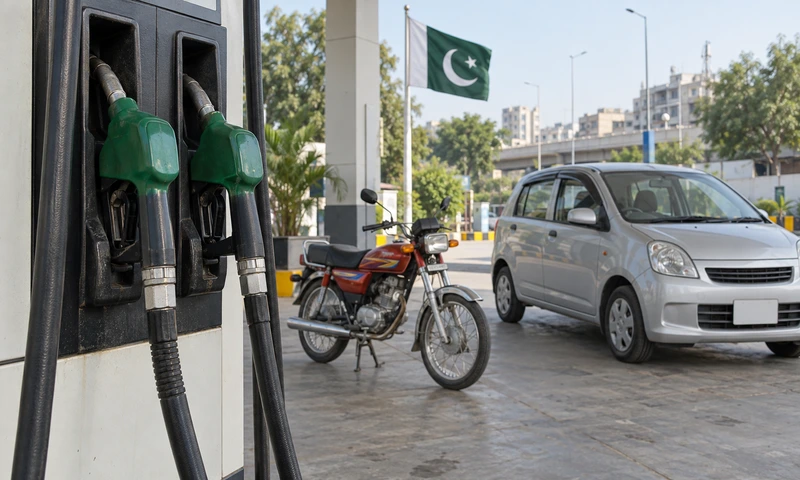
Petroleum dealers on Wednesday refused to sell subsidised petrol under the government’s Rs100-per-litre relief scheme, citing reimbursement concerns and financial pressure. The Pakistan Petroleum Dealers Association’s objections came hours before the planned nationwide rollout at 11:59pm on September 16. The scheme covers motorcyclists, rickshaw users and drivers of vehicles with engine capacities up to 800cc. PPDA Vice Chairman Anwar Kamal said the government had prepared the scheme without consulting dealers. Speaking at a Karachi press conference, he called its existing implementation mechanism difficult to follow. Dealers question reimbursement mechanism “We have reservations about the mechanism of the relief scheme,” Kamal said. He urged the government to deliver assistance directly to consumers through a simple process. Dealers already faced pressure on their working capital because of inflation, he added. Kamal also said oil marketing companies owed dealers billions of rupees in outstanding payments. “Putting the financial burden of the relief scheme on dealers is not workable,” he said. The association demanded higher dealer margins to help address rising operating costs. “How will the government pay dealers the amount for cheaper petrol?” Kamal questioned. He said dealers had contacted the government over the previous three days but received no response. He reiterated that they would not participate in the scheme in its “current form”. The announcement concerned sales under the subsidy mechanism. It did not establish that dealers would stop ordinary fuel sales. Monthly relief of up to Rs3,000 Prime Minister Shehbaz Sharif announced the scheme on September 13 amid rising fuel prices linked to Middle East tensions. He said the government recognised the pressure on households and would not leave people alone during difficult times. “We are launching a special scheme to reduce the burden of rising fuel prices on those using motorcycles, rickshaws, Chingchis and small vehicles,” he said. Motorcycle, rickshaw and other two- and three-wheeler users qualify for a Rs100-per-litre discount on up to 20 litres monthly. That provides maximum monthly relief of Rs2,000. Eligible vehicles up to 800cc qualify for 30 litres, equivalent to Rs3,000 in monthly savings. The government had already introduced the scheme in Islamabad before scheduling its nationwide expansion. Government orders payments within 24 hours Deputy Prime Minister and Foreign Minister Ishaq Dar reviewed rollout arrangements on Tuesday. He directed authorities to keep registration simple and accessible. Dar also ordered stronger public outreach and smooth implementation at petrol stations. He asked elected representatives to explain the scheme and help citizens register. He directed officials to involve Prime Minister’s Youth Programme volunteers in awareness and registration activities. Separately, Radio Pakistan reported that Dar had ordered settlement of fuel-station payments within 24 hours through the State Bank of Pakistan. Provinces also received instructions to complete district-level outreach. Registration was available nationwide through SMS to 9771, with token redemption scheduled for midnight between Wednesday and Thursday. The dealers’ objections indicate that the reimbursement directive had not resolved their concerns about implementing the scheme.
Pakistan Wins Panda Bond Award, Plans More Debt Issues in China
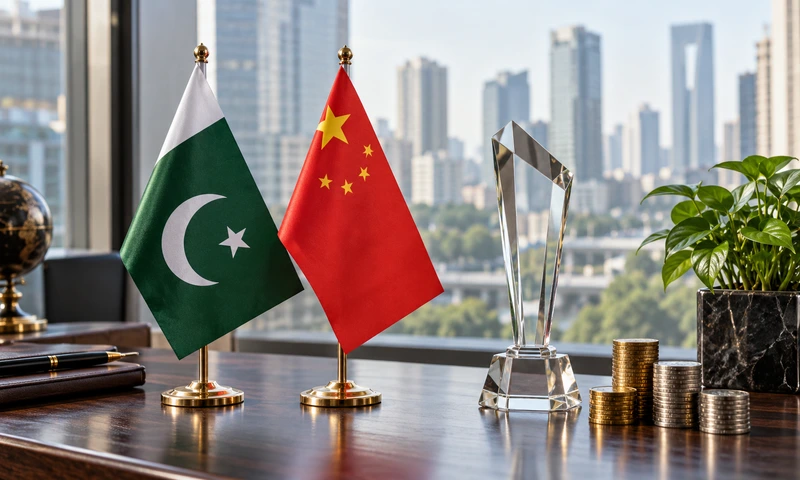
Pakistan has won an international award for its CNY1.75 billion Sustainable Panda Bond, worth approximately $258 million. Finance Minister Muhammad Aurangzeb said the country intends to return to China’s capital market with further debt issues. The country received the Pioneer Sustainable Sovereign Panda Bond Issuer Award at the 2026 APAC Climate Bonds Awards. The recognition follows Pakistan’s first renminbi-denominated bond issuance in May. Its proceeds will support environmentally friendly and socially important projects in water, energy and health. Investor demand exceeds five times the offering Adviser to the Finance Minister Khurram Schehzad outlined the transaction’s terms in a social media post on Wednesday. “The 3-year bond at 2.5% attracted 5x+ demand”, he wrote, describing the result as “opening a new pool of global capital, diversifying sovereign financing and strengthening Pakistan-China financial ties”. He said the issuance expanded Pakistan’s access to institutional investors and diversified its external financing sources. “This landmark transaction was completed with the collaboration of the Government of Pakistan, the Asian Infrastructure Investment Bank (AIIB), the Asian Development Bank (ADB), Chinese authorities, financial advisors, underwriters, and other market partners,” he said. The adviser linked the award to Pakistan’s efforts to broaden its funding options. “This global recognition is yet another important acknowledgement of Pakistan’s growing access to international capital markets, expanding investor base, new sources of financial resources, and ability to raise capital for sustainable development,” he said. Aurangzeb signals further Chinese-market issues In a video message, Aurangzeb thanked the Climate Bonds Initiative, China’s government, AIIB, ADB, investors, advisers, underwriters and other partners. “It’s the first time that Pakistan tapped the second largest, second deepest capital market in the world. From our perspective, it opens a new and deep pool of capital and strengthens the financial dimension of the long-standing strategic relationship between China and Pakistan,” he said. He described the market response as “amazing”. He said it represented confidence in “Pakistan’s improving economic fundamentals”. “We are not going to be a one-time issuer in China. We are going to go back into the Chinese capital market and print further issues as we go forward.” The minister said the award went beyond recognising a single transaction. “It marks Pakistan’s growing access to new pools of global capital, deeper international partnerships and continued progress towards diversified, market-based and sustainable financing.” Funding for sustainable infrastructure ADB confirmed that Pakistan issued the bond on May 15, 2026, for its Sustainable and Green Infrastructure Project. The bank identified water governance, energy reliability and efficiency, and healthcare capacity as priorities for the proceeds. ADB also highlighted the transaction’s guarantee structure. It said the bond became the first with less than 100 per cent guarantee coverage to secure a domestic AAA rating. That rating applies to the bond in China’s market. The structure illustrates how partial credit guarantees can help emerging-market borrowers attract private capital.
Pakistan Energy Crunch: Ministers Warn, Fuel Relief Expands
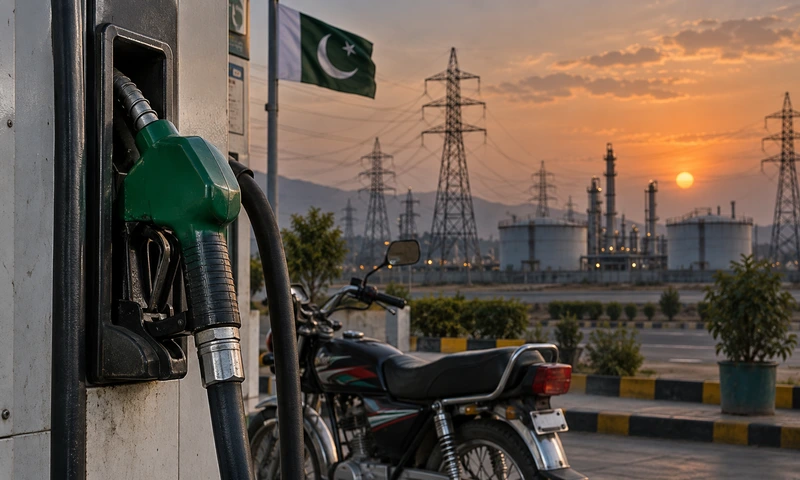
Federal ministers warned on Tuesday that disrupted Gulf shipping routes and soaring oil prices were straining Pakistan’s fuel supplies and electricity generation. Energy Minister Awais Ahmad Khan Leghari and Climate Change Minister Musadik Malik said government planning had prevented a deeper crisis. They highlighted disruptions affecting the Strait of Hormuz and Bab el-Mandeb as major threats to energy supplies. Malik said international crude prices had again exceeded $100 a barrel while the US-Israel war with Iran continued. Rs100-per-litre fuel relief The government plans to extend the Prime Minister’s Fuel Relief Scheme nationwide at midnight between September 16 and 17, following an Islamabad pilot. Deputy Prime Minister Ishaq Dar’s steering committee directed officials to process fuel-station payments within 24 hours. It also ordered provinces to complete district-level outreach. Read More: What PSO Just Announced for Its 3,600 Fuel Stations Motorcyclists would receive five subsidised litres weekly, while eligible car owners would receive 10 litres every 10 days. Malik said the petroleum levy stood at Rs80 per litre and the carbon levy at Rs5. The scheme’s Rs100-per-litre discount exceeded their combined Rs85. He acknowledged that the subsidy could not fully offset higher prices but called it the maximum burden the economy could absorb. He cited delivery riders whose travel distances remained unchanged despite rising costs. Rs2,000 in relief could help households buy food, milk and eggs, he said. A woman operating a Qingqi rickshaw could use the savings for her child’s school fee. An 800cc-car owner commuting to a factory could receive Rs3,000 monthly relief on 30 litres. His wife also used the vehicle for school trips. Domestic energy limits electricity costs Leghari said domestic resources supplied 72 per cent of August electricity generation, with imported coal and RLNG providing 28 per cent. His breakdown listed hydel at 38 per cent, local coal 11, nuclear 10, local gas seven, wind six and solar one. Those individual domestic shares total 73 per cent, differing from the stated aggregate. RLNG spot cargo prices had reached $23.25 per MMBtu, he said. Additional domestic gas, arranged on the prime minister’s instructions, helped avoid expensive purchases. Without it, consumers would have faced another hour of loadshedding, he said. Furnace-oil or imported-RLNG generation would also have added approximately Rs10.6 billion to consumer costs. Ministers reject lockdown speculation Tuesday night’s increases added roughly Rs4 to petrol and Rs6 to diesel prices. Successive rises, alongside Information Minister Atta Tarar’s suggestion of renewed austerity, fuelled “smart lockdown” speculation. Malik said no such discussions had occurred. Minister Tariq Fazal Chaudhry also rejected the reports. Read More: SBP Introduces Rs.1 Per Litre Incentive for Digital Fuel Payments Pakistan previously introduced restrictions in April, including an 8pm closing time for shops and markets, with provincial cooperation. Dawn separately reported that Prime Minister Shehbaz Sharif met Nawaz Sharif in Murree, citing sources who said similar measures were on the agenda. Neither the Prime Minister’s Office nor PML-N officially confirmed that account. Radio Pakistan reported that nationwide scheme registration was available through SMS to 9771, ahead of midnight token redemption.
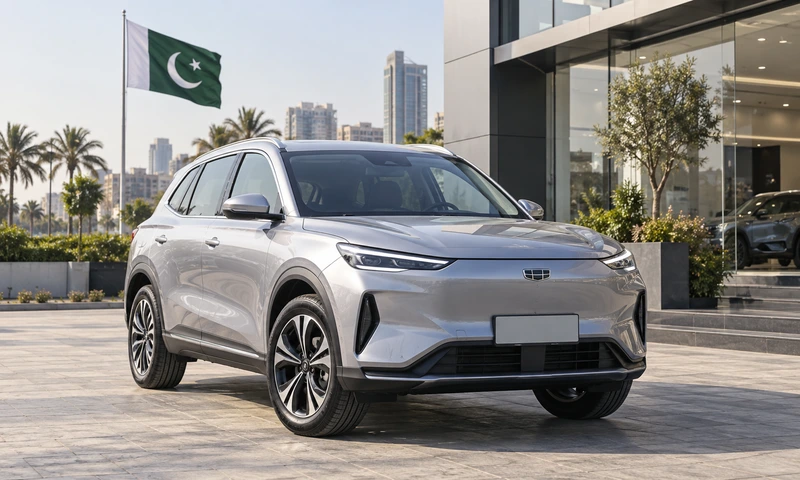
Geely Pakistan Launch: Three SUVs, Bookings Due in 2026
Geely Auto plans to enter Pakistan through Bestway Automotive Private Limited (BAL), with vehicle bookings expected before the end of 2026. BAL, a subsidiary of UK-based Bestway Group, confirmed its appointment as Geely’s sole authorised distributor and official representative at a Lahore media briefing. The launch will initially feature imported vehicles, followed by planned local assembly at Port Qasim, Karachi. Three SUVs planned for initial lineup Bestway’s product strategy centres on a large hybrid SUV, a mid-sized electric SUV and a compact electric SUV for urban travel. The hybrid offering targets buyers seeking fuel efficiency without depending on charging infrastructure. The supplied report identifies the Geely EX5 among potential mid-sized electric offerings, although final specifications remain pending. Read More: Bestway Signs Landmark Deal to Bring Geely Cars to Pakistan Vehicles will initially arrive as Completely Built Units, or CBUs. BAL plans to follow with Completely Knocked-Down, or CKD, assembly. Bestway has already acquired an automotive assembly facility at Port Qasim for that purpose. It purchased the plant before finalising its Geely agreement, indicating an early commitment to local manufacturing. The company will announce prices, detailed specifications and dealership rollout schedules before bookings open. Bestway stresses long-term commitment Muhammad Irfan Anwar Sheikh, group managing director of Bestway’s non-banking businesses in Pakistan, outlined the partnership’s objectives. “For us, this partnership is a long-term commitment to Pakistan. Our group has been investing in and building businesses here for decades, across sectors including cement and banking, and that experience and track record provide reassurance to our stakeholders, partners and customers that we are here to build for the long term. With Geely, we are bringing together that local strength and experience with the technology, safety and global capabilities of a major automotive manufacturer.” Bestway Group, described as Pakistan’s largest expatriate investor group, holds major interests in Bestway Cement and United Bank Limited. Geely’s official figures show 2025 sales of 3,024,567 vehicles, including 1,687,767 new-energy vehicles. Those totals represent annual growth of 39 per cent and 90 per cent, respectively. After-sales support faces market test Geely will enter an increasingly crowded market alongside Chinese, Korean and established Japanese manufacturers. Industry estimates cited in the supplied report put active assemblers at approximately 17. Combined annual production capacity stands at 500,000 to 600,000 vehicles. However, plant utilisation remains below 50 per cent, compared with levels above 80 per cent less than a decade ago. Recent entrants have faced difficulties maintaining after-sales service, spare-parts supplies and resale values. These concerns make long-term ownership support a significant test for new brands. Read More: Pakistan’s EV Revolution Accelerates With Record BYD Shipment Bestway plans to operate key primary dealerships directly across major cities. It aims to maintain consistent customer service, warranty support and parts availability. Fluctuating petrol prices could strengthen interest in hybrids and EVs offering lower running costs. However, Geely’s prospects will also depend on imported-vehicle pricing and the pace of local assembly. That transition could help reduce exposure to high import tariffs while supporting Bestway’s longer-term manufacturing plans.
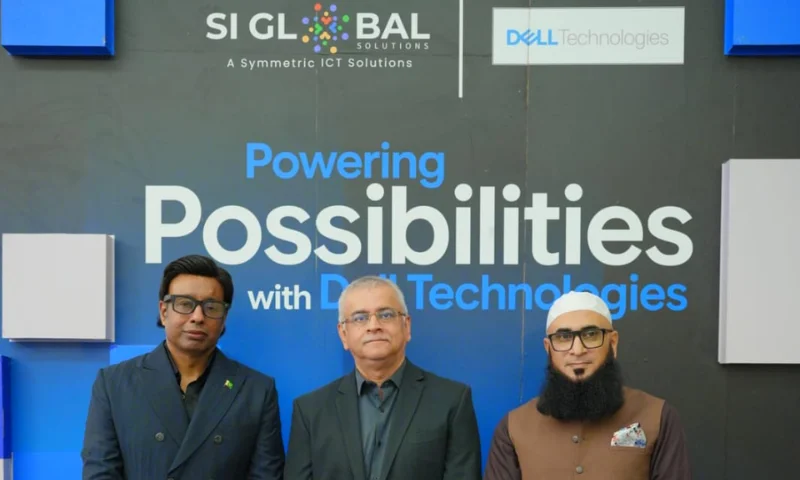
SI Global, Dell Highlight AI and Data Storage Needs in Pakistan
SI Global Solutions and Dell Technologies have reaffirmed their commitment to accelerating digital transformation in Pakistan, building on a 10-year partnership. The companies outlined their priorities at a recent Karachi event titled “Powering Possibilities Technologies”. Discussions focused on technology adoption, artificial intelligence, data storage and policies that could help Pakistan develop its own technology industry. SI Global Solutions CEO Dr Noman A. Said urged Pakistan to become a developer and exporter of technology. He said the country needed to move beyond its position as primarily a technology consumer. Call for R&D and procurement reforms Said called for research and development to become a national priority. Funding alone would not suffice, he argued. Procurement policies must also give locally developed technologies opportunities to demonstrate their capabilities at scale. “Our public procurement rules also need to evolve. Technology cannot always be procured purely on the basis of the lowest price or traditional qualification criteria. Procurement should recognise innovation, local intellectual property, R&D investment, cybersecurity, lifecycle value and technology transfer.” Read More: The End of Keyboards? Tech Giants Are Building Computers That Work for You He cited Singapore’s sustained investment in research, industry collaboration and commercialisation as an example of building a globally competitive technology ecosystem. Singapore’s RIE2030 programme provides relevant context. The government has committed S$37 billion to its five-year research, innovation and enterprise plan. Said also pointed to Malaysia’s mechanisms for prioritising qualified local R&D products in government procurement. Malaysia’s official MySTI programme offers recognised local research products and services priority access to government purchasing opportunities. AI and storage demand reshape business needs Dell Technologies Country Manager Naveed Siraj, the chief guest, said technology adoption continued to grow across Pakistan. However, rapid technological advances made selecting suitable solutions increasingly important. Businesses needed products that matched their requirements, he said. Read More: Pakistan Digital Assets Push: UN Appeal for Global Rules Siraj stressed the need for alignment between government policies and technology adoption at the local level. Such coordination would help businesses benefit from emerging technologies and new business models, particularly as AI becomes more influential. He said demand for data storage was rising both globally and in Pakistan. AI had become essential for processing raw data and turning it into structured information that supported better business decisions. His remarks linked growing infrastructure requirements with businesses’ need to extract useful information from their data. Dell plans further expansion in Pakistan Siraj said Dell Technologies had operated in Pakistan since 1989 and continued to maintain its presence in the country. He said the company would scale up operations through dedicated partners such as SI Global Solutions. Dell was preparing to introduce new solutions, devices and applications in Pakistan, he added. The aim was to give local users access to globally standardised technology and empower businesses and individuals. Partners of both companies attended the event, which highlighted their continuing collaboration and plans to support Pakistan’s digital development.

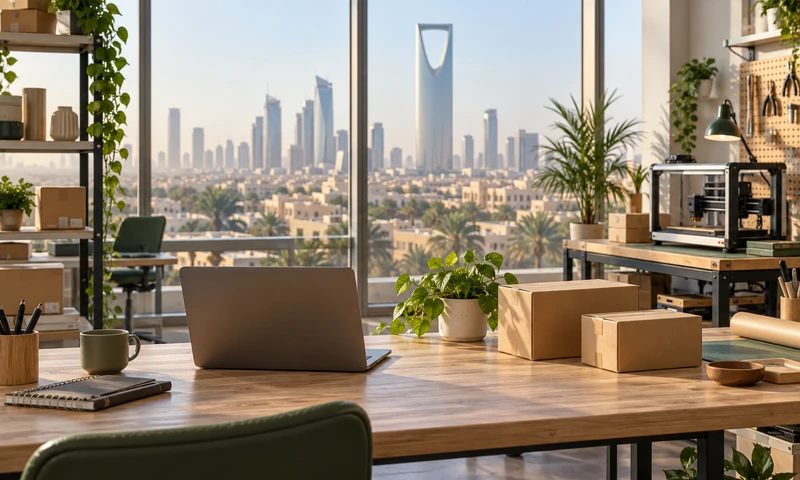
Saudi Arabia Targets Over 500,000 Jobs With New SME Strategy
Saudi Arabia aims to create more than 500,000 direct and indirect jobs through a new strategy for small and medium-sized enterprises. The plan also targets lower business costs, stronger financing access and greater participation by innovative international startups. The Saudi Cabinet approved the National Entrepreneurship and Small and Medium Enterprises Strategy on Tuesday, September 15. Its 13 initiatives seek to raise SMEs’ contribution to gross domestic product to 35 per cent. Commerce Minister Dr Majid Al Qasabi said the strategy would strengthen entrepreneurship and help businesses grow and expand. Al Qasabi also chairs the General Authority for Small and Medium Enterprises, known as Monsha’at. The plan targets first place globally by 2030 on the indicator measuring entrepreneurial skills and knowledge. More opportunities for growing businesses The strategy covers financing, market access, operational capabilities, regulation and innovation. It seeks to make business operations easier while addressing obstacles that limit expansion. Al Qasabi said the plan reflected the leadership’s support for entrepreneurs and smaller businesses. He described it as a move towards a more integrated and efficient business environment. Implementation will require coordination across government entities, he said. That cooperation should help SMEs access opportunities across sectors and participate more extensively in value chains and major projects. The strategy also seeks to open new domestic and international markets for Saudi businesses. Its focus extends beyond helping entrepreneurs establish companies. The measures aim to create conditions that allow those businesses to expand and compete at home and abroad. Procurement, exports and international startups Planned programmes include support for open commercial innovation and businesses operating in industrial cities and special economic zones. Other initiatives will help Saudi companies expand internationally and increase exports. The strategy also seeks a larger role for SMEs in government procurement and purchases by major companies. A comprehensive SME database forms another part of the plan. Authorities intend to connect it with relevant databases across the entrepreneurship sector. Saudi Arabia also plans to attract innovative international startups and establish their operations locally. Alongside this effort, the strategy calls for reviewing minimum Saudisation requirements according to sector. The announcement outlines a review of those requirements, rather than a uniform change across all businesses. Separate measures will address the cost of doing business. Financing support and Vision 2030 Financial initiatives will focus on improving awareness and literacy, strengthening access to funding and offering incentives to institutions that finance SMEs. These measures support Saudi Arabia’s longer-term ambitions for the sector. Monsha’at, established in 2016, identifies raising SMEs’ GDP contribution from a 20 per cent baseline to 35 per cent as a core objective. The latest strategy adds a coordinated set of initiatives covering business growth, procurement, innovation and financing. Al Qasabi said the plan would help smaller companies benefit more fully from economic opportunities and strengthen their contribution to development under Vision 2030.

Worked Until 3 AM, Then Lost His Oracle Job After 12 Years
An Oracle employee lost his job after 12 years with the company, prompting his wife to share an emotional LinkedIn account. She described years of late nights, interrupted holidays and work during family medical emergencies. The woman said her husband discovered the layoff when he could no longer log into his system. Her account emerged amid reports that some employees lost system access before receiving formal termination emails. “We are sharing some difficult news regarding your position,” read the opening line of the email sent to affected Oracle workers. Work continued through surgery and holidays “I have never seen a person so hardworking and dedicated to his work,” the woman wrote. She recalled how his responsibilities followed him through hospital visits, family celebrations and trips. “He continued working from the hospital while I was admitted for surgery to remove my polyps. We were on vacation in New Mexico, and he was on call while I was driving. He worked during Holi, Diwali, Rakhi, and other festivals, as well as on birthdays, anniversaries, and weekends.” The demands continued recently, even as the couple adjusted to caring for an adopted dog. “A few weeks ago, we adopted a dog, and he took care of her while working through the night until 3 am, to the point of falling ill.” She said he poured his “blood and sweat” into work while keeping the “immense pressure” hidden. “Not just me, but no one in our friends’ circle ever saw him cribbing.” Wife seeks job referrals The woman appealed for job referrals for her husband, who has more than two decades of IT experience. She also said he had won a best employee award. “This post is for everyone who works day and night to provide for their families, especially amid visa uncertainty, yet still gives their best every day.” Her account drew responses about job security and the personal costs of corporate careers. One commenter wrote: “Here is the ugly truth, and no one will tell you, but I will. It doesn’t matter how hard you work. When your role is no more, then you are no more. It happens to everybody. The best thing you can do is be prepared for that time. Work for yourself if you can figure out how. And don’t be a problem for somebody else to solve. Good luck. I wish you the best.” Another said: “That’s why my life lesson is don’t leave your life for the corporates. And we (how they mention the members) are not family, we are just people with benefits.” Oracle’s wider restructuring Reports described the latest job cuts as part of broader organisational changes. Separately, Reuters reported that Oracle’s workforce fell by approximately 21,000 during fiscal 2026, reaching 141,000 employees. The company spent $1.84 billion on severance and exit costs during that period. Those company-wide figures do not establish the specific reason for the husband’s dismissal.

Vicks VapoRub to Reach Pharmacies Across Pakistan in Coming Weeks
Welnox, a Martin Dow Group company, has entered into a licensing partnership with Procter & Gamble (P&G) for Vicks VapoRub. The company expects the product to reach pharmacies across Pakistan in the coming weeks. Welnox announced the agreement in Karachi on September 15, 2026, as it moves to expand its consumer healthcare portfolio. The partnership brings the longstanding cough and cold care brand into the company’s plans for growth in Pakistan. Read More: Unilever Says It Is Already Ahead of Target After P&G’s Exit The company said the agreement supports Martin Dow’s commitment to improving access to high-quality, reliable healthcare solutions for millions of consumers nationwide. Anwar Zaman, CEO, Welnox, said, “Vicks VapoRub is an iconic brand with enduring equity, and a natural fit with our vision to build a strong, consumer-centric healthcare portfolio. We see significant opportunity to build on its strong foundation and unlock new avenues of growth in Pakistan.” The announcement identifies pharmacies as the retail channel for the upcoming rollout. However, it does not specify an exact availability date, retail prices or pack sizes. It also does not disclose the financial terms or duration of the licensing agreement. Welnox expands consumer health portfolio The agreement follows Martin Dow’s establishment of Welnox Limited in 2024 as part of its consumer health portfolio. The group describes Welnox as its consumer health business unit, focused on accessible, science-backed wellness solutions. That focus places everyday healthcare products at the centre of Welnox’s business. Zaman’s remarks indicate that the company views Vicks VapoRub as a brand around which it can develop further growth in Pakistan. Martin Dow’s corporate history also shows previous agreements involving international pharmaceutical businesses. In 2010, it acquired Roche’s facility in Pakistan, alongside acquisitions and brand licensing involving Roche’s global product lines. The group later acquired Merck Germany’s shareholding in Merck Pakistan in 2016, along with two manufacturing facilities. These transactions provide background to Martin Dow’s experience with international healthcare partnerships, although the Welnox announcement concerns a licensing arrangement specifically for Vicks VapoRub. A brand with more than 125 years of history Welnox described Vicks as a familiar part of family care routines across generations, with more than 125 years of heritage. According to the announcement, Vicks VapoRub helps relieve common cold symptoms, including nasal congestion, cough, headache, body ache and discomfort associated with breathing. Read More: Pakistani Doctors Prescribe Over Twice WHO-Recommended Medicines The brand’s official history traces its origins to 1894, when pharmacist Lunsford Richardson developed remedies in Greensboro, North Carolina. His work eventually produced a family of 21 remedies sold under the Vicks name. For Pakistani consumers, the immediate development is the planned pharmacy rollout under Welnox’s partnership with P&G. The company has set a timeframe of the coming weeks but has yet to announce a specific launch day.
