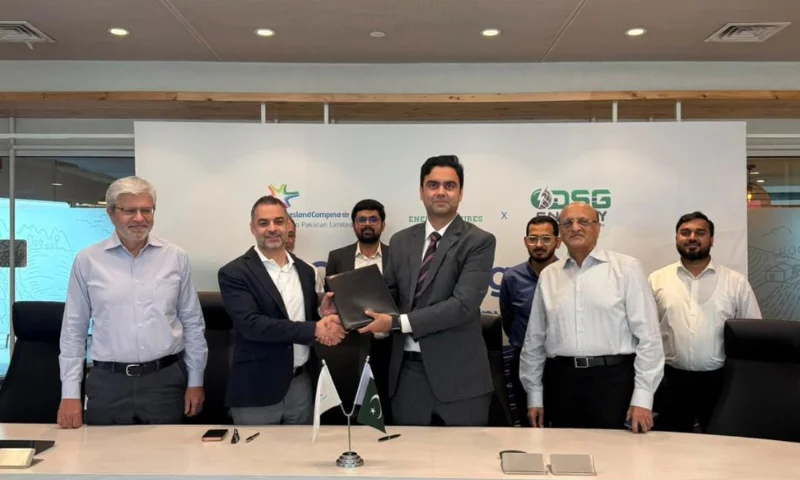
FrieslandCampina Engro Pakistan Limited (FCEPL) has announced a 450 kW solar photovoltaic system with 255 kWh of battery storage at Nara Dairy Farm. The company awarded the project to DSG Energy as part of its investment in cleaner, more reliable power. The installation will combine on-site solar generation with a Battery Energy Storage System, or BESS. FCEPL expects the project to improve operational efficiency and strengthen energy resilience at the farm. Solar and storage support farm operations The system aims to increase renewable energy consumption while reducing reliance on conventional fuel-based power generation. It also targets lower energy costs and a more dependable supply for critical farm operations. By pairing solar panels with storage, the project will help the facility manage renewable electricity beyond the moment of generation. However, the announcement did not disclose the investment value, expected annual electricity output or projected emissions savings. It also did not specify how much of the farm’s electricity demand the installation would meet. The 450 kW figure describes the solar system’s rated generation capacity. Meanwhile, the 255 kWh figure measures the battery’s energy-storage capacity. Company plans wider solar footprint Kashan Hasan, FCEPL’s CEO and Managing Director, linked the installation to the company’s broader environmental commitments. “This installation represents the futuristic, energy-conscious mindset that guides us at FCEPL,” he said. He added, “we are eager to expand our solar footprint further, which now includes our production facilities as well as our dairy farm. Our efforts to bring clean energy into our operations truly reflects our purpose of Nourishing Pakistan through-out the Grass to Glass journey, ensuring that we continue to care for our environment and communities whilst providing safe, healthy and nutritious products to the millions of families who consume our products everyday.” The Nara project follows earlier investments in renewable power across the company’s operations. In November 2024, FCEPL announced a separate 3.4 MW solar partnership with Reon Energy. That agreement also focused on strengthening sustainability within its dairy operations. The company operates production facilities in Sukkur and Sahiwal alongside its Nara dairy farm. Its wider supply network includes independent farmers and milk collection centres. DSG Energy highlights reliability DSG Energy CEO Daniyal Siddiqui said the project combines renewable generation with the systems needed to manage it effectively. “At DSG Energy, we believe the transition toward clean energy is not only about generating renewable power, but about building intelligent energy systems that deliver reliability, efficiency, and long-term value. The Nara Dairy Farm project is a meaningful step in that direction, and we are proud to support FCEPL in advancing its sustainability journey,” he said. According to the announcement, the partnership reflects growing business interest in combining solar generation, storage and intelligent energy management. For FCEPL, the project forms part of its broader push towards lower-carbon operations. It also supports the company’s stated goals of environmental stewardship, operational efficiency and long-term sustainable growth.

Pakistan’s Microfinance Customers Could Soon Get PayPak Credit Cards
HBL Microfinance Bank, 1LINK and Euronet Pakistan have signed an agreement to introduce Pakistan’s first PayPak Credit Card. Through the partnership, HBL MfB will become PayPak’s inaugural credit card partner. The organisations signed the agreement in Islamabad on September 29. Together, they aim to expand credit access for microfinance customers across Pakistan. Four card variants planned HBL MfB will issue the cards and lead the customer offering. Meanwhile, 1LINK will provide the PayPak payment scheme. Euronet will supply the processing platform and implementation support. The bank plans four variants: Green, Standard, Pink and Edge. In addition, its broader plans include conventional and Islamic PayPak Credit Card offerings. Read More: Visa and Mastercard May Face New Challenge From PayPak These products aim to give customers more flexibility in meeting livelihood needs. However, the announcement did not specify an availability date, eligibility criteria, credit limits or charges. PayPak operates as Pakistan’s domestic payment scheme under 1LINK. It launched under the State Bank of Pakistan’s auspices to promote financial inclusion and digitisation. The planned credit card programme would therefore extend the scheme’s role in serving customers through domestic payment infrastructure. Bank targets underserved customers HBL MfB President and CEO Amir Khan signed the agreement for the bank. Similarly, 1LINK CEO Najeeb Agrawalla and Euronet CEO Kashif Gaya signed for their organisations. Khan linked the initiative to responsible borrowing and wider financial access. “At HBL Microfinance Bank, we see access to finance as a way to help customers move forward with confidence.” He also highlighted the practical benefits the bank hopes to deliver. “This partnership aims to give microfinance customers greater choice, flexibility and convenience in how they access credit and make payments.” According to Khan, conventional banking products have traditionally underserved the customers the initiative seeks to reach. As a result, the partnership aims to combine wider access with support for livelihood needs. “This initiative will help support our customers’ livelihood needs while promoting responsible borrowing and greater financial inclusion.” The bank described the planned product as Pakistan’s first credit card offering for the microfinance sector. Partners highlight local payment capabilities Meanwhile, Agrawalla said the agreement reflected the strength of Pakistan’s domestic payment infrastructure. “This milestone reflects the strength of our domestic payment infrastructure and our commitment to delivering secure, convenient and locally powered payment solutions.” Read More: New UK Visa Rules Are Coming: What Applicants Must Know He also described the partnership as a step towards a more inclusive, locally driven digital payments ecosystem. For its part, Euronet will contribute processing expertise and technology support to bring the programme to market. “We are pleased to partner with HBL Microfinance Bank and 1LINK in bringing this significant program to market,” Gaya said. He also congratulated the bank on becoming PayPak’s inaugural credit card partner. Together, the partners intend to combine microfinance customer reach, domestic payment infrastructure and processing technology. However, customers will need further product announcements for details about applications, pricing and availability.
OGDC Expands Lithium Research Following Reported Discovery in Sindh
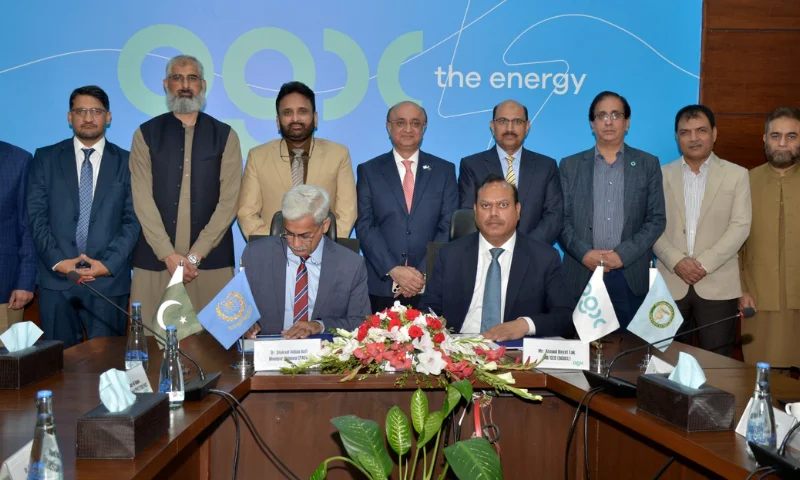
The Pakistan Institute of Nuclear Science and Technology (PINSTECH) and Oil and Gas Development Company Limited (OGDC) signed a contract on Tuesday. The agreement will provide analytical support for OGDC’s lithium extraction initiative and strengthen cooperation between the two organisations. Under the contract, PINSTECH will deliver elemental profiling and radioactive-element analysis services to the energy company. The signing took place at OGDC Headquarters in Islamabad on September 29. It brings together laboratory expertise and energy-sector capabilities as Pakistan explores opportunities in critical minerals. Scientific support for lithium extraction Dr. Qamar-ul-Haque, Director General of PINSTECH, signed the contract on behalf of the institute. Ejaz Abbas Rizvi, General Manager of OGDC’s Supply Chain Management Department, signed for the company. Dr. Shakeel Abbas Rofi, Member Science at the Pakistan Atomic Energy Commission, witnessed the ceremony. OGDC Managing Director and Chief Executive Officer Ahmed Hayat Lak also attended. Read More: Pakistan Energy Crunch: Ministers Warn, Fuel Relief Expands Rofi and Lak expressed confidence that the agreement would strengthen institutional cooperation. They said combining scientific and technical capabilities would support national objectives. Established in 1965, PINSTECH operates as a research and development institute of the Pakistan Atomic Energy Commission. Its role under the latest agreement centres on analytical services. The announcement does not specify the contract’s value, testing schedule or a target date for commercial lithium production. Institute outlines analytical capabilities Munib Ahmed Shafique, Head of PINSTECH’s Spectrometry Group, presented the institute’s capabilities in elemental analysis during the ceremony. Shagufta Shafique, JE Production at OGDC, outlined the company’s scope of work and diversification plans. Her presentation included the lithium extraction initiative involving PINSTECH. The cooperation aims to support indigenous resource development and explore emerging opportunities in Pakistan’s mineral and energy sectors. The contract follows earlier cooperation between the organisations on lithium extraction technology. An August industry update described an agreement to develop technologies for recovering lithium from geothermal brines. That initiative followed reported lithium findings at the Wahid Bakhsh Well in Khairpur, Sindh. The earlier collaboration focused on assessing commercial viability. OGDC also planned to examine additional geothermal wells to understand the country’s wider lithium resource potential. Tuesday’s announcement adds a defined analytical-services component to that cooperation. It does not announce the start of commercial extraction. Why lithium matters for energy development Lithium plays a central role in rechargeable batteries used in electric vehicles, consumer electronics and electricity storage systems. The metal occurs in rocks and underground saline fluids known as brines. Researchers internationally are exploring geothermal brines as a potential source of lithium alongside geothermal energy development. Read More: World Bank Greenlights $375.9 Million for Pakistan’s Energy Future Global lithium demand rose by nearly 30% in 2024, according to the International Energy Agency’s 2025 critical minerals outlook. For Pakistan, the immediate work remains technical assessment and resource evaluation. The PINSTECH contract provides scientific support as OGDC examines whether domestic resources can underpin a commercially viable extraction initiative.

California Becomes Second US State to Recognise Both Eid Holidays
California has recognised Eid ul Fitr and Eid ul Adha as state holidays, giving Muslim communities greater visibility on its calendar. The law supports leave arrangements and local school closures, but does not create an automatic statewide day off. Governor Gavin Newsom approved Assembly Bill 2017 on September 27, according to the official legislative record. Assemblymember Matt Haney authored the measure. California becomes the second US state to recognise both festivals, following Washington in 2025. They join a calendar that also recognises Lunar New Year and Diwali. What the Eid holiday law allows California has more than one million Muslim residents. State employees can observe Eid using existing vacation, annual leave, compensating time off or personal holiday credit. The designation does not automatically close courts, government offices or private businesses. Public schools and community colleges can arrange closures through local decisions and agreements with represented employees. For K-12 pupils, the law does not mandate statewide school holidays. It supplements existing protections for excused absences. Oussama Mokeddem, legislative and government affairs director at CAIR’s California chapter, encouraged communities to raise holiday needs with school districts. He described the signing as “an exciting day for the California Muslim community and a big day for the American Muslim community at large.” Students seek recognition in school calendars Adam Khaja, an 11th grader in Palos Verdes Peninsula Unified School District, plans to advocate for a district-wide holiday. He said recognition signals that “you don’t have to give up an important part of your identity to fully participate in Californian society.” “For a long time, immigrant and minority communities have sometimes felt pressure to leave parts of their identity at home in order to fit into American educational or industrial institutions,” he said. Khaja hopes district policies will better accommodate religious observance. “Eid has always been a huge part of our lives, but I think that the school calendar and district policies haven’t always reflected that,” he said. He wants students to avoid having “to choose between going to school or fully participating in one of the most important days of their faith.” Recognition amid concerns over hostility Mokeddem said Muslim communities face “unwarranted and unjustified criticism”. He linked that climate to the May 2026 attack at the Islamic Center of San Diego. A September Pew Research Center report found that 42% of Americans believe Muslim Americans negatively affect the country. Eid ul Fitr marks Ramadan’s end. Eid ul Adha honours Ibrahim’s willingness to sacrifice his son in devotion to God. Both follow the Islamic lunar calendar, so their Gregorian dates shift annually. Expected 2027 dates fall around March 10 for Eid ul Fitr and May 17 for Eid ul Adha, subject to observance practices. Muslim Women Professionals, a nonprofit, offers templates for requesting time off for both festivals. Families seeking district-wide closures can also approach local school boards about future calendars.

Pakistan’s Unfrozen Glacial Lakes Jump From 40 to 105, Raising Flood Concerns
Pakistan’s monitored unfrozen glacial lakes increased from 40 to 105 between July and August, raising concerns about downstream flood risks. Satellite assessments also showed that some lakes had expanded beyond their previously recorded maximum boundaries. The findings indicate seasonal thawing and expansion, rather than confirming that 65 entirely new lakes formed. Satellite images reveal expanding lakes The Space and Upper Atmosphere Research Commission, Suparco, compared imagery over time, using August 5 as its latest observation. Its August assessment identified 131 potentially dangerous glacial lakes. Provincial disaster management authorities and Wapda’s glacier monitoring and research centre supplied their locations. Suparco mapped the lakes using optical imagery to estimate surface areas and distinguish frozen from unfrozen water bodies. “At present, 105 lakes are observed to be unfrozen, compared with 40 lakes reported earlier. The current assessment also indicates temporal variation in extent, where few lakes have exceeded their previous recorded maximum extents,” it said. Read More: 22 Dead, 384 Missing After Devastating Nepal Flash Floods The agency had recorded 40 unfrozen lakes on July 2. Most then remained within their historical maximum boundaries. Persistent cloud cover subsequently restricted access to clear satellite images, complicating precise assessments of changes in lake size. Expansion beyond historical limits can indicate greater water storage and possible instability in natural dams formed from glacial debris. Dam failure can trigger a glacial lake outburst flood, or Glof. Suparco urged heightened preparedness, “particularly in downstream valleys of potentially dangerous glacial lakes”. It said satellite monitoring would continue throughout the melting season. Glaciologist calls for field investigations Dr Karamat Ali, a glaciologist at Karakoram International University, said satellite observations alone could not adequately establish the hazards. “Glacial melt is a serious concern. Numerous parameters are ignored which can only be verified from field studies, and mere satellite imagery will not suffice.” Ali, who has studied glaciers for two decades, criticised fragmented work, weak coordination and distrust among stakeholders. He identified gaps in knowledge about glacier morphology, local microclimates and seasonal mass accumulation. He also highlighted insufficient information about hanging glaciers, citing destructive losses in Nepal during September. Ali called for investigations of lake depths, surrounding terrain and end moraines, the debris accumulated at glacier fronts. He questioned government investment in addressing rapid glacier melt. A glacier inventory completed in 2024 counted more than 13,000 glaciers across Pakistan. Warming increases downstream risks Climate ministry spokesperson Mohammad Saleem Shaikh said warming across the Hindu Kush-Karakoram-Himalaya region was transforming Pakistan’s frozen landscapes. Read More: Rising Winter Heat Could Trigger Glacier Floods in Pakistan “The science is unequivocally clear that rising temperatures are reshaping Pakistan’s mountain ecosystems at an unprecedented pace. Every fraction of a degree of warming increases the risk to communities living downstream. Our response must therefore be science-driven, technology-enabled and translated into timely action to protect lives, livelihoods and critical infrastructure,” he emphasised. Pakistan’s Glof risk-reduction efforts also include community preparedness and protective infrastructure. UNDP’s GLOF-II programme incorporates early warning systems, weather monitoring, flood gauges and drainage works to help vulnerable northern communities respond.
Harvard Students Learned More in Less Time With a Custom AI Tutor
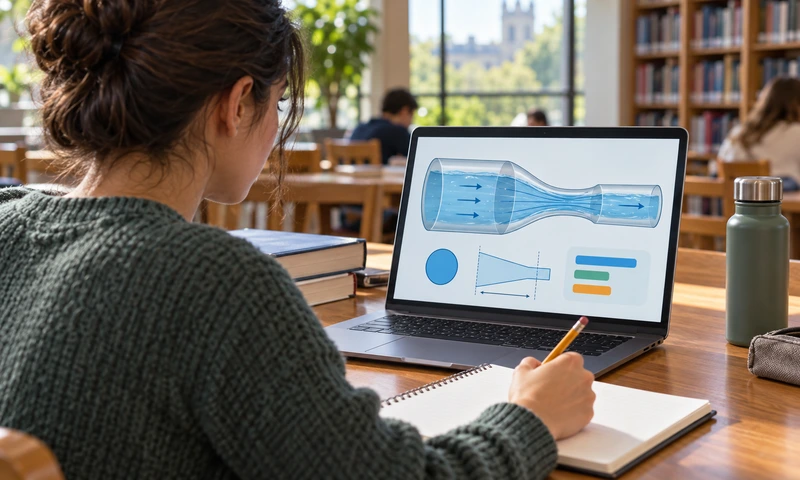
A Harvard experiment involving 194 students found that a custom AI tutor produced roughly twice the learning gains of instructor-led active learning. Students using the tutor also reported greater engagement and motivation while spending less time studying the material. The findings concern a system that faculty carefully designed around teaching principles, rather than unrestricted access to a chatbot. Harvard first reported preliminary results in September 2024. The final peer-reviewed study appeared in Scientific Reports on June 3, 2025. How Harvard tested the AI tutor Harvard lecturers Gregory Kestin and Kelly Miller led the research in Physical Sciences 2, an introductory physics course for life sciences majors. The experiment took place in autumn 2023 and covered two lessons over consecutive weeks. Students studied surface tension and fluid flow. One group initially attended an instructor-guided active learning lesson, while the other used the AI tutor at home. The groups switched methods the following week, allowing students to experience both approaches. Researchers used tests before and after each lesson to measure content mastery. They also surveyed engagement, enjoyment, motivation and growth mindset. The comparison involved an established active learning classroom that already used research-based teaching methods. Students participated in activities rather than simply listening to lectures. “It was shocking, and super exciting,” Miller said of the early findings. The published study found that median learning gains with AI exceeded twice those of the classroom group. Students spent a median of 49 minutes using the tutor, compared with approximately 60 minutes of classroom learning. Seventy per cent of AI users finished within an hour. Engagement and motivation improved, but enjoyment and growth mindset showed no statistically significant differences. Faculty expertise shaped the chatbot Kestin and Miller created detailed instructions to make the tutor behave like an experienced teacher. The system used a framework built on the GPT application programming interface. Faculty supplied content-rich prompts, checked conversations and structured feedback. The published research describes a GPT-4-based tutor with carefully sequenced activities and prepared solutions to improve accuracy. Researchers identified personalised feedback and control over learning pace as likely advantages. Students familiar with a concept could move ahead quickly. Those struggling could ask additional questions and spend longer working through explanations. That flexibility could help teachers reserve classroom time for advanced problem-solving, projects and group work. Researchers stress teachers’ continuing role Kestin cautioned that AI could support or undermine learning, depending on its use. The objective was to develop students’ critical thinking rather than let a chatbot think for them. The researchers did not present AI as a replacement for teachers. Their findings also do not establish that AI tutoring will outperform classroom instruction across every subject or learning task. Harvard’s September 2024 report outlined plans to adapt the tutor for multivariable calculus. The Derek Bok Center for Teaching and Learning and Harvard University Information Technology also planned pilots in other large introductory courses. The results point to the importance of instructional design: expert guidance, structured feedback and clear learning goals shaped this tutor’s performance.
Stunning Mosaics Found at Suspected School of Alexander the Great
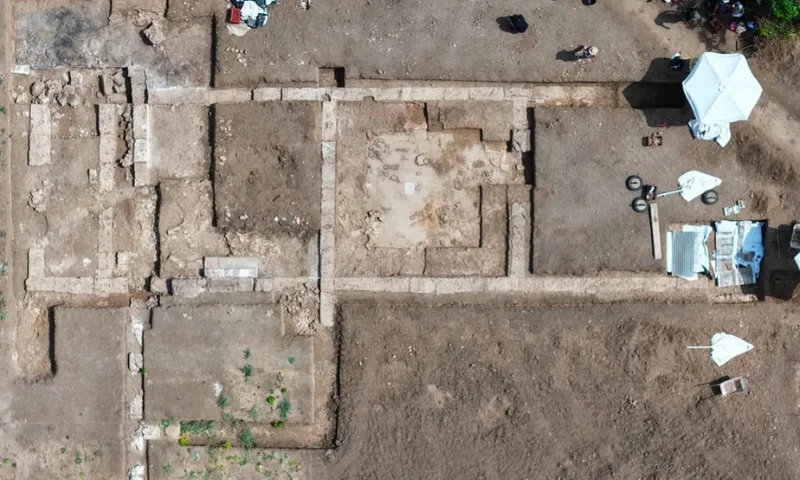
Archaeologists in northern Greece have uncovered ornate mosaic halls at a 2,400-year-old complex that may have housed Alexander the Great’s school. The discoveries strengthen the proposed connection between the royal gymnasium at ancient Mieza and his teacher, Aristotle. The excavation offers fresh clues about elite Macedonian education, combining classroom lessons, athletic training and formal dining. Mosaic halls reveal royal connections Archaeologist Angeliki Kottaridi, director emerita of antiquities with Greece’s culture ministry, leads the project, which began in 2024. The ministry places the complex near modern Naoussa. It covers approximately 30 stremmata, equivalent to three hectares or 7.4 acres. Earlier excavations revealed a palaestra, or wrestling area, a stadium, arcades and a covered running track stretching roughly 200 metres. The sheltered track allowed training in poor weather. Read More: Here Is How Your Research Could Build a $100 Million Company Researchers have also identified lecture rooms with stone desks within the Didaskaleion, meaning “place of teaching.” The latest discoveries include two banquet halls and a central vestibule covering more than 160 square metres. Both halls retain mosaic floors and raised platforms for reclining couches. Each hall accommodated ten couches and at least 20 diners. Their decoration closely resembles Philip II’s palace at Aigai. Kottaridi links these similarities to a complex built “for the education of his son Alexander and the children of the noble Macedonians.” Writing tools and lessons in etiquette The ancient biographer Plutarch described Aristotle teaching Alexander at Mieza. Greek gymnasia combined intellectual instruction with physical exercise. The banquet halls suggest another educational purpose. Students likely practised the etiquette required for elite dining gatherings known as symposia. Earlier finds include pottery, coins and four bronze writing styluses. Researchers suggest Aristotle’s pupils may have used them, although no evidence identifies Alexander as a particular tool’s owner. Fragments of vessels for sacred Athenian olive oil also indicate access to a prized ancient commodity. Together, the teaching rooms, sporting facilities and dining halls illuminate how Macedonian nobles prepared young men for leadership. Scholars support identification, with caution The discoveries do not conclusively establish that Alexander studied inside these particular buildings. Nevertheless, independent scholars consider the evidence persuasive. “All the evidence suggests this is the school Philip provided for Aristotle to tutor the young Alexander and his fellow students.” Jeanne Reames, director of ancient Mediterranean studies at the University of Nebraska at Omaha, offered that assessment. She hopes further work will “shed more light on elite education in Macedonia in the second half of the fourth century B.C.E.” Read More: China Launches World’s First Floating Artificial Island for Deep-Sea Research South Dakota State University historian Graham Wrightson also welcomed the discoveries. They allow “us to put ourselves in the shoes of the young Alexander and understand more how he became the famous king.” Neither scholar participated in the excavation. Separately, the United States returned more than 300 antiquities to Italy in April 2026, including Alexander’s first-century C.E. marble head. It depicted him as Helios. New York authorities seized it from a gallery in 2018 following theft sometime between 1910 and 1960.
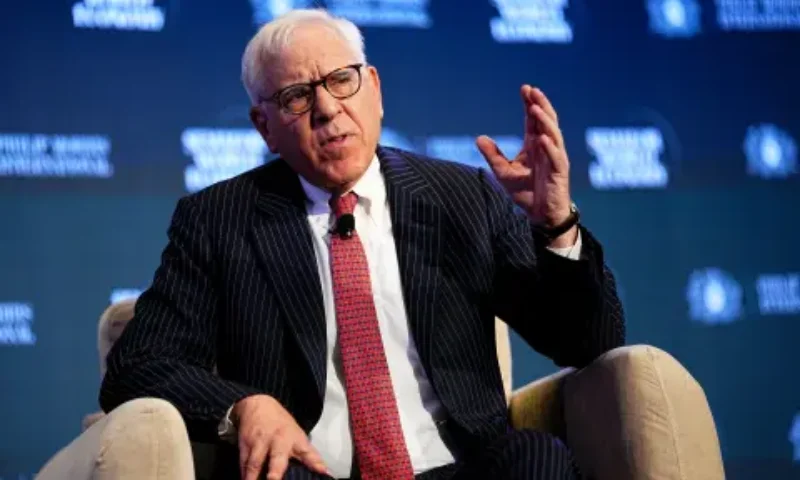
Why AI Leaders Are Putting Fresh Value on Humanities Degrees
Billionaire investor David Rubenstein has urged young workers to strengthen their reading, writing and speaking skills as artificial intelligence reshapes careers. The Carlyle cofounder says those abilities will remain essential despite growing reliance on chatbots. “For a young person, the best thing to do is: Learn how to read and enjoy reading, learn how to speak effectively and persuasively, and learn how to write reasonably well,” Rubenstein said. The 77-year-old also encouraged workers to pursue fulfilling careers. His advice was to “find something that you really enjoy and make it your life’s work.” “Nobody ever won a Nobel Prize hating what they do,” he said. Human judgment still matters Rubenstein acknowledged that professionals increasingly use AI to read and write. However, people still need judgment to distinguish strong writing from poor work. “I just think the basic skills that have gotten people to be successful over the last several thousand years are probably not going to go away,” he said. Read More: University of Amsterdam Opens Six Paid PhD Positions Across Five Projects His comments reflect a wider debate about workplace skills. Employers increasingly expect familiarity with AI tools. Business leaders also emphasise communication, curiosity and independent thinking. Reading remains a habit among prominent executives. Warren Buffett has said he spent 80% of his working days reading. Jamie Dimon reportedly reads five newspapers before starting work. AI founders highlight humanities Anthropic president and cofounder Daniela Amodei has made a similar case for humanities education. She highlights emotional intelligence and the ability to work with others. “I actually think studying the humanities is going to be more important than ever,” Amodei said. “The ability to have critical thinking skills and learn how to interact with other people will be more important in the future, rather than less.” Fellow Anthropic cofounder Jack Clark credits his English literature and creative writing background with supporting his AI career. He emphasises asking useful questions and connecting ideas across disciplines. “I’m a literature graduate, and I don’t think you’d put that as a cofounder of a frontier AI company, but what turned out to be useful is that I got to learn a lot about history and a lot about the kind of stories that we tell ourselves about the future,” Clark said. “That’s turned out to be, like, extremely relevant for AI in a way that I think people wouldn’t have predicted.” Critical thinking needs practice Microsoft chief scientist Jaime Teevan also sees value in liberal arts education. Natural-language AI tools require users to communicate context and intent. She highlights flexibility, adaptability, experimentation and questioning assumptions. “Developing critical-thinking skills requires friction, doing things that are hard, doing deep thinking,” Teevan said. Read More: GCU, LUMS Win UK Funding for Pakistan’s First Sustainable Chemistry Lab “For that, a traditional liberal-arts education is really important.” Employer research supports the broader emphasis on judgment. The World Economic Forum’s Future of Jobs Report 2025 identifies analytical thinking as employers’ leading core skill. Seven in 10 surveyed companies consider it essential. Resilience, flexibility and agility follow, alongside leadership and social influence.

Pakistan Tells IMF Gulf War Has Cost Rs144 Billion in Revenue
Pakistan has told the International Monetary Fund (IMF) that the Gulf war has slowed economic activity and hurt tax collection. Officials estimate first-quarter revenue losses at Rs144 billion, but insist the government can still meet its quarterly collection target. The government presented its assessment during Monday’s opening meetings with the visiting IMF review mission. Discussions covered revenue performance, disruption in the Strait of Hormuz and structural reforms, including mandatory digital asset declarations for federal civil servants. FBR confident of meeting quarterly target The Federal Board of Revenue expects to achieve the agreed July-September target of Rs3.053 trillion by September 30, 2026. Officials forecast September collection at around Rs1.330 trillion, against a monthly target of Rs1.343 trillion. That would leave September receipts approximately Rs13 billion below the monthly goal. Nevertheless, tax authorities told the mission that the anticipated collection would allow them to meet the overall first-quarter target. Read More: FBR to Start Deducting 5% Tax From Social Media Revenue The FBR linked the revenue pressure to higher fuel prices and weaker economic activity following disruption in the Strait of Hormuz. Officials identified sales tax and withholding tax collected at the import stage as particularly affected. The estimated Rs144 billion loss reflects the conflict’s impact on receipts during the first quarter of the current fiscal year. It does not represent a declared shortfall against the quarterly target, which officials still expect to achieve. Around 10,000 officials face asset deadline The Establishment Division and tax authorities also briefed the mission on digitising the Asset Declaration Scheme. The scheme falls under Section 15-A of the Civil Servants Act, 1973. Around 10,000 federal civil servants must submit details of their movable and immovable assets through the digital system. Officials stressed that participation would be mandatory for employees covered by the scheme. The government has set October 30, 2026 as its target for completing the declaration process. Authorities expect to publish the digitised declarations in December 2026 or January 2027. The initiative aims to strengthen public-sector transparency and accountability while improving scrutiny of assets held by federal civil servants. Its implementation forms part of the structural reform discussions alongside the revenue review. IMF reviews could unlock $1.2 billion The ongoing negotiations cover the fourth review of Pakistan’s $7 billion Extended Fund Facility and the third review of its climate-focused financing arrangement. The mission, led by Iva Petrova, is expected to remain until the first week of October. Successful reviews could make Pakistan eligible for approximately $1.2 billion in combined disbursements by late November or early December. That includes about $1 billion under the EFF and $200 million under the Resilience and Sustainability Facility. Read More: Pakistan’s $7bn IMF Programme Faces Next Review as Leaders Meet The IMF approved Pakistan’s 37-month EFF programme in September 2024 to support economic stability and structural reforms. During the current talks, the mission will assess fiscal performance, revenue mobilisation and progress against agreed programme benchmarks. Officials will also discuss how the Gulf conflict has affected Pakistan’s economy and its ability to deliver those commitments.